Plavac Mali: Croatia's Bold Coastal Red

By the Sommy Team — AI-assisted, human-edited.
Updated Jun 17, 2026
Contents (7)
TL;DR
Plavac Mali is Croatia's most important red grape, grown on the steep, sun-baked slopes of the Dalmatian coast. It produces bold, high-alcohol wines of jammy dark berry, dried fig, carob, and pepper. Genetically it is the offspring of Crljenak Kaštelanski, the grape known elsewhere as Zinfandel.
What Is Plavac Mali Wine?
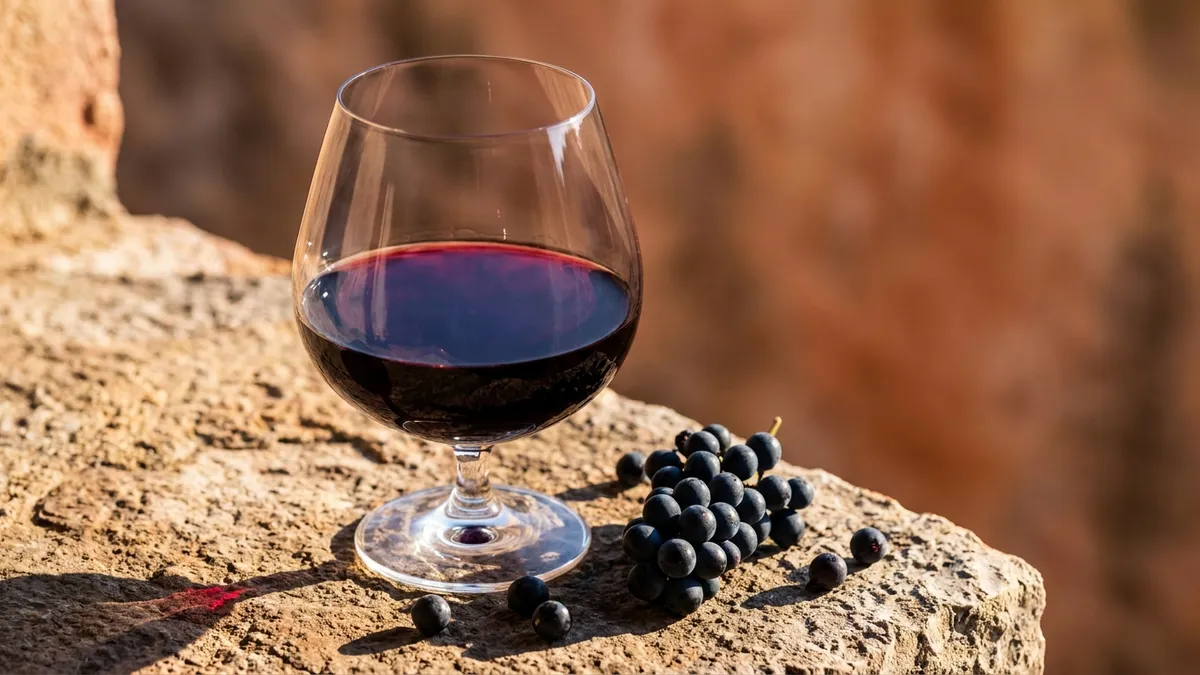
Plavac Mali is the most important red grape of Croatia, and the flagship variety of the Dalmatian coast — the long, sun-drenched strip of Adriatic shoreline and islands in the country's south. The name translates roughly as "little blue," a nod to the small, deeply colored berries that ripen on these hot, rocky slopes. When people search for plavac mali wine croatia, they are usually looking for one of the Mediterranean's boldest reds: full-bodied, high in alcohol, and packed with jammy dark fruit.
What makes this grape genuinely fascinating is its family tree. DNA research at UC Davis confirmed that Plavac Mali is the offspring of Crljenak Kaštelanski — the old Croatian grape that turned out to be identical to California's Zinfandel and Italy's Primitivo. In other words, Plavac Mali is Zinfandel's child. That single discovery rewrote the story of one of America's signature grapes and put Croatian wine on the map for a new generation of drinkers.
Plavac Mali Wine Croatia: The Quick Answer
Plavac mali wine croatia refers to bold, dry red wines made from the Plavac Mali grape along Croatia's Dalmatian coast. These wines are full-bodied, with alcohol commonly between 14% and 17%, firm tannins, and a flavor profile built on jammy blackberry, plum, dried fig, carob, black pepper, and dried Mediterranean herbs. The grape thrives on steep, south-facing coastal slopes, especially the Dingač and Postup vineyards on the Pelješac peninsula. Genetically, Plavac Mali is the offspring of Crljenak Kaštelanski, the same grape as American Zinfandel and Italian Primitivo, which makes Plavac Mali Zinfandel's direct descendant rather than an identical twin.
Plavac Mali Tasting Notes and Flavor Profile
Plavac Mali is a grape of intensity. Grown on hot slopes where the fruit ripens fully and unevenly, it produces wine that leans dark, warm, and concentrated rather than light or delicate.
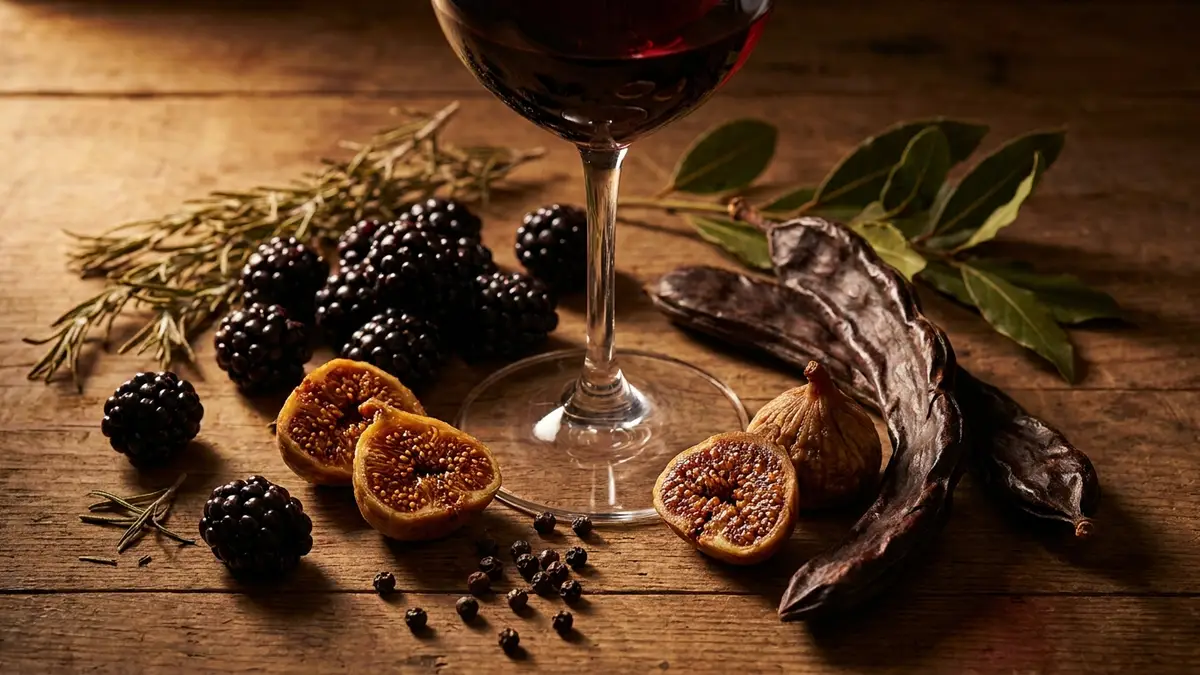
Typical aromas: blackberry, blackberry jam, dried fig, plum, carob, black pepper, dried rosemary, bay leaf, and a whiff of warm earth or tar.
On the palate, the wine carries that dark fruit forward with a slightly raisined, sun-dried edge — a signature of grapes that hang long on the vine in fierce heat. Carob (the dried, cocoa-like pod that grows across the Mediterranean) is one of its most distinctive markers, lending a roasted, bittersweet depth that sets Plavac Mali apart from other big reds.
Here is its structural snapshot, on a 1-to-5 scale where 1 is very low or light and 5 is very high or full:
- Body: full (5/5)
- Tannins: high (4/5)
- Acidity: medium (3/5)
- Alcohol: high (4 to 5/5)
- Sweetness: dry (1/5)
The tannins (the drying, gripping sensation you feel on your gums and the inside of your cheeks) are firm and grippy in youth, which is why the grape pairs so well with fatty, protein-rich food. The high alcohol gives a warming sensation on the finish that can read as richness when the wine is balanced, or as heat when it is not. Learning to separate alcohol warmth from genuine fruit sweetness is exactly the kind of skill that comes with deliberate practice — and one that makes bold reds like this far easier to appreciate.
How Plavac Mali Compares to Other Bold Reds
If you already enjoy big, fruit-driven reds, Plavac Mali will feel familiar but distinct. Comparing across structure is one of the fastest ways to place a new grape, and you can read more on reading tannins, acidity, and body as a framework.
- Plavac Mali · Body: full · Tannins: high · Signature flavors: jammy blackberry, dried fig, carob, pepper · Alcohol: very high
- Zinfandel (its parent) · Body: full · Tannins: medium · Signature flavors: bramble berry, jam, baking spice · Alcohol: very high
- Grenache · Body: medium-full · Tannins: medium-soft · Signature flavors: red berry, white pepper, dried herb · Alcohol: high
- Cabernet Sauvignon · Body: full · Tannins: high · Signature flavors: blackcurrant, cedar, graphite · Alcohol: medium-high
The takeaway: Plavac Mali sits in the bold, warm-climate camp alongside its parent and Grenache, but with firmer tannins and that unmistakable carob-and-herb signature. For a wider map of dark-skinned varieties, the black grapes overview places it among its peers.
The Zinfandel Connection — Croatia's Most Famous DNA Story
For decades, nobody knew where Zinfandel came from. It arrived in California in the 19th century, thrived, and became a defining American grape — yet it had no clear European origin. Croatian winemakers had long suspected a link to their own vines, and in the 1990s and early 2000s, DNA fingerprinting at UC Davis finally cracked the case.
The work revealed two layered facts. First, an obscure old Croatian grape called Crljenak Kaštelanski (and its near-extinct relative Tribidrag) is genetically identical to Zinfandel and to Italy's Primitivo. They are the same grape with three names. Second, this same grape is one of the two parents of Plavac Mali. The other parent is a rare Dalmatian variety called Dobričić.
Sommelier tip: When someone says Plavac Mali "is" Zinfandel, gently correct them. It is Zinfandel's child — half its DNA, but a grape of its own, shaped by a second Croatian parent and a far more extreme growing site.
This parent-offspring relationship is a textbook example of how new grape varieties arise. A natural cross between two existing vines produces seedlings, and occasionally one of those seedlings becomes a successful variety in its own right. If you enjoy the genetics behind the glass, the guide to grape mutations and sports explains the related ways vines change and diversify over time.
The story matters beyond trivia. It means a drinker who loves the jammy power of California Zin has a direct path to discovering its ancestral homeland — and a grape, Plavac Mali, that takes that same lineage and pushes it toward firmer structure and savory, herbal complexity.
The Steep, Sun-Baked Vineyards of Dalmatia
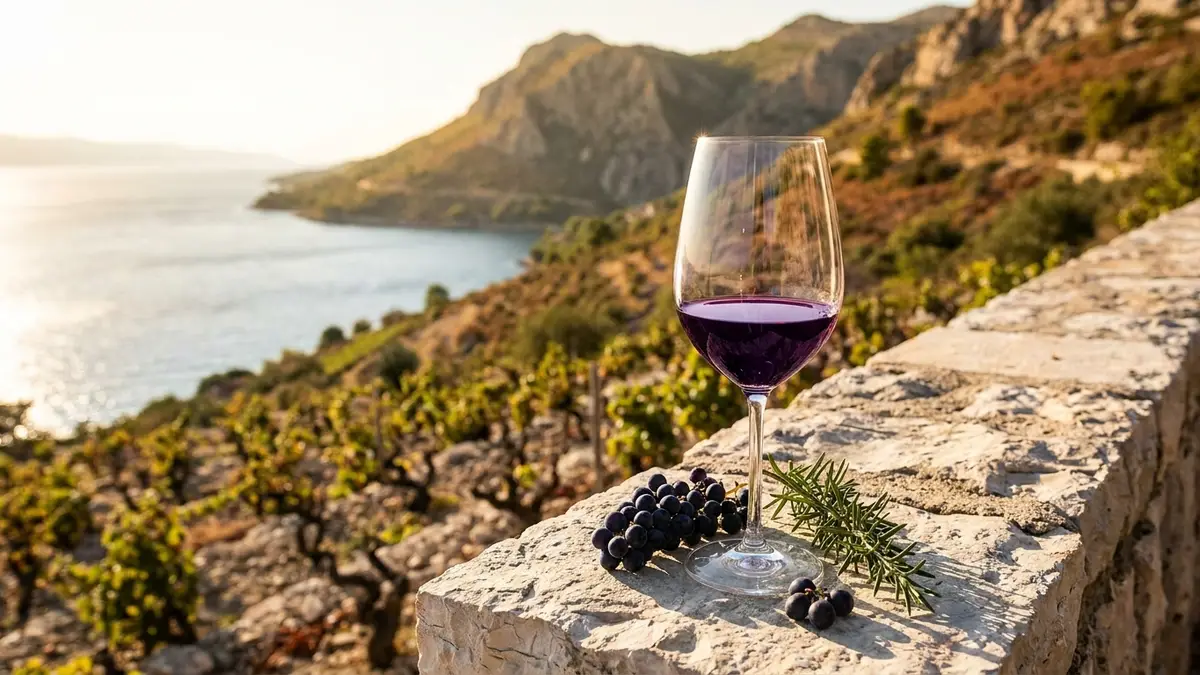
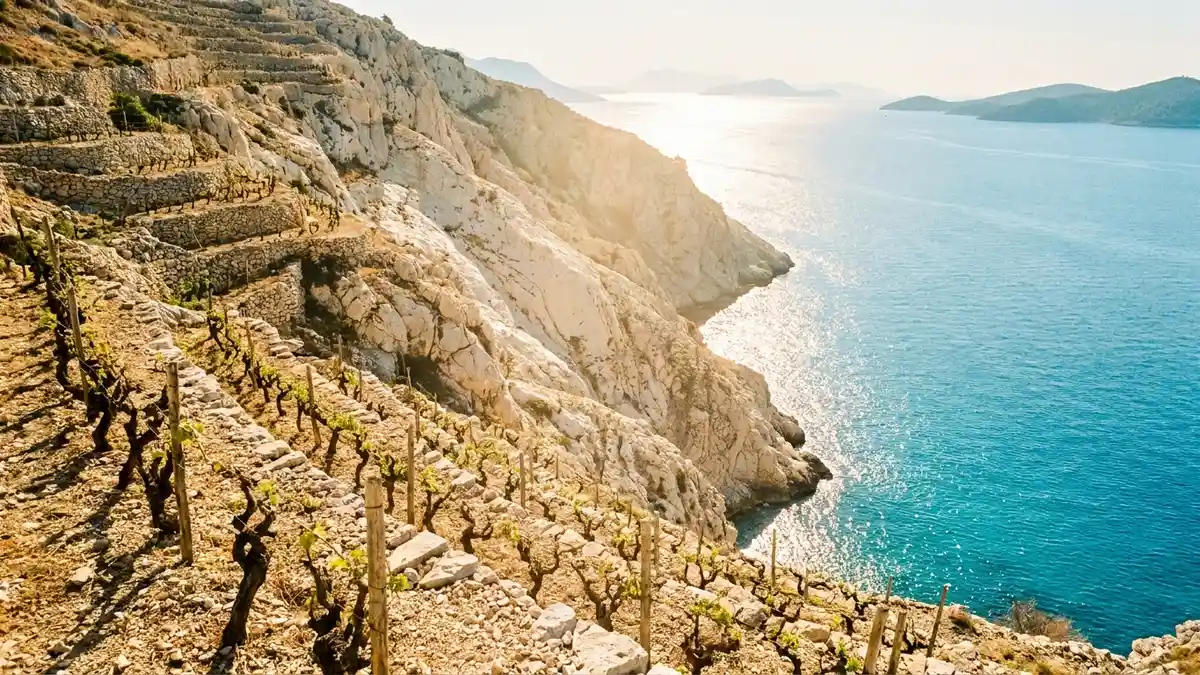
Plavac Mali's character is inseparable from where it grows. The best sites are not gentle hillsides but near-vertical coastal slopes, where viticulture is brutally manual and almost everything is done by hand.
Dingač and Postup — The Grand Slopes
The two most celebrated Plavac Mali vineyards are both on the Pelješac peninsula, a long finger of land north of Dubrovnik.
- Dingač — Croatia's first protected vineyard designation, granted in 1961. The slope faces almost due south and drops steeply toward the sea. Vines receive sunlight from three directions at once: directly overhead, reflected off the pale limestone, and bounced up off the bright surface of the Adriatic. The result is some of the ripest, most powerful Plavac Mali made anywhere.
- Postup — The neighboring protected slope, slightly cooler and often producing wines with a touch more freshness and aromatic lift, though still firmly in the bold camp.
On these gradients, growers historically lowered baskets of grapes down to the shore by hand or hauled them up on donkeys. A road tunnel through the mountain to reach Dingač was a genuine landmark of local winegrowing.
Island Plavac Mali
Beyond Pelješac, the grape is grown across the Dalmatian islands:
- Hvar — Sun-soaked southern slopes producing rich, herbal versions.
- Brač — Higher-altitude sites that can add a little freshness.
- Korčula — Better known for white grapes, but with pockets of Plavac Mali too.
Why the Site Drives the Style
The intense heat and reflected light do two things. They push sugar levels very high, which is why the wines reach such high alcohol. And they ripen the berries within a single bunch unevenly — some shrivel to near-raisins while others are barely ripe — which gives the wine its layered, jammy-yet-savory complexity. Thick skins on these small berries also pack in color and tannin, a trait worth understanding through the lens of thick- versus thin-skinned grapes.
How to Pair Plavac Mali with Food
Plavac Mali is built for the table, and its firm tannins genuinely soften when met with fat and protein. Its bold fruit and herbal edge make it a natural partner for the robust cooking of its Dalmatian home.
Classic Dalmatian Pairings
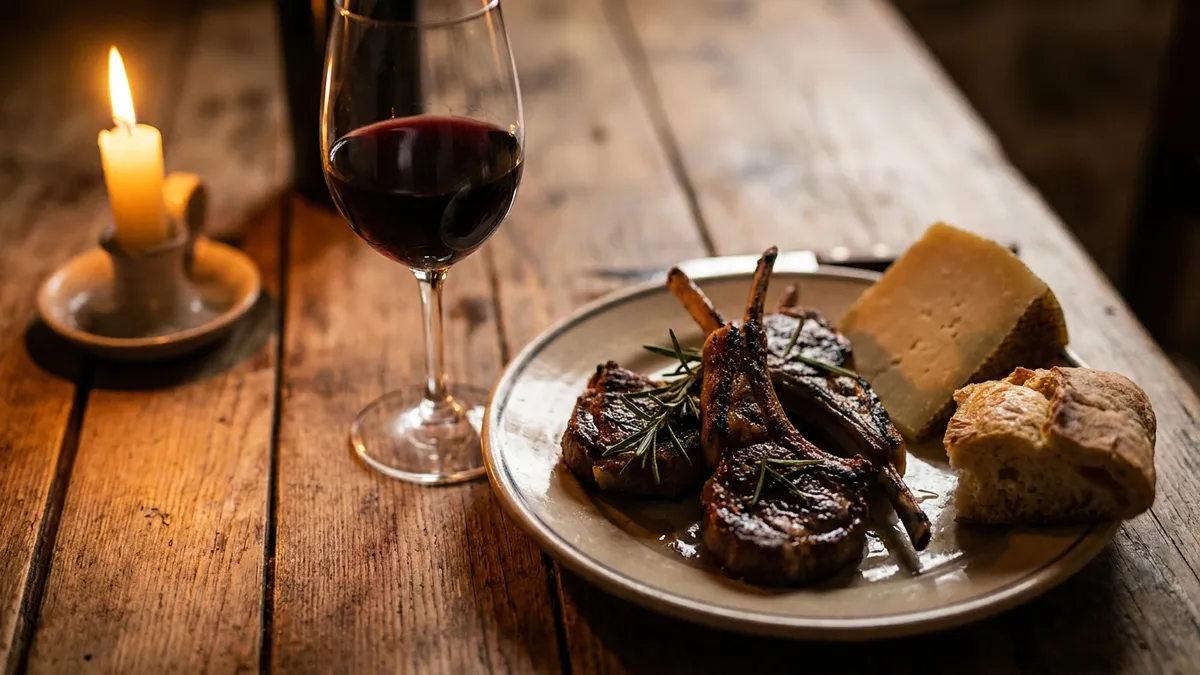
- Grilled lamb — The smoke and fat are tailor-made for the wine's tannins and dark fruit.
- Pašticada — The famous Dalmatian slow-braised beef in a sweet-savory sauce, the region's signature Sunday dish.
- Octopus or beef peka — Slow-cooked under a bell-shaped lid with potatoes and herbs; the savory depth meets the wine's carob and herb notes.
- Aged sheep cheese — Hard, salty Dalmatian sheep cheeses mirror the wine's intensity and tame its grip.
Beyond the Adriatic
- Barbecue and grilled meats — Ribs, brisket, sausages. The char and richness handle the wine's structure with ease.
- Braised short ribs and stews — Long-cooked, deeply savory dishes echo the wine's concentration.
- Hard, aged cheeses — Pecorino, aged Gouda, mature Cheddar. The umami amplifies the wine's savory depth.
- Tomato-rich dishes — Hearty ragùs and roasted-vegetable plates with rosemary and thyme connect to the herbal side of the grape.
What to Reach Past
Plavac Mali's power and tannin overwhelm delicate food. Skip it with light white fish, fresh salads, or subtle dishes, and avoid it with anything sweeter than the wine itself, which would make the fruit taste hollow and the tannins harsh.
Serving and Enjoying Plavac Mali
A few small choices help this big wine show its best.
Temperature
Serve Plavac Mali slightly below room temperature, around 16 to 18°C (60 to 65°F). Too warm and the high alcohol turns hot and spirity; a gentle chill keeps the fruit fresh and the alcohol in balance.
Decanting
- Younger, fruit-forward bottles — 30 minutes of air softens the tannins and lifts the aromatics.
- Powerful Dingač-style wines — 45 to 60 minutes lets the firm structure and concentrated fruit unfold.
A larger, bowl-shaped glass gives the bold aromas room to gather and express the carob, fig, and herb layers.
Building Your Palate with Bold Reds
Plavac Mali is an excellent grape for practicing the structural side of tasting. Because the alcohol is high and the tannins firm, it teaches you to separate three sensations that beginners often blur together: the warmth of alcohol, the grip of tannin, and the weight of body. Working through these one at a time is the core of a good tasting method.
The Sommy app walks you through assessing each of these in turn — rating tannin, alcohol, and body on a simple scale, then guiding you to the aromas hiding behind the wine's power. Putting structured words to a wine this bold is one of the quickest ways to feel confident with any big red, not just this one.
If your curiosity is sparked, Plavac Mali is a perfect gateway to other lesser-known varieties. The roundup of indigenous grapes worth trying points to other native grapes with stories as rich as this one, and the Zinfandel guide lets you taste the family resemblance from the other side of the tree. Once you have these reference points, every bold red — from a California Zin to a Croatian Dingač — becomes a chance to recognize a flavor, name a structure, and trust what you have learned to notice.
Sources
- Plavac Mali — Wine Grapes Database / DNA parentage research (UC Davis)
- Croatian Premium Wine — Dingač and Postup protected vineyards (Pelješac)
- Wine Folly — Plavac Mali and Zinfandel's Croatian origins
Frequently Asked Questions
What does Plavac Mali taste like?
Plavac Mali tastes of jammy dark berry, dried fig, blackberry, and plum, layered with carob, black pepper, and Mediterranean herbs like rosemary and bay. It is full-bodied and high in alcohol, often 14 to 17 percent, with firm tannins and a warm, slightly raisined finish from grapes ripened on hot coastal slopes.
Is Plavac Mali the same as Zinfandel?
No, but they are closely related. Plavac Mali is the offspring of Crljenak Kaštelanski, the old Croatian grape that DNA testing proved is identical to California Zinfandel and Italian Primitivo. So Plavac Mali is Zinfandel's child rather than the same grape, sharing roughly half its parentage with the famous American variety.
Where is Plavac Mali grown?
Plavac Mali grows almost entirely along Croatia's Dalmatian coast and its islands, including Hvar, Brač, and Korčula. Its two most prized vineyard areas are Dingač and Postup, both on the Pelješac peninsula, where vines cling to steep south-facing slopes above the Adriatic Sea and bake in intense reflected sunlight.
Is Plavac Mali a dry wine?
Yes, Plavac Mali is made as a dry red wine, with no significant residual sugar. Because the grapes ripen so fully on hot coastal slopes, the wine can taste rich and almost jammy, which some drinkers mistake for sweetness. The high alcohol and ripe dark fruit create that impression, but the wine itself finishes dry.
What food pairs well with Plavac Mali?
Plavac Mali's firm tannins and bold fruit suit rich, savory food. Classic Dalmatian pairings include grilled lamb, slow-cooked beef pašticada, octopus stew, and aged sheep cheese. Beyond the coast, it works with barbecue, braised short ribs, hard cheeses, and tomato-rich dishes that echo its Mediterranean herb character.
Why is Plavac Mali so high in alcohol?
The grape ripens on steep, south-facing slopes where heat reflects off both the pale rock and the Adriatic Sea. Berries within a single bunch ripen unevenly, so growers often wait for full maturity, by which point sugar levels are very high. Fermentation converts that sugar into alcohol, pushing many wines to 15 percent or more.
How do you serve Plavac Mali?
Serve Plavac Mali slightly cool of room temperature, around 16 to 18 degrees Celsius, so the high alcohol does not feel hot. Because the tannins are firm and the wine is concentrated, 30 to 60 minutes of decanting helps it open. A larger bowled glass gives the bold aromas room to express themselves.
Is Plavac Mali good for beginners?
Plavac Mali rewards a little context. Its high alcohol and firm tannins make it bolder than an easy starter red, but its generous dark fruit is approachable. Beginners enjoy it most alongside food and after learning to read its structure. The Sommy app guides you through assessing tannin, body, and alcohol so bold reds feel less intimidating.
Sommy Team
LinkedInFounder & Wine Educator
The Sommy Team is building the world's most approachable wine education app, helping beginners develop real tasting skills through structured courses and AI-guided practice.