Naoussa Wine Guide: Greece's Xinomavro Heartland

By the Sommy Team — AI-assisted, human-edited.
Updated Jun 17, 2026
Contents (10)
- What Is Naoussa Wine?
- The One Grape That Defines Naoussa: Xinomavro
- Where Naoussa Sits: Mount Vermio and the Continental Climate
- The Naoussa Wine Guide to Its Style and Classification
- Why Naoussa Tastes Like Greek Nebbiolo
- The Neighbors: Amyndeon and Goumenissa
- What Makes Naoussa Distinctive
- How a Beginner Should Start with Naoussa
- Naoussa Within the Broader Greek Wine Story
- The Reward of Learning Naoussa
TL;DR
Naoussa is a red-only appellation in northern Greece making powerful wines from a single grape, Xinomavro. Pale in color yet fierce in acidity and tannin, with tomato, dried fruit, and olive notes, it ages for decades and is often compared to Italy's Nebbiolo. This Naoussa wine guide shows beginners where to start.
What Is Naoussa Wine?
This Naoussa wine guide opens with the single fact that unlocks the whole region: every bottle of red Naoussa is made from one grape, Xinomavro. There is no blend to memorize and no second variety hiding on the label. Naoussa is a red-only appellation in Macedonia, northern Greece, set on the southeastern slopes of Mount Vermio, and its reputation rests entirely on what this grape can do. Xinomavro produces wines that look deceptively pale yet hit the palate with fierce acidity, firm tannins, and savory notes of dried tomato, olive, and sun-dried fruit. They age for decades and are so structurally similar to Italy's Nebbiolo that Xinomavro is widely called the Nebbiolo of Greece. Learn the grape and the climate, and Naoussa becomes one of the most rewarding regions a curious drinker can explore.
The One Grape That Defines Naoussa: Xinomavro
Most regions juggle several grapes. Naoussa commits to one. The appellation's rules permit only Xinomavro (pronounced ksee-NOH-mah-vroh), and that single-variety focus is the whole story.
The name itself is a tasting note. Xinomavro combines the Greek words for acid and black — a blunt, accurate description of a grape built on bracing acidity and a dark, savory soul. It is not a grape that flatters you with sweet, juicy fruit. It rewards patience and pays attention back.
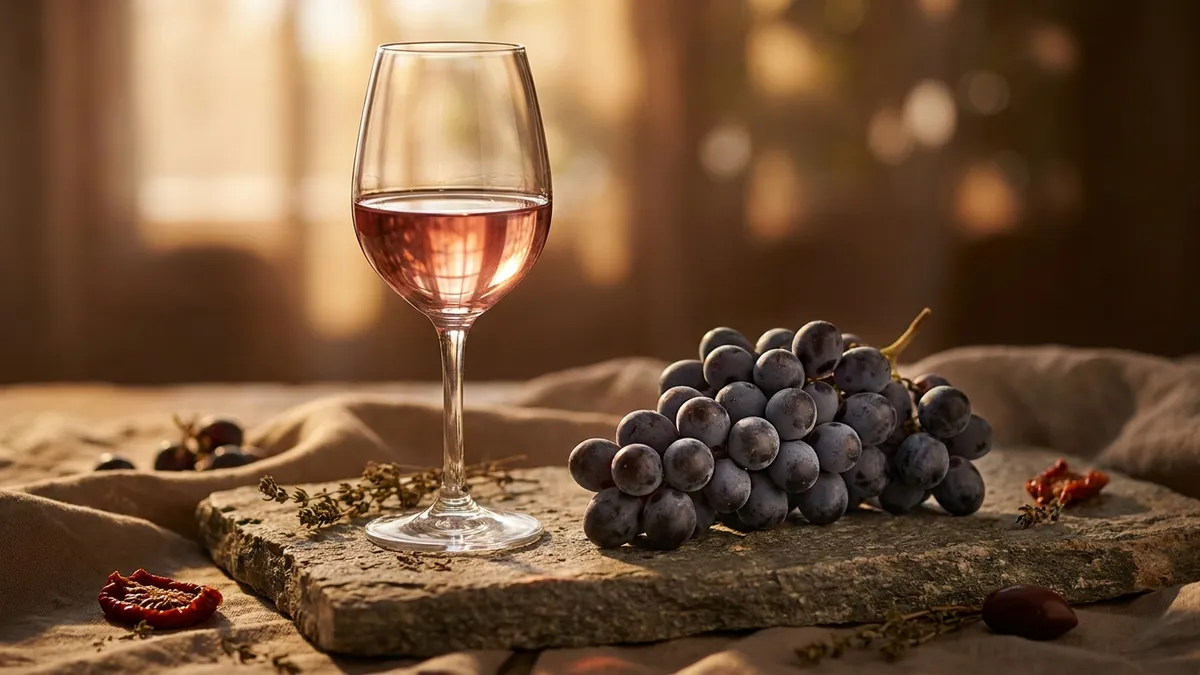
What surprises most newcomers is the gap between how Xinomavro looks and how it tastes. The wine is pale to medium ruby, often lighter than a Pinot Noir, which leads people to expect something delicate. Then the first sip lands with grippy tannins (the drying, gripping sensation that comes from grape skins and seeds) and mouth-watering acidity that braces the whole palate.
Typical aromas: dried tomato, sun-dried fruit, black and red olive, dried herbs, leather, spice, and dried rose, with an earthy, almost meaty undertone rather than fresh berry sweetness. Body: medium (3/5) · Acidity: high (5/5) · Tannins: high (4-5/5) · Color: pale-to-medium ruby. To understand why a pale wine can carry this much grip, our guide to thick vs thin-skinned grapes explains how skin chemistry, not color alone, drives structure.
Because the grape never changes within the appellation, every difference between two Naoussa wines comes from the place and the hand of the grower — altitude, exposure, soil, and how long the wine has aged. That makes Naoussa a clean classroom for tasting terroir (the full environment where grapes grow — soil, climate, slope, and altitude).
Where Naoussa Sits: Mount Vermio and the Continental Climate
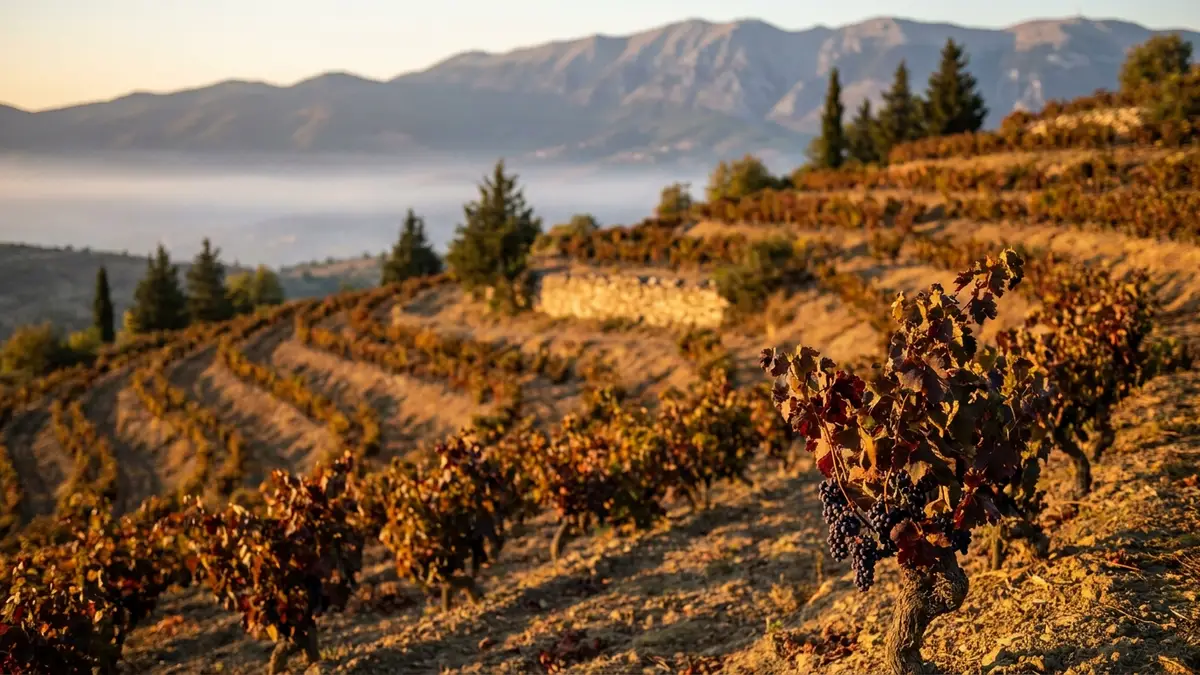
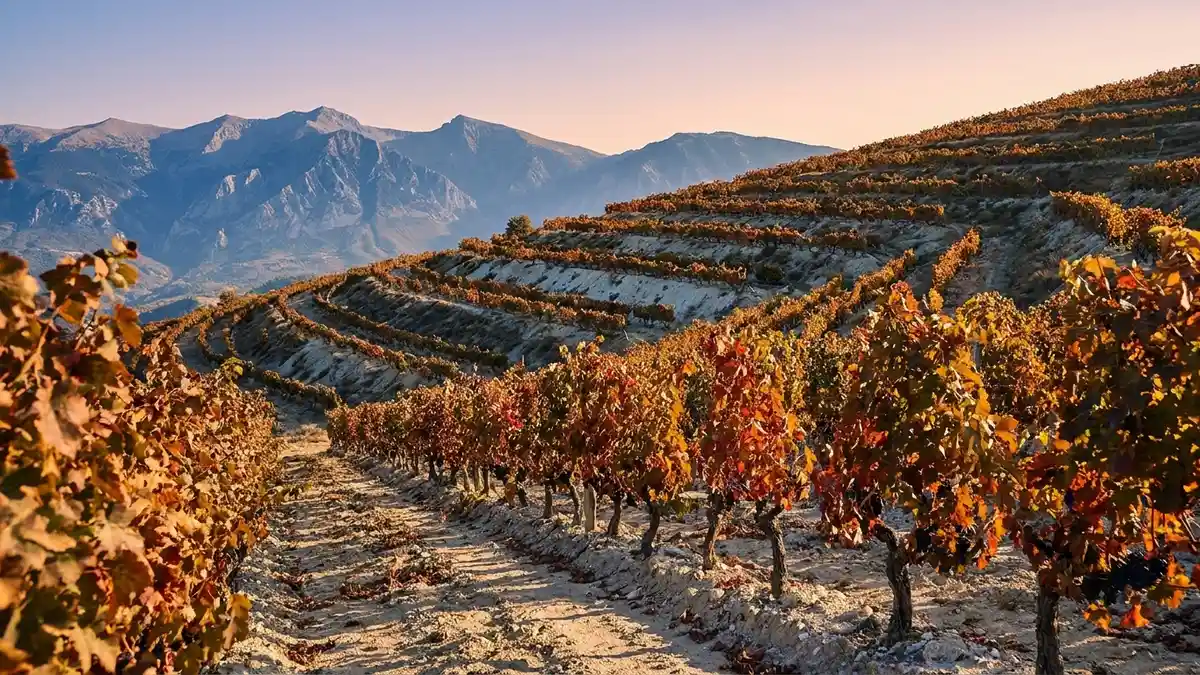
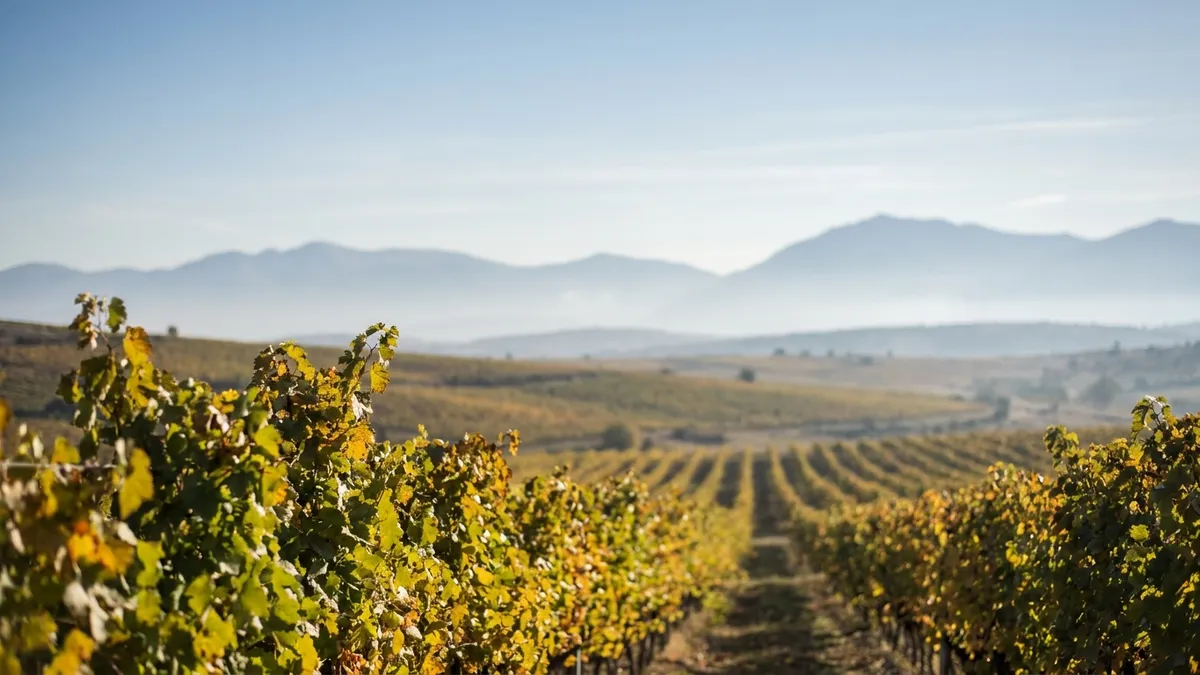
Naoussa lies inland in northern Greece, west of the port city of Thessaloniki, climbing the cool southeastern flank of Mount Vermio. This setting matters more than any winemaking choice, because it is what lets Xinomavro keep its electric acidity.
Greece is mostly hot and sun-drenched, the image of Mediterranean wine. Naoussa breaks that mold. Sitting at altitude on a continental climate, the region sees hot summers but genuinely cold winters and sharp swings between warm days and cool nights. That diurnal range — the daily gap between daytime heat and nighttime cold — ripens the grape's flavors while locking in the freshness that makes the wine taste alive rather than heavy.
The soils are varied across the slopes, with sandy, clay, and limestone parcels at different elevations, and the mountain offers a spread of exposures and aspects. Higher, cooler sites give more elegant, perfumed wines; lower, warmer sites give riper, fuller ones. The cooler continental conditions on Vermio are the reason Naoussa can produce a serious, age-worthy red where much of southern Greece leans toward warm, fruit-forward styles.
This is also why Naoussa fits so naturally into the wider story of Greek wine. For the full national picture — from the volcanic whites of the islands to the indigenous reds of the mainland — our Greece wine guide sets Naoussa in context alongside the country's other great regions.
The Naoussa Wine Guide to Its Style and Classification
Naoussa carries one of Greece's oldest and most respected wine classifications. It was among the first Greek regions granted appellation status in 1971, and today it holds PDO (Protected Designation of Origin) standing under European law. A wine labeled Naoussa PDO must be a red made entirely from Xinomavro, grown within the defined zone on Vermio's slopes, and made to the appellation's standards.
That single rule does a lot of work. Unlike multi-tier systems with crus and sub-zones to memorize, Naoussa keeps its classification simple: place plus grape plus red wine. The complexity lives in the bottle, not the label.
What makes the style distinctive is the combination of three things that rarely travel together:
- Pale color, powerful structure. The wine looks light but tastes formidable — high acid and firm tannin in a body that is medium rather than heavy. First-timers are almost always caught off guard by the gap between appearance and intensity.
- Savory over sweet. Instead of jammy fruit, Naoussa leans into dried tomato, olive, dried herbs, leather, and spice. It is a wine for the dinner table, built to sit beside food rather than stand alone.
- Serious aging potential. The acid-and-tannin backbone lets good Naoussa improve for ten to twenty years or more. Young bottles can taste austere and tight; time turns that severity into perfumed complexity.
Because the structure is so firm in youth, many drinkers find their first young Naoussa challenging. That is normal and intended — this is a wine that asks for either patience in the cellar or a generous decant before it shows its best.
Why Naoussa Tastes Like Greek Nebbiolo
The comparison you will hear again and again is that Xinomavro is the Nebbiolo of Greece, and it is more than marketing shorthand. The two grapes share an uncanny structural family resemblance, even though they grow a thousand kilometers apart.
Hold a glass of Naoussa next to a Barolo or Barbaresco and the parallels line up:
- Both are deceptively pale. Nebbiolo and Xinomavro make light-colored reds that hide serious power — neither delivers the deep purple a beginner expects from a tannic wine.
- Both carry high acid and high tannin. The two grapes are among the most structured reds anywhere, built on a firm acid-tannin frame rather than soft, plush fruit.
- Both age for decades. Their backbone lets top bottles improve for twenty years or more, slowly trading youthful grip for savory complexity.
- Both lead with savory, not sweet. Expect tar, dried rose, dried herbs, and earth rather than ripe berry — Naoussa simply adds its own tomato and olive accents on top.
The differences matter too. Naoussa's dried-tomato and olive notes give it a distinctly Mediterranean signature that Nebbiolo lacks, and it often arrives at a friendlier price for the structure you get. If you already enjoy Nebbiolo, Naoussa is the most natural next step in your tasting, and the same logic carries to Sicily's pale, savory Nerello Mascalese, another mountain-grown red that loves high acidity. To understand the shared backbone behind all three, our primer on tannins, acidity, and body breaks down the structure these wines are built on.
The Sommy app turns side-by-side comparisons like Naoussa and Nebbiolo into guided tasting exercises, so the family resemblance becomes something you can name rather than just sense.
The Neighbors: Amyndeon and Goumenissa
Naoussa does not stand alone. Xinomavro is the signature grape across several northern Greek zones, and getting to know its neighbors sharpens your sense of what makes Naoussa itself distinct.
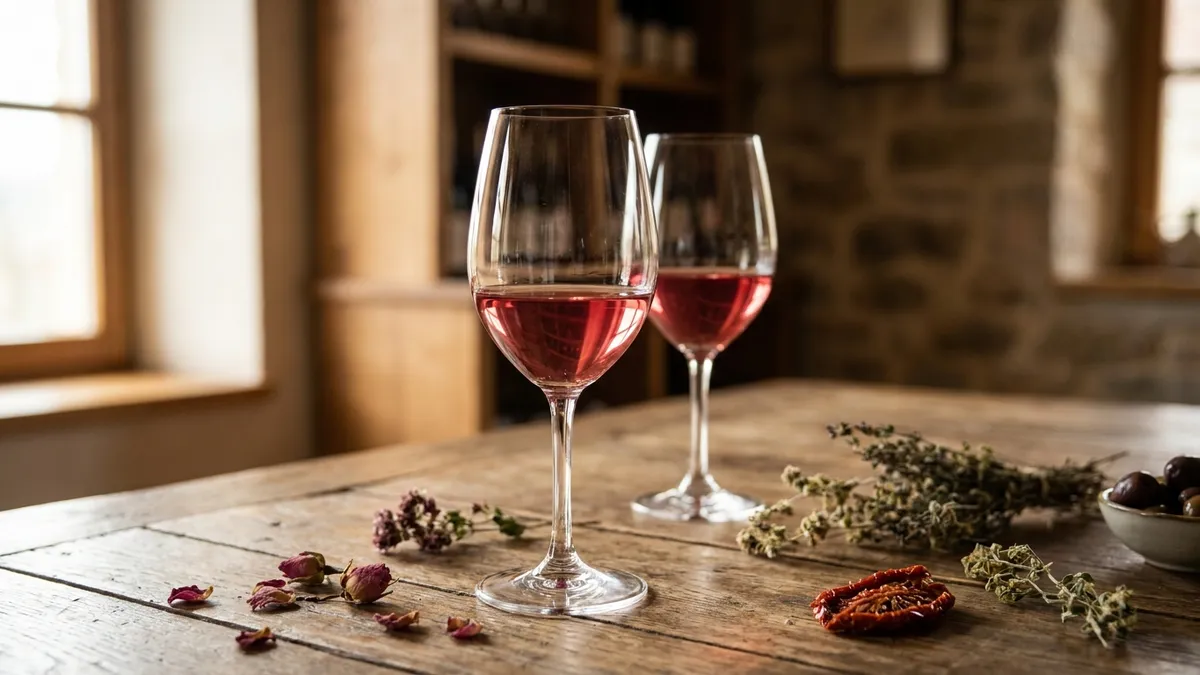
- Amyndeon (Amynteo): Sitting higher and cooler on the plateau to the northwest, this is Xinomavro's most versatile home. Where Naoussa is strictly red and firm, Amyndeon makes fresher, lighter reds plus crisp rosé and even sparkling Xinomavro. The cooler altitude pushes the grape toward red-fruit brightness and lower-tannin styles — the playful, aperitif side of a grape best known for its seriousness.
- Goumenissa: Northeast of Naoussa, this small appellation blends Xinomavro with Negoska, a softer, fruitier local grape, usually at roughly four parts Xinomavro to one part Negoska. The result is a rounder, more approachable red than Naoussa — Xinomavro with the edges smoothed off. For a beginner who finds straight Naoussa too austere, Goumenissa is a gentler way in.
Together the three zones form a kind of Xinomavro spectrum: Naoussa the structured, age-worthy purist; Goumenissa the softened, blended cousin; Amyndeon the cool-climate experimenter spinning Xinomavro into rosé and bubbles. Tasting across all three is one of the most rewarding journeys in Greek wine, and a vivid lesson in how a single grape can wear many faces.
 It is exactly the kind of discovery our roundup of indigenous grapes worth trying celebrates, and a reminder that the world's great grapes extend well beyond the noble grapes most beginners meet first.
What Makes Naoussa Distinctive
Step back from the detail and three things set Naoussa apart from almost any other red region.
First, the single-grape purity. Few serious appellations stake everything on one indigenous variety the way Naoussa does with Xinomavro. That discipline makes it a clear window into the grape and the place, with no blending to muddy the picture.
Second, the structure-to-color surprise. Naoussa overturns the beginner assumption that pale means light. It is one of the best wines in the world for teaching that color tells you very little about a wine's power — a lesson that reshapes how you read every red afterward.
Third, the savory, food-driven identity. Naoussa is not built to impress in a quick sip at a tasting bar. It is built for the table, where its acidity and tannin come alive against rich, savory dishes. That makes it an unusually honest, grown-up red in a market full of soft, fruit-forward crowd-pleasers.
How a Beginner Should Start with Naoussa
You do not need an expensive cellar or expert palate to enjoy Naoussa. You do need to meet it on its own terms — with food, a little air, and some attention. Here is a practical order:
- Choose a wine labeled Naoussa PDO. That label guarantees pure Xinomavro from the Vermio slopes. Pick a recent vintage that has had a few years of bottle age rather than the very newest release.
- Decant before drinking. Naoussa's firm tannins soften and its aromas open with an hour of air. Decanting transforms a tight young bottle into something far more generous — skip this step and the wine can taste austere.
- Pair it with savory, fatty food. The high acidity and grippy tannins are made for rich dishes — slow-cooked lamb, tomato-based stews, aged cheese, or anything with savory depth. The wine and the food complete each other.
- Taste it next to a Nebbiolo. Open a Naoussa and a Barolo or Barbaresco side by side to feel the family resemblance — the shared pale color, high acid, and savory grip — and to notice Naoussa's extra tomato-and-olive accent.
- Try Goumenissa or Amyndeon for contrast. If straight Naoussa feels too severe, a softer Goumenissa or a fresh Amyndeon rosé shows the gentler side of the same grape and eases you toward the real thing.
As you taste, build the habit of naming what you sense: the pale color, the mouth-watering acidity, the dried-tomato and olive notes, the firm tannic grip. Our guide to how to taste wine gives you the step-by-step method, and Sommy turns it into guided practice — scoring the structure, identifying the aromas, and building the vocabulary to describe a wine as distinctive as this one.
Naoussa Within the Broader Greek Wine Story
Naoussa is the flagship for Greek red wine, but it is one chapter in a much larger story. Greece is a treasure house of indigenous grapes grown almost nowhere else, from the crisp Assyrtiko whites of the volcanic islands to the dense reds of the Peloponnese. Naoussa's gift is to prove that a single native grape, grown in the right cool-climate spot, can rival the most celebrated reds on earth for structure and longevity.
That is also why Naoussa makes such a good entry point into Greek wine for anyone who already loves classic European reds. If your palate is built on Nebbiolo, Sangiovese, or other high-acid, savory styles, Naoussa will feel both familiar and excitingly new. From there, the rest of Greece — and its long list of grapes you have never tasted — opens up.
You can start building the tasting method for free at sommy.wine, then bring it to your next bottle of Naoussa. The app guides you through naming the aromas, scoring the acid and tannin, and recording what you sense, so each bottle teaches you a little more than the last.
The Reward of Learning Naoussa
Naoussa asks a little patience and gives a lot back. The pale color that fools beginners, the bracing acidity, the savory dried-tomato and olive notes, the tannins that need food and time — none of it is an accident. It is the honest expression of one tough, characterful grape grown on a cool Greek mountainside.
Start with one good bottle, give it air and a worthy meal, and taste it beside a Nebbiolo to anchor the comparison. Do that a few times and Naoussa stops being an unfamiliar name and becomes one of the most distinctive, food-loving reds you know — proof that some of the world's most exciting wine still comes from grapes most drinkers have never heard of.
Sources
Frequently Asked Questions
What grape is Naoussa wine made from?
Naoussa is made entirely from Xinomavro, a single red grape that is the sole permitted variety in the appellation. The name translates as acid-black, which captures its two defining traits: high acidity and a dark, savory character. No other grape is allowed, so every Naoussa red expresses one grape grown on the slopes of Mount Vermio.
What does Naoussa wine taste like?
Naoussa is pale to medium ruby with surprising power for its light color. Expect high acidity, firm grippy tannins, and savory aromas of dried tomato, sun-dried fruit, olive, dried herbs, and earth rather than sweet ripe fruit. Young versions taste tight and austere, while aged bottles develop leather, spice, and dried-flower complexity over many years.
Why is Naoussa compared to Barolo and Nebbiolo?
Both Xinomavro and Nebbiolo make pale-colored reds that carry unexpectedly high tannin and acidity, age for decades, and show savory dried-fruit, tar, and dried-rose notes rather than juicy fruit. The structural resemblance is so strong that Xinomavro is often called the Nebbiolo of Greece, though its tomato and olive accents give it a Mediterranean identity of its own.
Where is the Naoussa wine region?
Naoussa lies in Macedonia in northern Greece, on the southeastern slopes of Mount Vermio, west of Thessaloniki. The vineyards sit at altitude on a cooler continental climate with hot summers and cold winters. This elevation and continental swing preserve the bright acidity that defines Xinomavro and separate Naoussa from Greece's warmer southern islands.
How is Naoussa different from Amyndeon and Goumenissa?
All three are northern Greek zones built on Xinomavro. Naoussa makes only firm, age-worthy reds. Amyndeon sits higher and cooler and is known for fresher reds plus rosé and sparkling Xinomavro. Goumenissa blends Xinomavro with the softer Negoska grape for a rounder, more approachable red. Naoussa is the most structured and serious of the three.
Does Naoussa wine age well?
Yes. Naoussa is one of Greece's most age-worthy reds, built on high acidity and firm tannin that let good bottles improve for ten to twenty years or more. Young Naoussa can taste tight and austere, so many bottles reward cellaring. With age the tannins soften and savory notes of leather, dried tomato, and spice emerge.
Where should a beginner start with Naoussa?
Start with a wine clearly labeled Naoussa PDO from a recent but not brand-new vintage, and decant it for an hour to soften the tannins. Pair it with rich, savory food such as slow-cooked lamb or tomato-based stews. Tasting it next to a Nebbiolo highlights the family resemblance and trains your palate on this savory, high-acid style.
Is Naoussa a red or white wine?
Naoussa is a red-only appellation. Under its rules only red wine from Xinomavro may carry the Naoussa PDO name. White and rosé wines made nearby fall under different regional or appellation labels. If you want rosé or sparkling Xinomavro, look instead to the neighboring Amyndeon zone higher on the plateau.
Sommy Team
LinkedInFounder & Wine Educator
The Sommy Team is building the world's most approachable wine education app, helping beginners develop real tasting skills through structured courses and AI-guided practice.