McLaren Vale Wine Guide: Shiraz, Grenache, and Sea Breezes

By the Sommy Team — AI-assisted, human-edited.
Updated Jun 17, 2026
Contents (10)
- What Is McLaren Vale Wine?
- The Maritime Climate That Defines McLaren Vale
- The Signature Grapes of McLaren Vale
- The Mediterranean Wave: Fiano, Vermentino, and Nero d'Avola
- Sustainable and Organic Farming: A Regional Identity
- How McLaren Vale Compares to Other Australian Regions
- What Makes McLaren Vale Distinctive
- A McLaren Vale Wine Guide to Getting Started
- Beyond the Big Three: The Region's Wider Range
- The Reward of Learning McLaren Vale
TL;DR
McLaren Vale is a warm maritime region south of Adelaide where Gulf St Vincent sea breezes keep ripe wines fresh. It is famous for plush Shiraz, old-vine Grenache, and GSM blends, and is now a leader in Mediterranean grapes and sustainable farming. This McLaren Vale wine guide shows beginners where to begin.
What Is McLaren Vale Wine?
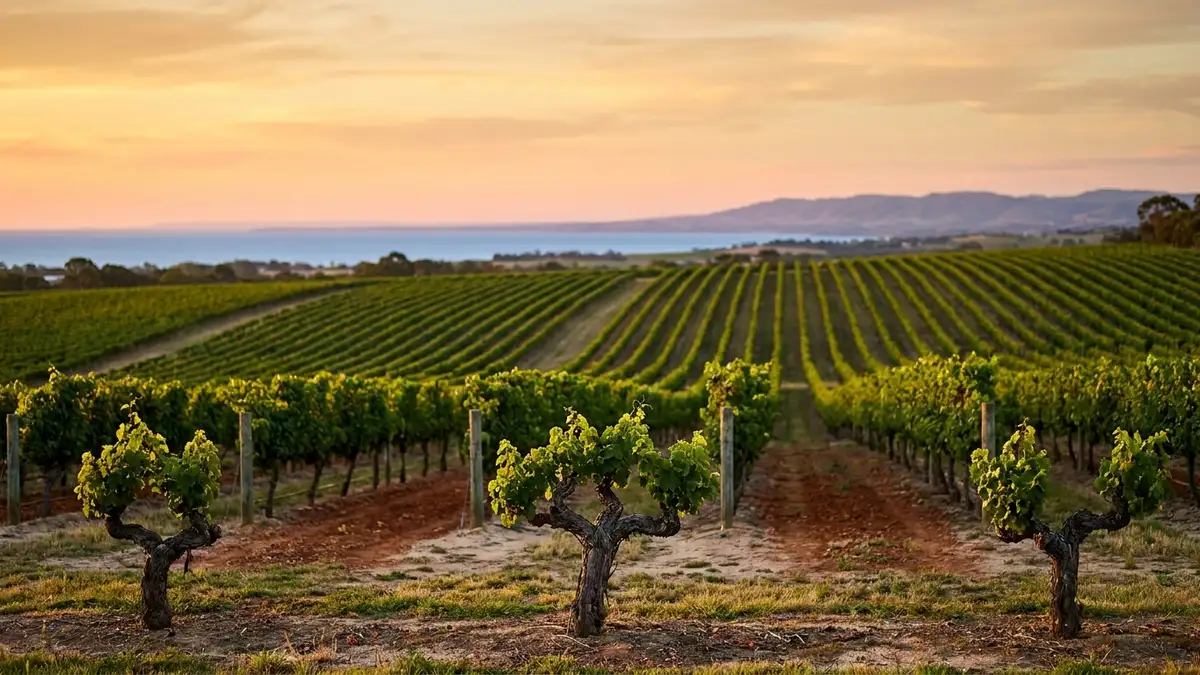
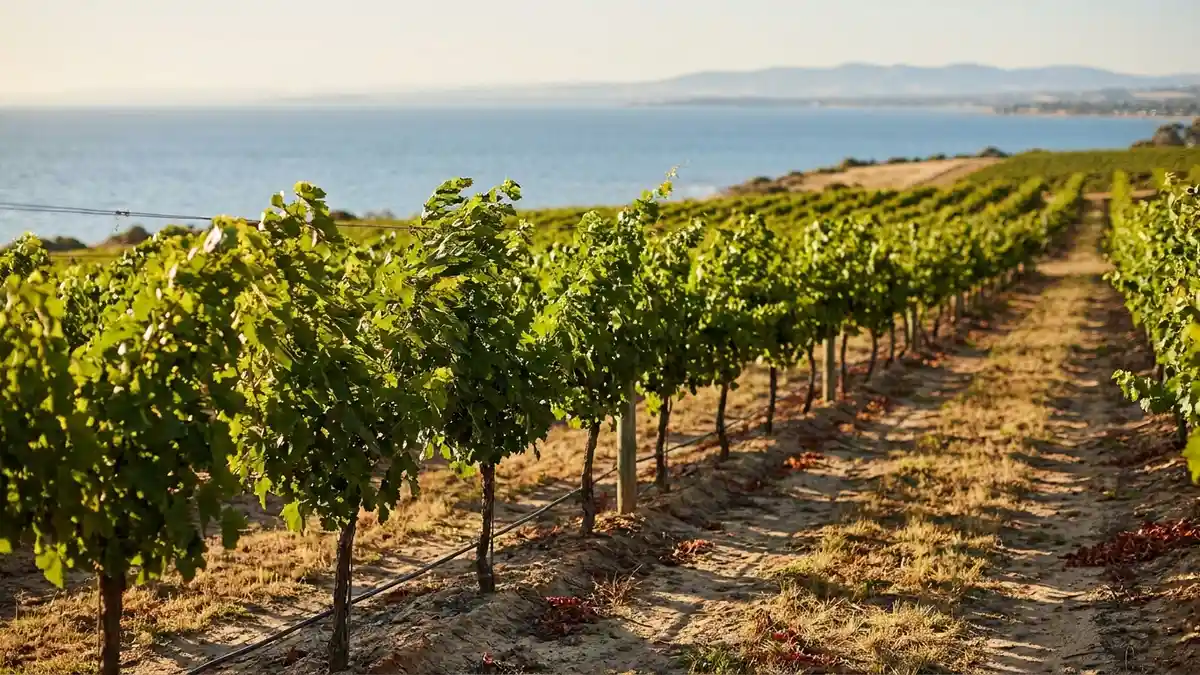
This McLaren Vale wine guide begins with the feature that shapes every bottle: the sea. McLaren Vale is a warm maritime region in South Australia, about 40 kilometres south of Adelaide, tucked between the Mount Lofty Ranges and the coast of Gulf St Vincent. The gulf sends cooling afternoon sea breezes through the vineyards, so the wines ripen fully yet stay fresh. The region is famous for plush, full-bodied Shiraz, world-class old-vine Grenache, and Rhône-style GSM blends (Grenache, Shiraz, and Mourvèdre). It has also become a New World leader for Mediterranean grapes and for sustainable, organic farming. Learn the breeze, the grapes, and the blend, and the region opens up quickly.
The Maritime Climate That Defines McLaren Vale
McLaren Vale sits at the same warm latitude as plenty of big, jammy wine regions, but it rarely tastes overcooked. The reason is geography. Vineyards run almost down to the shore of Gulf St Vincent, and most afternoons a cool sea breeze rolls inland off the water. That breeze drops the temperature after the heat of the day, slowing ripening and helping the grapes hold onto acidity (the tart, mouth-watering freshness that keeps a wine lively rather than flat).
This is what people mean by a maritime climate — a wine region whose weather is moderated by a nearby sea or ocean. Without that breeze, McLaren Vale would make heavy, soupy reds. With it, the region makes wines that are rich and ripe but still balanced and drinkable.
The soils add to the picture. McLaren Vale has an unusually varied patchwork of soil types for a region its size — sandy loams, ironstone, limestone, and ancient marine deposits left by a sea that once covered the area. That diversity is one reason the same grape can taste noticeably different a few kilometres apart, which makes the region a fine place to start noticing terroir (the environment where grapes grow — soil, climate, slope, and the sea air that drifts over the vines).
The Signature Grapes of McLaren Vale
McLaren Vale grows many grapes, but its reputation rests on a small, powerful cast. Three reds carry the region, and a new wave of Mediterranean varieties is reshaping what comes next.
Shiraz: The Plush Heart of the Region
Shiraz is the same grape the rest of the world calls Syrah, and in McLaren Vale it reaches one of its most generous, crowd-pleasing forms. The maritime breeze keeps it from tipping into raisined heaviness, so the style is plush and rounded rather than scorched.
McLaren Vale Shiraz is deep purple, full-bodied, and soft. Typical aromas: blackberry, dark plum, blueberry, milk chocolate, and a savoury hint of dried herbs or olive. On the palate it is rich and mouth-filling with ripe, velvety tannins (the drying, grippy sensation in red wine that comes from grape skins and oak). Body: full (5/5) · Acidity: medium (3/5) · Tannins: medium, ripe (3/5). It is one of the easiest big reds for a beginner to enjoy young, because the fruit is sweet-edged and the tannins are smooth.
Grenache: The Old-Vine Treasure
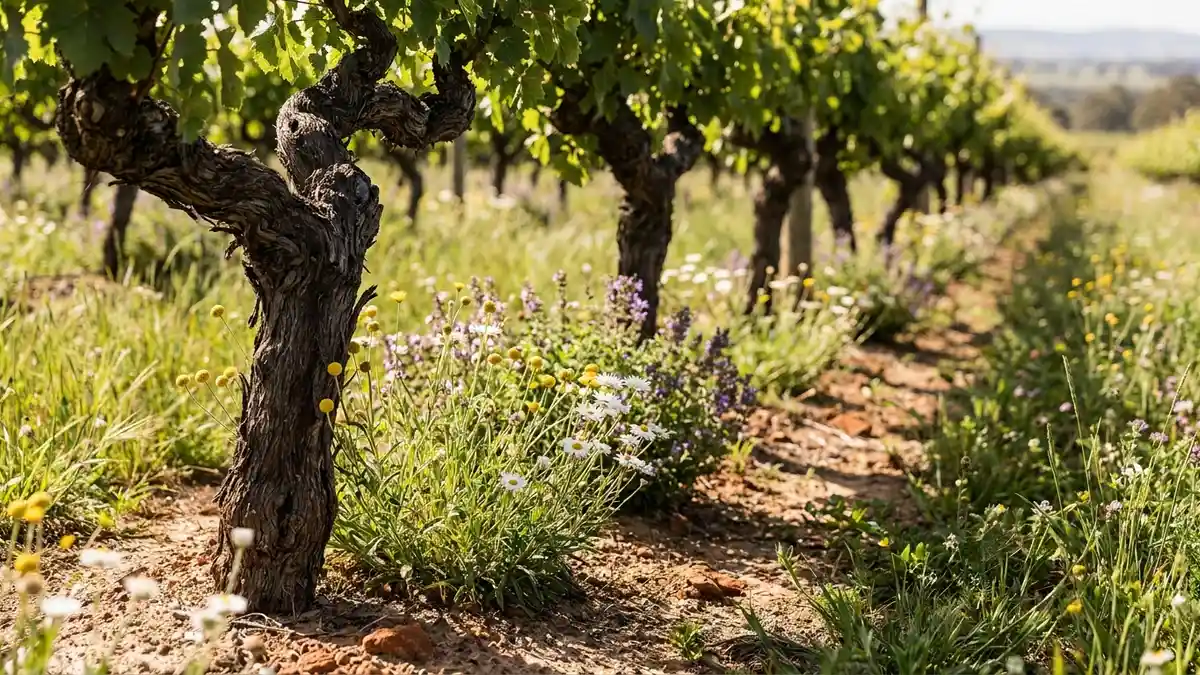
If Shiraz is the headline, Grenache is the connoisseur's pick. McLaren Vale holds some of the oldest Grenache vines on earth, many of them planted as low, unirrigated bush vines (free-standing vines grown without a trellis) that are well over a century old. Old vines crop tiny amounts of intensely flavoured fruit, and the results are special.
Grenache here is paler and lighter than Shiraz, more red-fruited and fragrant. Typical aromas: raspberry, red cherry, dried strawberry, white pepper, and a warm, almost herbal lift. Body: medium-to-full (4/5) · Acidity: medium-plus (4/5) · Tannins: low-to-medium, fine (2/5). It rewards a slight chill and drinks beautifully on its own. To see how this grape behaves around the world, our Grenache wine guide goes deeper on its many faces.
Mourvèdre and the GSM Blend
The third red is Mourvèdre (also called Mataro in Australia), a dark, savoury grape that brings structure, leather, and gamey depth. On its own it can be austere, but it is the backbone of the region's most famous blend.
That blend is GSM — Grenache, Shiraz, and Mourvèdre — a trio borrowed from the southern Rhône in France. Grenache supplies bright red fruit and warmth, Shiraz adds dark fruit and body, and Mourvèdre lends savoury grip. Together they make a red that is more complete than any one grape alone: fruity but structured, generous but fresh. McLaren Vale is one of the New World's strongest homes for GSM, often built around its prized old-vine Grenache.
The Mediterranean Wave: Fiano, Vermentino, and Nero d'Avola
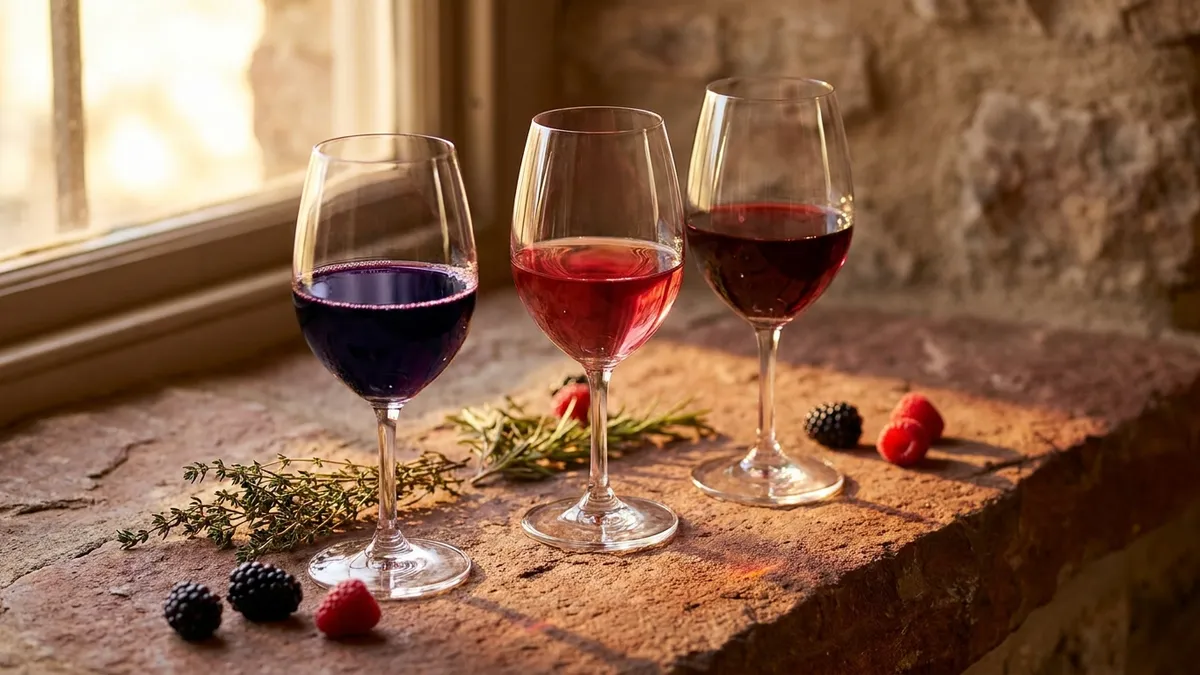
The most interesting story in McLaren Vale right now is the rise of Mediterranean grapes. Growers noticed that their warm, dry summers and salty breezes echo the climates of southern Italy, Spain, and the south of France, where many of these varieties evolved. Planting them is both a flavour choice and a climate-smart one, since they ripen well with little water.
- Fiano: A southern Italian white that gives a textured, savoury wine with notes of pear, almond, honeysuckle, and a saline edge. It keeps freshness even in heat, which is exactly what the region needs. Our Fiano wine guide covers the grape in full.
- Vermentino: A crisp, zesty coastal white with citrus, green apple, and a faintly bitter almond finish — built for warm-weather drinking and seafood. The Vermentino wine guide explains why it suits maritime regions so well.
- Nero d'Avola: Sicily's flagship red, deeply coloured with juicy black cherry, plum, and a peppery lift. In McLaren Vale it makes a fresh, mid-weight alternative to Shiraz.
- Other Italians and Spanish grapes: Sangiovese, Montepulciano, and Tempranillo are all gaining ground, adding savoury, food-friendly reds to the region's range.
These wines show a region thinking ahead. Rather than forcing cool-climate grapes to suffer in the heat, McLaren Vale leans into varieties that were born for it. If you enjoy discovering lesser-known bottles, our piece on indigenous grapes worth trying pairs naturally with what is happening here.
Sustainable and Organic Farming: A Regional Identity
McLaren Vale is one of Australia's leaders in sustainable viticulture — farming designed to protect soil, water, and biodiversity over the long term. A large share of the region's growers are certified through national sustainability programs, and many farm organically (without synthetic chemical fertilisers or pesticides) or biodynamically (an organic method that also follows a holistic, calendar-based approach to the vineyard).
Two things drive this. First, the dry climate suits low-input farming, because fewer disease pressures mean less need for sprays. Second, the region has a tight-knit community of growers who treat environmental care as part of the region's character rather than a marketing badge. For a beginner, the practical upshot is simple: McLaren Vale is a reliable place to look if you want wines made with a lighter touch on the land.
How McLaren Vale Compares to Other Australian Regions
McLaren Vale is one of three famous South Australian and Western Australian red regions, and tasting them side by side is the fastest way to feel what makes each distinct. Read each bullet as one region, leading with its name in bold:
- McLaren Vale: Style: plush, rounded Shiraz and old-vine Grenache · Climate: warm maritime, cooled by Gulf St Vincent breezes · Signature: GSM blends and Mediterranean grapes · Feel: rich but soft and approachable young.
- Barossa Valley: Style: big, powerful, densely structured Shiraz · Climate: warm and more continental (less sea influence) · Signature: old-vine Shiraz and Grenache · Feel: bigger and more concentrated than McLaren Vale.
- Margaret River: Style: elegant Cabernet Sauvignon and Chardonnay · Climate: cooler maritime, strongly ocean-moderated · Signature: Bordeaux-style reds and fine whites · Feel: leaner, fresher, more structured than the warm inland regions.
The takeaway: McLaren Vale sits in the sweet spot between Barossa's power and Margaret River's restraint — warm enough for ripe, generous reds, but cooled enough by the sea to keep them fresh. For the bigger picture, our Australian wine guide maps how these regions fit together, and our overview of French wine regions shows where the Rhône-born GSM idea came from.
What Makes McLaren Vale Distinctive
Plenty of regions grow Shiraz, so what sets this one apart? A few things come together that no other region quite matches.
The first is the breeze-and-warmth balance. McLaren Vale is hot enough to ripen Shiraz fully into plush, dark-fruited richness, yet the Gulf St Vincent sea breeze pulls the wines back from heaviness. That tension — ripe but fresh — is the regional signature.
The second is old-vine Grenache. Few places on earth can match the age and quality of the region's Grenache plantings, which gives it a genuine claim to greatness with a grape most of the world treats as a blending afterthought.
The third is openness to change. The Mediterranean wave and the sustainability push show a region willing to rethink what it plants and how it farms. That forward-looking spirit, combined with such varied soils in a compact area, makes McLaren Vale one of the more exciting regions to follow.
McLaren Vale's gift is balance: a region warm enough for plush, generous reds, yet cooled by the sea just enough to keep them honest.
A McLaren Vale Wine Guide to Getting Started
You do not need a cellar or a big budget to understand McLaren Vale. The smartest path is to taste a few styles together and notice what changes. Here is a practical order:
- Start with a single-region Shiraz. A straight McLaren Vale Shiraz is the clearest introduction to the plush house style — rich dark fruit, soft tannins, a chocolatey edge. This is your baseline.
- Add an old-vine Grenache beside it. Tasted next to Shiraz, Grenache feels lighter, brighter, and more red-fruited. The contrast teaches you how much the grape, not just the region, shapes a wine.
- Try a GSM blend. Notice how it lands between the two single grapes — fruity like Grenache, bodied like Shiraz, with a savoury grip from Mourvèdre. This is the region's calling card.
- Pour a Mediterranean white. A Fiano or Vermentino shows the region's fresh, modern side and makes a great warm-weather contrast to all those reds.
- Build the tasting habit. Note the ripe fruit, the soft tannins, and the freshness that the sea breeze preserves. Our guide to how to taste wine gives you the step-by-step method, and understanding tannins, acidity, and body explains the structure behind these wines.
Sommy turns these comparisons into guided exercises — naming the aromas, scoring the structure, and building the vocabulary to describe what you taste. You can start practising free at sommy.wine, then bring the method to your next bottle of McLaren Vale Shiraz.
Beyond the Big Three: The Region's Wider Range
The signature reds get the attention, but McLaren Vale's range is broader than first appears. Beyond the headline grapes you will find fortified styles, Cabernet Sauvignon, and a growing number of crisp, lower-alcohol whites built for hot afternoons. The region's varied soils mean even a single grape comes in many guises depending on the vineyard.
It is also worth knowing how the region's grapes connect to wines you may already enjoy. Grenache often blends with Carignan in France's south, and our Carignan wine guide shows how that old Mediterranean pairing works. And if you want the foundation that underpins all of this, our overview of the noble grapes every learner should know sets the stage for understanding why Shiraz and Grenache behave the way they do.
The Reward of Learning McLaren Vale
McLaren Vale rewards a learner quickly. Unlike regions where you must memorise a maze of villages and tiers, here the logic is clear: a warm climate, cooled by the sea, growing a handful of grapes you can taste and compare in a single sitting. Learn the breeze-and-warmth balance, the difference between plush Shiraz and bright Grenache, and the idea of the GSM blend, and you can read almost any bottle the region makes.
Start small, taste in pairs, and let the contrasts reveal themselves one glass at a time. The Sommy app is built to make that habit stick — turning each bottle into a short, guided lesson so the next McLaren Vale wine you open is a little clearer than the last.
Sources
Frequently Asked Questions
What wine is McLaren Vale known for?
McLaren Vale is best known for full-bodied, plush Shiraz with rich dark fruit and chocolate notes. It also makes some of Australia's finest old-vine Grenache and Grenache-Shiraz-Mourvèdre (GSM) blends. More recently it has become a leader in Mediterranean grapes like Fiano, Vermentino, and Nero d'Avola, which suit its warm, dry climate.
Where is McLaren Vale located?
McLaren Vale sits in South Australia, roughly 40 kilometres south of Adelaide, between the Mount Lofty Ranges and the coast of Gulf St Vincent. It is a maritime region: the gulf and nearby ocean send cooling afternoon sea breezes through the vineyards, which moderate the warm climate and help the grapes keep their acidity and freshness.
What is a GSM blend?
GSM stands for Grenache, Shiraz, and Mourvèdre, a classic red blend that originated in France's southern Rhône. Grenache brings bright red fruit and warmth, Shiraz adds dark fruit and body, and Mourvèdre contributes savoury, gamey structure. McLaren Vale is one of the New World's strongest homes for GSM, often built around old-vine Grenache.
How is McLaren Vale Shiraz different from Barossa Shiraz?
Both regions in South Australia make rich, ripe Shiraz, but the styles differ. McLaren Vale Shiraz tends toward plush, rounded dark fruit with milk-chocolate and savoury notes, kept fresh by maritime sea breezes. Barossa Shiraz is often bigger, denser, and more powerfully structured. McLaren Vale generally feels softer and more approachable when young.
Why is McLaren Vale good for Mediterranean grapes?
Its warm, dry summers and maritime breezes closely echo the climates of southern Italy, Spain, and the south of France. Grapes like Fiano, Vermentino, and Nero d'Avola evolved in those conditions, so they ripen reliably while keeping the acidity and freshness that struggle in cooler regions. Many growers now plant them as a climate-smart alternative to thirstier varieties.
Is McLaren Vale wine sustainable?
McLaren Vale is one of Australia's leading regions for sustainable, organic, and biodynamic viticulture. A large share of its growers are certified through national sustainability programs, and many farm organically. The push reflects both the dry climate, which suits low-input farming, and a community of growers focused on long-term soil and water health.
Where should a beginner start with McLaren Vale wine?
Start with a single-region McLaren Vale Shiraz to meet the plush house style, then taste an old-vine Grenache beside it to feel the lighter, brighter contrast. Add a GSM blend and a Mediterranean white like Fiano or Vermentino. Tasting these together makes the warm-climate-but-fresh signature of the region obvious.
Sommy Team
LinkedInFounder & Wine Educator
The Sommy Team is building the world's most approachable wine education app, helping beginners develop real tasting skills through structured courses and AI-guided practice.