Margaret River Wine Guide: Australia's Premium Cabernet Region

By the Sommy Team — AI-assisted, human-edited.
Updated Jun 17, 2026
Contents (9)
- What Is Margaret River Wine?
- The Maritime Climate That Shapes the Wine
- A Margaret River Wine Guide to the Signature Grapes and Styles
- How Margaret River Compares to Bordeaux
- The Sub-Regions of Margaret River
- What Makes Margaret River Distinctive
- How a Beginner Should Start with Margaret River
- Margaret River Beyond the Big Three
- The Reward of Learning Margaret River
TL;DR
Margaret River sits between two capes in Western Australia, where an even maritime climate produces elegant, structured Cabernet Sauvignon, world-class Chardonnay, and the crisp Sauvignon Blanc-Sémillon blend. This Margaret River wine guide shows beginners the climate, the signature grapes, the sub-regions, and exactly where to start.
What Is Margaret River Wine?
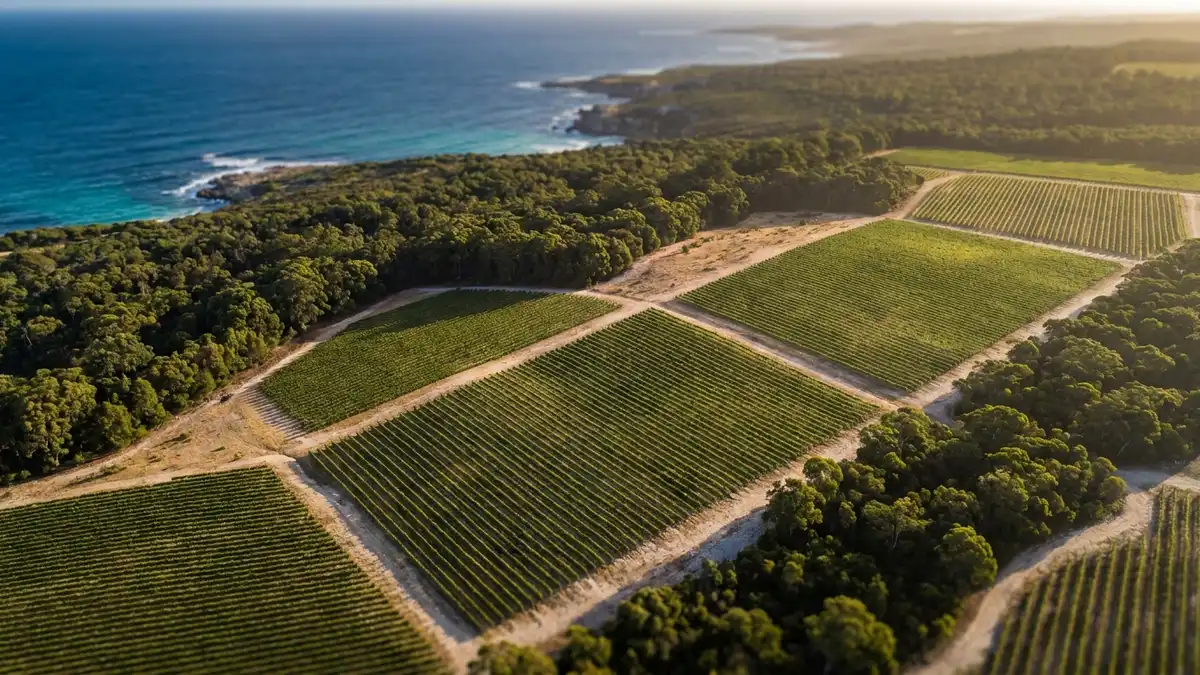
This Margaret River wine guide starts with a simple location fact that explains almost everything else. Margaret River is a small, premium wine region tucked into the far southwest corner of Western Australia, sitting on a narrow strip of land between Cape Naturaliste and Cape Leeuwin, with the Indian Ocean on three sides. That maritime setting gives the region an unusually even, Mediterranean-maritime climate, and it shows in the wine: elegant, structured Cabernet Sauvignon and Cabernet-Merlot blends that have earned the nickname the Bordeaux of Australia, alongside top-tier Chardonnay and the crisp Sauvignon Blanc-Sémillon blend known locally as SSB. Learn the climate and these three styles, and the region opens up quickly.
The Maritime Climate That Shapes the Wine
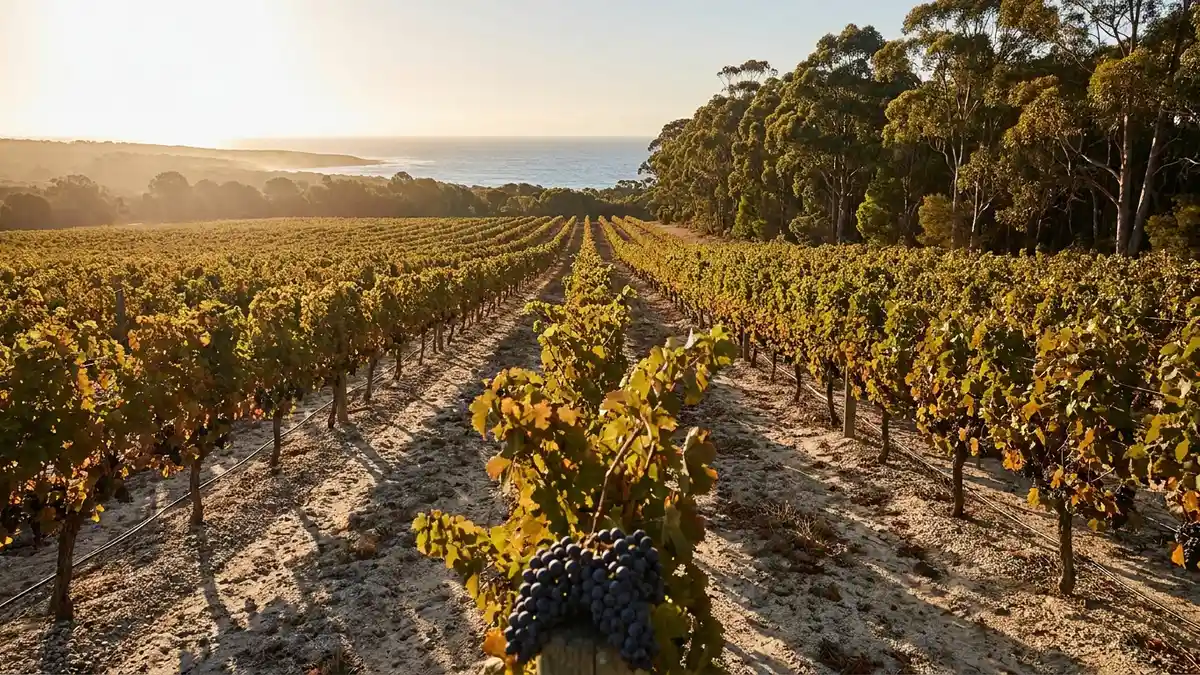
Most of Australia's famous wine country is warm and inland. Margaret River is the opposite, and its climate is the whole story. The region juts into the ocean, so it never gets the temperature swings of the continental interior. Days are warm but rarely scorching, nights stay mild, and the sea breeze keeps the vines cool and even.
The result is a long, gentle ripening season. Grapes hang on the vine without baking, which preserves freshness and acidity (the tart, mouth-watering element that gives wine its lift and structure). This is why Margaret River reds taste structured and savory rather than jammy, and why its whites stay crisp and precise.
There is also the soil. Much of the best vineyard land sits on ancient gravelly and sandy loams over granite and gneiss bedrock — free-draining ground that stresses the vines just enough to concentrate flavor. Combined with the maritime air, this terroir (the full environment where grapes grow — soil, climate, slope, and exposure) gives the region a signature of brightness and restraint.
That cool, even rhythm is also why the Bordeaux comparison sticks. Like Bordeaux, Margaret River is maritime, gravel-soiled, and built on Cabernet. Our Bordeaux wine guide lays out the Old World original so you can hear the echo for yourself.
A Margaret River Wine Guide to the Signature Grapes and Styles
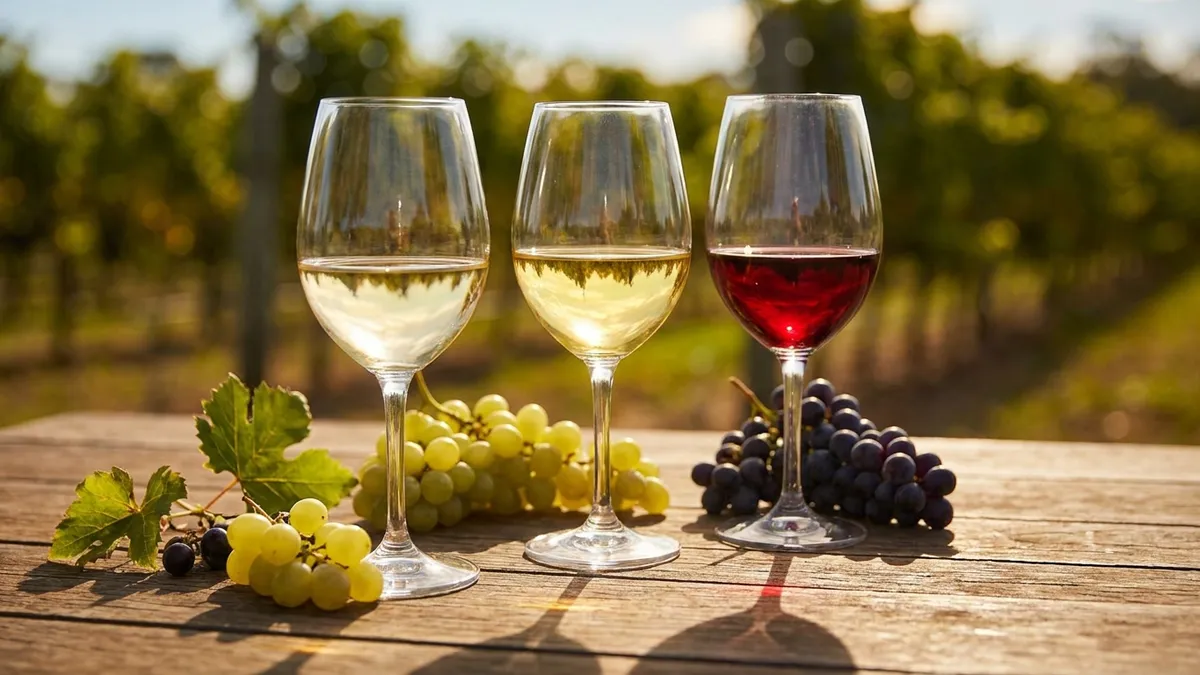
Margaret River is small and focused. Unlike many New World regions that plant a little of everything, it built its reputation on a tight set of grapes done well. Three styles carry the region's name.
Cabernet Sauvignon: The Flagship Red
Cabernet Sauvignon is the heart of Margaret River and the source of its fame. The maritime climate gives Cabernet exactly what it loves — enough warmth to ripen fully, enough coolness to keep it from going flabby. The wines are medium-to-full bodied with firm but polished tannins (the drying, gripping sensation that comes from grape skins and oak).
Typical aromas: blackcurrant, dark plum, cedar, graphite, and a leafy, herbal edge. The fruit is dark but never overripe, and there is usually a savory, almost gravelly thread running underneath. Body: medium-to-full (4/5) · Acidity: medium-to-high (4/5) · Tannins: firm but fine (4/5).
Many producers blend in a little Merlot, and sometimes Cabernet Franc, to soften and round the wine in the classic Bordeaux mold — hence the region's nickname. If you want the full picture of this grape worldwide, our Cabernet Sauvignon wine guide covers how it behaves from Napa to the Médoc.
Chardonnay: A Cool-Climate Benchmark
If Cabernet made the region famous, Chardonnay keeps it celebrated. Margaret River produces some of the most respected Chardonnay outside Burgundy, prized for balance rather than richness. The cool ocean air keeps the acidity bright, so the wines walk a line between fruit and freshness.
Typical aromas: white peach, nectarine, grapefruit, and subtle struck-match or nutty notes from careful oak and malolactic fermentation (a secondary fermentation that softens sharp acidity into a creamier feel). The style is restrained and mineral compared with the buttery, tropical Chardonnays of warmer regions. For the grape's global range, see our Chardonnay wine guide.
SSB: The Signature White Blend
The region's everyday hero is the Sauvignon Blanc-Sémillon blend, written on labels as SSB (or SBS). It is Margaret River's answer to a crisp, food-friendly white, and one of the smartest first bottles for a newcomer.
- Sauvignon Blanc brings zesty citrus, gooseberry, cut grass, and an aromatic lift.
- Sémillon adds body, lemon, and a faint waxy or lanolin texture that helps the wine age gracefully.
Together they make a wine that is fresher than most single-variety whites and more structured than straight Sauvignon Blanc. To understand the louder half of the blend on its own, our Sauvignon Blanc wine guide is a useful companion.
How Margaret River Compares to Bordeaux
The "Bordeaux of Australia" tag is more than marketing. The two regions share real structural DNA, and lining them up side by side is the fastest way to understand the Margaret River style.
- Margaret River: Climate: even maritime, Mediterranean-maritime · Flagship red: Cabernet Sauvignon, often blended with Merlot · Soils: gravelly, sandy loam over granite · Style: structured, savory, fresh, restrained · Classification: no cru system, quality signalled by sub-region and producer.
- Bordeaux: Climate: maritime, Atlantic-influenced · Flagship red: Cabernet Sauvignon and Merlot blends · Soils: gravel and clay over limestone · Style: structured, age-worthy, savory · Classification: formal 1855 cru hierarchy plus appellations.
The headline is that both regions favor freshness and structure over heavy ripeness, and both lean on the Cabernet-Merlot partnership. The biggest difference is age: Bordeaux carries centuries of classification and history, while Margaret River, planted only in the late 1960s, lets the producer and sub-region — not a cru ranking — tell you about quality. For a wider map of how France organizes its regions by contrast, our guide to French wine regions sets the stage.
Margaret River took Bordeaux's blueprint — gravel, sea air, and Cabernet — and rebuilt it under brighter Australian light.
The Sub-Regions of Margaret River
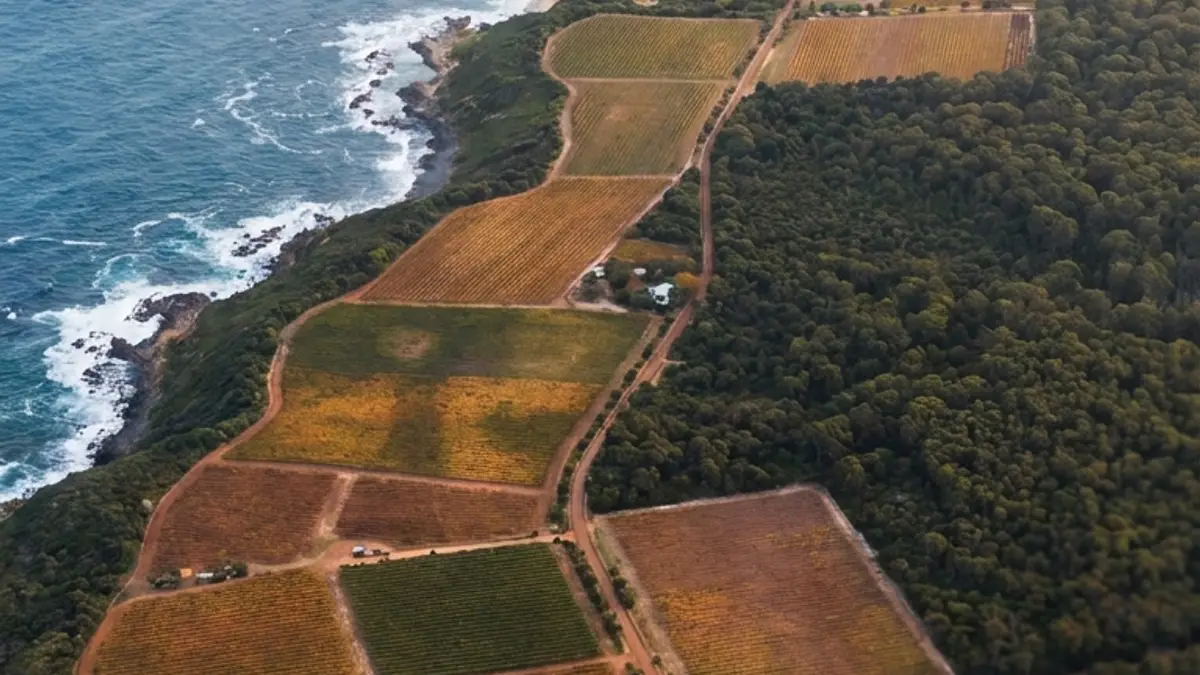
Margaret River is small, but it is not uniform. Six loosely defined sub-regions run north to south along the strip, each with its own balance of sea breeze, soil, and warmth. You will rarely see them named on a label as strictly as a French appellation, but knowing them helps you read style.
- Yallingup (north): Closest to Cape Naturaliste and the coast, cooled hard by the ocean. Known for aromatic, finely structured whites and elegant reds.
- Carbunup: Slightly warmer and more sheltered, producing rich Cabernet and full-bodied whites.
- Wilyabrup (heart of the region): The historic core, home to many of the founding vineyards. Gravelly soils here give some of the region's most acclaimed Cabernet Sauvignon.
- Treeton: A central pocket with mixed soils, making balanced reds and whites across several styles.
- Wallcliffe: Cooled by the Margaret River itself flowing to the sea, favoring vibrant Sauvignon Blanc-Sémillon and refined Cabernet.
- Karridale (south): The coolest, near Cape Leeuwin, leaning toward crisp whites and lively, aromatic styles.
The pattern to remember: the north and the heart lean toward riper, structured Cabernet, while the cooler southern and coastal edges favor crisp, aromatic whites. The Sommy app's regional courses walk through how climate shifts like these reshape a wine in the glass.
What Makes Margaret River Distinctive
A few things set this region apart from the rest of Australia, and they are worth holding together in your head.
A Tiny Region with an Outsized Reputation
Margaret River produces only a small share of Australia's total wine — a sliver compared with the vast inland regions — yet it accounts for a large slice of the country's premium bottles. It punches far above its volume. That is the mark of a region focused on quality over quantity, the way the cooler corners of the wine world usually are.
No Cru System, Just Sub-Region and Producer
Unlike Bordeaux or Burgundy, Margaret River has no legal classification ranking vineyards into tiers. There is no Grand Cru and no 1855-style hierarchy. Quality is signalled instead by the sub-region, the grape, and the producer's track record. That makes the region refreshingly easy to read once you know the styles: you are buying a place-and-grape combination, not decoding a centuries-old ranking.
Surf and Vines in One Place
Margaret River is as famous for its coastline as its Cabernet. World-class surf breaks, karri forests, caves, and a relaxed coastal culture sit right alongside the vineyards. This surfing-and-wine lifestyle is part of the region's identity — wine here is unpretentious, made to be enjoyed after a day on the beach rather than locked behind formality. It is a fitting home for a region whose whole style leans toward freshness and ease.
How a Beginner Should Start with Margaret River
You do not need a top bottle or a big budget to understand Margaret River. The smartest path is to taste deliberately across its three signature styles and pay attention to the thread of freshness that ties them together. Here is a practical order.
- Begin with an SSB white. The Sauvignon Blanc-Sémillon blend is affordable, widely available, and shows the region's bright, zesty character immediately. It is the easiest possible introduction.
- Move to a Chardonnay. A Margaret River Chardonnay reveals the cool-climate restraint — peach and citrus held in check by acidity, with only a light touch of oak. Compare it later with a richer warm-climate Chardonnay to feel the difference.
- Meet the flagship Cabernet. A mid-priced Cabernet Sauvignon or Cabernet-Merlot blend introduces the structured, savory red the region is built on. Look for blackcurrant and cedar with firm, fine tannins.
- Taste across climates. Open a Margaret River Cabernet beside a warmer-climate Australian red, like a Barossa or McLaren Vale Shiraz. The Margaret River wine will feel fresher and more structured; the warmer red riper and bolder. Same country, very different climate.
- Build the tasting habit. Note the acidity, the savory edge, and the polished tannins that mark the maritime style. Our guide to how to taste wine gives you the step-by-step method, and our overview of the noble grapes explains why Cabernet and Chardonnay anchor so many great regions.
Sommy turns these comparisons into guided exercises — naming the aromas, scoring the structure, and building the vocabulary to describe what you sense. You can start practicing free at sommy.wine, then bring the method to your next bottle of Margaret River Cabernet.
Margaret River Beyond the Big Three
The signature styles tell most of the story, but the region grows more than Cabernet, Chardonnay, and SSB. Shiraz appears here in a fresher, more peppery guise than in the warm inland regions, shaped by the same cooling ocean air. Cabernet Franc and small plantings of other varieties round out the Bordeaux-style blends, and a handful of producers experiment with Mediterranean grapes suited to the climate.
It is also worth knowing how Margaret River fits the wider Australian picture. The country's reputation was built on big, ripe reds from warmer zones, so a structured, savory Margaret River Cabernet often surprises people who expect Australian wine to be bold and jammy. Tasting it is a quick lesson in how much climate, not country, shapes a wine — the same idea that runs through our piece on why grapes that look the same can taste different.
The Reward of Learning Margaret River
Margaret River rewards a learner faster than almost any premium region, precisely because it is small and unburdened by classification. There is no cru ladder to memorize and no centuries of label tradition to decode — just a maritime climate, three signature styles, and a clutch of sub-regions you can hold in your head.
Start with the SSB, work through the Chardonnay, and finish with the Cabernet, tasting each beside something warmer or richer so the maritime freshness stands out. To make sense of the structure you are sensing, our guide to understanding tannins, acidity, and body breaks down exactly what gives these wines their shape. The Sommy app is built to make that habit stick — turning each bottle into a short, guided lesson so the next Margaret River you open is a little clearer than the last.
Sources
Frequently Asked Questions
What is Margaret River known for?
Margaret River is best known for elegant, structured Cabernet Sauvignon and Cabernet-Merlot blends that earn it the nickname the Bordeaux of Australia. It also produces world-class Chardonnay and a signature crisp white blend of Sauvignon Blanc and Sémillon, known locally as SSB. The region pairs serious wine with a relaxed surfing-and-wine coastal lifestyle.
Where is Margaret River located?
Margaret River sits in the far southwest corner of Western Australia, about three hours south of Perth, on a narrow strip of land between Cape Naturaliste and Cape Leeuwin. The Indian Ocean borders it on three sides, which moderates the climate. The region is small, producing a tiny share of Australia's wine but a large share of its premium bottles.
What grapes are grown in Margaret River?
The headline red is Cabernet Sauvignon, often blended with Merlot in the Bordeaux style. The leading whites are Chardonnay and the Sauvignon Blanc-Sémillon blend called SSB. You will also find Shiraz, Cabernet Franc, and small amounts of other varieties, but Cabernet, Chardonnay, and SSB define the region's identity and reputation.
Why is Margaret River called the Bordeaux of Australia?
Margaret River shares a maritime climate and gravelly soils with Bordeaux, and like Bordeaux it built its fame on Cabernet Sauvignon and Cabernet-Merlot blends. Its reds favor structure, freshness, and savory restraint over heavy ripeness, echoing the Old World style. The comparison signals elegance and ageability rather than the bold, jammy profile some expect from Australia.
What does Margaret River Cabernet Sauvignon taste like?
Margaret River Cabernet tends toward blackcurrant, dark plum, cedar, and a leafy or herbal edge, with firm but fine tannins, medium-to-full body, and bright acidity. The even maritime climate keeps the fruit fresh rather than overripe, giving wines that feel structured and savory. Many are built to age for a decade or more in good vintages.
What is SSB wine?
SSB stands for Sauvignon Blanc-Sémillon, the region's signature white blend. Sauvignon Blanc brings zesty citrus, gooseberry, and herbal lift, while Sémillon adds body, lemon, and a subtle waxy texture that helps the wine age. The result is crisp, aromatic, and food-friendly. SSB is one of the easiest and most affordable ways to taste classic Margaret River character.
How should a beginner start with Margaret River wine?
Start with an SSB white, which is affordable and shows the region's freshness clearly. Then try a Chardonnay to feel the cool-climate restraint, and a mid-priced Cabernet Sauvignon to meet the signature red. Taste a Margaret River Cabernet beside a warmer-climate Australian Shiraz to feel how maritime conditions shape structure and freshness.
Sommy Team
LinkedInFounder & Wine Educator
The Sommy Team is building the world's most approachable wine education app, helping beginners develop real tasting skills through structured courses and AI-guided practice.