Hungarian Wine Guide: Tokaji, Bull's Blood, and More

By the Sommy Team — AI-assisted, human-edited.
Updated Jun 17, 2026
Contents (10)
- What Is Hungarian Wine?
- The Land and Climate: A Continental Crossroads
- Tokaj: Sweet Aszú and Serious Dry Furmint
- Eger: Egri Bikavér and the Story of Bull's Blood
- Villány: Hungary's Bold Reds
- Lake Balaton: Crisp, Mineral Whites
- The Indigenous-Grape Revival
- How a Classification Tells You What's in the Glass
- How a Beginner Should Start with Hungarian Wine
- The Reward of Learning Hungary
TL;DR
Hungary makes legendary sweet Tokaji aszú from Furmint, increasingly serious dry Furmint, the spicy red blend Egri Bikavér known as Bull's Blood, and bold Villány reds. This hungarian wine guide explains the grapes, the puttonyos sweetness scale, the key regions, and where a beginner should begin.
What Is Hungarian Wine?
This hungarian wine guide starts with the wine that made the country famous: Tokaji aszú, a golden, honeyed sweet wine that European courts once prized above almost any other. But Hungary is far more than one dessert wine. It is a landlocked country in central Europe with a continental climate, 22 wine regions, and a deep bench of indigenous grapes rarely grown anywhere else. The signature white is Furmint, made both as sweet Tokaji and as a serious dry wine. The signature red is Egri Bikavér, the spicy blend known as Bull's Blood. From the volcanic slopes of Tokaj to the bold reds of Villány and the crisp whites of Lake Balaton, Hungary offers some of the best value and most distinctive flavours in Europe.
The Land and Climate: A Continental Crossroads
Hungary sits in the Carpathian Basin, ringed by mountains and crossed by the Danube and Tisza rivers. That position gives it a continental climate — hot summers, cold winters, and a wide swing between day and night temperatures. Grapes ripen fully in the warm season while cool nights lock in the bright acidity that defines Hungarian wine.
The country's soils are a patchwork. Tokaj is built on volcanic rock and loess; the slopes around Lake Balaton mix basalt and limestone; Villány in the south runs to warm limestone and clay. This variety of bedrock, more than any single climate, is what gives Hungarian wines their range — from racy, mineral whites to deep, structured reds.
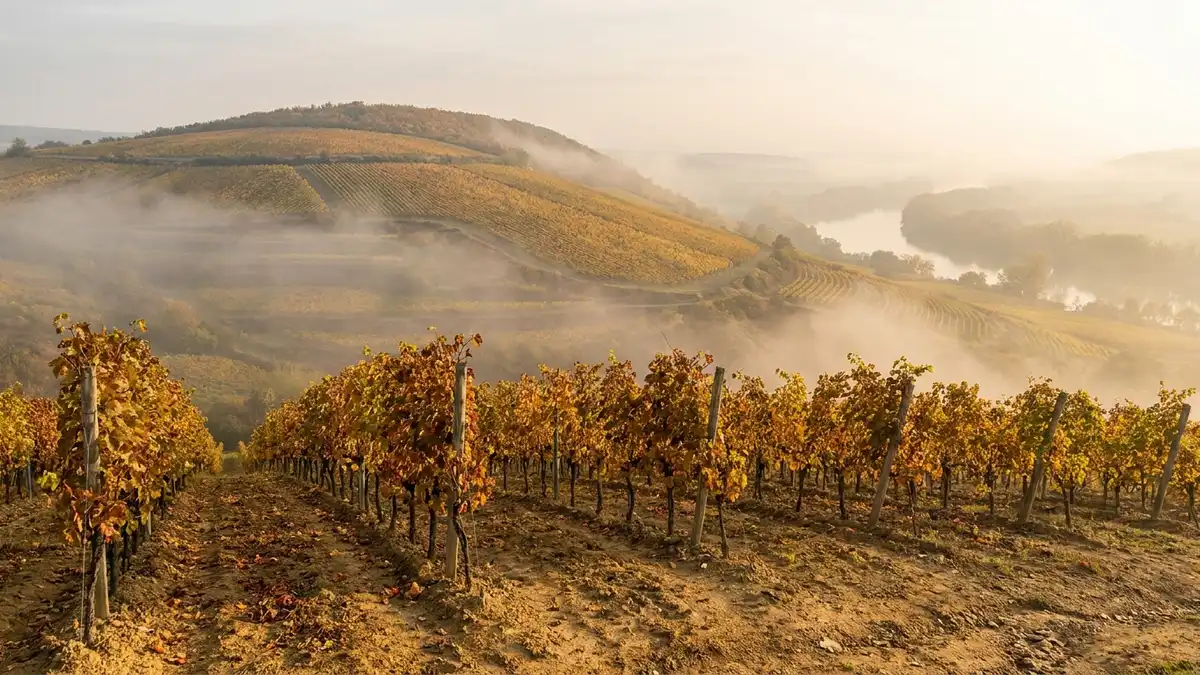
Two features shape the most famous styles. In Tokaj, autumn mists rising off the rivers encourage botrytis (a beneficial mould, also called noble rot, that shrivels grapes and concentrates their sugar). In the warm south, long ripening seasons push reds to full, ripe maturity. Understanding the terroir behind these wines — the way soil and climate translate into structure — is half the pleasure of learning the country.
Tokaj: Sweet Aszú and Serious Dry Furmint
Tokaj (the region; Tokaji means "from Tokaj") in Hungary's northeast is the country's most storied wine area and a UNESCO World Heritage site. It does two very different things exceptionally well.
Tokaji Aszú and the Puttonyos Scale
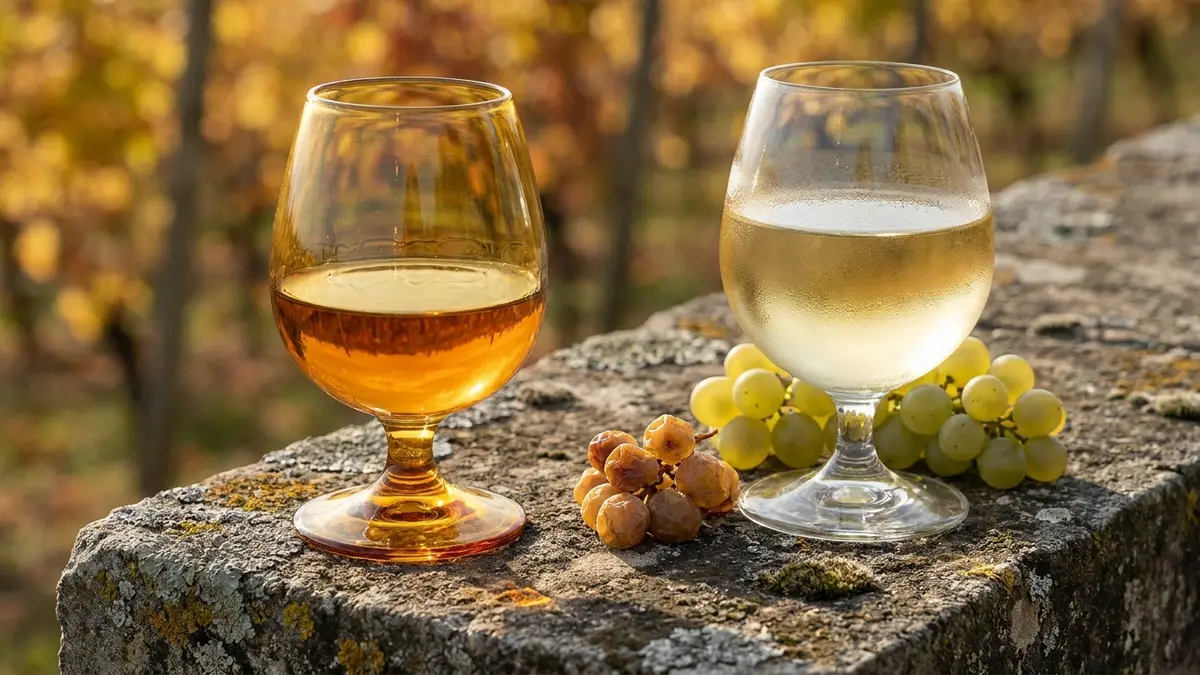
The classic Tokaji is aszú — a sweet wine made from grapes left on the vine until botrytis shrivels them into raisin-like aszú berries packed with sugar and flavour. These berries are picked individually, then macerated into a base wine and slowly fermented. The result is amber-gold, intensely sweet, and balanced by Furmint's searing acidity, with typical aromas of apricot, orange marmalade, honey, dried fig, and a savoury saffron note.
Sweetness in aszú is graded on the puttonyos scale. Historically a puttony was a wooden hod of shrivelled berries added to the base wine; today the term marks regulated sugar levels:
- 5 puttonyos: The modern entry point for aszú, with a regulated minimum of about 120 grams per litre of residual sugar. Rich and honeyed but still lifted by acidity.
- 6 puttonyos: Sweeter and more concentrated, around 150 grams per litre or more. Denser, more unctuous, built to age for decades.
- Eszencia: The legendary free-run nectar of aszú berries, so sugary it barely ferments. Rare, ultra-sweet, and one of the most concentrated wines on earth.
A drier intermediate style called Szamorodni also exists, made when whole bunches with some botrytised berries are pressed together — it comes in both sweet (édes) and dry (száraz) versions.
Dry Furmint: Tokaj's Modern Star
The biggest recent change in Tokaj has nothing to do with sweetness. Dry Furmint — the same grape, fermented to dryness — has become one of Hungary's most exciting wines. It is high in acidity with typical aromas of green apple, pear, quince, and citrus, often carrying a smoky, mineral edge from the volcanic soils. Body: medium to full (3-4/5) · Acidity: high (4-5/5) · Sweetness: dry (1/5). Lovers of top dry whites from Burgundy or the Loire find a kindred structure here, with serious ageing potential.
The supporting grape in both styles is Hárslevelű (meaning "linden leaf"), a floral, spicy white that adds perfume and softness. Together, Furmint and Hárslevelű are the heart of Tokaj. The Sommy app's tasting exercises help you pin down whether you are sensing the apple-and-mineral grip of Furmint or the honeyed florals of Hárslevelű.
Eger: Egri Bikavér and the Story of Bull's Blood
Travel west to Eger, a cooler, baroque town in the north, and you meet Hungary's most famous red: Egri Bikavér, or Bull's Blood. The name comes from a 16th-century legend in which defenders of Eger's castle, fortified with red wine, fought so fiercely that besieging soldiers believed they had been drinking bull's blood. The wine is deep, but the story is the spicier part.
Egri Bikavér is a blend, not a single grape, and Hungarian law requires it to combine several varieties. Its modern backbone is Kékfrankos — the Hungarian name for Blaufränkisch, the dark, peppery red grown across central Europe. Other partners include Kadarka, a spicy, lighter native grape, and Kékoportó (Portugieser), along with some international varieties.
- Egri Bikavér (the classic blend): Medium-bodied, spicy, and savoury, with bright acidity and supple tannins. Built around Kékfrankos for structure and dark berry fruit. A versatile food red rather than a heavyweight.
- Kékfrankos as a varietal: Increasingly bottled on its own — dark cherry and blackberry fruit, black pepper, and a firm, fresh acidity. For the full picture of this grape across borders, see our Blaufränkisch wine guide.
- Kadarka: A delicate, perfumed native red — think red fruit, paprika spice, and silky texture. Once Hungary's dominant red grape, now treasured by growers reviving old vineyards.
Eger also makes a white counterpart, Egri Csillag ("Star of Eger"), a fresh, aromatic blend of indigenous and international whites. The town shows Hungary's gift for blending native grapes into wines with a clear regional identity.
Bull's Blood earned its name in battle, but its real strength today is balance — a red built for the dinner table, not the trophy cabinet.
Villány: Hungary's Bold Reds
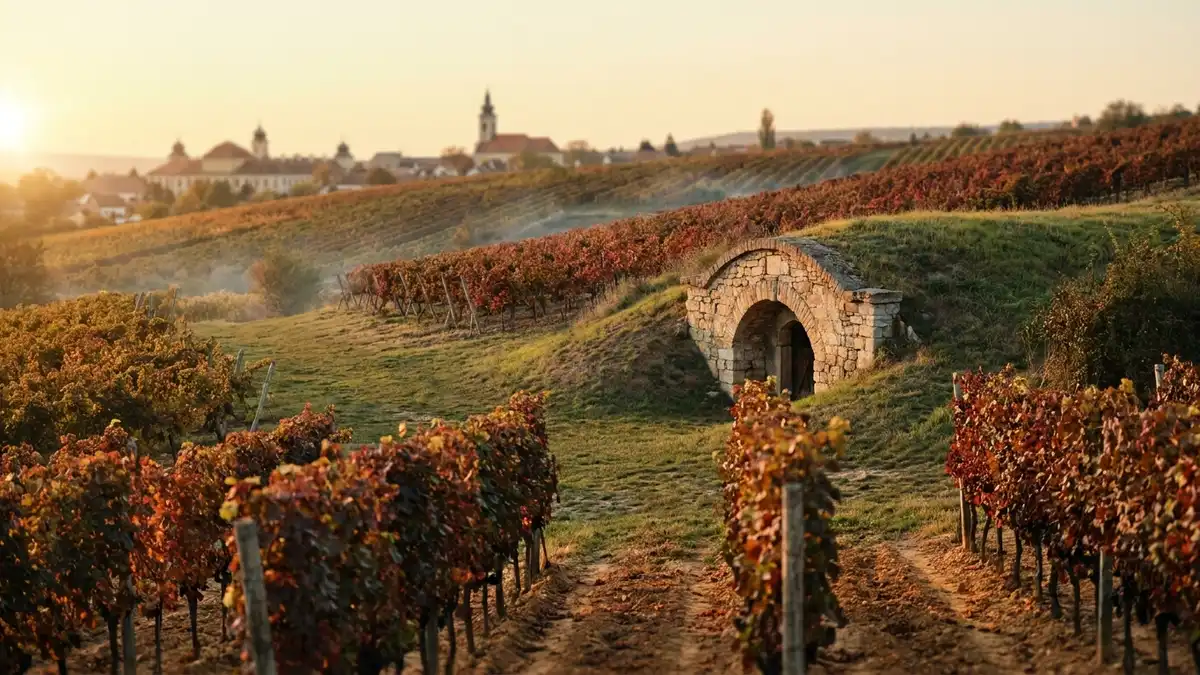
For Hungary's most powerful reds, head to the warm south. Villány, near the Croatian border, is the country's hottest major wine region, and it makes ripe, full-bodied reds that show off long, generous ripening seasons.
Here the climate suits Bordeaux grapes — Cabernet Sauvignon, Cabernet Franc, and Merlot all thrive — alongside the native Kékfrankos and the local speciality Portugieser (Kékoportó). Cabernet Franc in particular has become a regional flagship, producing deep, structured wines with dark fruit, herbs, and firm tannin (the drying, gripping sensation in red wines).
- Villányi Franc: A regional designation for serious Cabernet Franc — ripe black fruit, graphite, and tobacco, with real ageing potential and the structure to match top reds elsewhere.
- Bordeaux-style blends: Rich, oak-aged reds combining the Cabernets and Merlot, fuller and warmer than the spicier reds of Eger to the north.
- Portugieser: A lighter, juicy, early-drinking red — the everyday face of the region, easy and fruit-forward.
Villány proves that Hungary is not only a white-wine and dessert-wine country. Tasting an Eger Kékfrankos beside a Villány Cabernet Franc is one of the clearest ways to feel how climate shapes a red — cool-climate freshness against warm-climate ripeness. Our guide to understanding tannins, acidity, and body gives you the vocabulary to describe exactly what changes.
Lake Balaton: Crisp, Mineral Whites
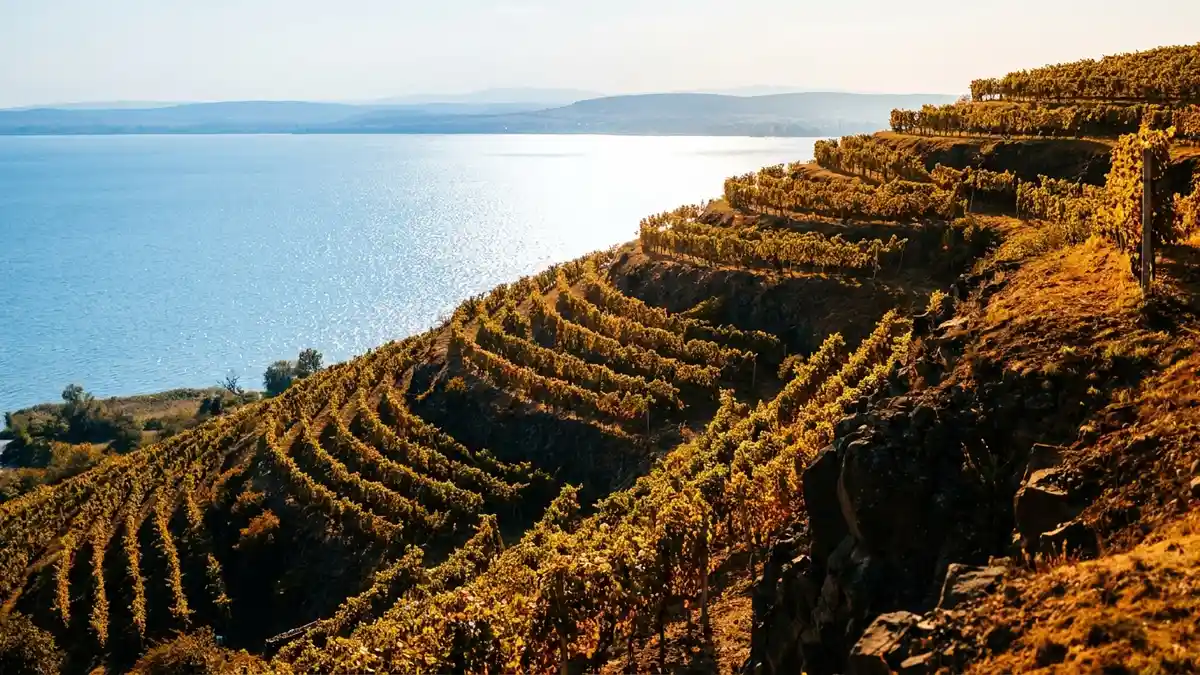
Central Europe's largest lake, Lake Balaton, anchors a cluster of white-wine regions on its volcanic shores. The lake moderates temperatures and reflects sunlight onto the vines, while basalt soils lend the wines a distinctive mineral lift.
The most celebrated area is Badacsony, where steep, extinct-volcano slopes produce intense whites. The grapes are a roll-call of Hungarian and central-European whites:
- Olaszrizling (Welschriesling): The workhorse white of Balaton — fresh, with green apple, almond, and a faintly bitter, savoury finish. Crisp and food-friendly.
- Kéknyelű: A rare, native Badacsony speciality — high-acid, structured, and slow to ripen, prized for its intensity and sense of place.
- Furmint and Hárslevelű: The Tokaj grapes also appear here in dry form, showing a different, lake-cooled personality.
Balaton whites are bright, mineral, and built for the table. They make the perfect contrast to richer Tokaji, showing just how wide Hungary's white-wine range really is.
The Indigenous-Grape Revival
What makes Hungary special is not just one famous wine — it is the sheer depth of indigenous grapes found almost nowhere else. After decades when bulk production dominated, the revival since the 1990s has put native varieties back at the centre.
- Furmint: The white star — high-acid, mineral, and capable of both great sweet and great dry wine.
- Hárslevelű: Floral and spicy, the perfumed partner to Furmint.
- Kékfrankos: The dark, peppery red backbone of Hungarian reds.
- Kadarka: The delicate, spicy native red being lovingly restored by growers.
- Juhfark, Kéknyelű, Olaszrizling: Regional whites that carry a strong sense of place.
This wealth of native grapes is exactly why Hungary rewards curious drinkers. If you enjoy stepping outside the familiar, our roundup of indigenous grapes worth trying places Hungary's varieties in a wider context, and our look at grapes to watch explains why Furmint and Kékfrankos keep climbing critics' lists. For the long view, Hungary's grapes also feature among the oldest grape varieties still in production today.
Hungary's revival mirrors what is happening across central Europe. Just over the border, Austria is rediscovering its own native reds and crisp whites — our Austria wine guide is the natural next stop, and it shares the very same Blaufränkisch grape that Hungary calls Kékfrankos.
How a Classification Tells You What's in the Glass
Hungary uses the EU framework of PDO (Protected Designation of Origin) and PGI (Protected Geographical Indication), but a few region-specific terms matter more for beginners than the bureaucratic layers.
- Aszú + puttonyos number: On a Tokaji label, this signals a sweet, botrytised wine and its sweetness level (5 or 6).
- Száraz / Édes: "Dry" and "sweet" — useful on Furmint and Szamorodni, where the same grape comes both ways.
- Bikavér: Guarantees a multi-grape red blend from Eger (or Szekszárd, a second region that also makes Bikavér).
- Dűlő: A single-vineyard designation, increasingly used by quality-focused producers to mark a specific plot — Hungary's answer to a named cru.
The takeaway is that the label usually tells you the style before the grape. Spotting "aszú," "száraz," or "Bikavér" instantly narrows down what to expect — a skill the Sommy app builds through guided label-reading practice.
How a Beginner Should Start with Hungarian Wine
You do not need a rare Eszencia or a cellar to get to know Hungary. The smartest path is to taste across the four core styles and notice what each region does differently. Here is a practical order:
- Begin with a dry Furmint. It is the clearest introduction to Hungary's signature white — high acidity, green-apple fruit, and a mineral, volcanic edge. A great first impression of the country's freshness.
- Try a 5 puttonyos Tokaji aszú. Even a small glass shows why this wine was once worth more than gold. Note how the searing acidity keeps the honeyed sweetness from cloying.
- Open an Egri Bikavér. Meet Bull's Blood as a medium-bodied, spicy food red, then compare it with a varietal Kékfrankos to feel the grape at the blend's core.
- Pour a Villány red beside the Eger. Same country, very different climate — the warm-south ripeness against the spicier north makes the role of terroir obvious.
- Finish with a Balaton white. A crisp Olaszrizling or dry Furmint from the lake rounds out the map and shows Hungary's range from sweet to bone-dry.
As you taste, build the habit of naming what you sense. Our guide to how to taste wine gives you the step-by-step method, and our overview of the noble grapes helps you place Hungary's natives against the international stars you may already know.
Sommy turns each of these comparisons into a short, guided lesson — naming the aromas, scoring the acidity, and building the vocabulary to describe what you taste. You can start practicing free at sommy.wine, then bring the method to your next bottle of Furmint or Bikavér.
The Reward of Learning Hungary
Hungary is one of the best-value classrooms in wine. It has the history of a great region, the diversity of a whole continent in miniature, and prices that have not yet caught up with the quality in the glass. Few countries let you taste a world-class sweet wine, a savoury spiced red, a bold Bordeaux-style blend, and a racy mineral white all from native traditions.
Start with the four core styles, taste in pairs, and let the indigenous grapes reveal themselves one glass at a time. The Sommy app is built to make that habit stick — turning each bottle into a short, guided lesson so the next Tokaji or Egri Bikavér you open is a little clearer than the last.
Sources
Frequently Asked Questions
What is Tokaji wine?
Tokaji is wine from the Tokaj region in northeast Hungary, most famous for Tokaji aszú, a golden sweet wine made from grapes shrivelled by botrytis, a beneficial mould. It is built mainly from Furmint, with Hárslevelű and Sárgamuskotály playing supporting roles. The same region also produces dry Furmint, which has become one of Hungary's most exciting white styles.
What is the puttonyos scale?
Puttonyos is the traditional measure of sweetness in Tokaji aszú. It once referred to the number of baskets of shrivelled aszú berries added to a base wine. Today the scale runs from 5 to 6 puttonyos, with higher numbers meaning more residual sugar and richer concentration. A regulated minimum sugar level now defines each level rather than literal baskets.
What grape is Egri Bikavér made from?
Egri Bikavér, known in English as Bull's Blood, is a red blend from the Eger region, not a single grape. Its backbone is Kékfrankos, the Hungarian name for Blaufränkisch, joined by grapes such as Kadarka, Kékoportó, and international varieties. The result is a medium-bodied, spicy, food-friendly red with bright acidity and a savoury edge.
Is Kékfrankos the same as Blaufränkisch?
Yes. Kékfrankos is the Hungarian name for the same grape that Austria calls Blaufränkisch. It is a dark, peppery red variety with high acidity and firm tannins, widely planted across central Europe. In Hungary it anchors Egri Bikavér blends and also appears as a varietal wine, showing dark berry fruit and a spicy, savoury character.
What does dry Furmint taste like?
Dry Furmint is a high-acid white with green apple, pear, quince, and citrus fruit, often with a smoky, mineral edge from the volcanic soils of Tokaj. It can be lean and racy when young or richer and waxy with oak and age. Many compare its structure and ageing potential to top dry whites from Burgundy and the Loire.
Which Hungarian wine regions should a beginner know?
Start with four. Tokaj makes sweet aszú and dry Furmint in the northeast. Eger produces the spicy Egri Bikavér red blend. Villány in the warm south makes bold, ripe reds. The areas around Lake Balaton turn out crisp, mineral whites. These four cover Hungary's main styles and give a clear map of the country's range.
Why is Hungarian wine considered underrated?
Hungary has centuries of winemaking history but spent much of the twentieth century under a system that prioritised bulk over quality. Since the 1990s a revival has restored focus to indigenous grapes like Furmint, Kékfrankos, and Kadarka, and to terroir-driven winemaking. The wines are now serious yet still affordable relative to better-known regions, which makes them strong value.
Sommy Team
LinkedInFounder & Wine Educator
The Sommy Team is building the world's most approachable wine education app, helping beginners develop real tasting skills through structured courses and AI-guided practice.