Cabernet Sauvignon vs Shiraz: Side by Side (Taste, Food)

By the Sommy Team — AI-assisted, human-edited.
Updated Nov 3, 2026
Contents (9)
- Cabernet Sauvignon vs Shiraz, in One Paragraph
- Cabernet Sauvignon vs Shiraz Side by Side
- Which Has More Tannin, Cabernet or Shiraz?
- Why Does Cabernet Smell of Blackcurrant and Shiraz of Pepper?
- Is Shiraz Sweeter or Stronger Than Cabernet?
- Which Goes Better With Food?
- Which Should You Pick Tonight?
- Is Shiraz the Same Grape as Syrah?
- Can You Tell Them Apart Blind?
TL;DR
Cabernet Sauvignon and Shiraz are both dry, deeply coloured reds. Cabernet usually has higher acidity and firmer, more angular tannin, and smells of blackcurrant. Shiraz feels rounder, can pass 15% alcohol and can smell of black pepper. In hot regions their aromas converge, so judge them by tannin and acidity.
Cabernet Sauvignon vs Shiraz comes down to what you feel on your gums. Cabernet grips harder and tastes tarter; Shiraz feels rounder and warmer, and sometimes smells of cracked black pepper. In hot regions the two can smell almost alike, so the tannin and acidity are the surer guide.
Cabernet Sauvignon vs Shiraz, in One Paragraph
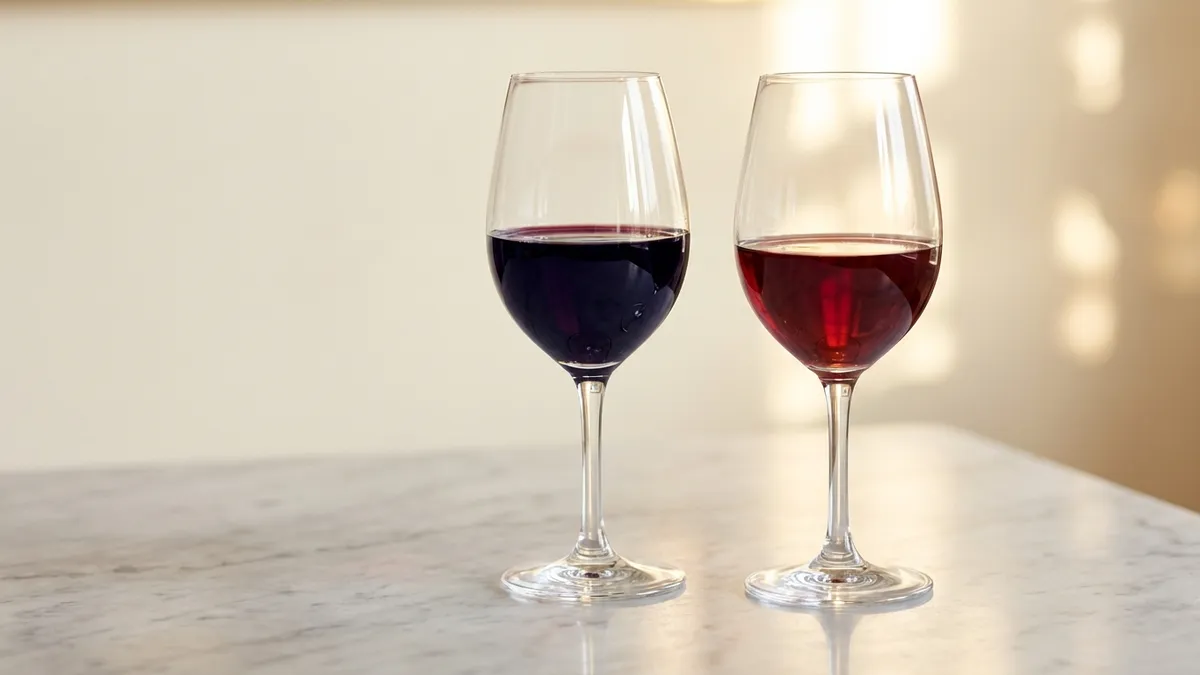
Both are dry, full-bodied reds with deep colour, but Cabernet Sauvignon usually has higher acidity (the tartness that makes your mouth water) and firmer, more angular tannin (the drying grip on your gums). Shiraz feels rounder and finer-grained, has slightly lower acidity and can easily pass 15% alcohol. Cabernet smells of blackcurrant, with green pepper in cool sites. Shiraz smells of blackberry and coffee, with black pepper in cool sites. Shiraz and Syrah are the same grape.
Cabernet Sauvignon vs Shiraz Side by Side
| Trait | Cabernet Sauvignon | Shiraz / Syrah | Check it in the glass |
|---|---|---|---|
| Tannin | Firm, angular, obvious grain | Rounder, smoother, finer grain | Run your tongue along your upper gums after a sip: rougher means Cabernet |
| Acidity | On the high side, lively | A bit lower | Count how long your mouth keeps watering: longer means Cabernet |
| Alcohol | Ripe but rarely the hottest | Easily over 15% in warm regions | Feel for warmth at the back of the throat after you swallow |
| Cool-climate aroma | Blackcurrant, green pepper | Cracked black pepper, then blackberry | Smell for pepper first; green pepper points to Cabernet, black pepper to Syrah |
| Warm-climate aroma | Black cherry, olive; jammy when very hot | Jammy blackberry, licorice | Aroma alone will not settle it; go back to tannin |
| Oak | Strong affinity for oak | Often oaked too | Vanilla and toast can hide the fruit, so judge the structure |

Quick check
One question on what you just read
In a hot region, Cabernet and Shiraz can smell almost alike. What tells them apart more surely?
Tap an answer to see how you did.
Which Has More Tannin, Cabernet or Shiraz?
Both grapes give plenty of tannin, but Cabernet's feels more angular and grainy, and Shiraz's rounder and finer. Both are thick-skinned, which is also why both wines are so deeply coloured. What separates them is how that tannin feels on the gums.
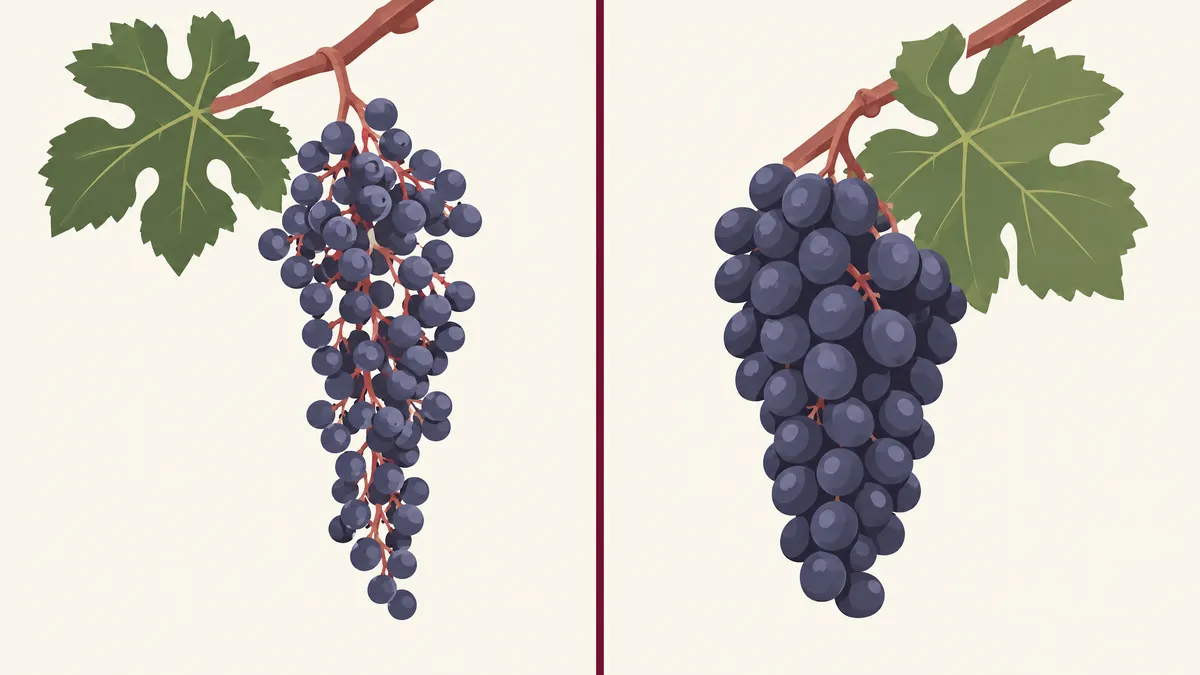
Cabernet's berries are very small, with a thick skin and a seed-to-pulp ratio of about 1:12. Skins and seeds are where tannin lives, so each drop of Cabernet juice carries a lot of them. Syrah's tannin reads as finer-grained, and in hot climates it softens further as the fruit turns jammy. The grip itself is explained in what tannins are.
Why Does Cabernet Smell of Blackcurrant and Shiraz of Pepper?
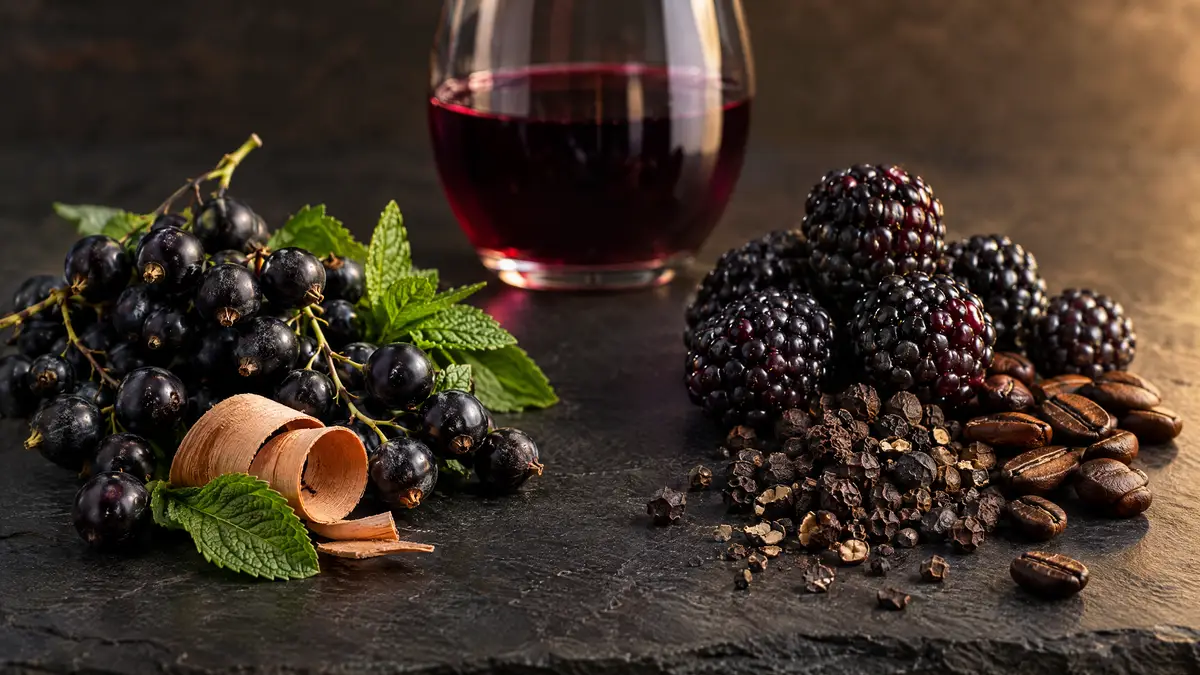
Each grape carries its own aroma compounds. Cabernet has high levels of methoxypyrazines (compounds that smell of green bell pepper), and some Syrah carries rotundone, the molecule that also gives black pepper its smell. Both show most clearly where the grapes ripen slowly.
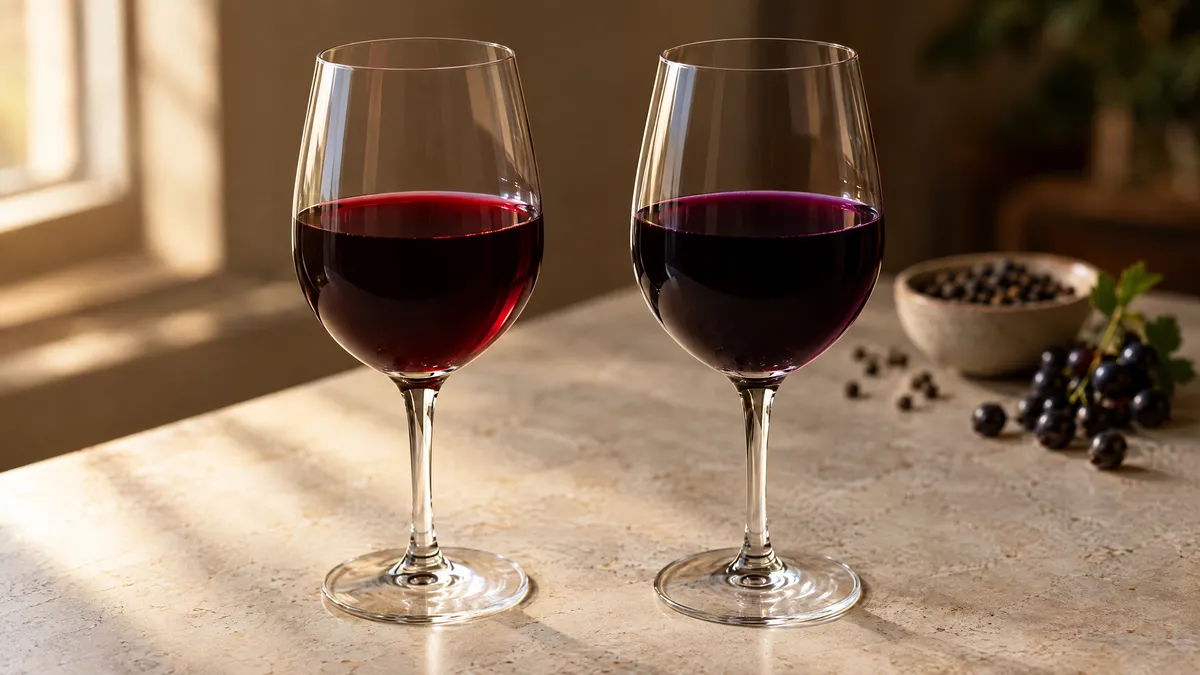
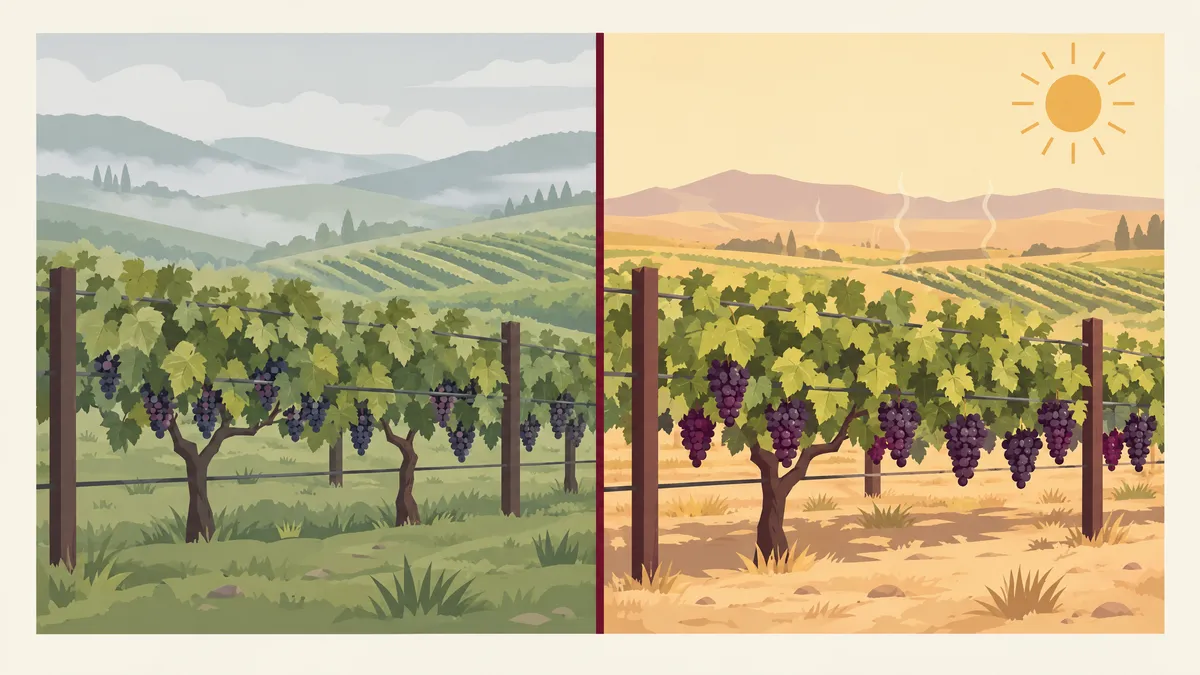
Cabernet changes with the heat. In a cool climate (slow ripening, so tarter, lighter wine) it tastes of blackcurrant and green pepper. In warmer places it moves to black cherry and olive, and in very hot ones it turns jammy. Mint appears in regions warm enough to keep methoxypyrazines low but still fairly cool, and a resinous eucalyptus note turns up where eucalyptus trees grow nearby.
Syrah has no single signature aroma, but blackberry, coffee and pepper are the common ones. In a warm climate (long sunny days, riper fruit and more alcohol) it gives softer tannin, jammier fruit and a licorice note. Some people cannot smell rotundone at all, so a peppery Syrah smells only of fruit to them. Spicy red wines lists the other reds that carry it.
Is Shiraz Sweeter or Stronger Than Cabernet?
Neither is sweet. Both are dry (no sugar you can taste; fruity is not sweet), and the sweet impression in Shiraz comes from very ripe fruit and alcohol. That is a smell and a warmth, not sugar. Cabernet's higher acidity and firmer tannin make it taste drier still.
Shiraz is usually the stronger of the two, easily passing 15% alcohol in warm regions, near the top of the alcohol by wine type range for unfortified reds. High alcohol also fools tasters into reading high acidity. The warmth makes the mouth water for a moment, but that watering dies down quickly, while acid keeps it going. Fruit versus sugar is covered in sweet vs dry wine.
Which Goes Better With Food?
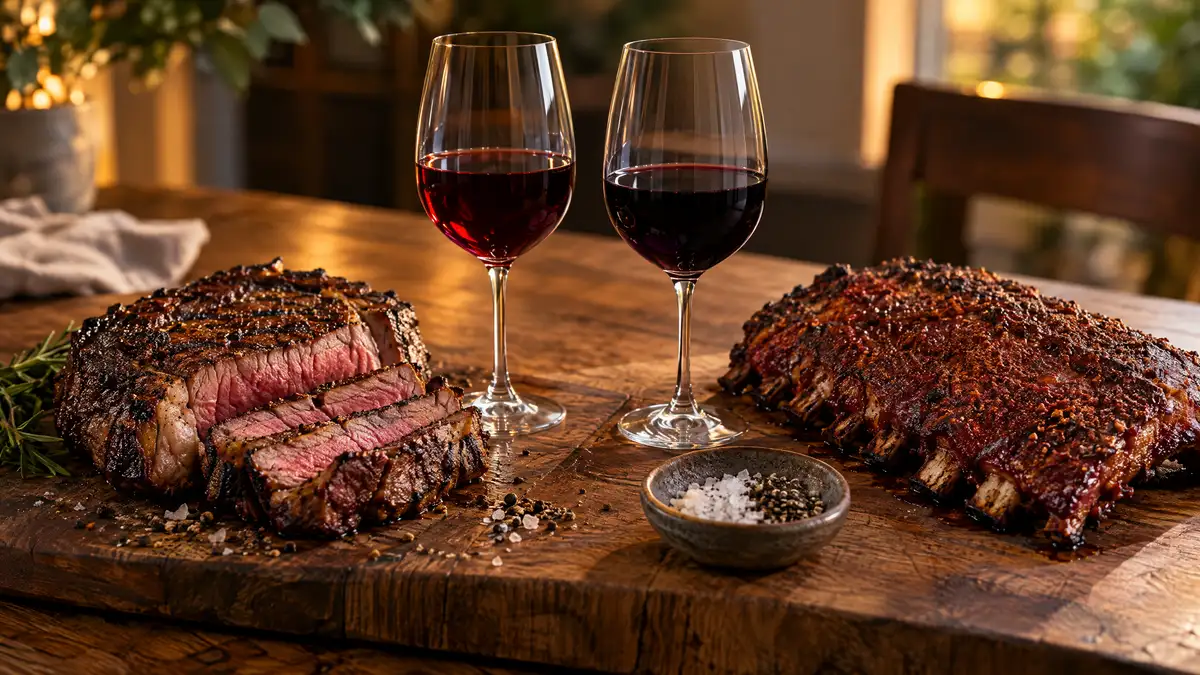
Cabernet goes with fatty, charred red meat; Shiraz goes with smoke, spice rubs and pepper. Fat and protein soften firm tannin, while spice and smoke suit a rounder wine with ripe fruit. If the plate is plain and fatty, open Cabernet; if it is spiced or smoky, open Shiraz.
- Grilled ribeye or lamb chops: Cabernet. The fat cushions its angular tannin. Wine with steak sets out the cut-by-cut picks.
- Spice-rubbed ribs or brisket: Shiraz. Its rounder tannin does not clash with the rub, and ripe blackberry stands up to sweet, smoky glazes. More matches are in wine with BBQ.
- Pepper-crusted steak: a cool-climate Syrah, whose own pepper repeats the crust.
- Tomato pasta or pizza: Cabernet from a cooler site, because acidic tomato makes a lower-acid wine taste flat.
- Chilli heat: a Syrah under 14%, because alcohol makes chilli burn harder.
Which Should You Pick Tonight?
Pick by the texture you want and the word on the label, because grape and place together predict the glass better than either alone. If you want grip and freshness, take Cabernet; if you want warmth and round, ripe fruit, take Shiraz.
- Pick Cabernet Sauvignon if the food is fatty and plain.
- Pick a bottle labelled Syrah if you want pepper and a firmer, cooler style; the word often signals a cooler region.
- Pick a warm-region Shiraz if you want a red to drink on its own; check the label, because 15% feels heavy with a light meal.
- Pick a Cabernet-Shiraz blend if you want both: Cabernet's grip with Shiraz's ripe middle.
Is Shiraz the Same Grape as Syrah?
Yes. Shiraz and Syrah are one grape; Shiraz is the name used mainly in Australia, where it is the most popular red grape. In France it is called Syrah and is the main grape of the northern Rhône. Its parents are two old grapes from southeastern France, Dureza and Mondeuse Blanche.
How far the two labels split in style is laid out in Syrah vs Shiraz, and the Cabernet Sauvignon wine guide maps where Cabernet grows.
Can You Tell Them Apart Blind?
Often, if you judge the structure before the smell. With warmer-climate examples the two converge in aroma, and oak can hide the fruit of both. Tannin texture and acidity stay readable, so the gums and a watering mouth settle most pairs.
Work in this order: pepper first, then tannin on the gums, then how long the mouth waters, then warmth on the finish. Blind tasting tips adds the setup.
The blend is common in Australia, where Cabernet is the second most planted red grape after Shiraz. A wine with both grainy grip and a ripe, round middle may be both grapes in one bottle; the Australian wine guide covers where each grows. The general method is in how to compare two wines.
Every other grape matchup sits in the grape varieties hub. Open one Cabernet and one Shiraz tonight, pour equal amounts, and judge tannin before you smell anything. Then photograph each label in Sommy and taste both glasses through the look, smell and taste steps.
Sources
Frequently Asked Questions
What is the main difference between Cabernet Sauvignon and Shiraz?
Structure. Cabernet Sauvignon usually has higher acidity and tannin that feels angular and grainy on the gums. Shiraz has rounder, finer tannin, slightly lower acidity and often more alcohol. On the nose, Cabernet leans to blackcurrant and, in cooler sites, green pepper; Shiraz leans to blackberry, coffee and, in cooler sites, black pepper.
Which is bolder, Cabernet Sauvignon or Shiraz?
Each wins on a different part of bold. Cabernet has the firmer grip, because its tannin feels more angular and its acidity is higher. Warm-climate Shiraz has more alcohol, easily over 15%, and riper, jammier fruit, so it feels heavier and warmer. If you want grip, pick Cabernet; if you want weight and warmth, pick Shiraz.
Is Shiraz sweeter than Cabernet Sauvignon?
No. Both are almost always dry, with no sugar you can taste. Warm-climate Shiraz seems sweeter because its fruit is very ripe, even jammy, and high alcohol feels round and warm. Cabernet's higher acidity and firmer tannin make it taste drier, even when both wines carry the same tiny amount of sugar.
Which has more tannin, Cabernet or Shiraz?
Both have plenty, because both grapes are thick-skinned. Cabernet's tannin usually feels firmer: angular, with an obvious grain, partly because its berries are small and carry a lot of seed and skin for their juice. Shiraz tannin tends to feel rounder and finer, and in hot regions it gets softer still.
Is Shiraz the same as Syrah?
Yes. Shiraz and Syrah are the same grape. Shiraz is the name used mainly in Australia, where it is the most popular red grape; Syrah is the name in France, where it is the main grape of the northern Rhône. Producers in cooler places often write Syrah to signal a peppery, firmer style.
Which is better with steak, Cabernet or Shiraz?
For a fatty, charred steak such as ribeye, Cabernet Sauvignon. Its firm tannin binds with the fat and protein, and the meat softens the grip. Shiraz is the better pick when the meat carries a spice rub, smoke or a pepper crust, because its rounder tannin and peppery, ripe fruit go with those flavours.
Can you blend Cabernet Sauvignon and Shiraz?
Yes, and Australia does it often. Cabernet Sauvignon is the second most planted red grape there after Shiraz, and the two are frequently blended. Cabernet brings acidity and firm, grainy tannin; Shiraz fills in the middle with ripe blackberry fruit and rounder texture. The label usually lists the larger share first.
Sommy Team
LinkedInFounder & Wine Educator
The Sommy Team is building the world's most approachable wine education app, helping beginners develop real tasting skills through structured courses and AI-guided practice.