Wachau Wine Guide: Austria's Riesling and Grüner Veltliner Terraces

By the Sommy Team — AI-assisted, human-edited.
Updated Jun 17, 2026
Contents (8)
- What Is Wachau Wine?
- The Two Grapes That Define the Wachau
- Where the Wachau Is and Why Its Terroir Matters
- The Wachau Classification: Steinfeder, Federspiel, Smaragd
- How the Wachau Relates to Kremstal and Kamptal
- What Makes the Wachau Distinctive
- How a Beginner Should Start with the Wachau
- The Reward of Learning the Wachau
TL;DR
The Wachau is a steep stretch of the Danube in Austria making world-class dry whites — peppery Grüner Veltliner and racy Riesling on primary-rock terraces. Its own ripeness scale, Steinfeder to Federspiel to Smaragd, sorts wines by weight. This Wachau wine guide shows beginners where to begin.
What Is Wachau Wine?
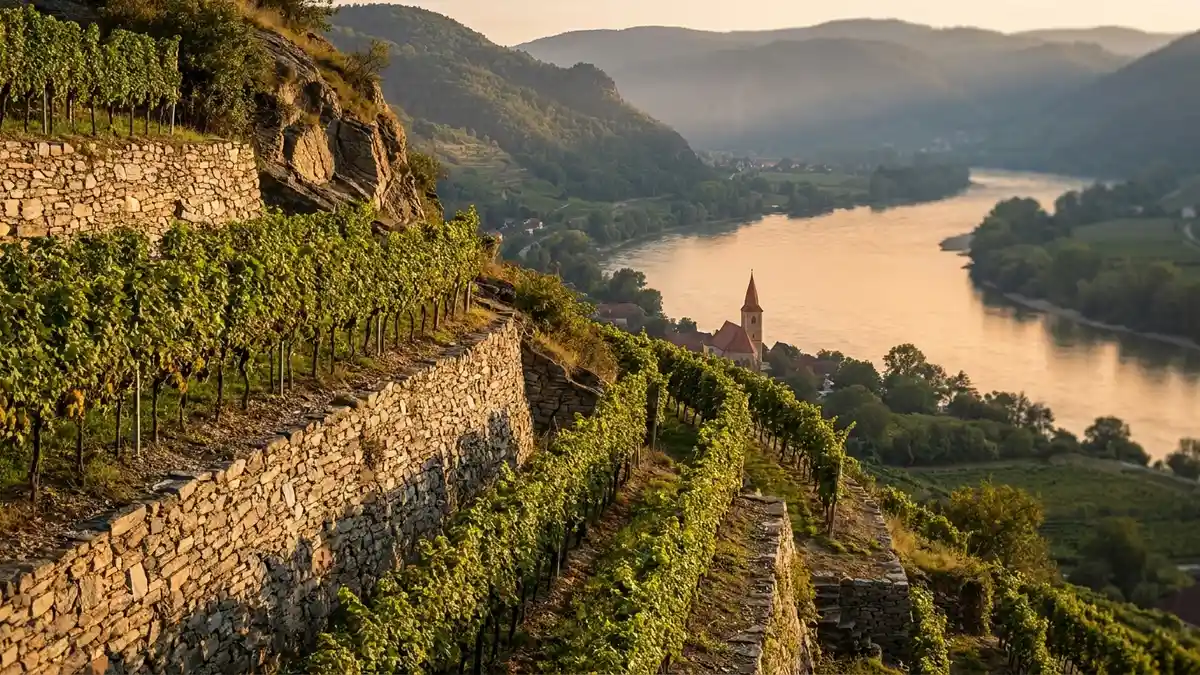
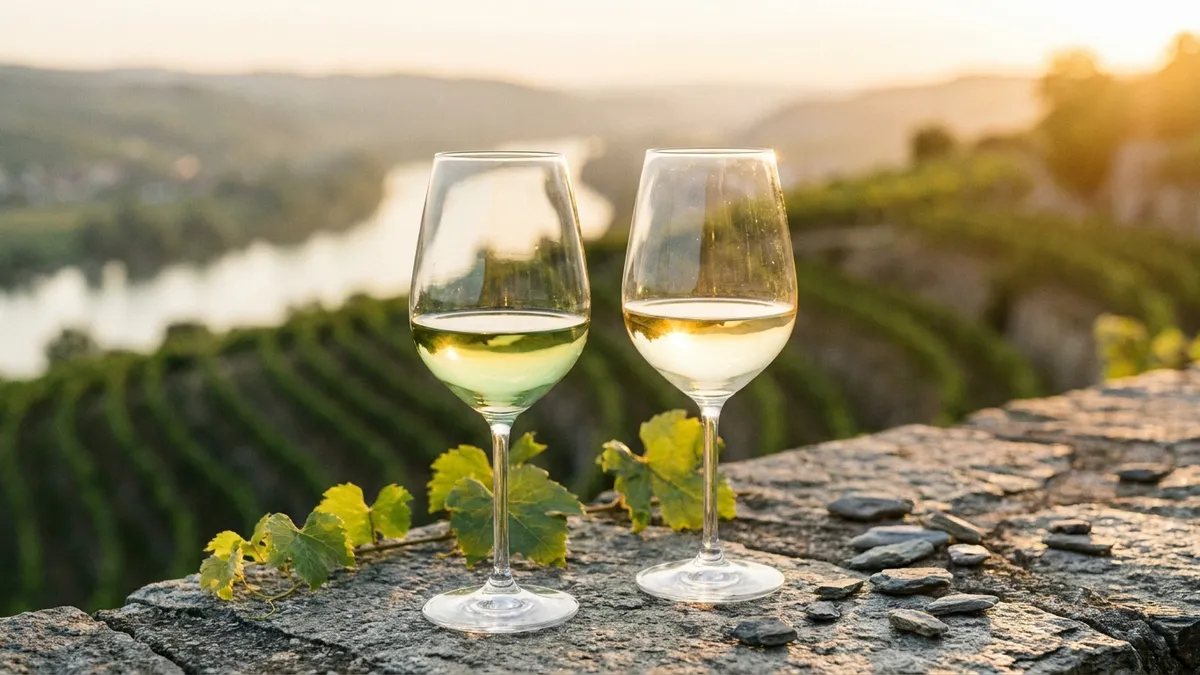
This Wachau wine guide begins with a postcard: a narrow, dramatic stretch of the Danube in lower Austria, walled with steep stone terraces where vines cling to rock above the river. The Wachau makes almost exclusively dry white wine from two grapes — peppery Grüner Veltliner and racy Riesling — grown on ancient primary rock like gneiss. The valley sorts its dry wines with its own ripeness ladder, Steinfeder, Federspiel, and Smaragd, rather than by sweetness. Add a sharp swing between warm days and cool nights, and you get whites that are concentrated yet tense and fresh. Learn the two grapes and the three tiers, and the Wachau opens up fast.
The Two Grapes That Define the Wachau
The Wachau is a white-wine valley with a tight focus. Two grapes carry almost the entire reputation, and they split the terraces between them by where they ripen best.
Grüner Veltliner is the signature grape of Austria and the everyday hero of the Wachau. It is dry and medium-bodied with high acidity and a savory streak no other white quite copies. Typical aromas: green apple, lime, white pepper, and a herbal, lentil-like note. Body: medium (3/5) · Acidity: high (4/5) · Sweetness: dry (1/5). For the full global picture of this grape, our Grüner Veltliner guide covers how it behaves beyond this valley.
Riesling takes the steepest, stoniest, sun-exposed sites — the spots where it can ripen its high natural acidity into balance. Wachau Riesling is bone-dry, racy, and built to age, with bright stone fruit and a stony cut. Typical aromas: white peach, apricot, lime, and wet-stone minerality. Body: light-to-medium (2-3/5) · Acidity: high (5/5) · Sweetness: dry (1/5). The grape rewards study anywhere it grows, and our Riesling wine guide traces its many styles around the world.
Both grapes sit among the great whites every learner should know, alongside the rest of our white grapes overview. The contrast between them on the same slope is the Wachau's best lesson.
Where the Wachau Is and Why Its Terroir Matters
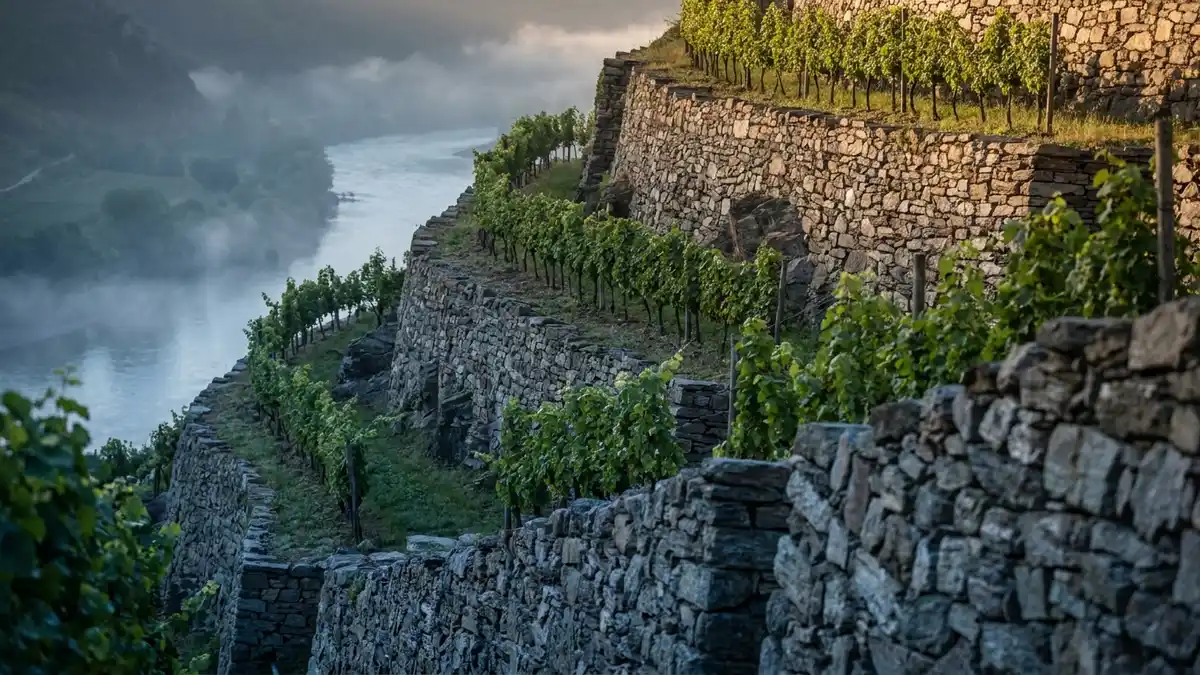
The Wachau runs roughly 40 kilometers along the Danube in Niederösterreich (Lower Austria), west of Vienna, between the towns of Melk and Krems. It is small — one of Austria's tiniest quality regions by area — but it punches far above its size. The river carved a tight gorge, and growers answered by building dry-stone terraces up the slopes by hand over centuries, some so narrow they hold a single row of vines.
The soils are what set the valley apart. The steepest sites are primary rock — ancient gneiss, granite, and mica-schist that geologists call the Bohemian Massif. This hard, mineral-poor stone drains fast and stresses the vine, concentrating flavor and lending Riesling especially a stony, taut edge. Lower down, pockets of loess (wind-blown silt) hold more water and warmth, giving rounder, fuller Grüner Veltliner.
The climate is the other half of the magic. Warm Pannonian air pushes in from the eastern plains during the day, while cool alpine air slides down from the forested hills at night. That cool-night, warm-day rhythm is the engine of the region: the warmth ripens the grapes while the cold nights lock in acidity. The result is the Wachau signature — wines that taste ripe and concentrated yet stay nervy and fresh.
The terraces trap the day's heat in stone and the night's cold in the valley. The wine remembers both.
This is terroir (the environment where grapes grow — soil, climate, slope, and altitude working together) at its most legible. The same grape on gneiss tastes tighter and stonier than on loess just below it. If the idea that place shapes taste fascinates you, the Sommy app turns those differences into guided side-by-side tastings you can actually feel in the glass.
The Wachau Classification: Steinfeder, Federspiel, Smaragd
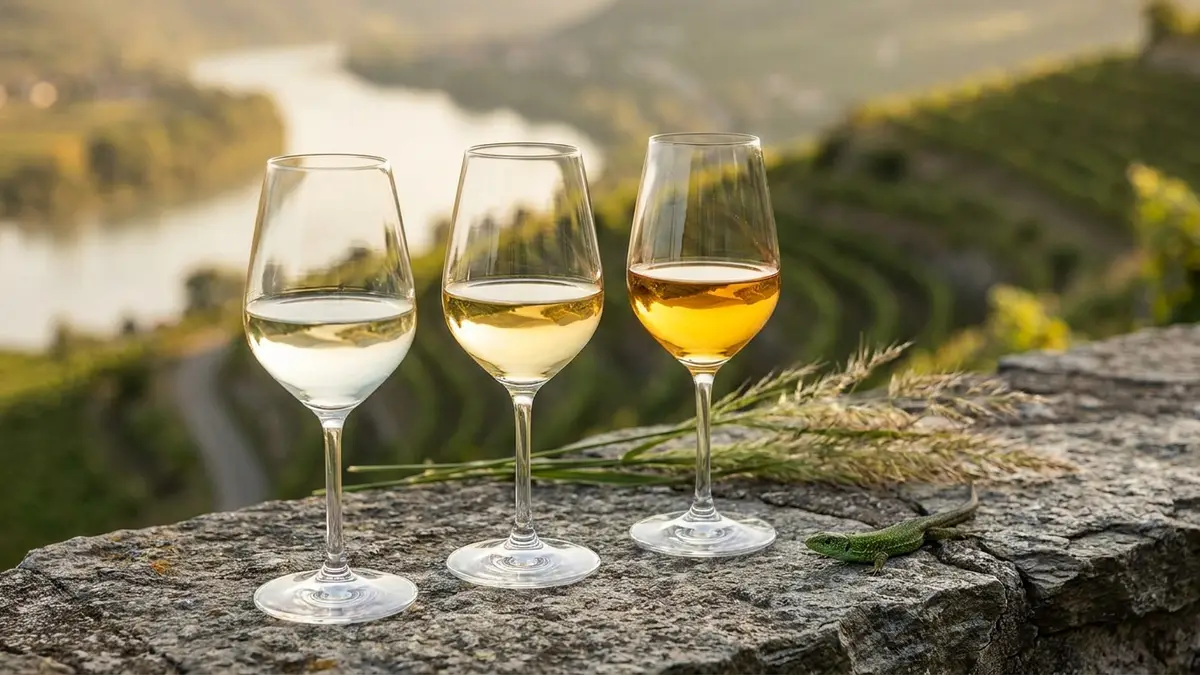
Most regions you have to decode by appellation or grape sweetness. The Wachau invented its own elegant system, run by the local growers' association, that sorts dry wines by ripeness and resulting body. The three tiers climb in weight and concentration, and the names are pure Wachau poetry — a wild grass, a falconry tool, and an emerald lizard that suns itself on the warmest terraces.
- Steinfeder: The lightest tier, named after a feathery grass that grows among the vines. These are the most delicate, lowest-alcohol wines (up to about 11.5% alcohol), picked at modest ripeness. Steinfeder is fresh, zesty, and meant to be drunk young — the easiest, breeziest face of the valley.
- Federspiel: The medium-bodied middle tier and the everyday backbone of the region (roughly 11.5–12.5% alcohol). Federspiel is where Grüner Veltliner's pepper and citrus and Riesling's stone fruit show most clearly without heavy weight. For a beginner, this is the sweet spot — classic Wachau character at a fair price.
- Smaragd: The ripest, most concentrated tier (typically 12.5% alcohol and up), named after the green lizard. Made from the best, latest-picked grapes on the top terraces, Smaragd wines are rich, powerful, and built to age for a decade or more — yet still fermented bone-dry.
The pattern to hold onto: Steinfeder is light, Federspiel is medium, Smaragd is full — and every one of them is dry. The categories track grape ripeness, not added sweetness, which is exactly what trips up newcomers expecting an Austrian white to be sugary. The Sommy app's tasting exercises help you place a wine on this ladder by weight and alcohol the moment you smell and sip it.
How the Wachau Relates to Kremstal and Kamptal
The Wachau does not stand alone. Just east along the Danube and the Kamp river sit two sister regions that grow the same grapes, and understanding them makes the Wachau easier to place — and cheaper to learn from.
- Kremstal: Wraps around the city of Krems immediately east of the Wachau. It shares the primary-rock-and-loess mix but has more loess overall, giving Grüner Veltliner that is a touch rounder and more open. Kremstal wines are often more approachable young and gentler on the wallet than Wachau bottles.
- Kamptal: Follows the Kamp river just north, centered on the town of Langenlois. It is slightly warmer and has Austria's most famous single vineyard for Grüner Veltliner. Kamptal offers superb value and clarity — many tasters meet Grüner Veltliner here first.
- The Wachau itself: Steepest terraces, the highest share of primary rock, a narrower and slightly cooler valley, and the Steinfeder–Federspiel–Smaragd classification that the neighbors do not use. This combination yields the most intense, mineral, age-worthy expressions of both grapes.
Think of the trio as one family with three temperaments: Kamptal the friendly, value-driven cousin; Kremstal the rounder middle child; the Wachau the intense, precise eldest. A smart beginner often starts in Kamptal or Kremstal, then steps up to the Wachau once the grapes feel familiar. Austria's broader picture, from these regions to its reds and sweet wines, is laid out in our Austria wine guide.
What Makes the Wachau Distinctive
Plenty of places grow Riesling and Grüner Veltliner. A few things make the Wachau unmistakable.
Aromatic Whites Built on Tension
The Wachau is a showcase for aromatic grapes — varieties whose perfume comes from the grape itself, not from oak or winemaking tricks. Grüner's pepper and Riesling's stone fruit jump out of the glass. Yet what separates Wachau wines from softer aromatic styles is tension: the cool-night acidity gives them a backbone that keeps all that fruit taut and savory rather than sweet or flabby. If the difference between perfumed and neutral grapes intrigues you, our piece on aromatic versus neutral grapes draws the line clearly.
Dry, Ageworthy, and Food-Friendly
Wachau whites break the lazy assumption that white wine is simple and short-lived. A good Smaragd Riesling can age fifteen years, deepening into honey and petrol notes while keeping its acid spine. And the dry, high-acid style makes these some of the most versatile food wines anywhere — Grüner Veltliner in particular handles tricky pairings like asparagus, artichoke, and schnitzel that wreck most other whites.
A Region You Can Read
Like the best classic regions, the Wachau tells you what is in the bottle if you know the code. The grape names the aroma, the ripeness tier names the weight, and the soil hints at the texture. Both grapes also belong to the wider circle of noble grapes worth learning early — varieties that make serious, age-worthy wine across the world.
How a Beginner Should Start with the Wachau
You do not need a rare Smaragd or a big budget to understand this valley. The smartest path is to taste deliberately across the grapes and tiers and notice what changes. Here is a practical order:
- Begin with a Federspiel Grüner Veltliner. The medium-weight everyday tier shows the grape's pepper, green apple, and lime cleanly, without high alcohol getting in the way. This is the truest first sip of the region.
- Add a Riesling on the side. Open a Federspiel or Smaragd Riesling next to your Grüner. Same valley, same dry style — but the Riesling will feel stonier and more stone-fruit-driven. The grape difference becomes obvious in two glasses.
- Climb the ripeness ladder. Try a Steinfeder and a Smaragd of the same grape together. Feel how weight, alcohol, and concentration rise while the wine stays dry. That is the classification made tangible.
- Warm up in Kamptal first. A Kamptal or Kremstal Grüner Veltliner is a friendlier, lower-cost introduction to the style before you spend on a Wachau Smaragd.
- Build the tasting habit. Note the bone-dry finish, the high acidity, and that savory peppery edge that marks Grüner apart from fruitier whites. Our guide to how to taste wine gives you the step-by-step method to put it all into words.
Sommy turns these comparisons into guided exercises — naming the aromas, scoring the acidity and body, and building the vocabulary to describe what you sense. You can start practicing free at sommy.wine, then bring the method to your next bottle of Grüner or Riesling.
The Reward of Learning the Wachau
The Wachau proves that white wine can be as serious, site-driven, and age-worthy as any famous red. Its terraces, its two grapes, and its three-tier ripeness ladder add up to a precise system for knowing exactly what is in the glass before you pour it. Once the code clicks, an Austrian label stops being a string of unfamiliar German words and becomes a clear description of weight, acidity, and flavor.
Start small, taste in pairs, and let the gneiss and the Danube reveal themselves one glass at a time. The Sommy app is built to make that habit stick — turning each bottle into a short, guided lesson so the next Grüner or Riesling you open is a little clearer than the last.
Sources
Frequently Asked Questions
What grapes does the Wachau grow?
The Wachau is almost entirely white and built on two grapes. Grüner Veltliner is the workhorse, giving peppery, citrusy, dry whites, while Riesling takes the steepest stony sites and turns out racy, stone-fruit wines that age beautifully. A little Neuburger and Muskateller appear too, but Grüner and Riesling define the valley.
What do Steinfeder, Federspiel, and Smaragd mean?
They are the Wachau's own dry-wine categories, sorted by grape ripeness and resulting weight rather than sweetness. Steinfeder is the lightest and lowest in alcohol, Federspiel is the medium-bodied everyday tier, and Smaragd is the ripest and most concentrated, made from the best late-picked grapes. All three are bottled fully dry.
Is Wachau wine sweet or dry?
Wachau wines are dry. Unlike many German Riesling styles, the valley's signature bottles ferment to dryness, so even the ripest Smaragd tastes dry rather than sugary. The fruit concentration can read as richness, but there is little residual sugar. Crisp acidity keeps the wines fresh and food-friendly across all three ripeness tiers.
How does the Wachau differ from Kremstal and Kamptal?
All three are neighboring lower-Austrian regions growing the same grapes, but the Wachau has the steepest primary-rock terraces and a slightly cooler, narrower valley. Kremstal and Kamptal sit just east with more loess soil, giving rounder, often more affordable Grüner Veltliner. They are the smartest, gentler entry points to Wachau-style wine.
Why is Wachau wine so distinctive?
The Wachau combines steep gneiss-and-mica terraces, a sharp swing between warm Pannonian days and cool alpine nights, and the cooling Danube. That cool-night, warm-day rhythm preserves bright acidity while the grapes ripen, giving wines that are both concentrated and tense. The hand-worked stone terraces concentrate sunlight and heat on otherwise marginal slopes.
What does Grüner Veltliner taste like?
Grüner Veltliner is dry and medium-bodied with high acidity. Expect green apple, lime, white pepper, and a savory, sometimes lentil-like or herbal note that sets it apart from other whites. Lighter versions are zesty and crisp; riper Smaragd bottlings add stone fruit and weight while staying fresh. It is one of the most food-friendly whites you can pour.
Where should a beginner start with Wachau wine?
Start with a Federspiel Grüner Veltliner, the medium-weight everyday tier that shows the grape's pepper and citrus clearly without high alcohol. Then try a Federspiel or Smaragd Riesling alongside it to feel the grape difference on the same soil. A neighboring Kamptal Grüner is a friendly, lower-cost warm-up.
Sommy Team
LinkedInFounder & Wine Educator
The Sommy Team is building the world's most approachable wine education app, helping beginners develop real tasting skills through structured courses and AI-guided practice.