Texas Wine Guide: The Lone Star State's Growing Wine Scene

By the Sommy Team — AI-assisted, human-edited.
Updated Jun 17, 2026
Contents (8)
- What Is Texas Wine?
- Where Texas Wine Comes From: Two Regions, One Climate
- Why Texas Grows Mediterranean and Iberian Grapes
- The Spring-Frost Problem and Other Weather Challenges
- How Texas Wine Is Labeled
- What Makes Texas Wine Distinctive
- How a Beginner Should Start with Texas Wine
- The Reward of Learning Texas Wine
TL;DR
Texas is the fifth-largest wine state, with most fruit grown on the high, sunny Texas High Plains and most wineries clustered in the Texas Hill Country. The hot climate suits Mediterranean and Iberian grapes like Tempranillo, Mourvèdre, and Viognier rather than cooler classics.
What Is Texas Wine?
This Texas wine guide starts with a fact that surprises most newcomers: Texas is one of the largest wine-producing states in the country, and its best wines come from grapes you would normally expect in Spain or southern France. The Texas wine story splits across two areas — the high, sunny Texas High Plains in the northwest, where roughly 80 percent of the state's grapes are grown, and the Texas Hill Country west of Austin, where most of the wineries and tasting rooms sit. The hot climate has pushed growers toward Mediterranean and Iberian varieties like Tempranillo, Mourvèdre, Grenache, and Viognier, which keep their balance in heat that overwhelms cooler-climate classics. Learn those grapes and those two regions, and Texas wine starts to make sense.
Where Texas Wine Comes From: Two Regions, One Climate
Texas is enormous, but its wine industry concentrates in two places that play very different roles. Understanding the split is the first step to reading any Texas bottle.
The state's grape-growing happens mostly far from the wineries that sell the finished wine. Fruit is trucked hundreds of miles from the plains in the northwest to the cellars and tasting rooms in the center of the state. That separation is unusual, and it explains why the region a winery sits in is not always the region its grapes came from.
The Texas High Plains: Where the Grapes Grow
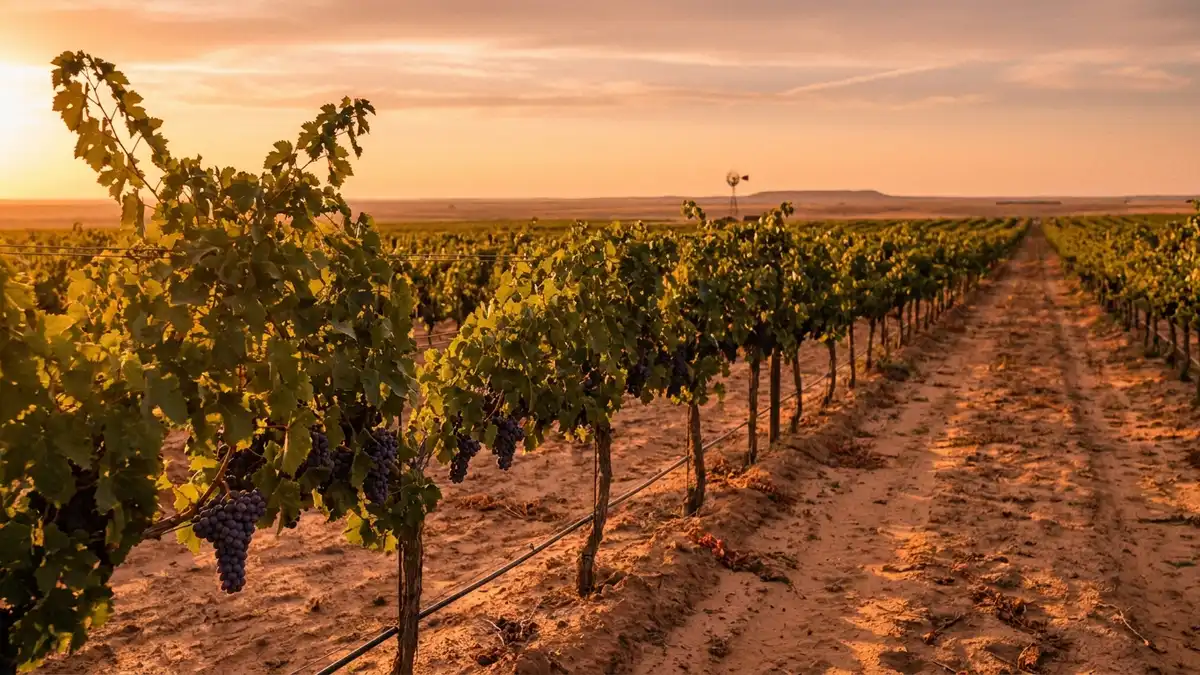
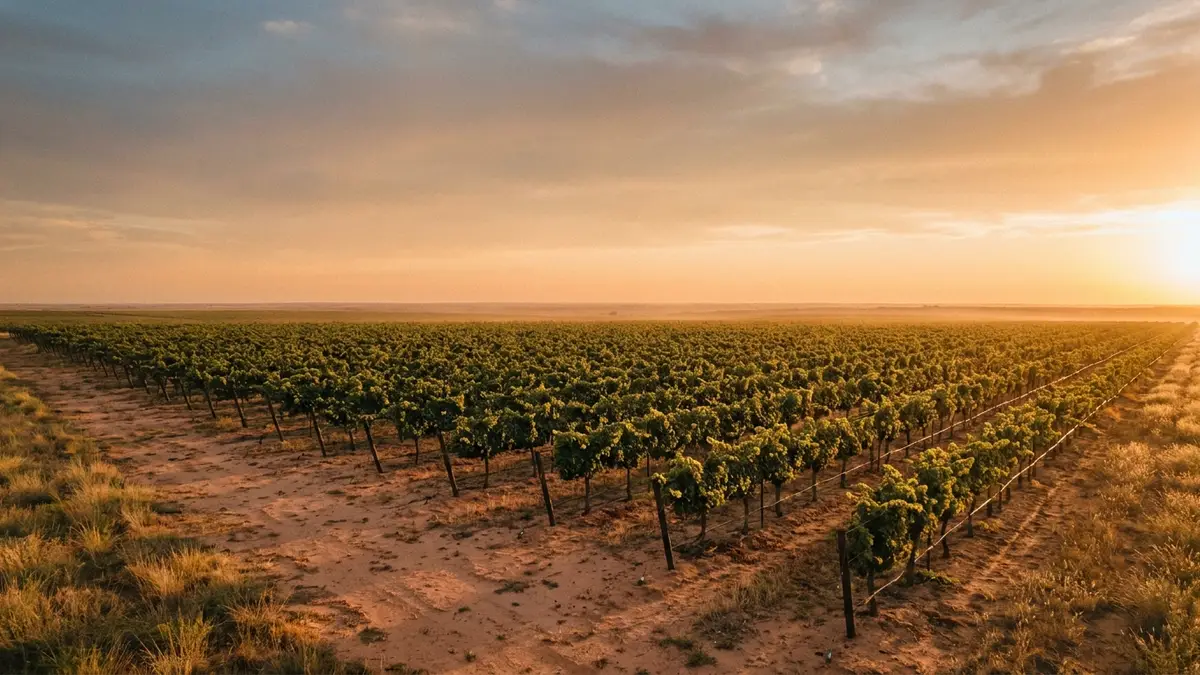
The Texas High Plains is a vast, flat tableland around the city of Lubbock in the northwest of the state. It is one of the highest vineyard areas in the country, with elevations between roughly 3,000 and 4,000 feet. That altitude is the secret to its success.
High elevation brings strong daytime sun for ripening and cool night air that lets the grapes hold onto acidity — the tart, mouth-watering freshness that keeps a wine lively rather than flabby. This wide daily temperature swing, the gap between hot days and cool nights, is exactly what heat-loving grapes need to ripen fully without losing balance.
The High Plains is its own American Viticultural Area (AVA) — a legally defined grape-growing region, the United States' closest equivalent to a European appellation. Roughly 80 percent of all grapes crushed in Texas are grown here, which makes the High Plains the true engine of Texas wine, even though few tourists ever visit it.
The Texas Hill Country: Where the Wineries Are
The Texas Hill Country sprawls west of Austin and San Antonio across rolling limestone hills. It is one of the largest AVAs in the United States and, for most visitors, it is the face of Texas wine. The vast majority of the state's wineries, cellar doors, and tasting rooms are here, strung along scenic roads that draw weekend crowds from the nearby cities.
The Hill Country does grow grapes, but its warmer, more humid pockets and limited vineyard land mean it leans heavily on fruit shipped in from the High Plains. Think of it as the showroom — the place to taste, learn, and buy, while the heavy lifting of growing happens to the northwest.
Why Texas Grows Mediterranean and Iberian Grapes
The most important thing to understand about Texas wine is its grape selection, and it comes down to one word: heat. Texas summers are long, intense, and sun-soaked, closer to the climate of central Spain or the southern Rhône Valley than to Napa or Burgundy. The grapes that thrive here are the ones that evolved in those hot, dry places.
Early Texas growers planted the famous Bordeaux grapes — Cabernet Sauvignon, Merlot — and many struggled. In the relentless heat, those varieties often ripened too fast, losing acidity and turning jammy and unbalanced. The breakthrough came when growers stopped fighting the climate and matched the grape to it.
The Signature Red Grapes
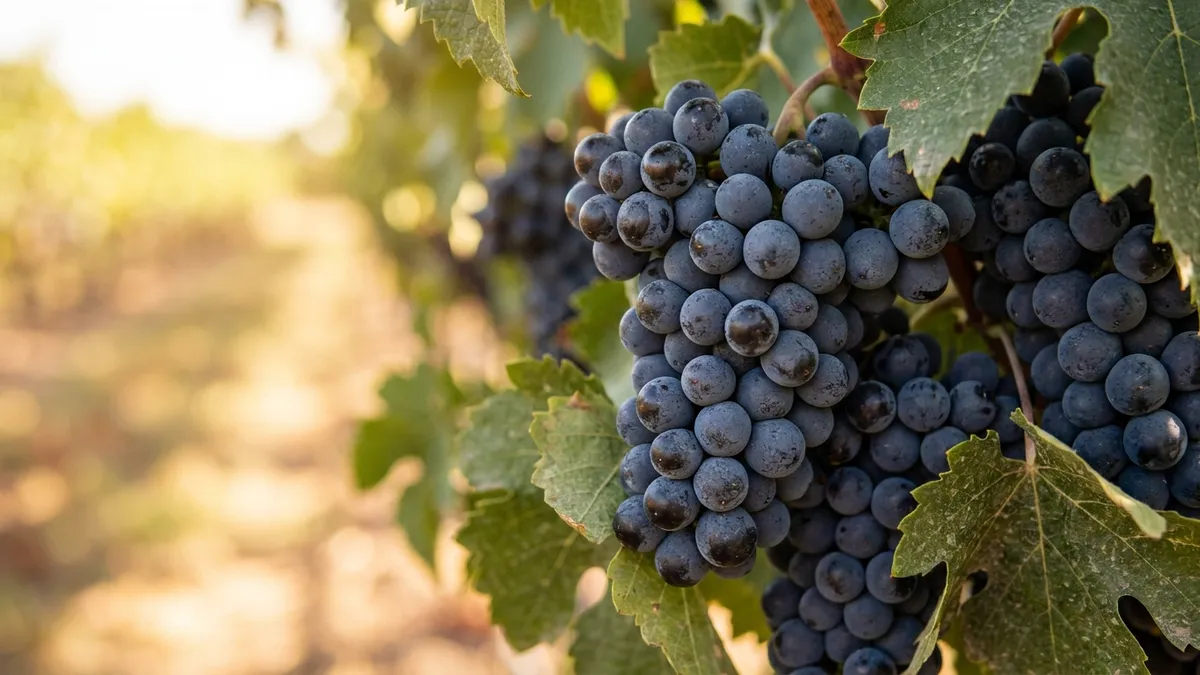
- Tempranillo: The unofficial flagship of Texas. This Spanish grape, the backbone of Rioja, ripens beautifully in the Texas heat while holding firm structure. Typical aromas: red cherry, plum, leather, dried herbs, and a savory edge. Body: medium-to-full (4/5) · Tannins: medium-to-high (4/5) · Acidity: medium-plus. For the full picture of this grape worldwide, see our Tempranillo wine guide.
- Mourvèdre: A thick-skinned southern French and Spanish grape (called Monastrell in Spain) that loves heat and sun. It brings deep color, dark fruit, and earthy, gamey notes. Often blended, but increasingly bottled on its own in Texas. Our Mourvèdre wine guide covers its global styles.
- Grenache: A warm-climate workhorse that ripens to high sugar and gentle tannins, giving juicy red-fruit wines that round out blends. Read more in our Grenache wine guide.
- Sangiovese: Italy's signature grape, the heart of Chianti, has found a comfortable home in the Texas sun, offering tart cherry, tomato leaf, and bright acidity. See the Sangiovese wine guide for its Old World roots.
These four often appear together in the GSM-style blends (Grenache, Syrah, Mourvèdre) borrowed from the southern Rhône, plus Texas's own takes built around Tempranillo.
The Signature White Grapes
- Viognier: The leading white of Texas. This perfumed Rhône grape gives full-bodied, aromatic whites that handle the heat well. Typical aromas: apricot, peach, honeysuckle, and orange blossom, with a rich, almost oily texture. Our Viognier wine guide explains why it suits warm climates.
- Roussanne: Another Rhône white, often paired with Viognier or Marsanne. It brings nutty, herbal, honeyed notes and a firmer backbone, ageing better than most warm-climate whites.
The pattern across both reds and whites is consistent: Texas succeeds with grapes built for sunshine. The state's most exciting wines are the ones that lean into this identity rather than imitating cooler regions. Sommy's tasting courses help you recognize these warm-climate aromatic signatures — the dried-herb savor of Tempranillo, the apricot lift of Viognier — so you can spot them in any glass.
The Spring-Frost Problem and Other Weather Challenges
For all its sunshine, the Texas climate is not an easy one to farm. The same elevation that gives the High Plains its cool nights also exposes it to one of winegrowing's most feared hazards: spring frost.
Why Frost Is the Biggest Threat
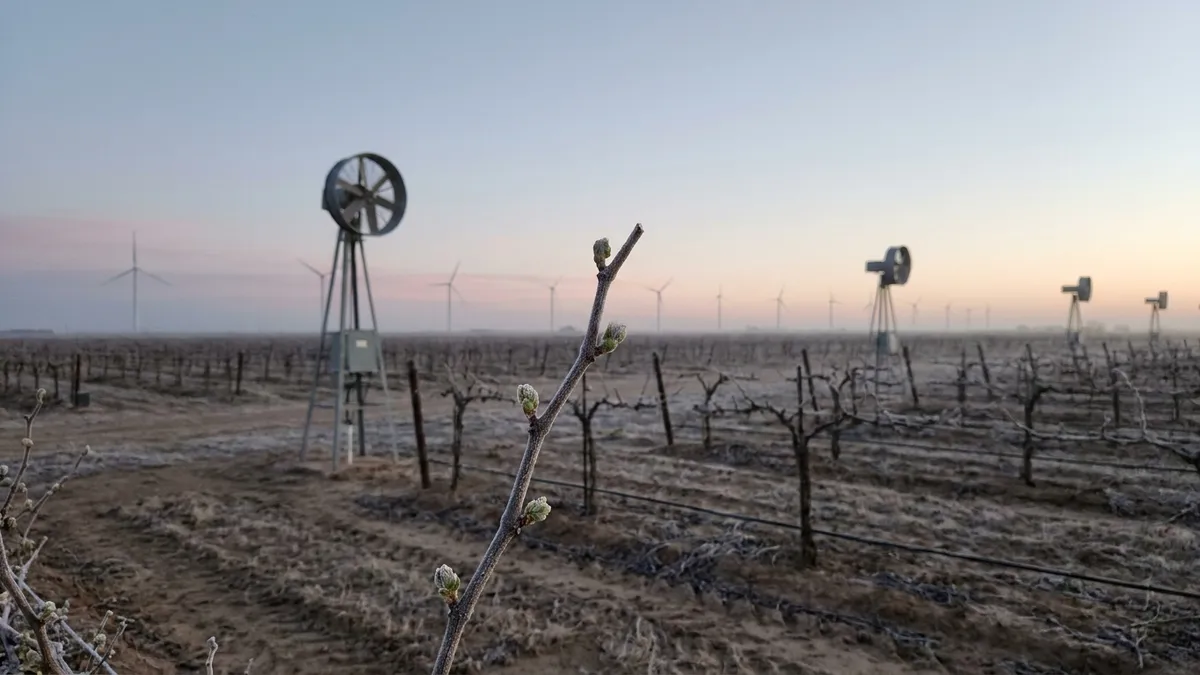
Spring frost happens when warm late-winter weather coaxes the vines into budbreak — the moment the first green shoots emerge — and then a sudden late freeze kills those tender buds. Because the High Plains can warm early, vines often bud while the risk of a hard freeze is still very real.
A single bad frost night can wipe out a large share of a vineyard's crop for the entire year. There is no second chance: once the spring buds are dead, that vintage is largely lost. This is why Texas yields swing wildly from one year to the next, and why some vintages are far scarcer than others.
- Spring frost: Late freezes after early budbreak kill young shoots — the single largest cause of crop loss.
- Hail: Sudden, violent hailstorms on the open plains can shred leaves and grapes in minutes.
- High winds: Strong winds across the flat tableland can damage vines and dry out the fruit.
- Temperature swings: Rapid drops and spikes stress the vines and complicate the harvest timing.
Growers fight back with frost-protection tools, careful site selection on slopes where cold air drains away, and by choosing grapes that bud later in the season. Still, weather risk is built into the Texas wine story, and it is part of what makes a successful Texas vintage worth seeking out.
How Texas Wine Is Labeled
Texas labeling follows the United States AVA system rather than a European cru or DOCG hierarchy, so there is no quality pyramid like the one in our French wine regions overview. Instead, the key things to read are the AVA and the grape sourcing.
- Texas High Plains AVA: Tells you the grapes were grown on the high tableland in the northwest — the source of most of the state's quality fruit.
- Texas Hill Country AVA: A grape-origin claim from the central hills, though much Hill Country wine is actually made from High Plains fruit.
- Texas AVA (statewide): A broad designation meaning the grapes were grown somewhere in Texas, with no narrower region specified.
- "For Sale in Texas Only": A label phrase that historically allowed wine made from out-of-state grapes — a sign the fruit may not be Texas-grown. Reading the fine print matters.
The habit that matters most is to check that the wine is actually made from Texas-grown grapes. Because the state once allowed wineries to bottle wine from imported fruit, a Texas address on the label does not guarantee Texas terroir. A named Texas AVA is your best assurance that what is in the glass actually came from the state's vineyards.
What Makes Texas Wine Distinctive
Texas does not try to be the next Bordeaux, and that is its strength. A few things set the region apart from the more famous American wine states.
First, the grape identity is genuinely its own. While California built its name on Cabernet and Chardonnay, Texas has staked out Spanish and Rhône varieties — a clear, deliberate signature rooted in its climate rather than in fashion.
Second, the two-region structure is unusual. Few wine areas separate their growing and their tourism so completely, with grapes traveling hundreds of miles from plains to cellar. It makes label-reading more important here than in regions where the winery and vineyard sit side by side.
Third, the wines themselves tend toward ripe, sun-driven structure: full-bodied reds with firm tannins and warm fruit, and aromatic, generous whites. If you want to understand why these wines feel the way they do, our guide to understanding tannins, acidity, and body breaks down the structure you will taste in a Texas Tempranillo or Viognier.
Texas proved a simple lesson the hard way: great wine comes from matching the grape to the place, not from copying a famous region.
How a Beginner Should Start with Texas Wine
You do not need to visit the Hill Country to get to know Texas wine. The smartest path is to taste a couple of the signature grapes deliberately and pay attention to what the climate does to them. Here is a practical order:
- Start with a Texas Tempranillo. This is the flagship red and the clearest expression of what Texas does well — ripe dark fruit with savory, leathery structure. Choose one labeled with a Texas AVA, ideally Texas High Plains.
- Add a Texas Viognier. The leading white shows the aromatic, full-bodied style the heat produces — apricot and honeysuckle with a rich texture. It is an easy, crowd-pleasing introduction.
- Try a GSM or Tempranillo blend. Texas blends built on Grenache, Syrah, and Mourvèdre, or on Tempranillo, show how these warm-climate grapes work together. Many are excellent value.
- Compare with the Old World. Taste a Texas Tempranillo beside a Spanish Rioja, or a Texas Viognier beside a southern French one. The same grape, two climates — the difference makes Texas's character obvious.
- Build the tasting habit. Note the ripe fruit, the warm-climate texture, and the firm structure that defines these wines. Our guide to how to taste wine gives you the step-by-step method, and our overview of the noble grapes puts Texas's chosen varieties in global context.
Sommy turns these comparisons into guided exercises — naming the aromas, scoring the structure, and building the vocabulary to describe what you sense. You can start practicing free at sommy.wine, then bring the method to your next bottle from the Lone Star State.
The Reward of Learning Texas Wine
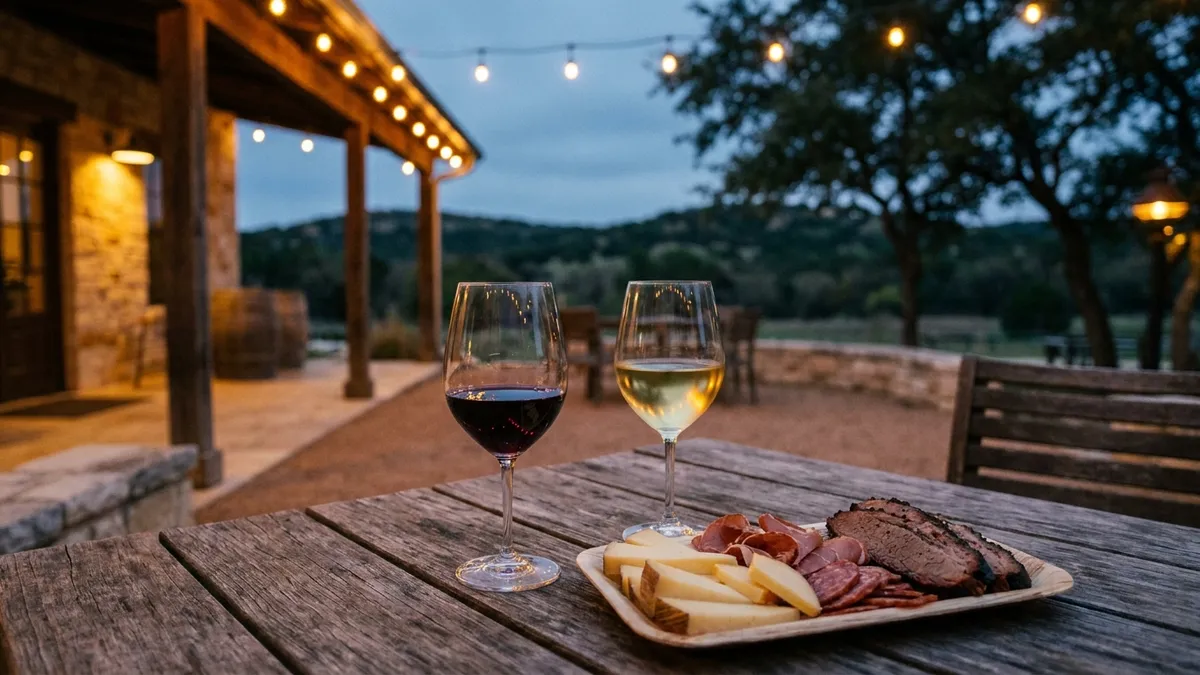
Texas is a young, fast-changing wine region, and that is exactly what makes it rewarding to explore now. The growers have done the hard work of figuring out which grapes belong here, and the results — sun-soaked Tempranillo, perfumed Viognier, structured Mourvèdre — have a confidence that earlier vintages lacked.
It is also a region that teaches a wider lesson: that climate, not reputation, decides which grape thrives where. If that idea interests you, our piece on why the same grape can taste different carries the thread well beyond Texas. Start with a Tempranillo, taste it against its Spanish cousin, and let the Lone Star State reveal itself one glass at a time. The Sommy app is built to make that habit stick, turning each bottle into a short, guided lesson.
Sources
Frequently Asked Questions
What wine is Texas known for?
Texas is increasingly known for Mediterranean and Iberian grapes rather than the cooler-climate classics. Tempranillo is the unofficial flagship red, joined by Mourvèdre, Grenache, and Sangiovese. For whites, Viognier and Roussanne lead. These heat-loving varieties ripen reliably in the hot, sunny Texas climate where Cabernet and Pinot Noir often struggle.
Where are Texas vineyards located?
Two areas dominate. The Texas High Plains, a high-altitude region around Lubbock in the northwest, grows roughly 80 percent of the state's wine grapes thanks to its elevation, sunshine, and cool nights. The Texas Hill Country, west of Austin and San Antonio, holds most of the wineries and tasting rooms, making it the heart of wine tourism.
Why does Texas grow Spanish and Rhône grapes?
Texas summers are long and hot, much like parts of Spain and southern France. Grapes such as Tempranillo, Mourvèdre, Grenache, and Viognier evolved in those warm, dry climates and keep their balance in heat that would over-ripen cooler-climate varieties. Growers shifted toward these Mediterranean and Iberian grapes after early plantings of Bordeaux varieties struggled.
What is the biggest challenge for Texas wine?
Spring frost is the single greatest threat. The Texas High Plains can warm early, pushing vines to bud, then suffer a late freeze that kills the young shoots and slashes the harvest. Hail, high winds, and sudden temperature swings add further risk. These weather hazards make yields unpredictable from one vintage to the next.
Is Texas wine any good?
Texas wine has improved dramatically as growers matched grape to climate. The best bottles from the High Plains and Hill Country show ripe fruit, firm structure, and genuine regional character, especially the Tempranillo, Mourvèdre, and Viognier. Quality is uneven across the state, so seeking out producers who grow heat-adapted varieties is the surest path to a good glass.
How should a beginner start with Texas wine?
Begin with a Texas Tempranillo as the signature red and a Texas Viognier as the signature white, both grown from High Plains fruit. Look for a Texas AVA on the label so you know the grapes were grown in the state. Taste them beside a Spanish or Rhône counterpart to feel how the Texas climate shapes the same grape.
What does AVA mean on a Texas wine label?
AVA stands for American Viticultural Area, a legally defined grape-growing region. Texas has several, including the Texas High Plains and Texas Hill Country. An AVA on the label tells you where the grapes were grown, not who made the wine. It is the closest thing Texas has to a European appellation system.
Sommy Team
LinkedInFounder & Wine Educator
The Sommy Team is building the world's most approachable wine education app, helping beginners develop real tasting skills through structured courses and AI-guided practice.