Portuguese Wine Guide: From Vinho Verde to Port
Sommy Team
Founder & Wine Educator
April 14, 2026
8 min read
TL;DR
Portugal packs extraordinary wine diversity into a small country — from crisp, effervescent Vinho Verde in the north to powerful Douro reds and the iconic fortified Port wines, plus the sun-drenched Alentejo in the south. With over 250 indigenous grape varieties and a winemaking tradition spanning millennia, Portugal offers some of the best value and most distinctive wines in Europe.
Why Portuguese Wine Deserves Your Attention
Portugal is one of Europe's oldest winemaking countries and one of its most underrated. While France, Italy, and Spain dominate international conversation, Portugal quietly produces some of the continent's most distinctive and best-value wines — powered by over 250 indigenous grape varieties that you will not find anywhere else on earth.
This portuguese wine guide covers a country that packs extraordinary diversity into a small footprint. From the crisp, effervescent whites of Vinho Verde in the Atlantic northwest to the powerful, terroir-driven reds of the Douro Valley and the sun-drenched plains of the Alentejo in the south, Portugal's wine regions span a remarkable range of climates, soils, and styles.
Portugal produces roughly 7.5 million hectoliters annually, exporting about half — primarily to Brazil, the United States, and Canada. But the real story is not volume. It is the sheer originality of what comes out of the bottle.
Key Portuguese Wine Regions
Douro Valley
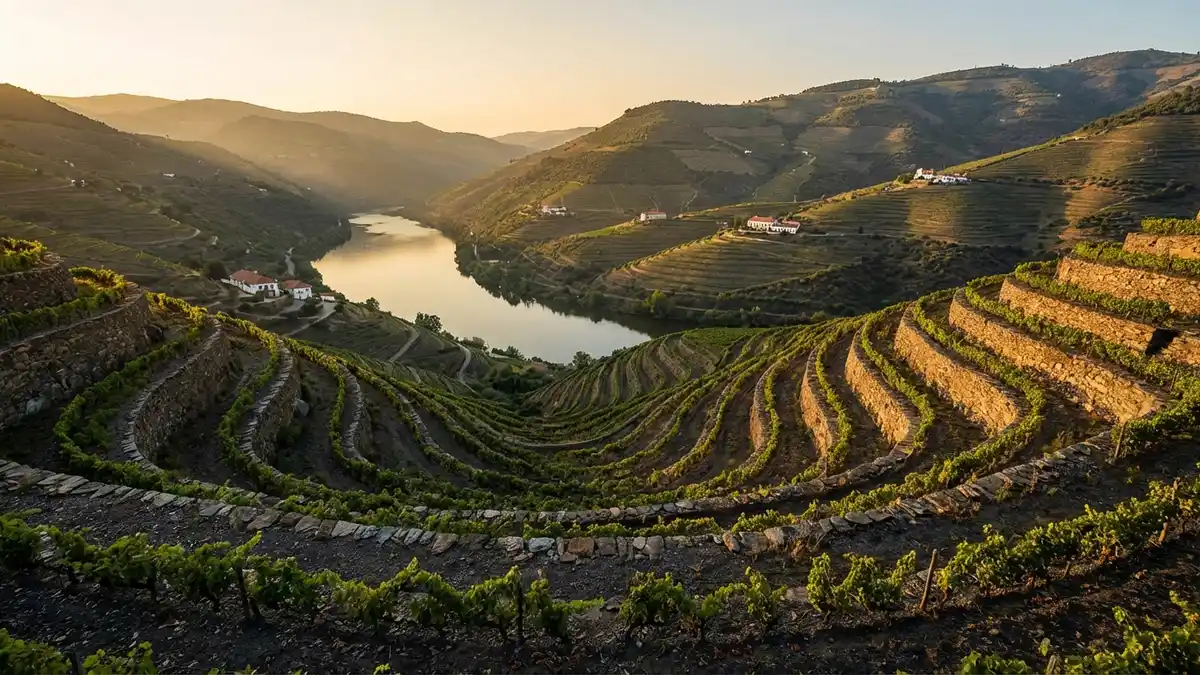
The Douro Valley is Portugal's crown jewel — a UNESCO World Heritage Site with steep, terraced vineyards carved into schist hillsides along the Douro River. Established as the world's first officially demarcated wine region in 1756, the Douro is where Port wine was born and where Portugal's finest dry reds now come from.
The Douro's extreme terrain — with gradients so steep that many vineyards can only be worked by hand — creates wines of remarkable concentration and complexity. The schist soils retain heat and force vine roots deep, while the continental climate delivers scorching summers tempered by the river's moderating influence.
Douro Reds — Made from blends of indigenous grapes (Touriga Nacional, Touriga Franca, Tinta Roriz, Tinta Barroca), dry Douro reds are dark, structured, and aromatic, with black fruit, violet, and earthy mineral notes. The best examples rival top Bordeaux and Napa Cabernet for depth and aging potential — at a fraction of the price.
Douro Whites — An emerging category. Blends of Rabigato, Viosinho, and Gouveio produce fresh, mineral whites with surprising complexity.
Vinho Verde
The Minho region in Portugal's green, rainy northwest produces Vinho Verde — literally "green wine," though the name refers to youth, not color. This is Portugal's most exported style and one of the world's great summer wines.
- Grapes — Alvarinho (the finest), Loureiro, Trajadura, Arinto
- Style — Light-bodied, high acidity, low alcohol (8.5–11.5%), often with a gentle spritz
- Flavors — Lemon, green apple, white peach, floral notes
- Best served — Ice cold, ideally with seafood
Premium single-varietal Alvarinho from the sub-region of Monção e Melgaço shows that Vinho Verde can be serious as well as refreshing — fuller bodied, more complex, and capable of short-term aging.
Alentejo
The Alentejo stretches across southern Portugal's hot, dry interior — a vast, sun-baked region that produces some of the country's most accessible and fruit-forward red wines. Where the Douro is steep and dramatic, the Alentejo is flat and expansive, with cork oak forests and rolling wheat fields between vineyard blocks.
- Key grapes — Aragonez (Tempranillo), Trincadeira, Alicante Bouschet, Touriga Nacional
- Style — Full-bodied, ripe, generous, approachable
- Flavors — Ripe plum, dark cherry, chocolate, warm spice
- Value — Excellent. Many outstanding Alentejo reds cost $10–$20.
Dao
Located in central Portugal, surrounded by mountains that shield it from Atlantic moisture, Dao produces elegant, structured reds that age beautifully. Touriga Nacional reaches some of its finest expressions here — aromatic, floral, and more refined than the bolder Douro style. Dao whites from Encruzado are among Portugal's most complex and age-worthy.
Bairrada
A small region south of Porto known for the Baga grape — a thick-skinned, tannic variety that produces deeply colored, structured reds capable of decades of aging. Baga is an acquired taste — the tannins can be fierce in youth — but well-made examples from top producers develop extraordinary complexity with time. Bairrada is also an increasingly important center for sparkling wine, using Baga in traditional-method production.
Lisboa and Setubal
Lisboa (formerly Estremadura) produces large volumes of everyday wine at excellent value, plus some increasingly serious reds from cooler coastal sites. Setubal is famous for its fortified Moscatel — a rich, honeyed dessert wine that is one of Portugal's hidden gems.
Portugal's Key Grape Varieties
Red Grapes
- Touriga Nacional — Portugal's noblest red grape. Deep color, concentrated black fruit, violet, and herbal notes. Key in both Port and dry Douro reds. About 6,700 hectares planted.
- Touriga Franca — The most planted Douro red grape. Floral, aromatic, and slightly lighter than Touriga Nacional. Essential in Port blends.
- Tinta Roriz — The Portuguese name for Tempranillo. Contributes structure and red fruit to Douro blends.
- Baga — The grape of Bairrada. Deeply tannic, high acidity, and capable of extraordinary aging.
- Trincadeira — Widely planted across southern Portugal. Produces aromatic, spicy reds.
- Alicante Bouschet — One of the few teinturier grapes (red-fleshed, not just red-skinned). Produces intensely dark, concentrated wines in the Alentejo.
White Grapes
- Alvarinho — Portugal's finest white grape. Produces the best Vinho Verde — aromatic, citrusy, with good body and acidity.
- Loureiro — Floral and delicate. Key Vinho Verde grape, often blended with Alvarinho.
- Encruzado — The great white grape of the Dao. Complex, mineral, age-worthy.
- Arinto — High-acid grape found across Portugal. Brings freshness and citrus to blends.
Port Wine — A Quick Guide
Port is Portugal's most famous wine export — a sweet, fortified wine made in the Douro Valley by adding grape spirit during fermentation.
Main Port Styles
- Ruby Port — Young, fruity, and vibrant. Aged briefly in large barrels. Drink slightly chilled as a dessert wine or with chocolate.
- Tawny Port — Aged in small barrels (pipes), developing nutty, caramel, dried-fruit flavors. Labeled by age: 10, 20, 30, or 40 years. Serve slightly chilled.
- Vintage Port — Made from a single exceptional year. Bottled young and aged in bottle for decades, developing immense complexity. The pinnacle of Port.
- Late Bottled Vintage (LBV) — Single-vintage Port aged 4–6 years in barrel. Ready to drink, with more depth than basic Ruby.
- White Port — Made from white grapes. Dry or sweet. Mixed with tonic water, it makes a popular Portuguese aperitif.
Sommelier tip: A 10-year Tawny Port is one of the best values in the wine world. Rich, complex, and ready to drink — pair it with pecan pie, crème brûlée, or just enjoy it on its own after dinner.
How to Pair Portuguese Wine with Food
Portuguese wine and Portuguese food evolved together over centuries, and the pairings are natural.
Vinho Verde
- Grilled sardines — The iconic Portuguese pairing. Crisp Vinho Verde cuts through the oily fish.
- Bacalhau (salt cod) — In any of its legendary 365 preparations.
- Seafood — Shrimp, clams, mussels, grilled octopus.
- Light salads — With citrus or herb dressings.
Douro and Alentejo Reds
- Grilled meats — Pork, lamb, beef. The wine and food pairing guide covers more principles.
- Cozido a Portuguesa — A rich Portuguese stew with multiple meats and vegetables.
- Hard cheeses — Serra da Estrela, São Jorge, aged Queijo de Azeitão.
- Charcuterie — Presunto (Portuguese cured ham), chouriço.
Port Wine
- Blue cheese — Stilton, Roquefort, Gorgonzola. The classic Tawny pairing.
- Dark chocolate — Ruby Port and 70%+ dark chocolate.
- Dried fruits and nuts — Walnuts, almonds, figs, dates.
- Crème brûlée — Tawny Port's caramel notes mirror the dessert.
Portugal vs Its Iberian Neighbor
Portugal and Spain share the Iberian Peninsula, but their wine cultures are remarkably different.
| Feature | Portugal | Spain | |---|---|---| | Signature grape | Touriga Nacional | Tempranillo | | Indigenous varieties | 250+ | 400+ | | Winemaking philosophy | Blends of indigenous grapes | Single-variety and blends | | Fortified tradition | Port (Douro) | Sherry (Jerez) | | Light white | Vinho Verde | Txakoli | | Key red regions | Douro, Alentejo, Dao | Rioja, Ribera del Duero | | Price positioning | Excellent value | Excellent value |
Both countries offer outstanding quality at prices that make France and Napa look expensive. If you enjoy Spanish reds, Portuguese Douro wines offer a similar richness with a completely different flavor profile.
Portuguese Wine — Value and Price
Portugal is one of the best-value wine countries in the world:
- Under $10 — Good everyday Vinho Verde, simple Alentejo reds
- $10–$20 — Excellent Douro reds, premium Vinho Verde, Dao wines. This is Portugal's sweet spot.
- $20–$40 — Serious single-estate Douro reds, aged Dao, top Alentejo. Real complexity.
- $40–$80 — Top-tier Douro reds that compete with wines costing two to three times as much from other regions.
- Port wine — 10-year Tawny around $20–$30. Vintage Port from $50–$150+.
Building Your Portuguese Wine Tasting Skills
Portugal rewards exploration. Start with a crisp Vinho Verde and a Douro red side by side — the contrast between Atlantic freshness and continental power teaches you more about how climate shapes wine than any textbook.
Then try comparing a Douro red with an Alentejo red — same country, different terroir. The Douro will be more structured and mineral; the Alentejo rounder and more fruit-forward. Pay attention to mouthfeel and tannin texture — these are the dimensions where the regional differences come through most clearly.
The Sommy app includes guided tasting exercises that help you identify these kinds of differences, building your tasting vocabulary one comparison at a time. Portugal's wines are bold, original, and endlessly rewarding — and at their price points, there is no cheaper way to taste world-class wine.
Frequently Asked Questions
What is Portugal best known for in wine?
Portugal is best known for Port wine — a fortified wine from the Douro Valley — and increasingly for its dry table wines, especially from the Douro and Alentejo regions. Vinho Verde, a light, refreshing white from the north, is also widely recognized. Portugal's unique strength is its wealth of indigenous grape varieties found almost nowhere else.
What is Vinho Verde?
Vinho Verde is a light, crisp, often slightly effervescent white wine from the Minho region in northwestern Portugal. The name means green wine, referring to the wine's youth rather than its color. Made primarily from Alvarinho and Loureiro grapes, it is low in alcohol, high in acidity, and best served very cold as a summer refresher.
What is Port wine?
Port is a sweet, fortified wine from the Douro Valley in northern Portugal. It is made by adding grape spirit (brandy) during fermentation, which stops the yeast and preserves natural sugar. Main styles include Ruby (young, fruity), Tawny (aged in barrel, nutty), Vintage, and Vintage Port (single vintage, age-worthy).
What is Touriga Nacional?
Touriga Nacional is widely considered Portugal's finest red grape variety. It produces deeply colored, concentrated wines with black fruit, violet, and herbal notes, with firm tannins and excellent aging potential. It is a key grape in both Port wine blends and increasingly prestigious dry Douro reds.
What food pairs well with Portuguese wine?
Vinho Verde pairs perfectly with grilled sardines, bacalhau (salt cod), and seafood. Douro reds match beautifully with grilled meats, stews, and aged cheeses. Port wine is a classic partner for Stilton and other blue cheeses, chocolate desserts, and dried fruits. Portuguese wine and Portuguese food are deeply intertwined.
Is Portuguese wine good value?
Yes. Portugal offers some of the best value in European wine. Excellent Douro reds and Alentejo wines are widely available for 10 to 20 dollars. Even top-tier wines from prestigious producers rarely exceed 50 to 80 dollars, making Portugal one of the most affordable quality wine countries in the world.
How many grape varieties does Portugal have?
Portugal has over 250 indigenous grape varieties — one of the highest concentrations of native grapes of any wine country. Many of these are found almost nowhere else in the world, giving Portuguese wine a distinctive character that cannot be replicated by other regions.
What is the Douro Valley?
The Douro Valley is a UNESCO World Heritage Site in northern Portugal, famous for its steep terraced vineyards along the Douro River. It is the world's first officially demarcated wine region (1756) and produces both Port wine and increasingly acclaimed dry red and white table wines from indigenous grape varieties.
Get the free Wine 101 course
Start learning to taste wine like a pro with structured lessons and AI-guided practice.
Sommy Team
LinkedInFounder & Wine Educator
The Sommy Team is building the world's most approachable wine education app, helping beginners develop real tasting skills through structured courses and AI-guided practice.
Keep Reading
French Wine Regions: A Complete Guide
Explore the major French wine regions from Bordeaux to Provence. Understand the AOC system, signature grapes, and what makes each region unique.
Italian Wine: From Chianti to Barolo
Discover Italian wine from north to south. Learn the key regions, native grapes, classification system, and why Italian wine and food are inseparable.
Spanish Wine Regions: From Rioja to Sherry
Explore Spain's major wine regions, from the legendary Rioja to the unique world of Sherry. Learn the DO system, key grapes, and aging classifications.