Lagrein: Alto Adige's Dark, Smoky Red Grape

By the Sommy Team — AI-assisted, human-edited.
Updated Jun 17, 2026
Contents (10)
- What Is Lagrein Wine?
- Lagrein in 100 Words
- Lagrein Tasting Notes and Flavor Profile
- Lagrein's Grape Family: Syrah, Teroldego, and Pinot
- Lagrein Dunkel and Kretzer: The Two Styles
- Alto Adige and Südtirol: Where Lagrein Grows
- Aging Potential
- How to Pair Lagrein with Food
- Lagrein vs Other Dark Reds
- How a Beginner Should Approach Lagrein
TL;DR
Lagrein is the dark, smoky red grape of Italy's Alto Adige, a German-speaking alpine region. A relative of Syrah and Teroldego, it pours nearly black and tastes of dark plum, blackberry, bitter chocolate, violet, and smoke. Brisk acidity and firm, faintly bitter tannins make it a natural match for smoked and cured alpine food.
What Is Lagrein Wine?
Lagrein is the signature dark red grape of Alto Adige, the German-speaking alpine region of far northern Italy, also written as Südtirol. It produces a lagrein wine alto adige style that pours nearly black, smells of dark plum and smoke, and finishes with a firm, faintly bitter grip. For centuries it was the everyday red of the valley around Bolzano, dismissed as rustic. Careful vineyard work has since revealed a grape of real depth and structure.
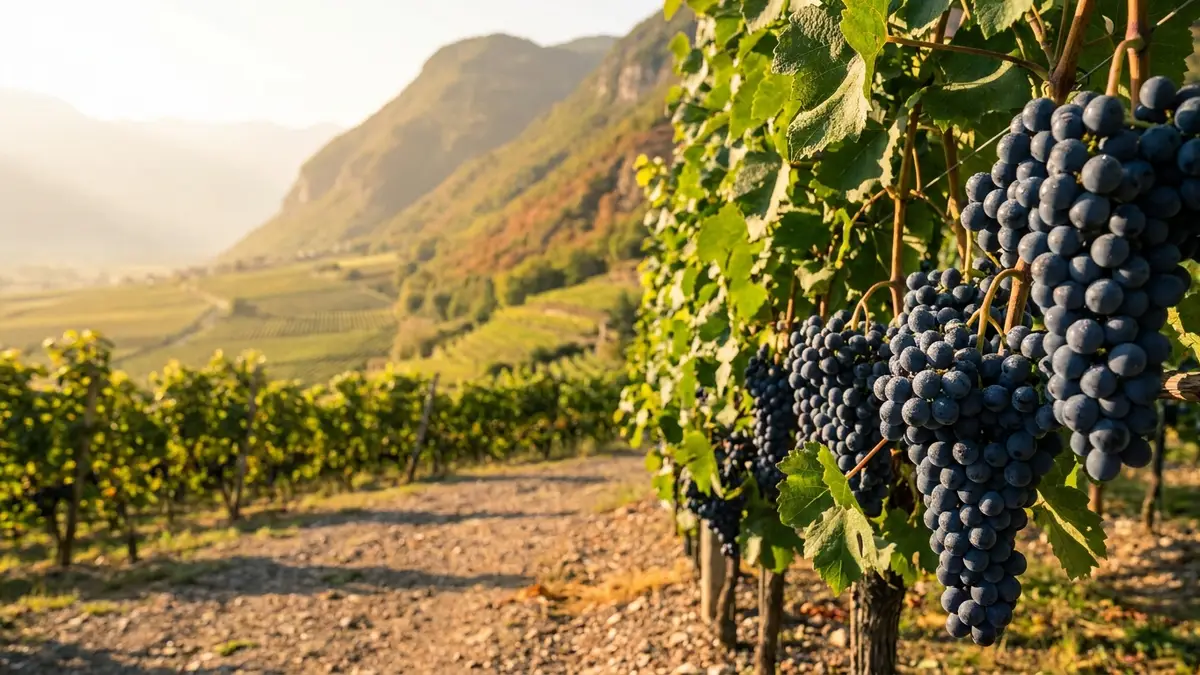
The region itself tells the story. Alto Adige sits where Italian and Austrian cultures meet, and most labels appear in both languages. Lagrein thrives on the warm valley floors near the Gries district of Bolzano, where the heat ripens this late variety fully. The grape is deeply colored, savory, and built around brisk acidity and dark fruit rather than soft sweetness.
If you already enjoy Syrah (dark-fruited, peppery, smoky) or northern Italian reds like Nebbiolo (structured, savory, high-acid), Lagrein offers a different but related thrill: a darker, plumper, more chocolatey take on the savory alpine red.
Lagrein in 100 Words
Lagrein wine is a deeply colored, dry red from Italy's Alto Adige, built on dark plum, blackberry, and black cherry, with notes of bitter chocolate, violet, earth, and smoke. Brisk acidity and firm, moderate tannins close on a faintly bitter finish that is part of the grape's charm. A relative of Teroldego and a half-sibling of Syrah, it ripens late on warm valley floors near Bolzano. The classic deep red is labeled Dunkel; the rosato is called Kretzer. Most bottles drink well within five years, while oak-aged Riserva versions gain depth and can cellar a decade.
Lagrein Tasting Notes and Flavor Profile
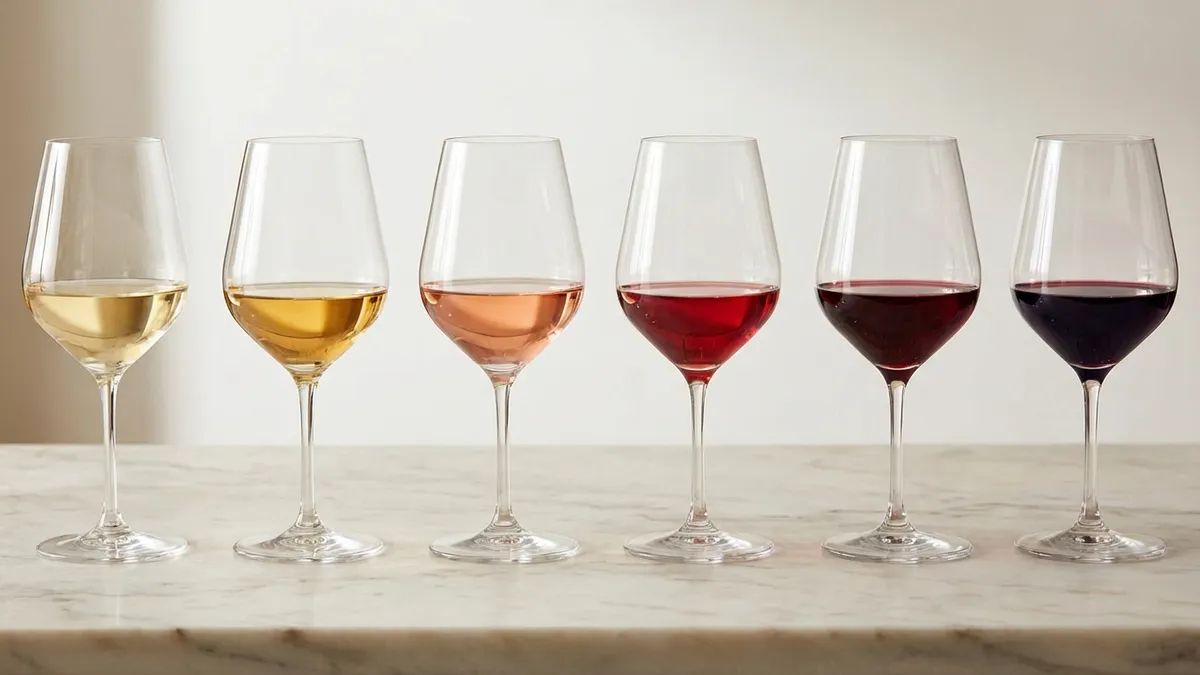
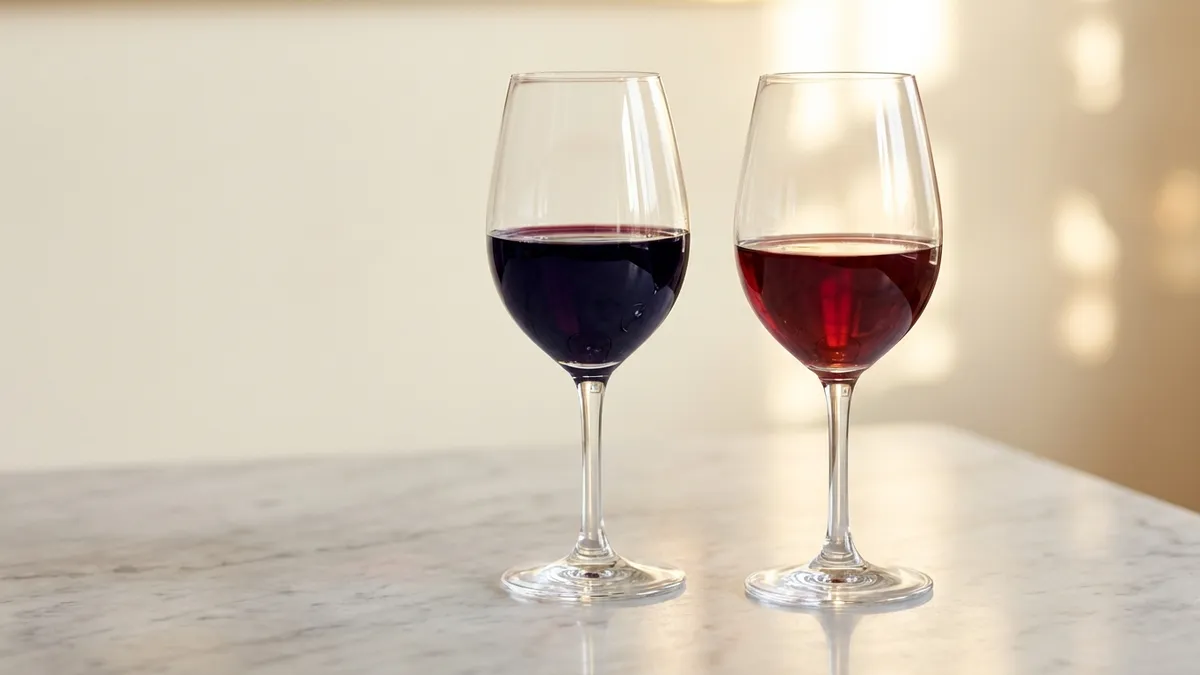
Lagrein is a dark, savory red rather than a soft, fruity one. The first thing you notice is the color: almost opaque, inky purple-black in the glass. The aromas follow that intensity, leaning toward dark fruit and smoke rather than bright berries.
The Core Flavors
- Dark fruit — dark plum, blackberry, black cherry, and stewed dark berries in riper years
- Spice and savory notes — bitter chocolate, dried herbs, a smoky, earthy undertone
- Floral lift — a clear note of violet that keeps the dark profile from feeling heavy
- Oak-derived (when present) — cedar, vanilla, and mocha from time in barrel
The grape's thick skins give the wine its deep color and real tannic grip, while its naturally brisk acidity keeps everything fresh and food-friendly. The defining quirk is the finish: a gentle, lingering bitterness, a little like dark chocolate or coffee, that marks Lagrein out from softer reds.
Structure at a Glance
Lagrein leans medium to full in body, with assertive acidity and firm, slightly grainy tannins. Reading these three axes — body, acidity, and tannin — is the fastest way to understand any red. If the terms are new, the guide to tannins, acidity, and body breaks them down.
Body medium to full (4/5) · Acidity high (4/5) · Tannin medium to high (3/5)
Young, unoaked Dunkel stays leaner and more cutting, while oak-aged Riserva bottlings push the body fuller and round off the tannins. Either way, the acidity rarely drops below crisp, and the faintly bitter finish almost always shows up.

Lagrein's Grape Family: Syrah, Teroldego, and Pinot
Lagrein's flavor makes more sense once you know its relatives. DNA research has mapped the grape into a surprisingly noble family tree.
A Grandchild of Pinot, Offspring of Teroldego
Lagrein is a natural offspring of Teroldego, the dark, juicy red grape of neighboring Trentino, just to the south. Both grapes share inky color and dark-fruited intensity. Through Teroldego, Lagrein also descends from Pinot, placing it in the wider Pinot family alongside many of Europe's classic varieties.
A Half-Sibling of Syrah
The most useful comparison for a beginner is Syrah. Lagrein and Syrah share a parent, making them half-siblings, and the family resemblance is easy to taste: dark fruit, a smoky and savory edge, and firm structure. Lagrein is usually a touch more bitter on the finish and a little brighter in acidity, but if you enjoy Syrah, Lagrein is a natural next step.
Lagrein is Teroldego's dark intensity meeting Syrah's smoky structure — with a bitter-chocolate finish all its own.
If you want the bigger picture of how dark grapes relate to one another, the overview of black grapes places Lagrein in wider company, and the foundational noble grapes guide is the best place to start if these varieties are new.
Lagrein Dunkel and Kretzer: The Two Styles
One grape, two very different wines. The labels are in German, which trips up many first-time buyers, so it helps to learn the two key words.
Lagrein Dunkel — The Classic Dark Red
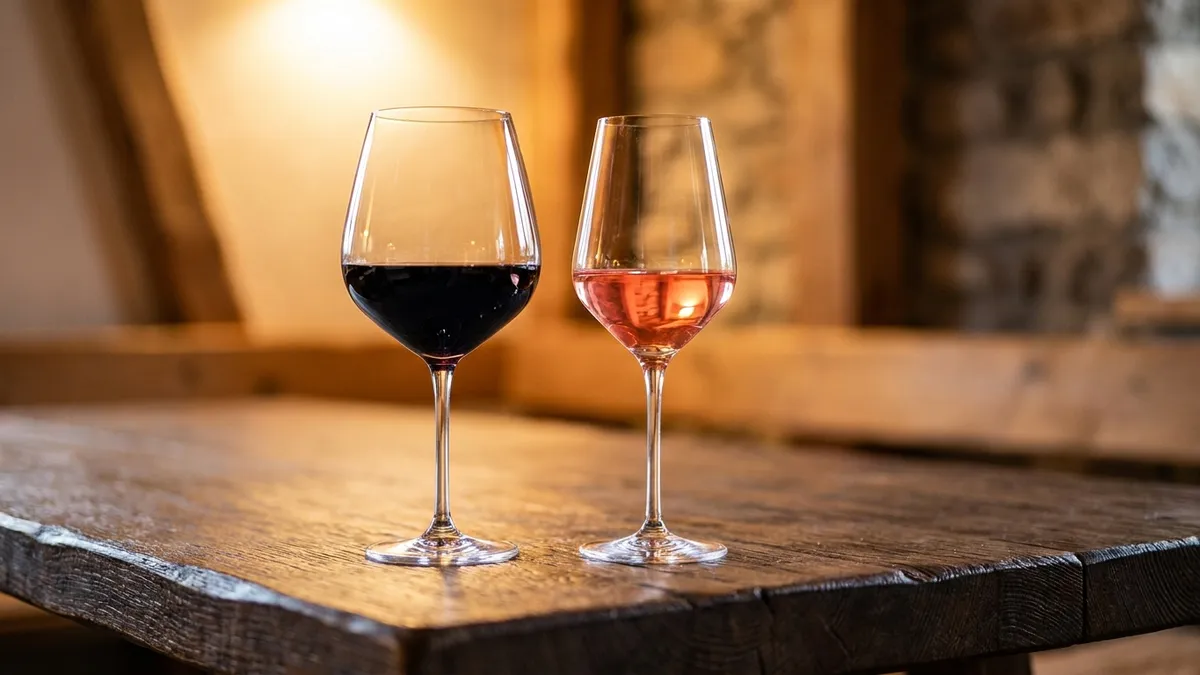
Dunkel means "dark" in German, and Dunkel is the deep, full-colored red that most people mean when they say Lagrein. The dark juice ferments on its skins, drawing out maximum color, tannin, and dark-fruit flavor. This is the structured, savory wine built for hearty alpine food, sometimes labeled simply as Lagrein with no extra word.
Within Dunkel, look for two sub-styles:
- Fresh and unoaked — bright dark fruit, lively acidity, lighter on its feet, ready to drink young
- Riserva (oak-aged) — fuller body, softer tannins, added cedar and mocha, capable of aging a decade
Lagrein Kretzer — The Rosato
Kretzer is the local name for the rosato, or rosé, made from the same dark grape. The trick is brief skin contact: the dark juice spends only a short time with the skins, so it picks up a pale salmon-pink color and a fraction of the tannin. Kretzer is light, fresh, and brightly fruited, with a savory edge that sets it apart from softer rosés. It is dry, food-friendly, and an easy summer pour.
Alto Adige and Südtirol: Where Lagrein Grows
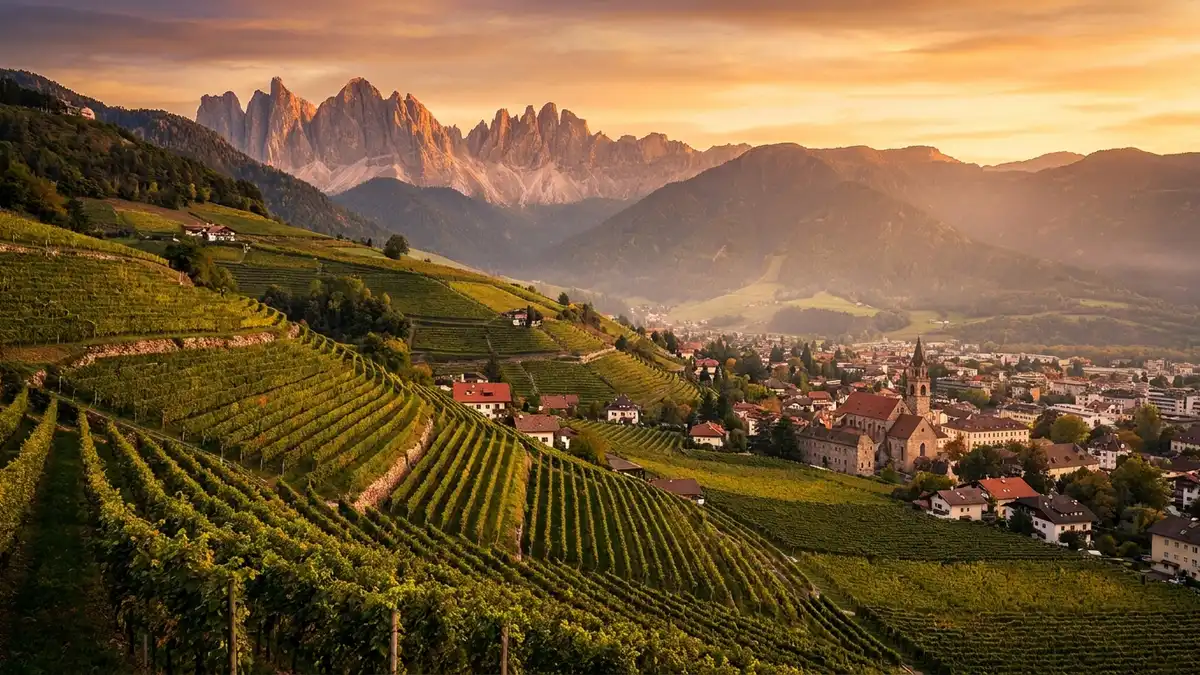
Few grapes are as tied to one place as Lagrein is to Alto Adige. The region is among the smallest in Italy, tucked against the Austrian border, and shaped by a meeting of two cultures.
The German-Italian Heartland
Alto Adige became part of Italy after the First World War, but it remains overwhelmingly German-speaking, which is why Südtirol and Italian names appear together on most labels. This dual identity runs through the food and wine: alpine, hearty, and savory, with Italian acidity and freshness underneath. Lagrein is the region's flagship dark red, the local answer to the crisp whites and lighter Schiava reds grown on the cooler slopes.
Warm Valley Floors Around Bolzano
Lagrein is a late-ripening grape that needs heat, so it does not grow on the cool hillsides where the region's white grapes thrive. Instead it sits on the warm, gravelly valley floors around Bolzano, especially the historic Gries district. These sun-trap sites collect alpine warmth and ripen the grape's thick skins fully, which is exactly why Lagrein develops such deep color and firm structure. Its thick skins also mark it as a thick-skinned grape, the trait behind its inky color and tannic grip.
Beyond Alto Adige
Small plantings of Lagrein exist in neighboring Trentino and in a handful of experimental sites in Australia, California, and Argentina. The wines can be good, but Alto Adige remains the grape's true home, and almost every benchmark bottle comes from there. For the wider Italian picture, the Italian wine guide maps how Alto Adige fits among the country's regions.
Aging Potential
Lagrein's brisk acidity and firm tannins give it a backbone for aging, even though most bottles are made to drink young and fresh.
- Fresh, unoaked Dunkel — drink within 2–4 years for bright dark fruit and lively acidity
- Kretzer rosato — drink within 1–2 years while it is at its freshest
- Oak-aged Riserva — 5–10 years or more, gaining depth, spice, and silkier tannins
With time, the bright dark plum settles into dried fruit, leather, and earth, while the firm young tannins soften. The acidity that can feel sharp in a young wine becomes the quality that keeps an aged bottle precise and alive rather than flabby.
How to Pair Lagrein with Food
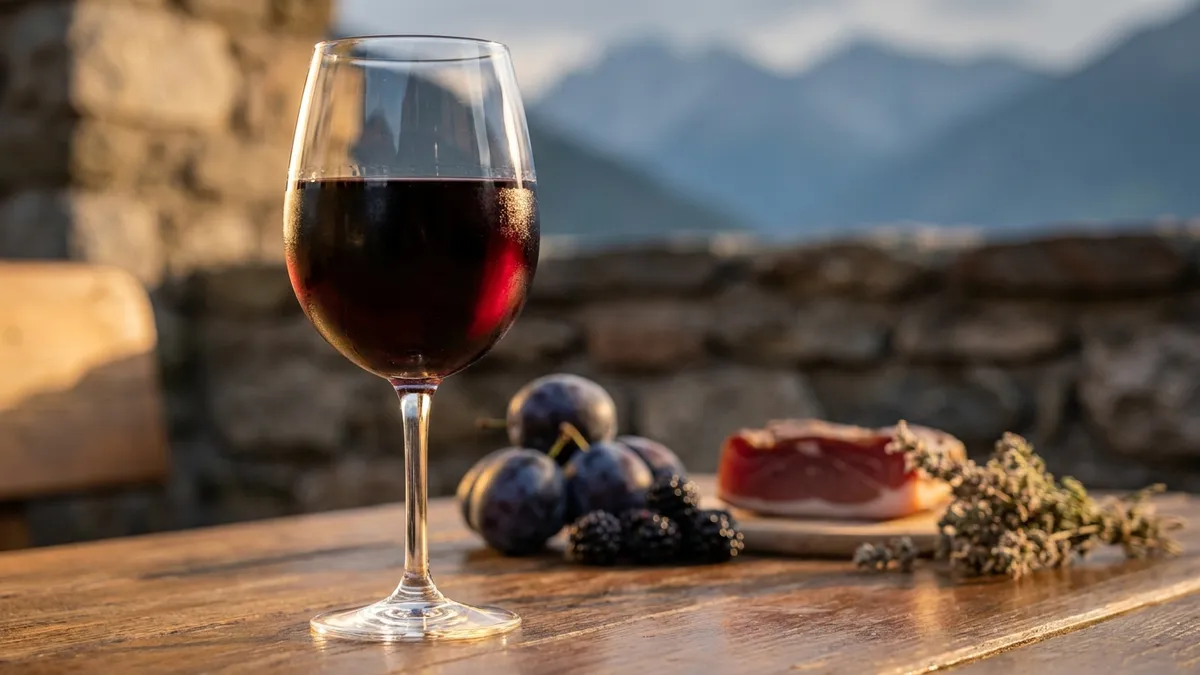
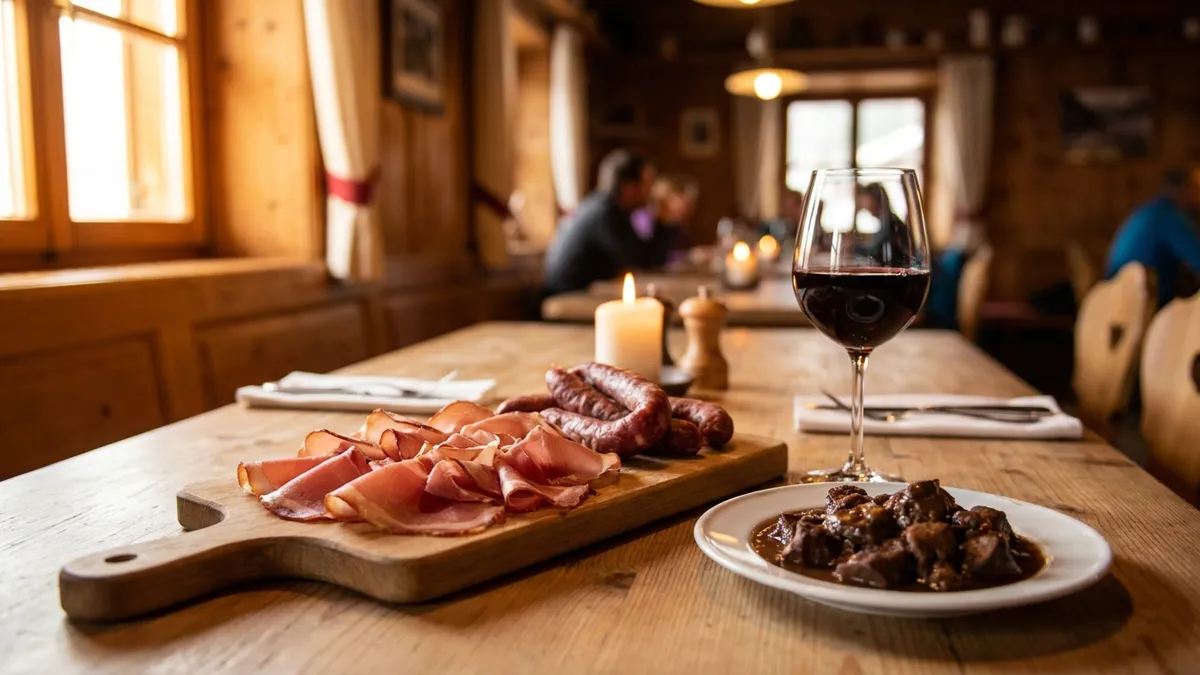
Lagrein was made for the table, and specifically for the smoked and cured fare of the Alps. Its acidity cuts through fat, its tannins handle protein, and its smoky, savory side mirrors cured and grilled flavors. The principle is the same one behind all structured reds: match the wine's grip and acid to the dish's richness.
Reliable Alpine Pairings
- Smoked speck and cured meats — the regional classic, where the wine's smoke echoes the cure and the acidity slices the fat
- Roast pork and braised beef — hearty, savory plates that meet the wine's depth head-on
- Venison and game — earthy, dark meats that flatter the wine's savory, smoky core
- Grilled sausages and charcuterie — fat and salt meet the brisk acidity for a clean finish
- Mushroom dishes — risotto, ragù, or roasted mushrooms echo the wine's earthy undertone
- Aged alpine cheeses — firm, nutty mountain cheeses match the wine's structure
What to Avoid
Skip very delicate fish and creamy, sweet desserts, which the wine's acidity and faint bitterness will overpower. Save the lighter Kretzer rosato for charcuterie and lighter plates, and bring out the structured Dunkel for smoked meats and roasts.
Lagrein vs Other Dark Reds
Placing the grape next to familiar varieties makes its profile easier to remember.
How Lagrein compares to three reds you may already know.
- Body: Lagrein medium to full; Syrah full; Teroldego medium to full; Cabernet Sauvignon full
- Acidity: Lagrein high; Syrah medium; Teroldego medium to high; Cabernet Sauvignon medium to high
- Tannins: Lagrein medium to high; Syrah high; Teroldego medium; Cabernet Sauvignon high
- Key flavors: Lagrein dark plum, chocolate, violet, smoke; Syrah black fruit, pepper, smoke; Teroldego blackberry, plum, earth; Cabernet Sauvignon blackcurrant, cedar, graphite
- Signature finish: Lagrein faintly bitter; Syrah peppery; Teroldego juicy; Cabernet Sauvignon firm and dry
- Best with: Lagrein smoked speck, venison; Syrah grilled red meat, stew; Teroldego pizza, grilled sausage; Cabernet Sauvignon steak, aged cheese
If this dark, savory profile appeals, you may also enjoy the structure of Cabernet Sauvignon and the savory complexity of Nebbiolo, Italy's other great structured red.
How a Beginner Should Approach Lagrein
The smartest way to learn any grape is to taste it across two contrasting styles, side by side. Lagrein makes this easy because its range runs from a fresh, juicy Dunkel to a deep, oak-aged Riserva.
- Start fresh and unoaked. Pour a young Lagrein Dunkel and lock onto the signature: inky color, dark plum and smoke, brisk acidity, and that clean bitter finish. This is the grape's fingerprint.
- Then taste an oak-aged Riserva. A Riserva shows how barrel time adds cedar and mocha, rounds the tannins, and stretches the finish.
- Note the shift. Watch how the fruit moves from bright plum toward riper, darker tones, how the tannins soften, and how the smoky and bitter notes deepen. Those changes are winemaking made tangible.
The point of a comparison is to give your senses a contrast to react to. A single glass tells you little; two glasses side by side teach you the variable that changed. That habit of systematic tasting is the single fastest way to build a real palate.
The Sommy app walks you through exactly these structured comparisons, guiding you to name the smoke, gauge the acidity, and put words to the difference between two bottles of the same grape. Lagrein, with its clear dark signature and wide stylistic spread, is an ideal grape to practice on, one inky, savory glass at a time.
Sources
- Lagrein — Wikipedia
- Lagrein — Alto Adige's Dark Red Grape — Wine Folly
- Alto Adige Wines — Lagrein — Consorzio Vini Alto Adige
Frequently Asked Questions
What does Lagrein wine taste like?
Lagrein tastes of dark plum, blackberry, and black cherry layered with bitter chocolate, violet, earth, and a smoky, savory edge. It has brisk acidity and firm, moderate tannins that finish with a faint, pleasant bitterness. The wine pours almost opaque purple-black and feels concentrated, structured, and food-driven rather than soft or jammy.
Where is Lagrein wine grown?
Lagrein is native to Alto Adige, the German-speaking alpine region of far northern Italy, also called Südtirol. The warmer valley floors around the towns of Bolzano and Gries are its heartland, where the heat helps ripen the late variety. Small plantings exist in nearby Trentino and a handful of experimental sites abroad, but Alto Adige defines the grape.
What is the difference between Lagrein Dunkel and Kretzer?
Dunkel means dark in German and refers to the classic deep red Lagrein, fermented on its skins for full color and tannin. Kretzer is the rosato, or rosé, made by giving the dark juice only brief skin contact. Kretzer is paler, lighter, and brighter, while Dunkel is concentrated, structured, and built for richer food.
Is Lagrein related to Syrah and Teroldego?
Yes. DNA research shows Lagrein is a grandchild of Pinot and an offspring of Teroldego, the dark red grape of neighboring Trentino. It is also a half-sibling of Syrah through shared parentage. These links explain its deep color, dark-fruited spice, and savory, structured character, which sit closer to Syrah than to softer Italian reds.
What food pairs well with Lagrein?
Lagrein loves the smoked and cured fare of the Alps. Smoked speck, cured sausages, roast pork, venison, and braised beef all flatter its smoky, savory side, while its acidity cuts through fat. Aged alpine cheeses and mushroom dishes also work well. The brisk acidity and firm tannins make it a confident partner for rich, hearty plates.
Is Lagrein dry or sweet?
Lagrein is a dry red wine with no meaningful residual sugar. Its ripe dark-plum and blackberry fruit can create a brief impression of sweetness on the first sip, but the brisk acidity, firm tannins, and faintly bitter finish confirm it is fully dry. The Kretzer rosato is also made in a dry style.
Is Lagrein a good wine for beginners?
Yes, especially for drinkers who enjoy dark, savory reds over fruity, jammy ones. Its deep color and clear smoky-plum signature make it easy to recognize, and its acidity keeps it food-friendly rather than heavy. Start with a fresh, unoaked Dunkel to learn the grape, then try an oak-aged Riserva to taste how barrel time adds depth and polish.
Sommy Team
LinkedInFounder & Wine Educator
The Sommy Team is building the world's most approachable wine education app, helping beginners develop real tasting skills through structured courses and AI-guided practice.