Casablanca Valley Wine Guide: Chile Cool-Climate Whites

By the Sommy Team — AI-assisted, human-edited.
Updated Sep 24, 2026
Contents (10)
- What Is Casablanca Valley Wine?
- What Makes Casablanca Valley a Cool-Climate Region If Chile Is Generally Warm?
- Where Is Casablanca Valley, and How Far Is It From Santiago?
- How Did Casablanca Valley Become a Wine Region?
- What Grapes Grow in Casablanca Valley, and Where?
- What Does Casablanca Valley Sauvignon Blanc and Chardonnay Taste Like?
- How Is Casablanca Valley Different From Leyda and San Antonio Valley?
- What Do "DO" and "Costa" Mean on a Casablanca Valley Wine Label?
- What Food Pairs With Casablanca Valley White Wine?
- Can You Visit Casablanca Valley Wineries From Santiago?
TL;DR
Casablanca Valley is Chile's pioneering cool-climate wine region, chilled not by latitude but by the Humboldt Current and morning fog. Planted from 1982, it grows mostly Chardonnay and Sauvignon Blanc in its cooler zones, with Pinot Noir, Merlot and Syrah on warmer ground. Its nearest rival, Leyda in San Antonio Valley, lies just south and even closer to the Pacific.
What Is Casablanca Valley Wine?
Casablanca Valley wine is crisp, cool-climate white wine from Chile's Pacific coast. The valley sits at roughly the same latitude as warm places like Morocco or Adelaide, yet it grows some of South America's crispest whites. Its cooling has nothing to do with how far north or south the valley sits.
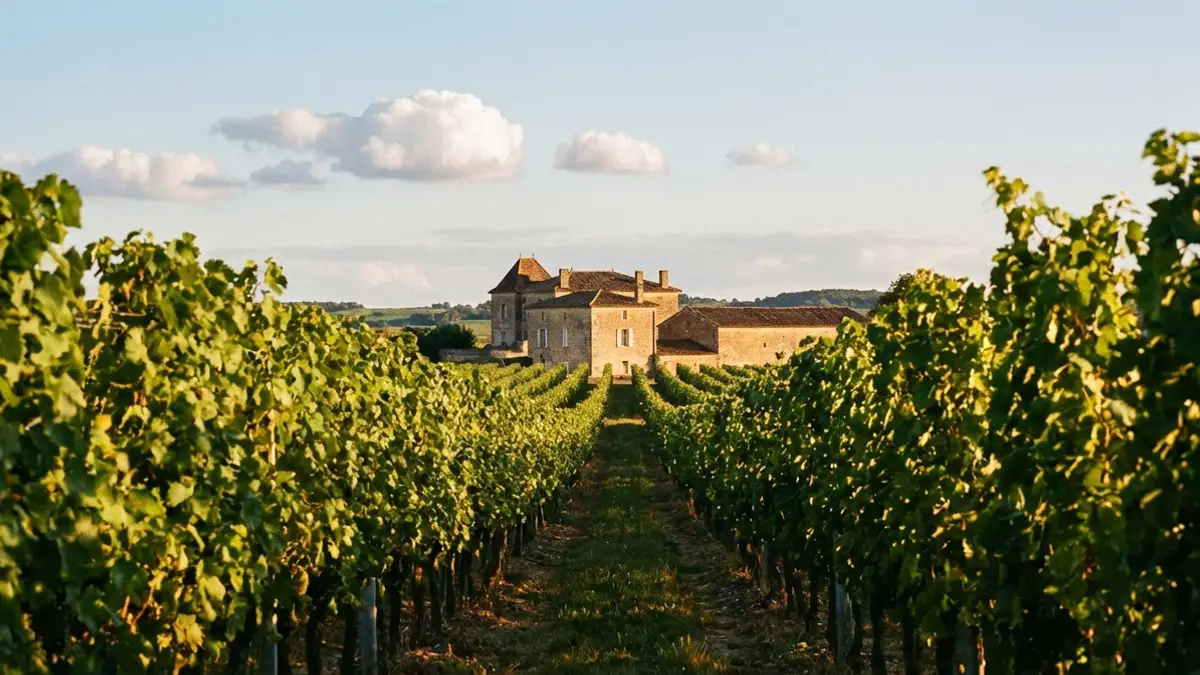
Chardonnay and Sauvignon Blanc dominate Casablanca's vineyards. They grow in a cool coastal mesoclimate, meaning a local climate shaped by one site's geography. The cold Humboldt Current and daily fog rolling in from the Pacific create it. Pinot Noir does well in the coolest sites, while higher, warmer pockets further from the coast ripen Merlot and Syrah. Planted only since 1982, Casablanca is one of Chile's youngest wine valleys, and it changed how the world thought about Chilean wine.
Before Casablanca, Chile's international reputation rested almost entirely on ripe, sun-soaked reds from warm inland valleys. Casablanca proved the country could also grow high-acid, aromatic whites that stood up next to whites from cooler parts of Europe or New Zealand. It did that with one deliberate bet on a patch of land nobody had planted before.
What Makes Casablanca Valley a Cool-Climate Region If Chile Is Generally Warm?
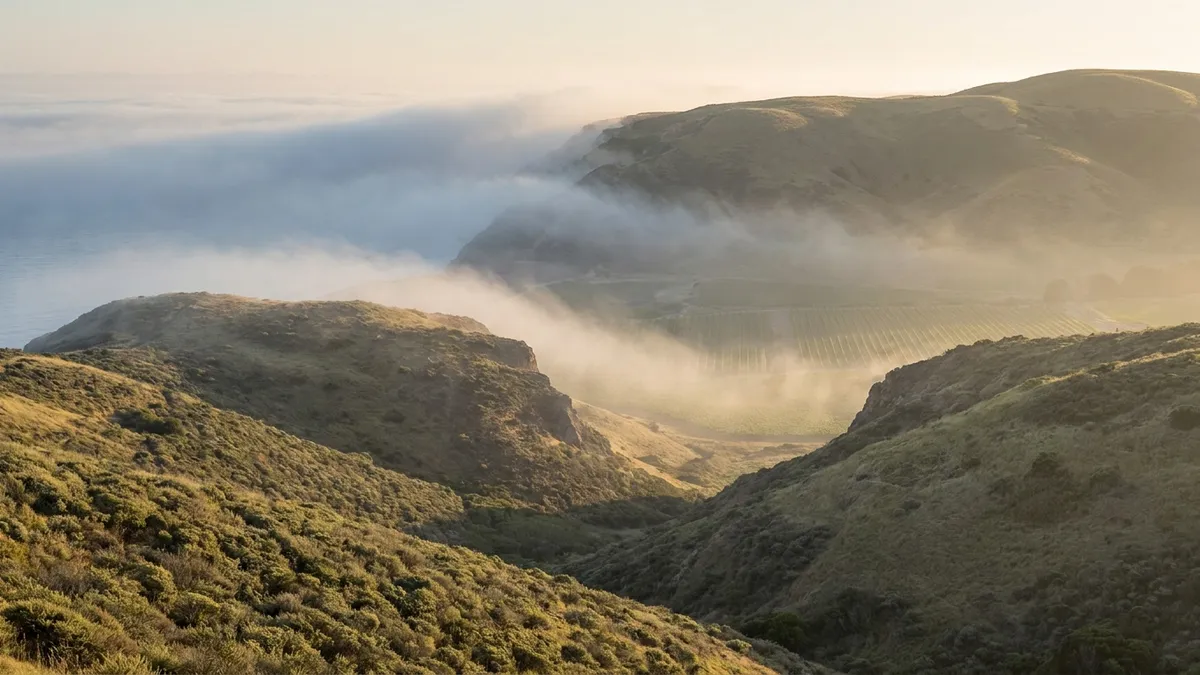
Casablanca is cool because of ocean chemistry, not because it sits far from the equator. The Humboldt Current drags cold water up the Chilean coast from the Antarctic, and that cold water chills the air sitting just above it before it drifts toward the vineyards.
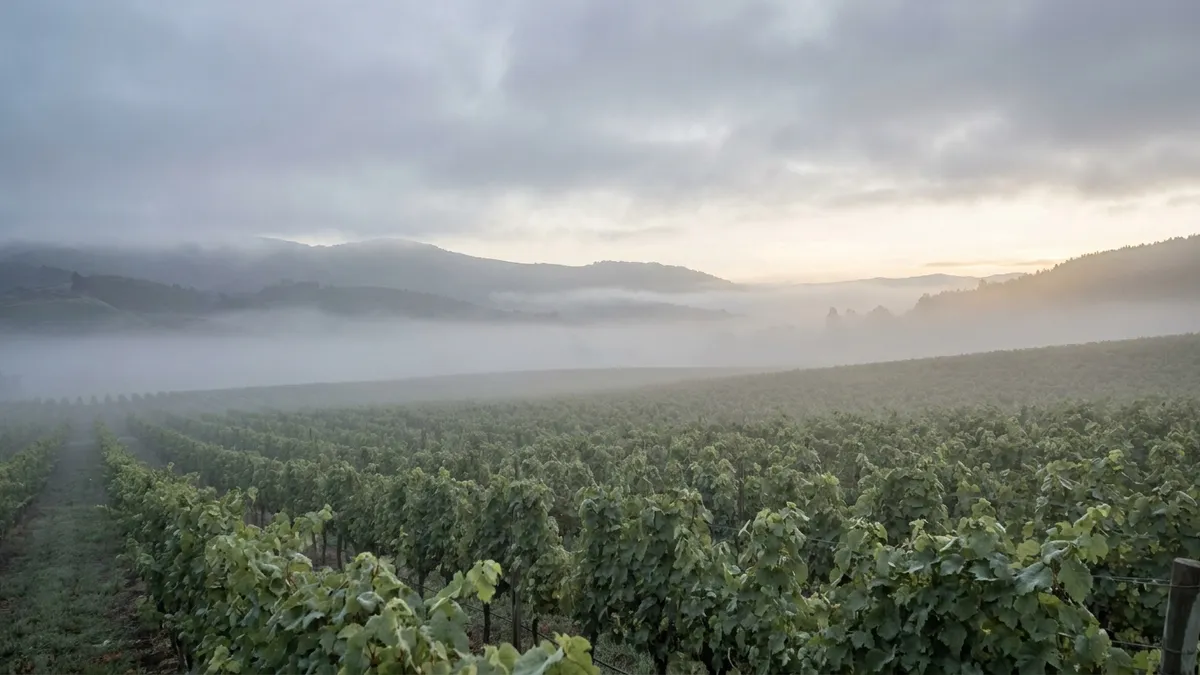
A gap in the Coastal Range near Casablanca lets that chilled, moisture-heavy air roll inland every morning as fog. The fog typically blankets the vineyards until it burns off. As the inland valley warms through the day, it pulls in a cooling afternoon sea breeze from the coast. The result is a long, gentle ripening season that protects the grapes' acidity (the tartness that makes your mouth water).
Where Is Casablanca Valley, and How Far Is It From Santiago?
Casablanca Valley sits in Valparaíso Province, roughly 75 to 100 kilometers northwest of Santiago, on the road to the port city of Valparaíso. The valley itself stretches roughly 30 kilometers east to west, and that east-west span matters more than the distance to Santiago.
Most of Chile's wine regions line up north to south, but Casablanca is defined by how far each vineyard sits from the coast within its own short valley. The western end, closest to the Pacific, gets the strongest fog and breeze. The eastern end, sheltered a little more by the Coastal Range, runs warmer. Rainfall averages around 540mm a year, and the soils are a mix of clay and sandy ground shaped by an old, weathered granite base beneath.
How Did Casablanca Valley Become a Wine Region?
Casablanca became a wine region in 1982. Before then the valley was sheep-farming country, dismissed by other winemakers as too close to the sea to plant. Pablo Morandé, then a winemaker at Concha y Toro, put in Chile's first cool-coastal vineyard that year on a 20-hectare property. One of the winery's owners funded it privately.
The project almost failed at once. Frost wiped out the first year's planting. Morandé replanted, and by the third year the vineyard succeeded. It proved that Casablanca's cool mesoclimate could ripen fine white wine grapes on land once used to graze livestock.
That bet paid off well beyond Casablanca itself. The valley opened the door to Chile's other coastal wine zones. Today Casablanca, San Antonio and Limarí together host more than 15,000 hectares of vineyard. They are recognized as Chile's leading white-wine terroirs, where terroir means the soil, climate and site that give a wine its character (terroir explained).
Other growers followed Morandé's lead through the 1980s and 1990s. Large producers that had built their names on inland reds bought and planted land in Casablanca to reach cooler fruit. Within a couple of decades, a valley that had never grown wine grapes became a standard stop on any serious tour of Chilean wine.
What Grapes Grow in Casablanca Valley, and Where?
Casablanca plants whites on its cooler, lower ground near the coast and reds on higher, warmer ground inland. One widely cited tally puts Chardonnay first at roughly 2,269 hectares, ahead of Sauvignon Blanc at around 1,950 hectares. Pinot Noir follows at about 723 hectares and Merlot at roughly 391 hectares. Treat these as approximate, since sources report total plantings inconsistently.
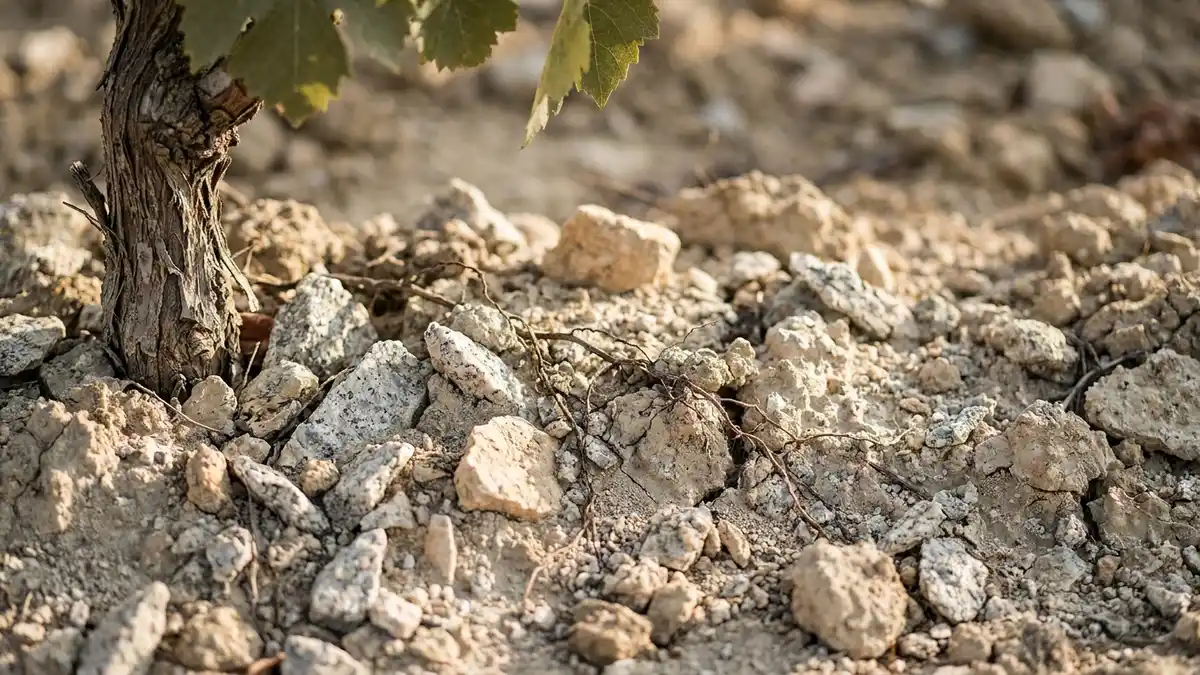
Casablanca's old granitic clay soils vary across a small area, which helps the valley support a wide grape mix. Some blocks sit on heavier clay that holds water and keeps vines cooler through the growing season. Others sit on sandier, faster-draining ground that warms a little quicker and suits red grapes better. Growers choose grape and rootstock block by block.
The pattern holds across the valley. The cooler, lower west grows Sauvignon Blanc and Chardonnay, while the warmer, higher east ripens Merlot and Syrah. Pinot Noir does best in the coolest pockets of all.
What Does Casablanca Valley Sauvignon Blanc and Chardonnay Taste Like?
Casablanca Sauvignon Blanc leans toward grapefruit, lime and gooseberry, with passion fruit, freshly cut grass and a faintly salty edge that reflects the valley's cool, foggy mornings. It sits at the zesty, aromatic end of the Sauvignon Blanc spectrum, away from the riper, tropical styles of warmer climates. It is generally less grassy than New Zealand Marlborough Sauvignon Blanc.
Chardonnay from Casablanca spans a wider range of styles. Unoaked versions are lean and citrus-driven, built around green apple and lemon. Fuller, barrel-aged versions add white peach and a subtle vanilla or buttery note from time in oak, without losing the underlying freshness that the cool mesoclimate provides.

The common thread is the region's long, cool ripening period. Grapes hang on the vine longer at lower temperatures. That builds more flavor in the fruit while keeping sugar and acid in balance, instead of racing to full ripeness under constant heat. The same balance lets Casablanca whites age a little better than warm-climate versions of the same grapes. The acid that carries the fruit in a young bottle is still there a few years on.
How Is Casablanca Valley Different From Leyda and San Antonio Valley?
San Antonio Valley, home to the Leyda sub-zone, lies just south of Casablanca and sits even closer to the Pacific, which pushes its mesoclimate a step further toward the cool, saline end of the spectrum. Both are coastal, fog-influenced valleys, but they are distinct appellations with different histories and, by most accounts, different textures in the glass.
| Valley | Distance to coast | Cooling driver | Leading grapes | Sauvignon Blanc style |
|---|---|---|---|---|
| Casablanca Valley | Coastal, ~75-100km NW of Santiago | Humboldt Current fog + afternoon sea breeze | Chardonnay, Sauvignon Blanc, Pinot Noir | Grapefruit, gooseberry, herbal, mineral edge |
| San Antonio (Leyda) | South of Casablanca, closer to the Pacific | Stronger, more direct ocean influence | Sauvignon Blanc, Pinot Noir, Syrah | Leaner, more saline, higher acid |
| Maipo Valley (inland) | Shielded by the Coastal Range | Little to no fog; warm, sunny days | Cabernet Sauvignon, Carmenère | Little grown; warm-climate reds instead |
San Antonio's coastal vineyards developed later than Casablanca's and needed real engineering to farm at all. Growers built a pumping station eight kilometers away, at the mouth of the Maipo River, to bring irrigation water to such dry, wind-exposed ground. Casablanca is the older, larger and more established of Chile's coastal cool-climate valleys, which is why it is usually the one consumers meet first.
What Do "DO" and "Costa" Mean on a Casablanca Valley Wine Label?
A Denominación de Origen (DO) is Chile's legally defined place name, similar in purpose to an appellation elsewhere in the world. A wine labeled Casablanca must contain at least 85% grapes grown within the Casablanca DO. Chile's system dates from Decree 464 of December 1994, which defines Casablanca as a subregion of the wider Aconcagua region.
In 2012, Chile added a second, optional system on top of its regional DOs. It has three climate designations: Costa (coastal, Pacific-influenced), Entre Cordilleras (the sheltered zone between the coastal hills and the Andes) and Andes (mountain-influenced). These describe growing conditions rather than a fixed place. A bottle can carry both a DO name and a climate designation together, such as "Casablanca, Costa." If a Chilean label says "Costa," then the wine comes from a cooler, ocean-influenced site, whichever valley it names. On the label, the climate word sits next to the DO name (how to read a wine label).
Chile's appellation rules have kept changing since then. In 2018 the country approved four new, smaller DOs, each covering a much tighter area than a valley-wide designation like Casablanca. Chilean wine law is moving toward more precise, site-specific labeling. If an unfamiliar DO name appears on a Chilean bottle, then it is likely one of these smaller, newer zones.
What Food Pairs With Casablanca Valley White Wine?
Casablanca Sauvignon Blanc's citrus, gooseberry and herbal profile goes with raw and lightly cooked seafood: ceviche, oysters, grilled white fish and shellfish. The wine's acidity cuts through the dish, and its saline edge echoes it. High acid against lean, briny food is the core of wine and seafood pairing.
The same grassy, salty character also goes with goat cheese and green vegetables like asparagus. Both are classic matches for high-acid whites (wine and cheese pairing). Casablanca Chardonnay, especially unoaked styles, is more flexible at the table. It handles roast chicken, richer shellfish like scallops or crab, and creamy sauces without being overwhelmed. If the dish is raw fish with lime, then pour the Sauvignon Blanc; if it carries cream or butter, then pour the Chardonnay.
Can You Visit Casablanca Valley Wineries From Santiago?
Yes, it is one of the easiest wine day trips near the Chilean capital. At roughly 75 to 100 kilometers from Santiago, Casablanca sits directly on the route toward Valparaíso and the coastal resort town of Viña del Mar. A single day comfortably covers a couple of wineries plus time by the sea.
Most visits center on tasting rooms built for guests, often with a walk through the vines. Watching the fog burn off is the clearest way to see why this valley tastes the way it does. If you want to see it, then book a morning visit: fog sits low over the rows, then clears to bright sun by late morning as the sea breeze builds.
When to go
Casablanca sits between two very different terrains. Head a little further west after tasting and the Pacific coastline begins, with its own seafood and fishing towns. Head back east and Santiago's sprawl is within the hour. Spring and early autumn tend to give the clearest mix of morning fog and afternoon sun. The valley's cool mesoclimate keeps it comfortable for most of the year.
Chile's coast-to-Andes geography shapes every region in the country (Chilean wine guide), and the wine regions hub on Sommy maps the rest of the world. Pour a Casablanca Sauvignon Blanc tonight next to one from a warm climate and taste them side by side: the Casablanca glass should taste tarter and less tropical.
Sources
Frequently Asked Questions
What makes Casablanca Valley a cool-climate wine region if Chile is generally warm?
Casablanca sits at roughly the same latitude as warm regions like Morocco, so its coolness comes from ocean chemistry, not distance from the equator. The cold Humboldt Current chills the Pacific water offshore, that cold water chills the air above it, and a gap in the Coastal Range lets that chilled air roll inland as morning fog, followed by cooling afternoon sea breezes.
What grapes grow best in Casablanca Valley?
Chardonnay and Sauvignon Blanc are the leading grapes, planted mainly in the valley's cooler, lower-lying western zones. Pinot Noir also does well in the coolest pockets. Higher, warmer eastern elevations, further from the direct fog influence, ripen Merlot and Syrah, so the valley is not exclusively a white-wine region even though whites built its reputation.
Is Casablanca Valley good for red wine or only white wine?
Both, though whites lead. The valley's cooler coastal zones favor Chardonnay and Sauvignon Blanc, while its higher, warmer inland elevations ripen Merlot and Syrah, and Pinot Noir thrives in the coolest sites of all. Casablanca is not a one-dimensional white-wine valley, but its whites are what put it on the map internationally.
How far is Casablanca Valley from Santiago?
Casablanca Valley sits roughly 75 to 100 kilometers northwest of Santiago, in Valparaíso Province, on the route toward the port city of Valparaíso and the coastal resort of Viña del Mar. The valley itself stretches about 30 kilometers east to west, which is the span that lets ocean fog and afternoon sea breezes travel inland.
What is the difference between Casablanca Valley and San Antonio (Leyda) Valley?
San Antonio Valley, home to the Leyda sub-zone, lies just south of Casablanca and sits even closer to the Pacific, giving it a leaner, more saline style, especially in Sauvignon Blanc and Pinot Noir. Casablanca is the older, larger and more established of the two, planted from 1982, while San Antonio's coastal vineyards developed later and needed engineered irrigation to reach such dry, wind-exposed ground.
What does 'Costa' mean on a Chilean wine label?
Costa is one of three optional climate designations Chile added to its labeling rules, alongside Entre Cordilleras and Andes, describing a wine's growing conditions relative to the Pacific Ocean and the Andes rather than a fixed region. Costa signals a coastal, ocean-cooled site. It can appear on a label together with the region's official Denominación de Origen name.
What food pairs with Casablanca Valley Sauvignon Blanc?
Its citrus, gooseberry and herbal profile pairs naturally with raw and lightly cooked seafood: ceviche, oysters, grilled white fish and shellfish. The grassy, saline edge also matches goat cheese and green vegetables like asparagus. Casablanca Chardonnay, especially unoaked styles, works well with roast chicken, richer shellfish and creamy sauces.
Can you visit Casablanca Valley wineries as a day trip from Santiago?
Yes. Casablanca's distance of roughly 75 to 100 kilometers from Santiago, directly on the route to Valparaíso and Viña del Mar, makes it one of the easiest wine day trips near the capital. Many estates run tasting rooms geared toward visitors, and a single day comfortably covers a couple of wineries plus time on the coast.
Sommy Team
LinkedInFounder & Wine Educator
The Sommy Team is building the world's most approachable wine education app, helping beginners develop real tasting skills through structured courses and AI-guided practice.