The Definitive Wine and Cheese Pairing Guide

By the Sommy Team — AI-assisted, human-edited.
Updated Apr 29, 2026
Contents (11)
- Wine and Cheese Pairing, in 90 Seconds
- The Three Rules That Drive Every Match
- The Tannin Problem (Why "Red Wine with Cheese" Often Fails)
- Pairing by Cheese Category
- The Regional Rule: What Grows Together Goes Together
- The Salt Factor
- The "One Wine + One Cheese" Decision Tree
- Building a Cheese Board That Actually Works
- Serving the Cheese Right
- Common Mistakes That Sink the Pairing
- Practicing Pairing as a Skill
TL;DR
Match weight to weight, intensity to intensity, and use sweetness or acidity to cut richness. Fresh cheeses want crisp whites, soft-ripened cheeses want sparkling or Pinot Noir, washed-rinds love Gewurztraminer, hard aged cheeses take bold reds, and blue cheeses always want sweet wine.
A wine and cheese pairing guide is only as useful as the specific matches it gives you. The three classic rules — match weight, balance fat with acidity, and use sweetness to tame salt — explain the logic, but the real value is knowing what to pour with a wedge in front of you. This deep-dive covers 30+ cheeses with specific wine matches plus a decision tree for working backward from one bottle. For the higher-level overview, our original wine and cheese pairing guide covers the broader theory. This one is built for the cheese counter.
Wine and Cheese Pairing, in 90 Seconds
A wine and cheese pairing guide can be condensed to four reflexes: match the weight of the cheese to the weight of the wine, use acidity or bubbles to cut fat, use sweetness to tame salt and pungency, and avoid grippy tannin with anything soft, fresh, or creamy.
The shorthand: sparkling handles 80% of cheeses. Pinot Noir handles most red-friendly ones. Sweet wine handles every blue. Sauvignon Blanc handles every goat cheese. Gewürztraminer handles every washed-rind. Aged red goes with aged hard cheese — never with soft. Memorize those six and you outperform most restaurant pairings.
The Three Rules That Drive Every Match
Three principles do most of the work. Internalize them and you can pair almost any cheese to almost any wine without a chart.
Rule 1: Match Weight to Weight
A delicate fresh mozzarella next to a thick, oaky Chardonnay is a mismatch — the wine bulldozes the cheese. The same Chardonnay next to a 24-month-aged Comté is a beautiful match because the weights line up. Weight in cheese comes from age, fat, and salt. Weight in wine comes from alcohol, oak, tannin, and flavor density. The louder the cheese, the louder the wine can be.
Rule 2: Use Acidity or Bubbles to Cut Fat
Cheese is, at its core, concentrated milkfat. Acidity (the bright, mouth-watering quality in wine that comes from natural fruit acids) cuts through fat the way lemon brightens a rich sauce. Champagne, Sauvignon Blanc, and unoaked Chardonnay are the workhorses of cheese pairing. Bubbles do the same job mechanically. If a cheese feels heavy on the palate, your wine needs more acid or more bubble.
Rule 3: Use Sweetness to Tame Salt and Pungency
Aged and blue cheeses are surprisingly salty and pungent, and a big, tannic Cabernet next to Roquefort often tastes harsh. Sweetness counterbalances salt the way salted caramel works. Sauternes with Roquefort, Tawny Port with Stilton, and late-harvest Riesling with aged Gouda are all built on this rule.
The Tannin Problem (Why "Red Wine with Cheese" Often Fails)
The most enduring myth in pairing is that red wine goes with cheese. Half the time, it does not. Tannins (the drying, gripping compounds in red wine from grape skins, seeds, and oak) and the weight of a young red overpower soft cheeses, and their mild flavor simply disappears.
A young, grippy Cabernet Sauvignon next to a soft Brie is one of the worst pairings most people accidentally serve. Tannin only works when there is enough protein density and aged-cheese concentration to absorb it — Parmigiano-Reggiano, aged Gouda, Pecorino Romano, aged Cheddar. Soft, fresh, or creamy cheese needs low-tannin reds (Pinot Noir, Gamay) or no red at all. When in doubt, reach for white, sparkling, rosé, or sweet.
Pairing by Cheese Category
Cheese is easier to pair when you group it by how it is made. Each category has a predictable texture, salt level, and intensity, and a predictable wine that flatters it.
Fresh Cheeses (Mozzarella, Burrata, Ricotta, Feta, Fresh Chèvre)
Fresh cheeses are unaged, milky, and high in moisture — the lowest intensity of any category, so they need the lightest wines.
Best wine matches:
- Crisp unoaked white: Sauvignon Blanc, Albariño, Vinho Verde, Verdicchio, Muscadet
- Light sparkling: Prosecco, Cava, Crémant
- Dry rosé, especially Provençal styles
- Light Pinot Grigio for mozzarella and burrata
Avoid heavy reds, oaked Chardonnay, or anything with significant tannin or alcohol heat — the cheese disappears. The textbook pairing of Sancerre Sauvignon Blanc with fresh goat cheese works because the wine's citrus and herbal notes mirror the cheese's tangy grassiness. Our Chardonnay vs Sauvignon Blanc comparison breaks down which white styles flatter which foods.
Soft-Ripened Cheeses (Brie, Camembert, Brillat-Savarin, Triple Crèmes)
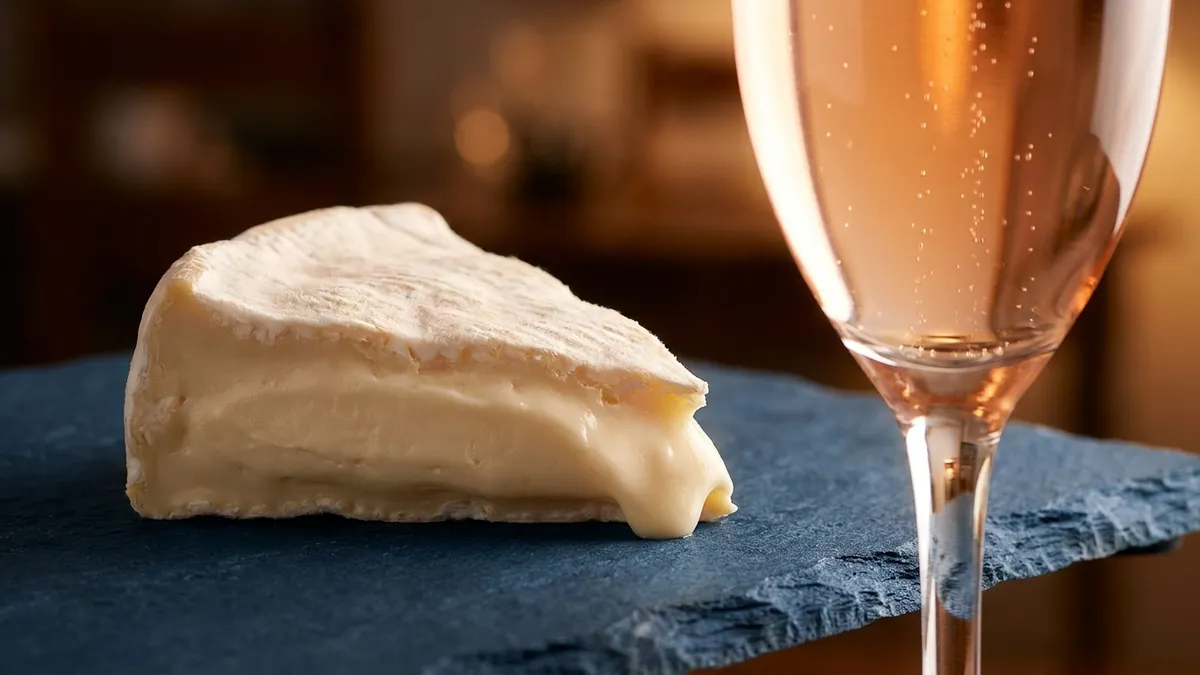
Soft-ripened cheeses have a white bloomy rind and a rich, buttery interior. They are fattier than fresh cheeses, with mushroomy and yeasty notes that develop with age.
Best wine matches:
- Sparkling wine — Champagne with Brie de Meaux is a textbook regional pairing
- Light, fruity red: Pinot Noir, Gamay (Beaujolais)
- Off-dry white: Chenin Blanc, Riesling Spätlese, dry Vouvray for triple-crèmes
- Dry rosé
Sparkling wine is the surest bet — acid and bubble cut through the buttery rind better than anything else. For aged Brie or Camembert that has gotten funky, a fruity Pinot Noir matches the mushroomy depth without overwhelming the texture. The full ripeness-by-wine table is in our guide to wine with Brie.
Washed-Rind Cheeses (Époisses, Munster, Taleggio, Limburger)
Washed-rind cheeses are bathed in brine, wine, or spirits during aging, which feeds bacteria that produce orange, sticky rinds and pungent, meaty aromas. They smell stronger than they taste.
Best wine matches:
- Aromatic white: Gewürztraminer (the classic Alsatian pairing), dry Alsace Riesling, Pinot Gris
- Off-dry Chenin Blanc, especially Vouvray demi-sec
- Light fruity red: Beaujolais, very young Pinot Noir
Washed-rinds are the great red-wine killers — tannin and pungency clash badly. Stick to aromatic whites with a touch of sweetness. Gewürztraminer's lychee and rose notes next to a ripe Époisses is a revelation. A good farmhouse beer often beats wine here too.
Semi-Firm Cheeses (Gouda, Edam, Gruyère, Comté, Manchego, Cantal)
Semi-firm cheeses are pressed and aged to a firm-but-not-crumbly texture. They are nutty, caramelized, and the most wine-friendly category overall — they tolerate tannin, oak, and a wide range of styles. Melted into a fondue pot, Gruyère calls for a crisp unoaked white instead: see wine with fondue.
Best wine matches:
- Aged white: oaked Chardonnay, white Bordeaux, white Rioja, Vin Jaune (with Comté)
- Medium-bodied red: Tempranillo (Rioja), Côtes du Rhône, Sangiovese, Merlot
- Sherry: Amontillado or Oloroso — magical with aged Manchego
- Traditional-method sparkling for aged Gruyère
This is the diplomatic middle of the cheese board. Manchego with Rioja and Comté with Vin Jaune are two of the most reliable regional pairings in food.
Hard, Aged Cheeses (Parmigiano-Reggiano, Aged Cheddar, Pecorino Romano, Grana Padano, Aged Gouda)
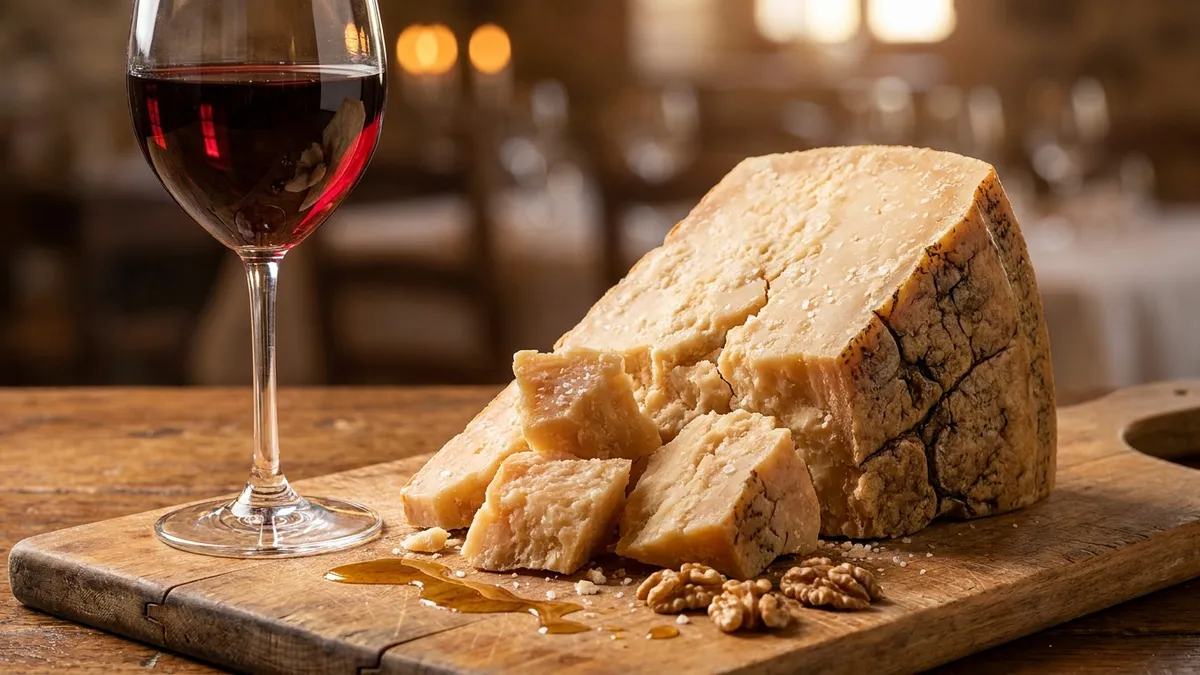
Hard, aged cheeses are low-moisture, crystalline, and intensely savory. The umami compounds that build during long aging — the same amino acids that give aged meat its depth — pair beautifully with concentrated wines.
Best wine matches:
- Bold red: Cabernet Sauvignon, Sangiovese (Chianti Classico, Brunello), Nebbiolo, aged Tempranillo
- Sweet wine: Vin Santo, Tawny Port (especially with aged Gouda)
- Sherry: Oloroso, Palo Cortado
- Sparkling red: Lambrusco with Parmigiano is a regional classic
This is the only category where a big tannic red truly belongs. For aged Cheddar, Cabernet's structure usually wins; Merlot's softness flatters less aggressive aged cheeses. Our Cabernet Sauvignon vs Merlot comparison lays out the trade-offs.
Blue Cheeses (Roquefort, Stilton, Gorgonzola, Cabrales, Bleu d'Auvergne)
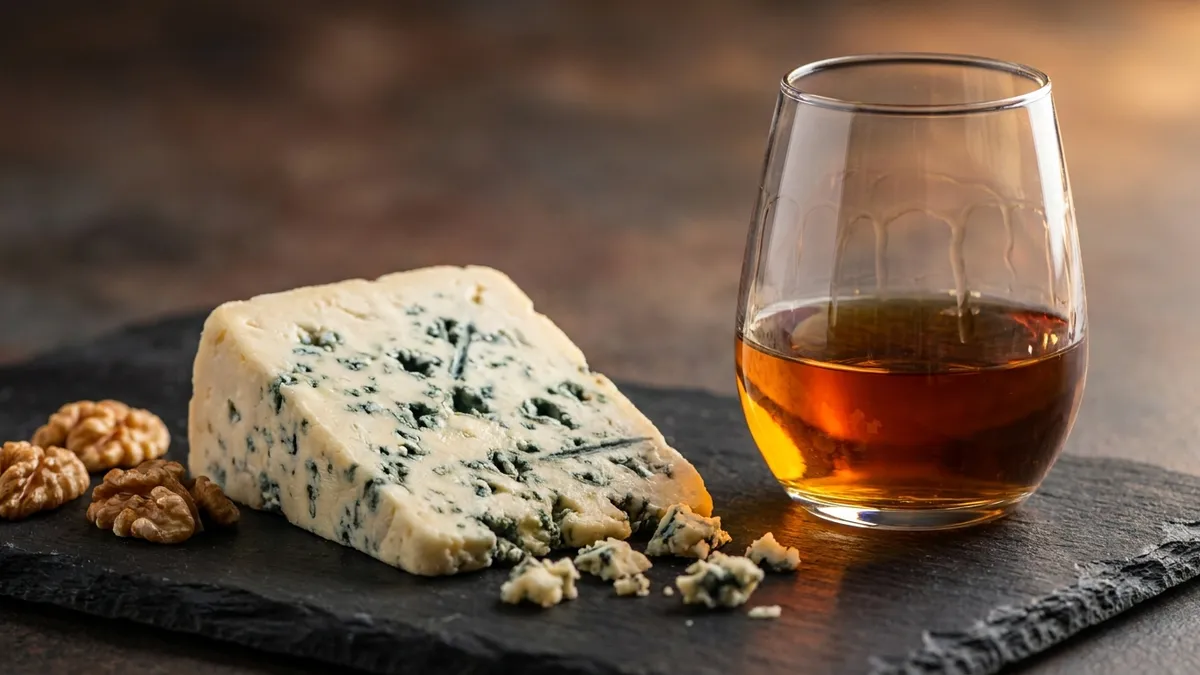
Blue cheeses are inoculated with Penicillium mold, which creates blue veins and a salty, peppery, often sharp flavor. They are the loudest cheeses on any board — and almost universally crave sweet wine.
Best wine matches:
- Sweet wine (the universal match): Sauternes, Tokaji Aszú, late-harvest Riesling, Vin Santo, ice wine
- Fortified: Tawny Port (the textbook Stilton pairing), Ruby Port, Pedro Ximénez sherry
- Sweet and pungent: Amarone or Recioto with Gorgonzola Piccante
Sauternes with Roquefort and Stilton with Tawny Port are two of the most storied pairings in wine. Our dessert wine guide covers the sweet wine styles that handle these matches. Avoid big, dry reds with blue — the cheese's sharp, pungent flavor tends to make them taste harsh.
Goat Cheeses (Chèvre, Crottin de Chavignol, Selles-sur-Cher, Banon)
Goat cheeses cross categories — fresh chèvre is in the fresh family, aged chèvre crosses into semi-firm, and ash-coated goat cheese has its own funky character. The pairing rule holds across all of them.
Best wine matches:
- Sauvignon Blanc, especially Loire styles (Sancerre, Pouilly-Fumé) — the textbook match
- Other crisp whites: Albariño, Verdejo, dry Chenin Blanc
- Light Pinot Noir for aged chèvre
- Dry rosé
The Loire Valley produces both world-class goat cheeses and Sauvignon Blanc, and the pairing is so reliable that even aged or ash-rolled goat cheeses tend to flatter Loire whites. Our wine with goat cheese guide matches each stage, from fresh chèvre to firm aged rounds, to a wine style.
The Regional Rule: What Grows Together Goes Together
When you are stuck, pair by geography. Cheeses and wines from the same region grew up at the same tables and have done the matching work for you.
The most reliable regional pairings:
- Burgundy reds with Burgundy cheeses (Époisses, Brillat-Savarin)
- Rioja with aged Manchego
- Tuscan reds (Chianti, Brunello) with Pecorino Toscano
- Champagne with Brie de Meaux
- Sancerre with Crottin de Chavignol
- Lambrusco with Parmigiano-Reggiano
- Vin Jaune with Comté
- Sauternes with Roquefort, Tawny Port with Stilton
If you are building a themed cheese board, pick one region and source both cheese and wine from it. The pairing is essentially pre-solved.
The Salt Factor
Salt is the variable most pairing guides underplay. Aged cheeses and blue cheeses can carry as much salt as cured meat, and salt has predictable effects on wine: it softens bitterness and makes the wine taste less acidic and a little fuller. The rule: salty cheese needs either acid or sweetness — never both at low levels. Feta with Sauvignon Blanc works because the wine has enough acid. Roquefort with Sauternes works because the sweetness balances the salt. Roquefort with a dry red fails because the cheese's pungency overpowers the wine and nothing sweet balances the salt.
The "One Wine + One Cheese" Decision Tree
Most real pairing decisions look like this: one bottle on the counter, one cheese in the fridge. Here is the working-backward chart.
- You have a Cabernet Sauvignon → aged Cheddar, aged Gouda, Parmigiano-Reggiano, or Pecorino Romano
- You have a Pinot Noir → Brie, Camembert, semi-aged Gouda, or aged goat cheese
- You have a Sauvignon Blanc → fresh chèvre, feta, mozzarella, or burrata
- You have a Champagne or sparkling wine → almost anything, but especially Brie, Comté, or aged Gouda
- You have a Riesling (off-dry) → washed-rind (Munster, Époisses) or blue cheese
- You have a Chardonnay (oaked) → Gruyère, Comté, semi-aged Gouda
- You have a Tempranillo (Rioja) → Manchego, semi-firm sheep's milk cheeses
- You have a Sangiovese (Chianti) → Pecorino Toscano, aged Parmigiano
- You have a Tawny Port → Stilton, blue Stichelton, aged Gouda
- You have a Sauternes or sweet wine → Roquefort or any blue
- You have a Prosecco or Cava → fresh, soft, or mild semi-firm cheeses
- You have a Rosé → fresh chèvre, mild Brie, mozzarella, mild semi-firm
The shortcut: when in doubt, default to sparkling. It is the closest thing to a universal answer in this guide.
Our food-pairing learning hub walks through the underlying logic in interactive lessons. Sommy's tasting exercises let you feel the interaction between fat, acid, and salt in real time, which is when pairing stops feeling like trivia and starts feeling instinctive.
Building a Cheese Board That Actually Works
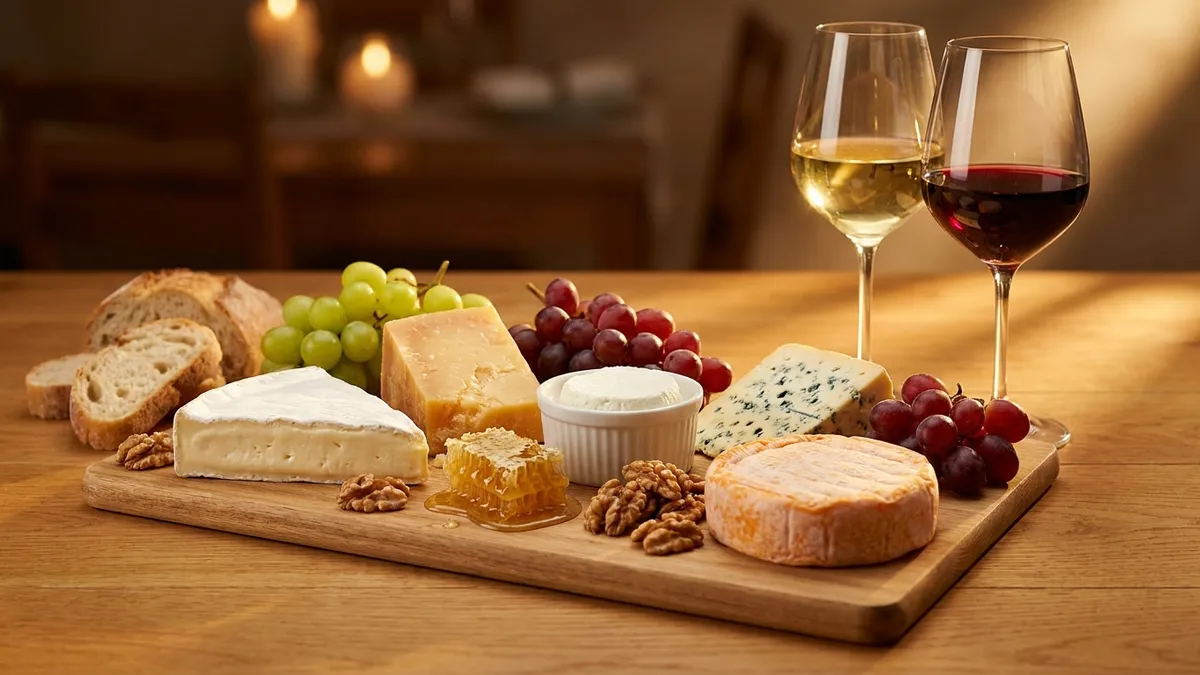
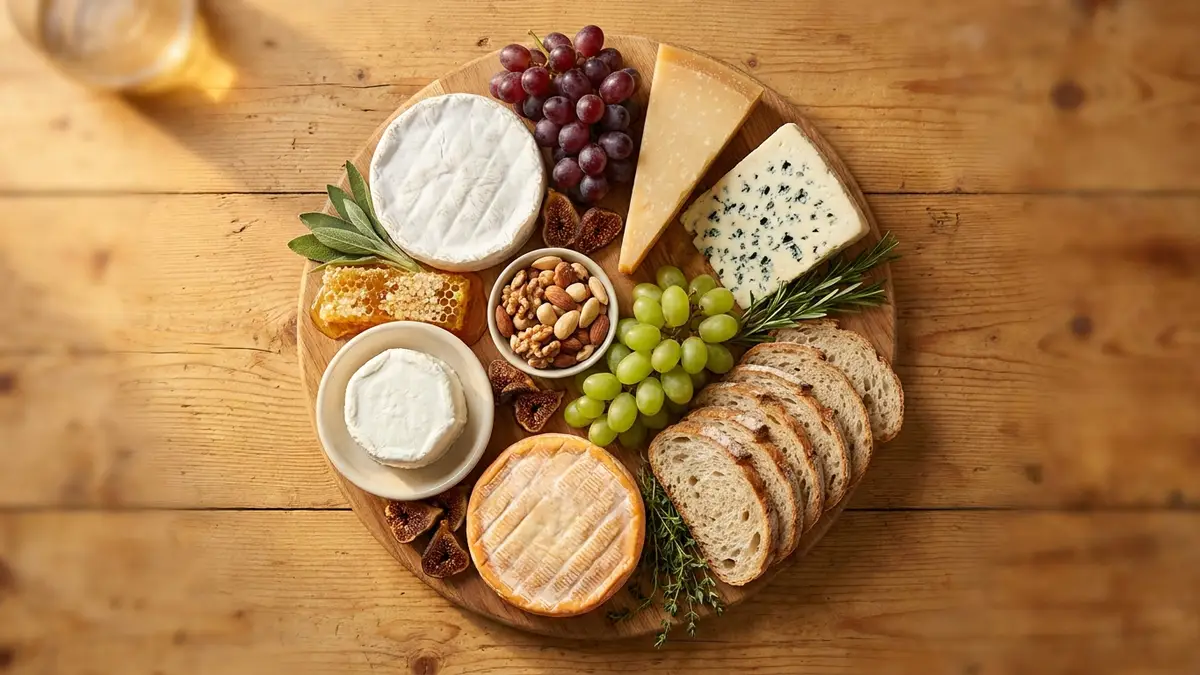
A cheese board is a sequence with a strategy: three to five cheeses across categories, two wines that handle 80% of them, plus a serving routine that lets each cheese show what it can do.
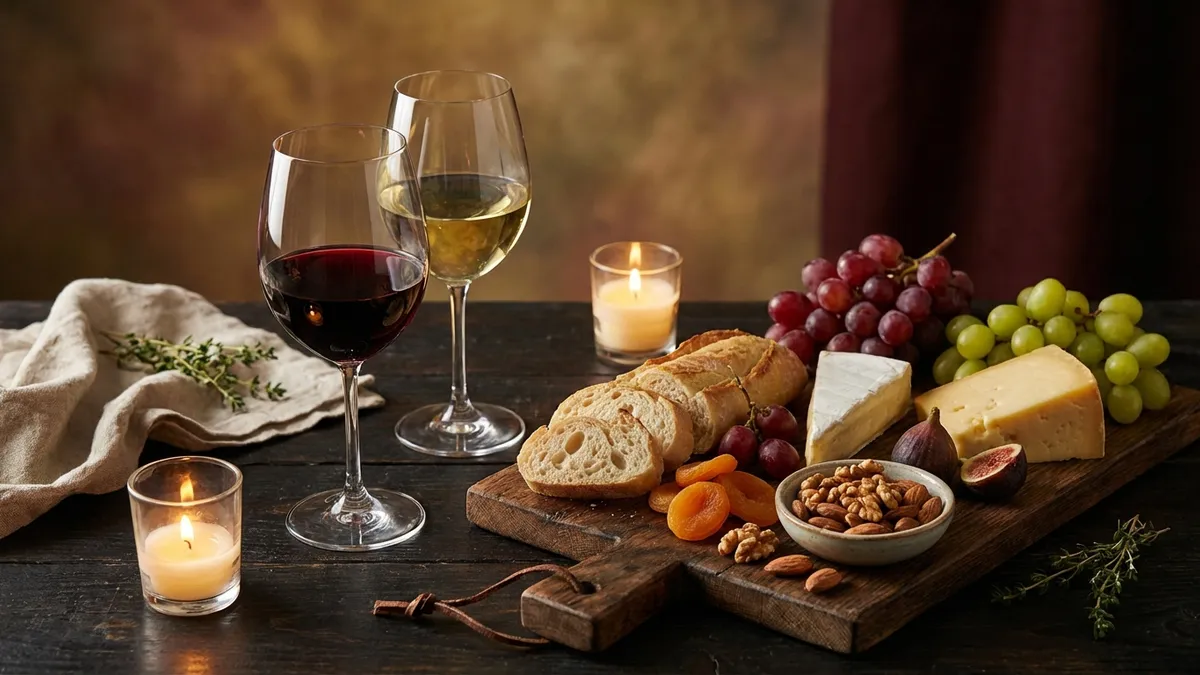
The two-wine compromise: one sparkling (Champagne, Crémant, or Cava) plus one medium red (Pinot Noir or Tempranillo). Sparkling handles fresh, soft, washed-rind, and semi-firm; the Pinot or Tempranillo handles aged semi-firm and most hard cheeses. If there is a blue on the board, add a small pour of sweet wine. Our Champagne vs Prosecco vs Cava breakdown helps you pick the right sparkling style.
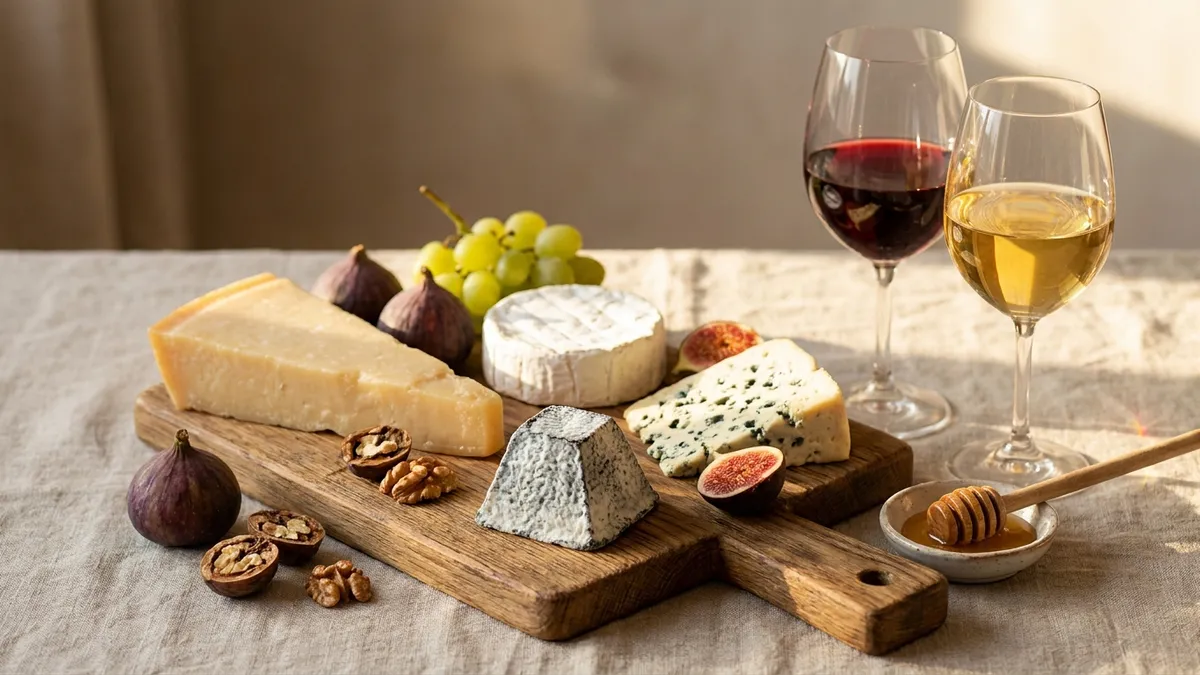
A classic five-cheese progression goes mild to bold: fresh (chèvre or burrata), soft-ripened (Brie or Camembert), semi-firm (Comté or Manchego), hard aged (Parmigiano or aged Gouda), and blue (Roquefort or Stilton). Eat in that order — starting with blue blows out your palate for everything after.
Serving the Cheese Right
Even a perfect pairing falls apart with bad service. The fundamentals:
- Cheese at room temperature: 60 minutes out of the fridge before serving. Cold cheese is muted cheese.
- Wine at the right temperature: whites and sparkling at 45-55°F, light reds lightly chilled at 55-60°F, full reds at 60-65°F
- Bread or simple crackers only — no flavored crackers, no rosemary-and-cracked-pepper anything
- Separate knives so flavors do not cross-contaminate
- Sip wine first, then eat, then sip again to compare. The pairing only reveals itself in that sequence
Common Mistakes That Sink the Pairing
A few errors show up at almost every cheese board.
- Heavy red with soft Brie. The classic clash — the wine's weight and tannin bury the cheese's mild, buttery flavor.
- Dry white with blue cheese. The cheese's strong, pungent flavor swamps a light, dry white, which ends up tasting thin. Reach for sweetness instead.
- High-tannin Cabernet with fresh chèvre. The wine bulldozes the cheese's fresh, tangy flavor.
- Stacked sweetness. Fig jam plus Sauternes plus blue cheese can cross into cloying. Pick one source of sweetness, not three.
- Mass-market Cabernet with mild Cheddar. Technically fine, but underwhelming. A medium red with aged Cheddar is genuinely better.
- Ice-cold cheese. The most common error. Always rest cheese 60 minutes before serving.
The reliable test: if a pairing tastes worse than the wine alone or the cheese alone, the pairing has failed. A good match makes both elements taste better than they did separately.
Practicing Pairing as a Skill
Pairing improves the same way tasting improves — through structured practice. Try one wine with three cheeses side by side and pay attention to what changes. Then try one cheese with three wines. Within a few sessions, your reflexes for "this will clash" or "this will sing" become automatic.
The deeper skill underneath good pairing is palate calibration — identifying acid, fat, salt, and tannin as distinct sensations. Our guide to developing your wine palate lays out the daily exercises that build it, and the Sommy app translates them into interactive tasting sessions with whatever bottle is open.
The next time you open a bottle, pull three cheeses from different categories and taste systematically. That single experiment teaches you more about pairing than any chart.
Frequently Asked Questions
What is the single best wine for a mixed cheese board?
A traditional-method sparkling wine like Champagne, Crémant, or a quality Cava. The bubbles and acidity cut fat, the subtle yeasty depth handles soft cheeses, and the bone-dry profile does not clash with anything. A medium-bodied Pinot Noir is the second-best universal choice.
Why does the rule say white wine pairs better than red with cheese?
The tannin and weight of a young red often overpower soft, fresh and creamy cheeses, so their mild flavor gets lost. White wines tend to have higher acidity and no tannin, so they refresh the palate between bites instead of fighting the cheese. The reds that do work are aged, low-tannin styles or wines paired with hard, aged cheese where the protein content tames the tannin.
What should I pair with a strong blue cheese like Roquefort or Stilton?
Sweet wines almost without exception. Sauternes with Roquefort and Tawny Port with Stilton are two of the most celebrated pairings in the wine world. The sugar tames the salt and pungency, and the acidity in the sweet wine keeps the pairing from feeling cloying. Late-harvest Riesling and Vin Santo also work beautifully.
What goes with goat cheese?
Sauvignon Blanc — particularly Loire styles like Sancerre or Pouilly-Fume. The wine's herbal, citrus, and mineral notes mirror the tangy, grassy flavor of fresh chèvre. Other crisp whites like Albariño or Verdejo work well, and a light, fruity Pinot Noir handles aged goat cheese.
Can I pair a Cabernet Sauvignon with cheese?
Yes, but only with the right cheeses. Cabernet's grippy tannins clash with anything soft, fresh, or creamy — Brie, chèvre, and burrata all suffer next to a young Cab. Aged hard cheeses like Parmigiano-Reggiano, aged Cheddar, or aged Gouda have enough protein density and concentrated flavor to soften the tannin and match the wine's intensity.
How long before serving should I take cheese out of the fridge?
Sixty minutes is the sweet spot. Cold cheese is muted cheese — fats stay solid, aromas stay locked in, and the texture feels waxy. Letting cheese come to room temperature lets the milkfat soften and the aromas open up, which is when pairings actually work as designed.
What is the regional pairing rule?
Cheeses and wines from the same place tend to pair beautifully because they evolved together. Manchego with Rioja, Brie with Champagne, Pecorino Toscano with Chianti, Crottin de Chavignol with Sancerre, and Stilton with Port are all near-guaranteed matches. When in doubt, pair by region.
Sommy Team
LinkedInFounder & Wine Educator
The Sommy Team is building the world's most approachable wine education app, helping beginners develop real tasting skills through structured courses and AI-guided practice.