Touriga Nacional: Portugal's Noble Red Grape

By the Sommy Team — AI-assisted, human-edited.
Updated Apr 29, 2026
Contents (10)
- What Is Touriga Nacional Wine
- Touriga Nacional in 80 Words
- A Short History — From Port Blender to Dry-Wine Star
- Touriga Nacional Tasting Notes
- Where Touriga Nacional Is Grown
- How Touriga Nacional Compares to Other Powerful Reds
- Food Pairings for Touriga Nacional
- Aging and Cellaring Touriga Nacional
- Serving Touriga Nacional
- Building Touriga Nacional into Your Tasting Skills
TL;DR
Touriga Nacional is Portugal's noblest red grape, traditionally the most prized blender in Port wine and now increasingly bottled solo as Douro DOC dry red. The wines are deep ruby-purple, tannic, and powerful, with a signature violet and floral aromatic that no other major red grape matches. Top Douro DOC examples cellar 15 to 20 years.
What Is Touriga Nacional Wine
Touriga Nacional is Portugal's flagship native red grape — long considered the country's noblest variety and the soul of both Port wine and the dry reds of the Douro Valley. For centuries it played a supporting role as the most prized blender in Port. Since the 1990s, touriga nacional wine has emerged as a star in its own right, increasingly bottled as a dry, unfortified Douro DOC red that rivals top Bordeaux and Northern Rhone reds for structure and aging potential.
The grape is grown almost exclusively in Portugal — about 6,700 hectares total — concentrated in the Douro Valley and the Dao DOC. Tiny plantings exist in Australia, California, South Africa, and Argentina, but none match the Portuguese expressions.
What sets Touriga Nacional apart from every other powerful red grape is its aromatic signature. Where Cabernet Sauvignon leans on cassis and cedar, and where Syrah builds on black pepper and smoke, Touriga Nacional layers an unmistakable violet and rose-petal perfume on top of black plum and black cherry. That floral lift, on a wine of this density and power, is genuinely rare.
Touriga Nacional in 80 Words
Touriga Nacional is Portugal's flagship native red grape, traditionally the most prized blender in Port wine and now increasingly bottled solo as Douro DOC dry red. Profile: deep ruby-purple, very high tannin, intense violet and floral aromatics with black plum, black cherry, Mediterranean herb, and minerality, alcohol 13.5 to 14.5 percent. Star regions are the Douro Valley (the homeland for both Port and dry reds) and Dao DOC (cooler, more elegant style). Late-ripening, demanding age — top Douro DOC examples cellar 15 to 20 years.
A Short History — From Port Blender to Dry-Wine Star
Touriga Nacional has been grown in the Douro Valley for centuries. Records mention it as early as the 1700s, around the time the Douro became the world's first officially demarcated wine region in 1756.
For most of its history, the grape was used exclusively in Port wine — Portugal's iconic fortified wine, made by adding grape spirit to fermenting must to halt fermentation and preserve natural sweetness. Within Port blends, Touriga Nacional contributed the most concentrated color, the deepest tannin structure, and the unmistakable floral aromatics that elevate the very best Vintage Ports. For more on how Port itself is made and styled, see the dedicated port wine guide.
The shift to dry wine began in the late 20th century. As global tastes moved away from sweet fortifieds, Douro producers — sitting on world-class terroir and centuries-old vines — began experimenting with the same grapes for unfortified table wine. Touriga Nacional led that charge. By the 2000s, dry Douro DOC reds had become Portugal's premium dry wine category, and Touriga Nacional was its calling card.
The grape is also notoriously low-yielding. Bunches are small, berries are tiny, and the vine is finicky in the vineyard. That low yield helps explain the concentration in the glass — and it is one reason great Douro Touriga Nacional has historically been priced well below its quality level.
Touriga Nacional Tasting Notes
Touriga Nacional is one of the most distinctive and recognizable red grapes once you know what to look for. The combination of dense black fruit, intense floral aromatics, and grippy tannin is hard to mistake for anything else.
Sight
- Color — deep ruby-purple, almost opaque in young wines
- Rim — purple-tinged when young, slowly fading to brick-garnet with age
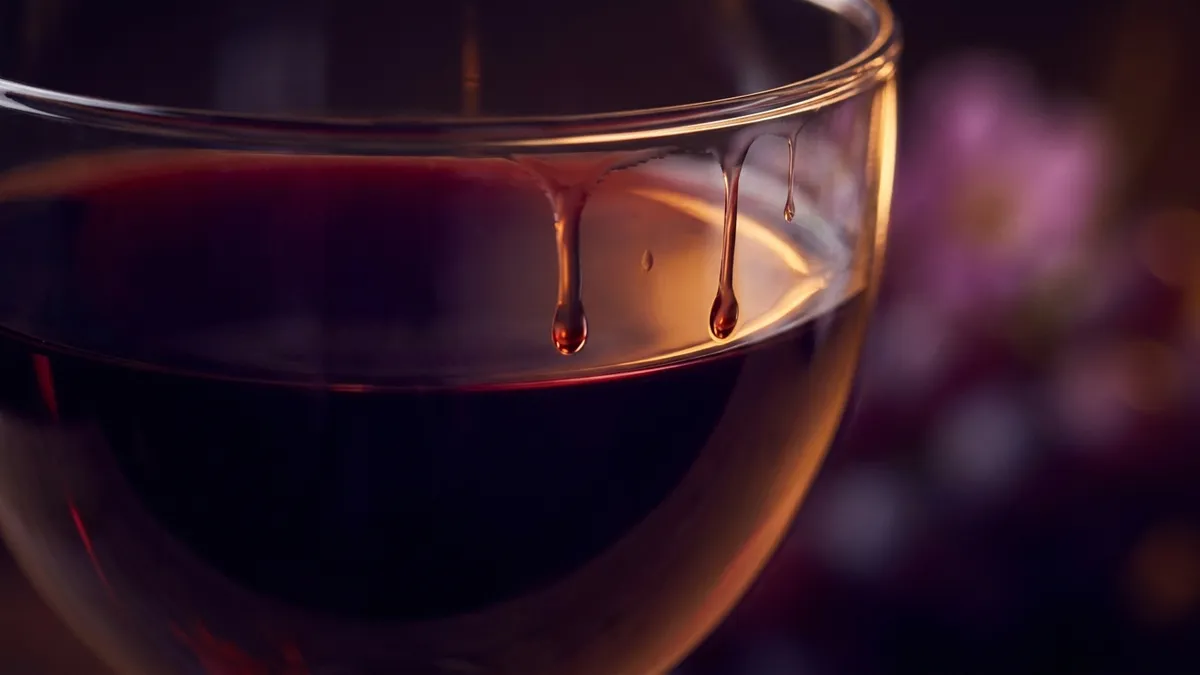
- Legs — slow and thick, reflecting the higher alcohol (13.5 to 14.5 percent)
For a primer on reading wine color and what it tells you, see the wine color meaning guide.
Smell
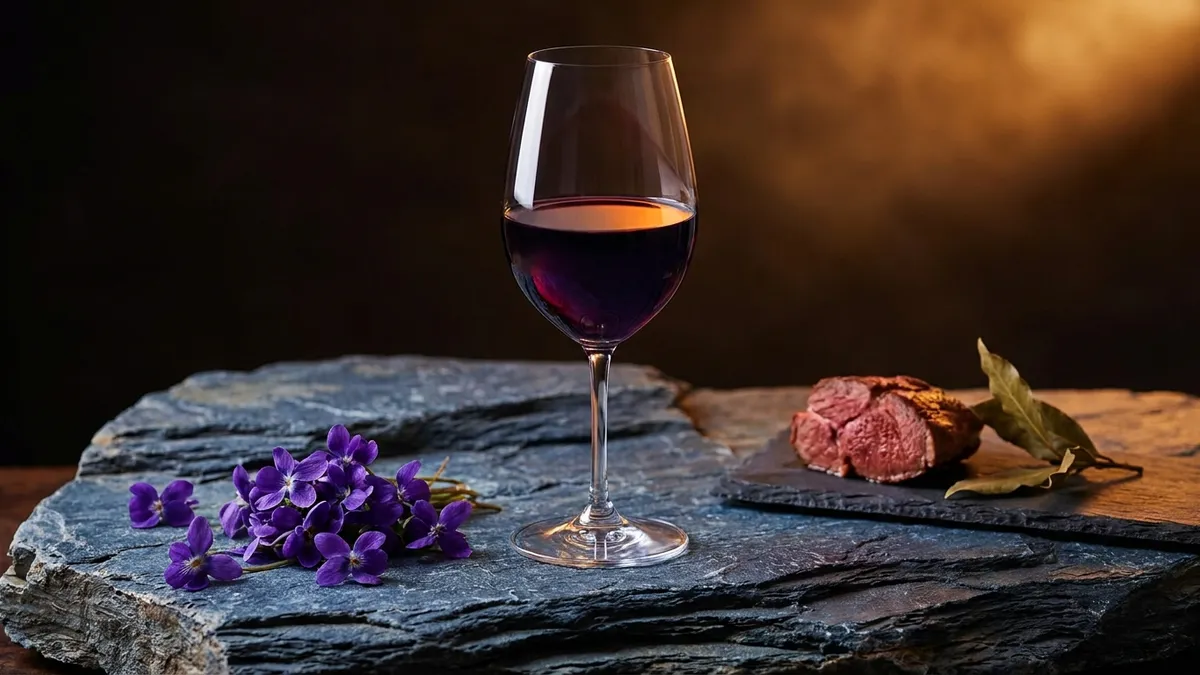
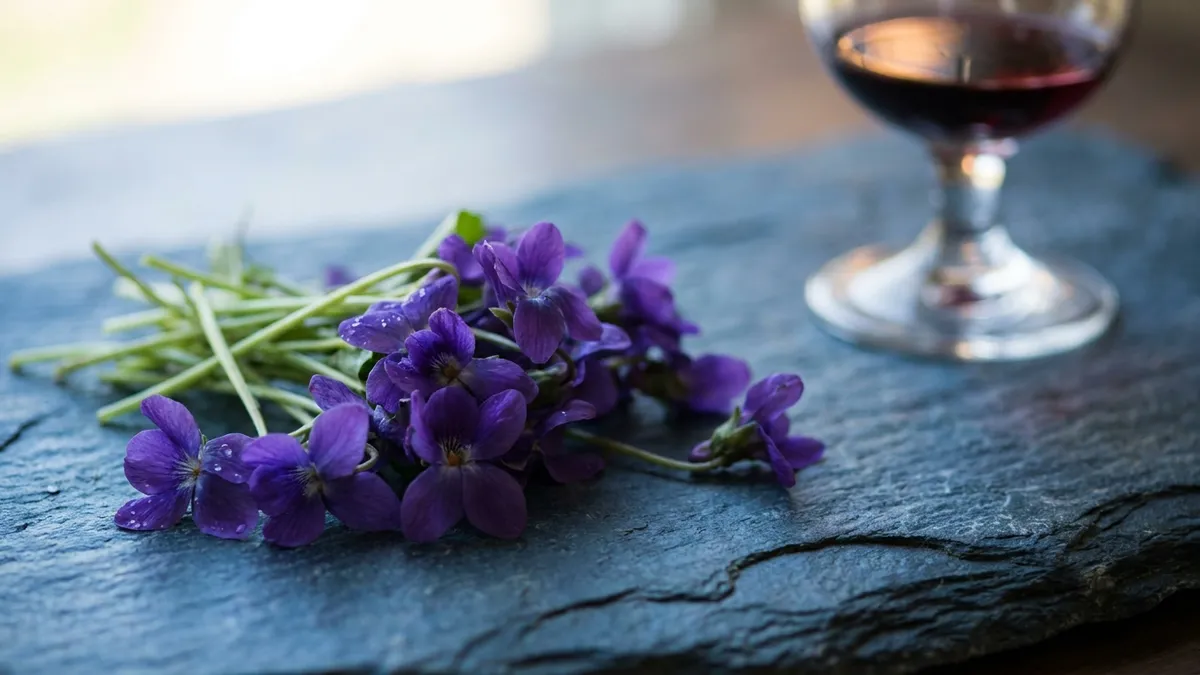
- Floral — violet, rose petal, lavender (the signature)
- Black fruit — black plum, black cherry, blueberry, blackberry compote
- Herbal — rosemary, bay leaf, eucalyptus, dried Mediterranean scrub
- Minerality — graphite, slate, wet stone (especially from Douro schist)
- With oak aging — dark chocolate, bittersweet cocoa, cedar, sweet spice
The violet aromatic is so distinctive that it is one of the easier "tells" in blind tasting. If you smell concentrated black fruit with a clear floral top note, Touriga Nacional should be high on your suspect list. Sommy's tasting course teaches you how to lock these aromatic signatures into memory through repeated guided practice.
Palate
- Body — full
- Tannins — high, gripping, sometimes austere when young
- Acidity — medium to medium-plus, providing freshness despite the power
- Alcohol — 13.5 to 14.5 percent, occasionally higher
- Finish — long, with mineral and floral persistence
Young Touriga Nacional can feel angular and tannic — the classic young-Douro experience is power without polish. Give the wine 5 to 10 years in bottle and the tannins soften, the floral note moves to the front of the palate, and tertiary notes of leather, dried fig, and tobacco emerge. For a deeper look at how aging changes wines on the palate, see tasting young vs aged wine and understanding tannins, acidity, and body.
Where Touriga Nacional Is Grown
Douro Valley DOC — The Homeland
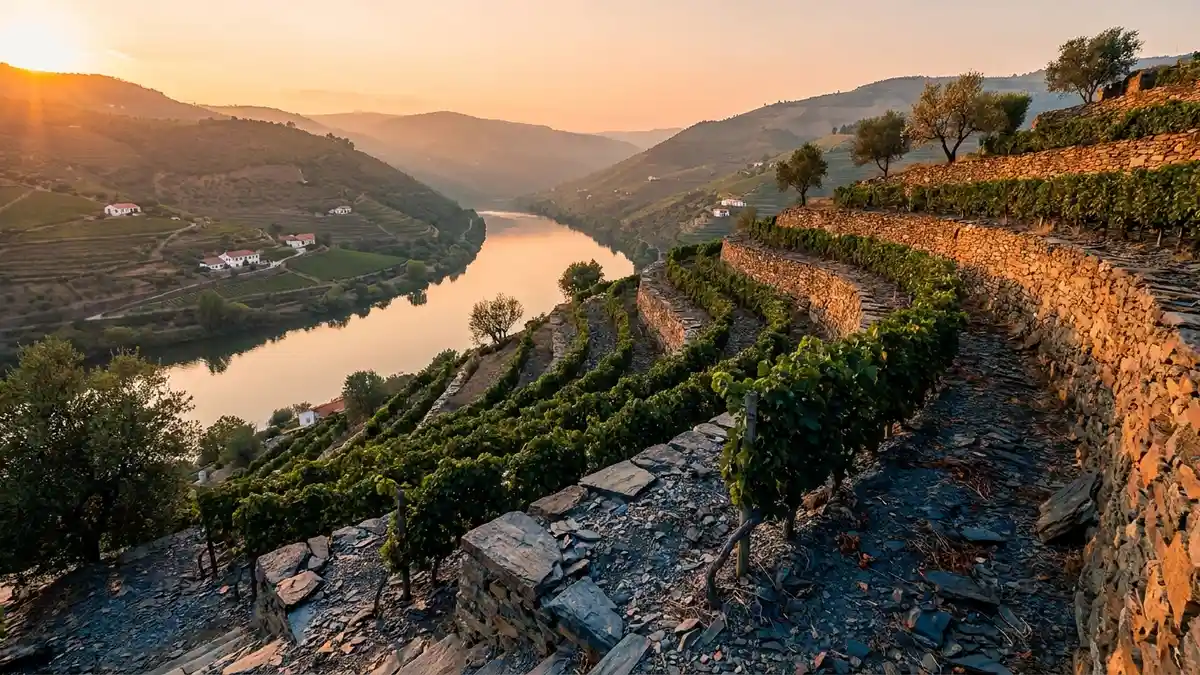
The Douro Valley is Touriga Nacional's spiritual home and the source of nearly every great example. The valley is split into three sub-regions running east from the city of Porto: Baixo Corgo (cooler, wetter, Atlantic-influenced), Cima Corgo (the heart of premium Port and Douro DOC), and Douro Superior (hotter, more continental, increasingly important).
The terroir is extreme. Vineyards are planted on steep schist terraces — sometimes hand-built over centuries — at altitudes ranging from river level to 600+ meters. Schist is a layered metamorphic rock that holds heat by day, releases it slowly at night, and forces vine roots deep in search of water. That stress, combined with hot summers and cold winters, gives Douro Touriga Nacional its concentration.
Douro DOC reds are usually blends, with Touriga Nacional joined by Touriga Franca (the most planted Douro red), Tinta Roriz (Tempranillo), and Tinta Barroca. Top single-varietal Touriga Nacional bottlings represent the most concentrated, structured, and age-worthy expressions. For the broader Portuguese context, see the portuguese wine guide.
Dao DOC — The Elegant Cousin
Two hours south of the Douro, Dao sits at higher altitude (400 to 800 meters) and is shielded from the Atlantic by the Serra do Caramulo and Serra da Estrela mountain ranges. The soils are granite, not schist. The growing season is cooler and longer. Diurnal temperature swings are significant — hot afternoons, cold nights.
The result is a noticeably different style of Touriga Nacional. Dao examples are:
- More aromatic and perfumed
- Lower in alcohol (often 12.5 to 13.5 percent)
- Lighter in body but still structured
- Finer-grained tannin
- More red-fruit-leaning (red cherry, raspberry alongside the black plum)
- Longer-lived in some cases, owing to higher acidity
If Douro Touriga Nacional is the muscular, schist-driven expression, Dao is the cool-climate, granite-driven one — closer in spirit to top Burgundy or Northern Rhone in structural elegance. Both are legitimate ideals.
Other Portuguese Regions
Smaller plantings exist in Alentejo (southern Portugal, where the grape produces riper, fruit-forward styles in a hot continental climate), Lisboa, and Tejo. None match Douro or Dao for prestige, but they offer accessible, value entry points.
Outside Portugal
Australia has the largest plantings outside Portugal — small but growing in the Hilltops region of New South Wales, McLaren Vale, and the Adelaide Hills. California Touriga Nacional is grown mainly in Lodi and the warmer parts of the Central Valley. South Africa, Argentina, and Spain have minor plantings. None of these regions yet produce wines at the level of the Douro or Dao, but the experiments are interesting and the grape clearly travels.
How Touriga Nacional Compares to Other Powerful Reds
Touriga Nacional sits in a small club of intensely concentrated, age-worthy red grapes. Here is how it stacks up.
| Feature | Touriga Nacional | Cabernet Sauvignon | Syrah | Nebbiolo | |---|---|---|---|---| | Color | Deep ruby-purple | Deep ruby | Inky purple | Garnet, lighter | | Tannins | High | High | Medium-high | Very high | | Acidity | Medium-plus | Medium | Medium | High | | Signature aromatic | Violet, rose petal | Cassis, cedar | Black pepper, smoke | Tar, rose | | Black fruit | Plum, cherry, blueberry | Cassis, blackberry | Blackberry, olive | Sour cherry | | Body | Full | Full | Full | Medium-full | | Age potential | 15 to 30 years | 20 to 40 years | 15 to 30 years | 20 to 40 years | | Style center | Douro, Dao | Bordeaux, Napa | Northern Rhone, Barossa | Barolo, Barbaresco |
The closest analog in flavor profile is probably Syrah — both are dense, dark, structured, with savory and herbal notes. The difference is that Touriga Nacional swaps pepper for violet, and the floral note carries through the entire wine in a way no major red except Nebbiolo really matches. For a deeper compare-and-contrast across regions, see new world vs old world tasting style.
Food Pairings for Touriga Nacional
Touriga Nacional's high tannin and powerful structure demand rich, savory food. Lighter dishes get steamrolled. Stick with proteins and preparations that match the wine's intensity.
Game Meats — The Best Match
- Venison — roasted, in a pepper sauce, or braised. The herbal note in the wine mirrors the meat's wild character.
- Wild boar — slow-roasted with garlic and rosemary
- Duck — pan-seared breast or confit. Tannin cuts through the fat.
Lamb
- Slow-roasted lamb shoulder with rosemary and garlic
- Lamb chops grilled rare with a herb crust
- Portuguese-style lamb stew (caldeirada de borrego)
Beef
- Grilled steak — ribeye, sirloin, or T-bone
- Beef stew with red wine and root vegetables
- Cozido a Portuguesa — the Portuguese mixed-meat stew
Hard Aged Cheeses
- Serra da Estrela — Portugal's most famous sheep's milk cheese
- Sao Jorge — sharp Azorean cow's milk cheese
- Manchego — Spanish hard sheep's milk
- Aged Gouda or aged Cheddar as easier substitutes
For a fuller framework on red wine pairings, see wine and cheese pairing and wine with steak.
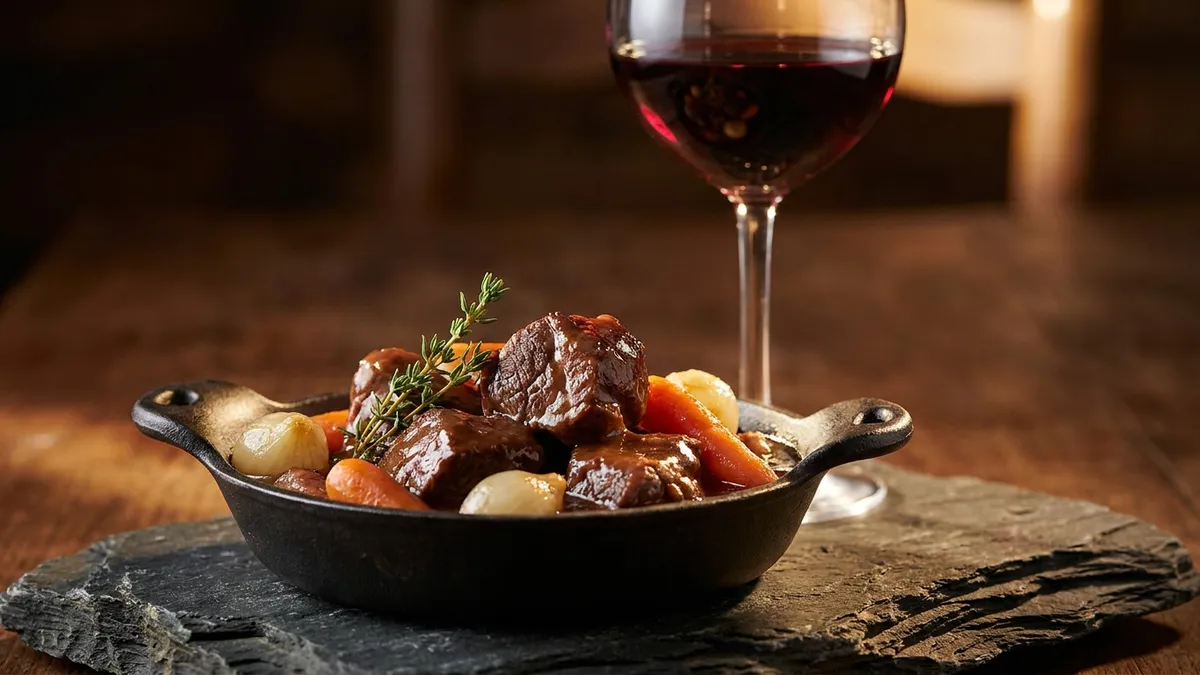
Sommelier tip: When in doubt with Touriga Nacional, think rosemary. The herbal compound in the grape mirrors the herb almost exactly. Any dish that benefits from rosemary — roast lamb, slow-cooked beans, garlic-rosemary potatoes — will sing alongside this wine.
Aging and Cellaring Touriga Nacional
Touriga Nacional is built for the cellar. The combination of high tannin, good acidity, and concentrated phenolics means the wine evolves dramatically over decades.
- Entry-level Douro DOC ($12 to $20) — drink within 3 to 5 years
- Mid-tier Douro DOC ($20 to $40) — drink at 5 to 10 years
- Premium Douro DOC ($40 to $80) — peak at 10 to 20 years
- Top single-vineyard Douro Touriga Nacional ($80+) — 15 to 30 years
- Vintage Port with Touriga Nacional as backbone — 30 to 50+ years
- Dao Touriga Nacional — surprisingly long-lived; top examples cellar 15 to 25 years
Storage rules are the same as for any age-worthy red — cool (55 to 60 F), dark, humid, and on its side if cork-sealed. For the broader principles of how wines change with time, see tasting young vs aged wine.
Serving Touriga Nacional
- Temperature — 60 to 65 F (16 to 18 C). Too cold and the tannins feel harsher; too warm and the alcohol dominates.
- Glass — a large Bordeaux-style bowl gives the wine room to open up
- Decanting — strongly recommended for any Douro DOC under 10 years old. Decant 1 to 2 hours ahead. Older bottles (15+ years) decant for sediment but pour gently.
- Pour — 5 ounces. The wine is intense; smaller pours encourage slower drinking.
For more on how decanting changes wines, see does decanting change wine flavor.
Building Touriga Nacional into Your Tasting Skills
The fastest way to lock Touriga Nacional into your palate memory is comparison tasting. Try a Douro Touriga Nacional alongside a Dao Touriga Nacional from the same vintage. Same grape, completely different terroir — schist versus granite, hot versus cool, structured versus elegant. The contrast teaches more about how place shapes wine than any textbook.
Then try a Touriga Nacional alongside a top Syrah and a top Cabernet Sauvignon. All three are powerful, dark, and tannic — but the floral note will jump out of the Touriga Nacional immediately. Once you know the violet signature, you will spot it every time. The Sommy app walks you through structured side-by-side tasting exercises with guided AI feedback, building the kind of comparative palate memory that turns casual drinkers into confident tasters.
Touriga Nacional is one of those grapes that rewards a little homework. The wines are complex, the regions are dramatic, the price-to-quality is among the best in Europe, and the aromatic signature — that unmistakable violet on top of black plum and graphite — is one of the most distinctive in the wine world.
Frequently Asked Questions
What does Touriga Nacional taste like?
Touriga Nacional is deeply colored, very tannic, and powerful, with high alcohol and a distinctive floral aromatic. Expect intense violet and rose petal aromas alongside black plum, black cherry, blueberry, Mediterranean herb (rosemary, bay leaf), and graphite minerality. Oak-aged versions add dark chocolate, bittersweet cocoa, and warm spice. The floral lift on top of dark fruit is its signature.
Is Touriga Nacional only used in Port wine?
No. Touriga Nacional has long been the most prized grape in Port blends, but since the 1990s it has been increasingly bottled as a dry, unfortified red — both as a varietal and as the lead grape in Douro DOC blends. The dry style now rivals top Bordeaux and Northern Rhone reds for structure and aging potential.
What is the difference between Douro and Dao Touriga Nacional?
Douro Touriga Nacional is grown on hot, schist-soil terraces and produces powerful, concentrated, deeply structured wines. Dao Touriga Nacional grows in a cooler, mountain-shielded zone with granite soils and produces a more elegant, perfumed, finer-tannin style. Douro is the bolder expression. Dao is more refined and aromatic.
How long can Touriga Nacional age?
Top Douro DOC bottlings of Touriga Nacional age comfortably for 15 to 20 years, with the finest examples lasting 30 plus years. Vintage Port using Touriga Nacional as a key blender ages even longer — many examples improve for 50 years or more. Mid-tier Douro varietal Touriga Nacional drinks beautifully at 5 to 10 years.
What food pairs well with Touriga Nacional?
Touriga Nacional pairs best with rich, savory food. Game meats (venison, wild boar, duck), slow-roasted lamb, beef stew, and grilled steak all match its tannin and power. Hard aged cheeses such as Serra da Estrela, Sao Jorge, and Manchego work beautifully. The herbal note also makes it a natural match for rosemary-rubbed roasts.
Is Touriga Nacional grown outside Portugal?
Yes, but in tiny quantities. Australia (especially the Hilltops and McLaren Vale regions) and California (Lodi and the Central Valley) have small but growing plantings. South Africa and Argentina also produce a little. None of these match the Douro or Dao for quality yet — Portugal still owns this grape.
Why is Touriga Nacional so floral?
Touriga Nacional contains unusually high levels of certain aromatic compounds, including monoterpenes (the same family responsible for Muscat's perfumed character) layered over rich, dark-fruit phenolics. Most powerful red grapes are dominated by black fruit and earth. Touriga Nacional adds a distinct top note of violet and rose petal that almost no other major red shares.
Is Touriga Nacional dry or sweet?
Modern dry Douro DOC and Dao Touriga Nacional are completely dry, with no significant residual sugar. When the same grape is used in Port wine, the resulting Port is sweet — but that sweetness comes from the fortification process, not from the grape itself. The grape is naturally dry, powerful, and tannic.
Sommy Team
LinkedInFounder & Wine Educator
The Sommy Team is building the world's most approachable wine education app, helping beginners develop real tasting skills through structured courses and AI-guided practice.