Table Grapes vs Wine Grapes: Why You Can't Make Wine from Grocery-Store Grapes

By the Sommy Team — AI-assisted, human-edited.
Updated Jun 16, 2026
Contents (11)
- Table Grapes vs Wine Grapes, in One Paragraph
- Why Table Grapes and Wine Grapes Are Bred Differently
- The Core Differences Between Table Grapes and Wine Grapes
- Size and Skin: Why Small Grapes Make Better Wine
- Sugar and Brix: The Fuel That Becomes Alcohol
- Acidity: Why Wine Grapes Taste Tart Even When Ripe
- Seeds and Tannin: The Missing Backbone
- Flavor Concentration and Thicker Juice
- So Could You Actually Make Wine from Table Grapes?
- The Exceptions: Dual-Purpose Grapes
- How to Taste the Difference for Yourself
TL;DR
Table grapes vs wine grapes comes down to breeding for opposite goals. Wine grapes are small, intensely sweet (22 to 26-plus Brix), thick-skinned, seeded, and tart, packing the sugar, tannin, and acid that make wine. Table grapes are bred big, juicy, mild, and often seedless, which makes them lovely to eat but thin and bland to ferment.
Table Grapes vs Wine Grapes, in One Paragraph
The difference between table grapes and wine grapes is the difference between two crops bred for opposite jobs. Wine grapes are small, with thick skins, a high skin-to-juice ratio, intense sugar (typically 22 to 26-plus Brix), high acidity, and seeds — everything fermentation needs. Table grapes are bred large, juicy, crunchy, mild, and usually seedless, which makes grocery-store grapes a joy to eat but a poor base for wine. You technically can ferment table grapes, but with low sugar (often 15 to 18 Brix), low acid, and almost no tannin, the wine comes out thin, pale, and bland.
Why Table Grapes and Wine Grapes Are Bred Differently
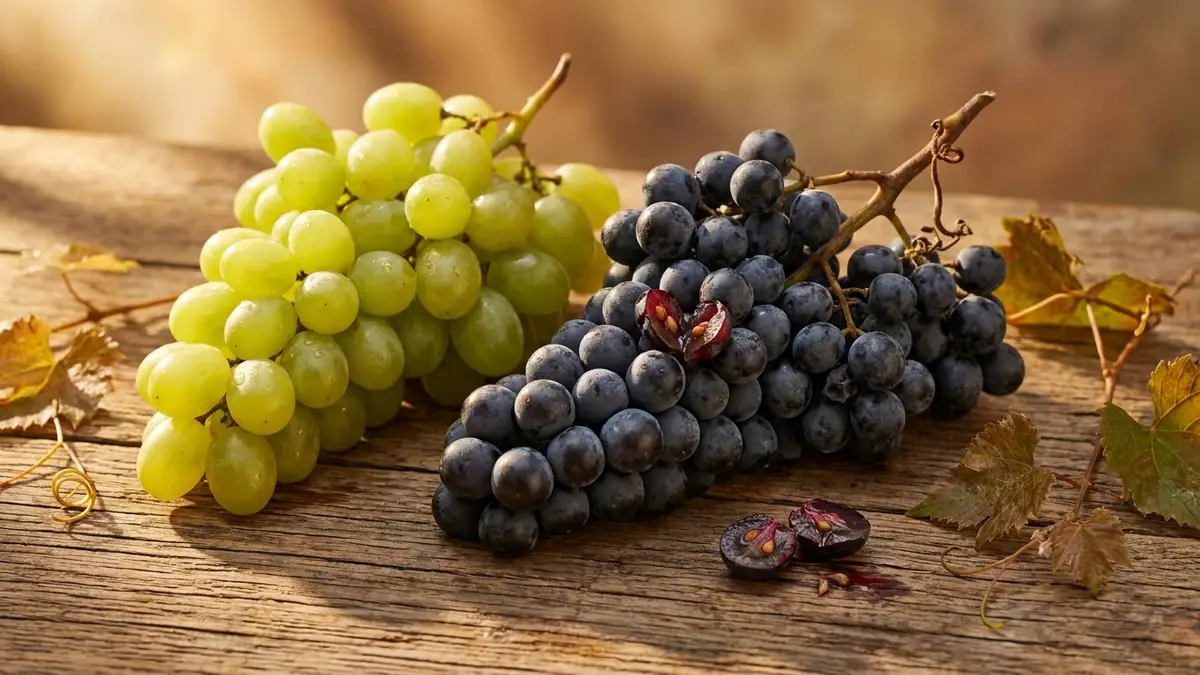
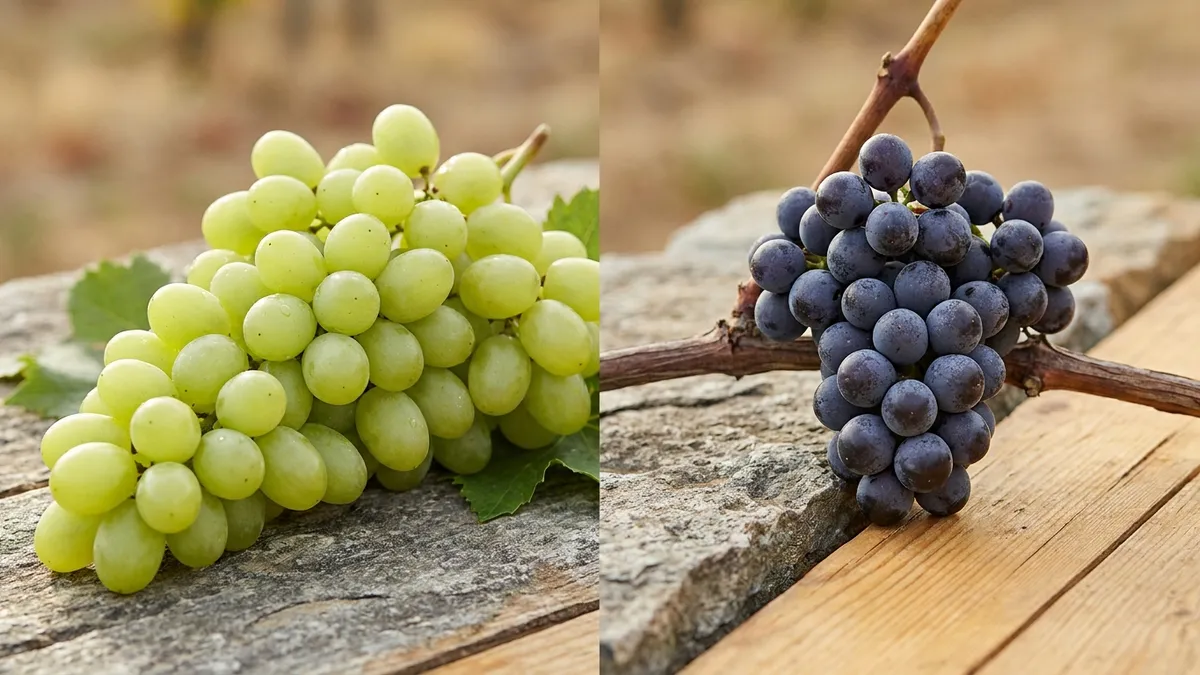
Walk into any supermarket and the grapes you see are almost certainly table grapes: big, glossy, seedless, and easy to eat by the handful. The grapes that go into a bottle of Cabernet Sauvignon look nothing like them — tiny, dark, packed tight on the bunch, with thick skins and seeds you would spit out.
Both are the species Vitis vinifera (with some exceptions, covered below), but centuries of selective breeding pulled them in opposite directions. Growers of table grapes chase size, crunch, mild sweetness, and seedlessness — the qualities that sell fruit. Growers of wine grapes chase concentration: small berries, thick skins, high sugar, and tart acidity that survives fermentation.
Understanding those two breeding goals explains every difference that follows. A grape bred to be eaten fresh is, almost by definition, a poor candidate for wine — and a grape bred for wine is genuinely unpleasant to eat raw.
The Core Differences Between Table Grapes and Wine Grapes
Before the detailed breakdown, here is a side-by-side comparison of the traits that matter most. Each row shows how the two crops diverge — and why that divergence makes one perfect for snacking and the other perfect for fermenting.
The trait-by-trait split between table grapes and wine grapes.
- Berry size: table grapes large, plump; wine grapes small, compact
- Skin: table grapes thin; wine grapes thick, with a high skin-to-juice ratio
- Sugar (Brix): table grapes lower, often 15–18; wine grapes high, 22–26+
- Acidity: table grapes low, mild; wine grapes high, tart
- Seeds: table grapes usually seedless; wine grapes seeded
- Tannin: table grapes almost none; wine grapes significant (from skin + seeds)
- Juice: table grapes watery, abundant; wine grapes thicker, concentrated
- Flavor: table grapes mild, crunchy; wine grapes intense, complex
- Bred for: table grapes eating fresh; wine grapes fermenting into wine
Size and Skin: Why Small Grapes Make Better Wine
The single most visible difference is size, and it matters more than it looks. Skin-to-juice ratio — the proportion of skin surface to the liquid inside — is far higher in a small berry than a large one. The skin is where the action is.
Grape skins hold the color pigments (anthocyanins), most of the aroma compounds, and a large share of the tannins (the drying, gripping sensation you feel on your gums in red wine). A small wine grape, with proportionally more skin around less juice, delivers a concentrated dose of all three into the fermenting vat.
A big, juicy table grape does the opposite. Its thin skin wraps a large volume of watery juice, so even if you fermented it, the resulting liquid would be pale, low in tannin, and dilute — like brewing tea with one bag in a gallon of water. For a deeper look at how skin thickness shapes a wine's color and grip, see our guide to thick-skinned versus thin-skinned grapes.
This is also why winemakers prize concentration over yield. A vine that produces fewer, smaller berries often makes better wine than one straining to ripen a heavy crop of large ones.
Sugar and Brix: The Fuel That Becomes Alcohol
Here is where the table-grape dream of homemade wine quietly falls apart. Fermentation is yeast eating sugar and producing alcohol. No sugar, no alcohol — at least not enough to make wine.
Brix is the standard measure of sugar content, expressed as grams of sugar per 100 grams of juice (roughly, the sugar percentage by weight). Wine grapes are typically harvested at 22 to 26-plus Brix, a sugar level that ferments into the 12 to 15 percent alcohol most wines carry. Late-harvest and dessert styles push even higher.
Table grapes usually sit far lower, often around 15 to 18 Brix. That is plenty sweet for eating — pleasant and refreshing — but ferment it and you get a wine of weak alcohol, thin body, and no staying power. Winemakers chase ripeness precisely to bank that sugar; table-grape growers stop well short, because nobody wants to eat a grape as sugary as a raisin-in-waiting.
To make drinkable wine from table grapes, home winemakers usually add cane sugar (a process called chaptalization) just to reach normal alcohol. That fixes the strength but not the missing flavor, acid, or structure.
Acidity: Why Wine Grapes Taste Tart Even When Ripe
Bite into a wine grape at harvest and it tastes sharp — almost too tart to enjoy — even though it is loaded with sugar. That high acidity is a feature, not a flaw.
Acidity is the crisp, mouth-watering quality that gives wine its freshness and makes it feel alive rather than flabby. It also acts as a natural preservative, which is why high-acid wines age longer. Wine grapes are bred and grown to hold onto their acid as they accumulate sugar, balancing sweetness against tartness.
Table grapes go the other way. They are bred to shed acidity as they ripen, ending up mild and easy on the palate — exactly what you want eating a bowl of fruit, and exactly the wrong thing for wine. A low-acid base ferments into a flat, lifeless wine that tastes dull and falls apart quickly.
The interplay of sweetness, acid, and grip is the foundation of tasting. Our guide to tannins, acidity, and body breaks down how these three elements combine to give a wine its shape.
Seeds and Tannin: The Missing Backbone
Most modern table grapes are seedless — a triumph of breeding for snack convenience. For winemaking, it is a serious loss.
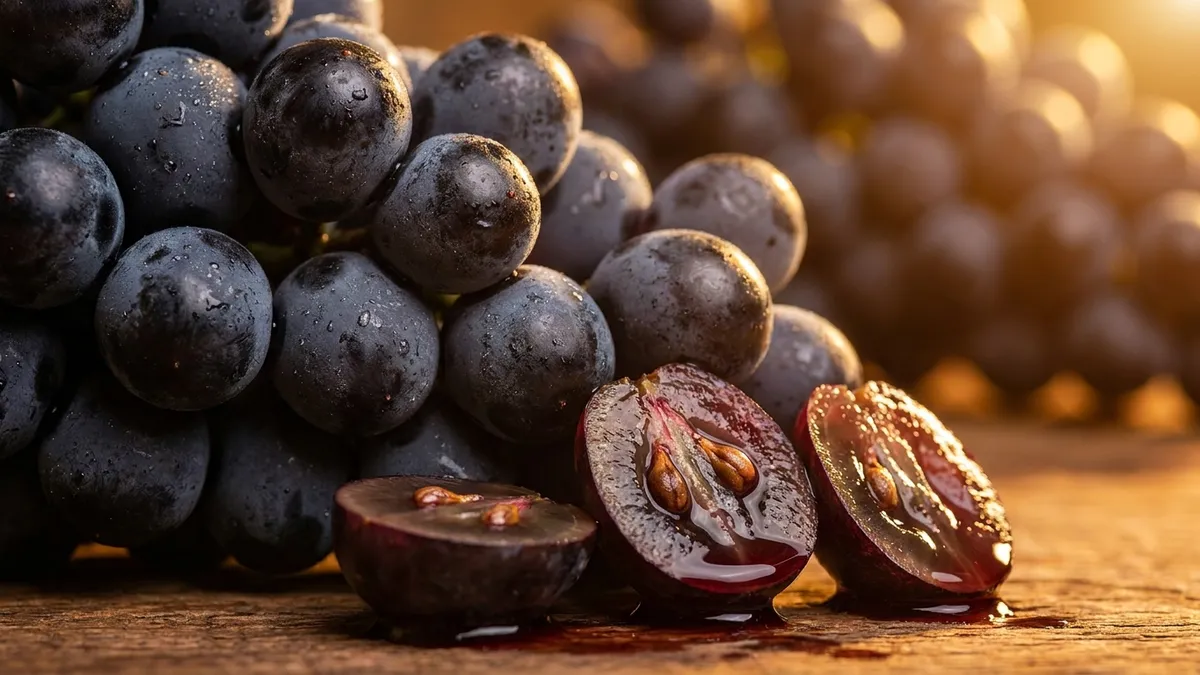
Seeds, along with skins, are a primary source of tannin. In red winemaking, the juice ferments in contact with skins and seeds for days or weeks, extracting the tannin that gives a red its structure, grip, and ability to pair with rich food and age gracefully. A wine with no tannin feels soft, short, and forgettable.
A seedless, thin-skinned table grape contributes almost nothing here. Even fermented red-skinned table grapes produce a wine with no backbone — pleasant for a moment, then gone, with none of the architecture that makes a serious red satisfying. Tannin is part of why Cabernet Sauvignon can age for decades while a soft, tannin-free wine is best drunk young.
This is also why red wine grapes are never bred seedless on purpose. The very thing snackers want to remove is the thing winemakers need to keep.
Flavor Concentration and Thicker Juice
Crush a handful of wine grapes and the juice runs thick, dark, and intense. Crush table grapes and you get a thin, pale, watery liquid. That contrast captures the whole story.
Wine grapes concentrate sugar, acid, and aroma compounds into a small volume, producing a juice dense with the raw material of flavor. As that juice ferments, those compounds transform into the hundreds of aromas a finished wine can show — black fruit, spice, earth, flowers — many of them anchored in the thick skins.
Table grapes, bred for crisp refreshment, simply lack that density. Their flavor is clean and pleasant fresh, but it is one-dimensional and easily lost. Ferment them and you strip away the crunch and dilution that made them enjoyable, leaving a wine that tastes of very little. For the broader map of which grapes make which wines, our overview of the noble grapes is the best starting point.
So Could You Actually Make Wine from Table Grapes?
Yes — and people do, as a kitchen experiment. The chemistry of fermentation does not care whether a grape was bred for snacking. Add yeast to crushed table grapes and you will get something alcoholic.
The problem is what comes out. Without enough sugar, you need to add cane sugar just to reach drinkable alcohol. Without acid, the wine tastes flat, so many home winemakers add tartaric or citric acid to compensate. Without tannin or thick skins, reds stay pale and structureless. The end result is a thin, simple, often slightly off-tasting wine that bears little resemblance to a bottle made from purpose-grown wine grapes.
In short, you can fake the alcohol, but you cannot fake the concentration, structure, and balance that real wine grapes provide for free. It is the difference between assembling a meal from a vending machine and cooking with proper ingredients — technically food either way, but not the same experience.
The Exceptions: Dual-Purpose Grapes
A handful of varieties genuinely bridge both worlds, blurring the neat divide between table and wine grapes.
- Muscat is the classic dual-purpose grape. Intensely aromatic and floral, it is pleasant to eat fresh yet makes everything from dry whites to sparkling Moscato d'Asti to lush dessert wines. Its perfume survives in both forms. See our Muscat wine guide for its many styles.
- Concord and other labrusca grapes are eaten, juiced, and fermented, though their foxy character keeps them outside the fine-wine mainstream.
- A few high-sugar table varieties get pressed into rustic country wines in regions where dedicated wine grapes are scarce.
These exceptions prove the rule. The vast majority of grapes are specialists, and a grape that does both jobs well is genuinely rare. Even Muscat, the great all-rounder, is grown in different clones and ripened to different sugar levels depending on whether it is headed for the fruit bowl or the press.
How to Taste the Difference for Yourself
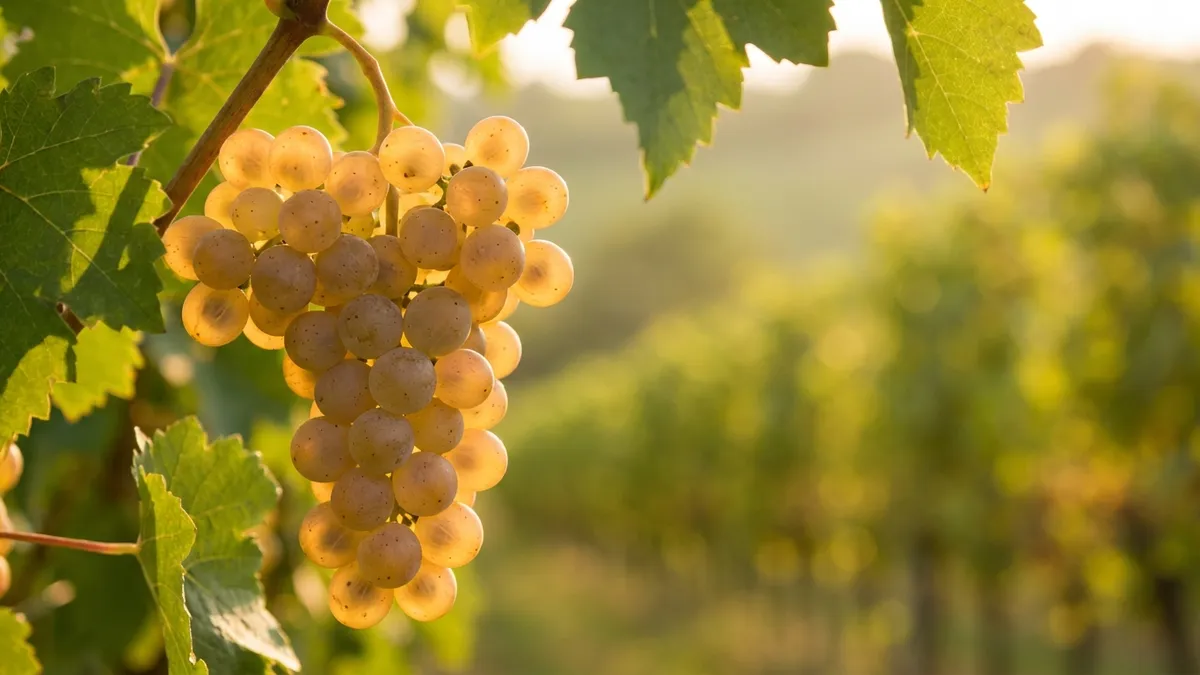
The fastest way to understand wine grapes is to put the two crops side by side. The next time you have wine grapes within reach — at a vineyard, a farmers' market, or harvest season — try this simple comparison using the systematic tasting method.
-
Compare them raw. Eat a seedless table grape, then a wine grape. Notice how the table grape is mild and watery while the wine grape hits you with sweetness, sharp acidity, thick skin, and crunchy seeds all at once.
-
Feel the skin and seeds. Chew the skin of a wine grape and notice the bitter, drying grip — that is tannin, the structure a seedless table grape simply does not have.
-
Taste the juice. Crush each and compare the liquid. The wine grape juice runs thick and dark; the table grape juice is thin and pale. That difference in concentration is what survives into the glass.
-
Connect it to a finished wine. Pour a tannic red and notice the same drying grip you felt chewing the wine-grape skin. Suddenly the link between grape and bottle becomes obvious.
Practicing these comparisons trains your palate to recognize concentration, acid, and tannin — the exact traits that separate a snacking grape from a winemaking one. The Sommy app guides you through this kind of structured tasting one step at a time, building your vocabulary grape by grape. If you want a clear path from beginner to confident taster, Sommy turns each glass into a lesson.
Table grapes and wine grapes share an ancestor and a name, but they were bred to do entirely different things. One is built to delight you in seconds; the other is built to become something far more complex in the glass. Knowing why grocery-store grapes make bad wine is the first step toward understanding what makes good wine good.
Sources
- Wine Grapes: A Complete Guide to 1,368 Vine Varieties — Jancis Robinson, Julia Harding, José Vouillamoz, Allen Lane, 2012
- The Oxford Companion to Wine, 4th Edition — Jancis Robinson, Julia Harding, Oxford University Press, 2015
- Understanding Wine Technology: The Science of Wine Explained — David Bird, DBQA Publishing, 2010
Frequently Asked Questions
Can you make wine from grocery-store table grapes?
Technically yes, but the result is thin, pale, and bland. Table grapes are too low in sugar to reach proper alcohol, too low in acid to taste balanced, and too thin-skinned and seedless to give tannin or color. You would need to add sugar and acid just to fake what wine grapes provide naturally.
What is the main difference between wine grapes and table grapes?
Breeding goals. Wine grapes are bred for concentration — small berries, thick skins, lots of sugar, high acidity, and seeds. Table grapes are bred for eating pleasure — big, juicy, crunchy, mild, and usually seedless. One is built to ferment into a complex drink; the other is built to snack on fresh.
Why are wine grapes so small?
Small berries have a high skin-to-juice ratio, and the skin holds the color, tannin, and most of the aroma compounds. A small grape concentrates flavor, sugar, and structure into less liquid, so the resulting wine tastes intense rather than watered down. Table grapes are bred large for the opposite reason — juicy, easy eating.
What is Brix and why does it matter for wine grapes?
Brix measures sugar content as a percentage of weight. Wine grapes are usually picked at 22 to 26-plus Brix, because yeast converts that sugar into alcohol. Table grapes often sit around 15 to 18 Brix — sweet enough to enjoy fresh, but too low to ferment into a wine with normal alcohol and body without adding sugar.
Do seedless table grapes affect winemaking?
Yes. Seeds and skins are a major source of tannin, the drying, gripping structure in red wine. Most table grapes are bred seedless for easy eating, so they contribute almost no tannin. Without that structure, even a fermented table-grape wine feels soft, flat, and short, lacking the grip and backbone of real wine.
Are any grapes used for both eating and wine?
A few are dual-purpose. Muscat is the classic example — aromatic and floral enough to make wine, yet pleasant to eat fresh. Concord, a labrusca grape, is eaten, juiced, and made into a sweet, foxy-tasting wine. But most varieties are specialists, bred firmly for either the table or the cellar, not both.
Why do wine grapes taste so tart and intense compared to table grapes?
Wine grapes keep high acidity even when fully ripe, which tastes sharp eaten fresh but gives wine its freshness and aging ability. They also concentrate sugar and aroma into small, thick-skinned berries. Table grapes are bred to lose that tartness and stay mild and crunchy, so they taste pleasant raw but bland once fermented.
Sommy Team
LinkedInFounder & Wine Educator
The Sommy Team is building the world's most approachable wine education app, helping beginners develop real tasting skills through structured courses and AI-guided practice.