Roussanne: The Aromatic Rhône White with Herbal Charm

By the Sommy Team — AI-assisted, human-edited.
Updated Apr 29, 2026
Contents (11)
- What Is Roussanne Wine, in 100 Words
- A Grape Named for Its Colour
- What Roussanne Tastes Like
- Roussanne Versus Marsanne, Side by Side
- The Roussanne-Marsanne Co-Blend Explained
- Key Roussanne Regions
- Food Pairing — Where Roussanne Shines
- Drink It Now or Cellar It — The Ageing Question
- How Roussanne Differs from Other Aromatic Whites
- How to Taste Roussanne
- Why Roussanne Belongs on Your Tasting List
TL;DR
Roussanne is a delicate aromatic white grape from the northern Rhône, named for its russet-tinged ripe berries. Expect chamomile, pear, honey, dried hay, and jasmine, with medium-high acid and 13 to 14 percent alcohol. Most often co-blended with Marsanne, it stars in Hermitage Blanc, Saint-Joseph, and Châteauneuf-du-Pape. Best three to ten years.
Roussanne wine is one of the great whisper-aromatic white grapes of France — a Rhône native named for the russet-coppery hue its ripe berries take on in late autumn. If Viognier shouts apricot and Marsanne murmurs almond, Roussanne hums chamomile, pear, and dried hay. It is the more aromatic, more acidic half of the great Rhône white blends, and on its own it makes some of the most age-worthy whites in southern France.
This guide covers what Roussanne actually is, why it is almost always co-blended with Marsanne, where the best examples grow, and how to pair and cellar it. By the end you will know what to expect from a glass of white Hermitage and why Châteauneuf-du-Pape allows Roussanne in its famous thirteen-grape blend.
What Is Roussanne Wine, in 100 Words
Roussanne (pronounced roo-sahn) is a delicate aromatic white grape from the northern Rhône Valley of France. It produces medium-bodied dry whites with medium-high acidity, alcohol typically between 13 and 14 percent, and a perfumed nose of pear, chamomile, honey, dried hay, and jasmine. The colour ranges from pale gold in youth to deep gold with age. The grape is most often co-blended with Marsanne at ratios from 60/40 to 20/80, and it stars in Hermitage Blanc, Saint-Joseph Blanc, and Châteauneuf-du-Pape. Best window: three to ten years.
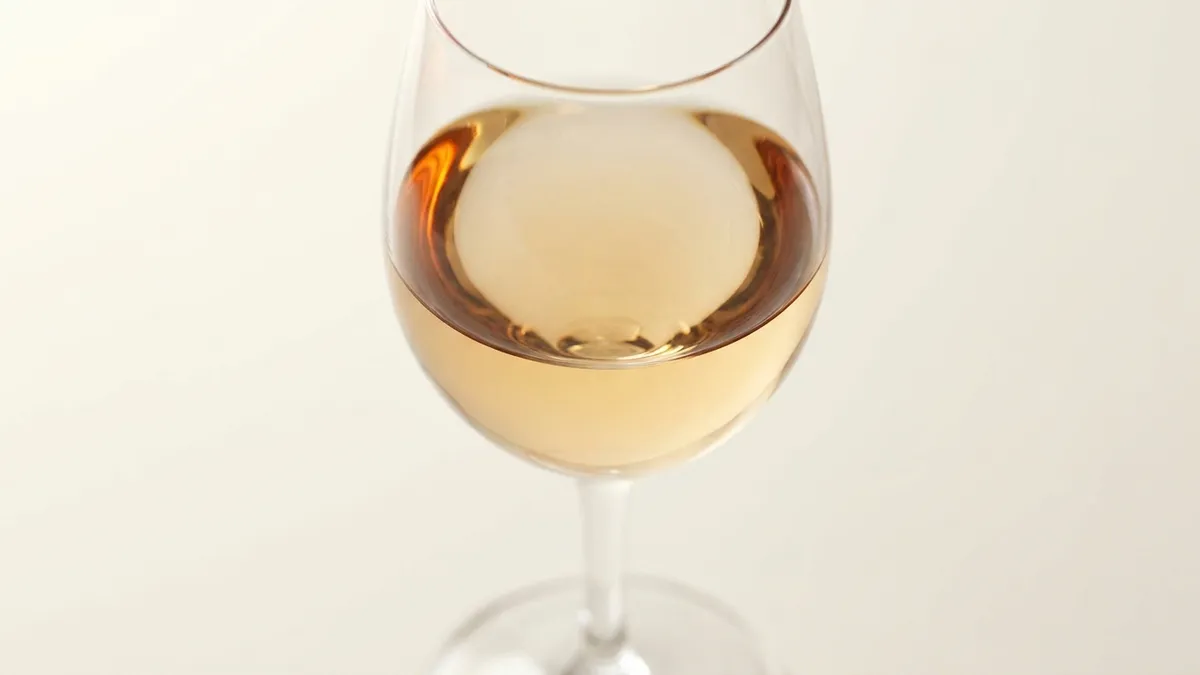
A Grape Named for Its Colour
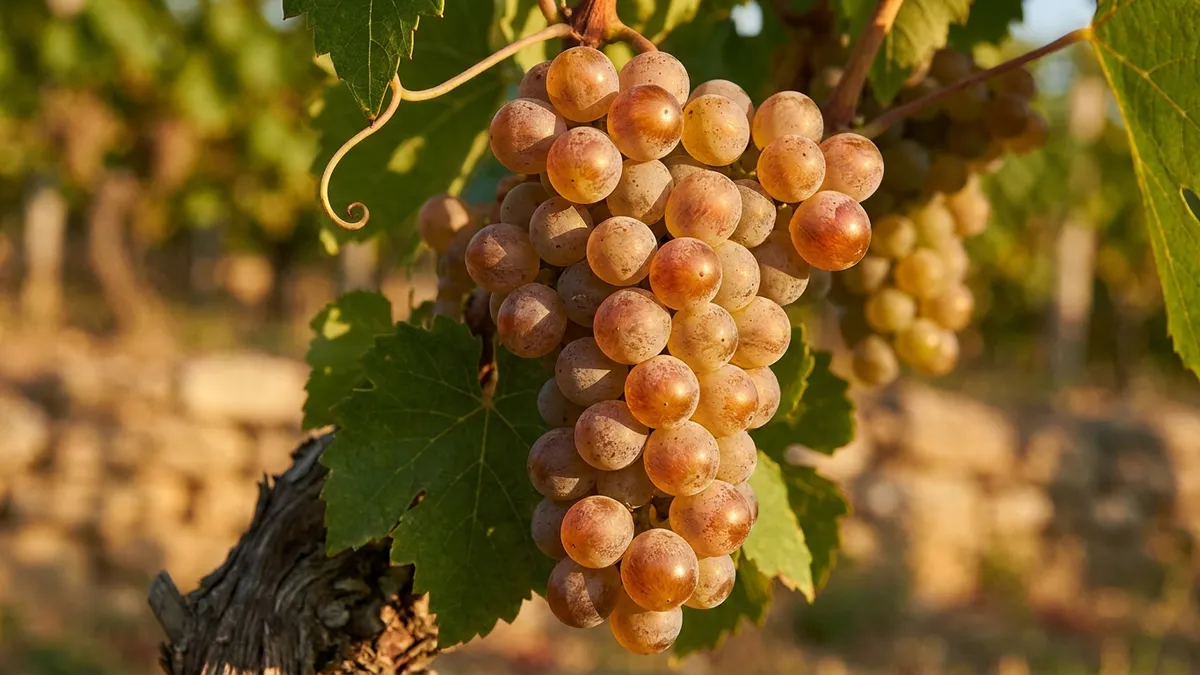
Roussanne is the rare grape that earns its name from how it looks rather than where it grew. The French word roux means russet, fox-red, or copper. At full ripeness — which arrives later than almost any other white in the northern Rhône — Roussanne berries take on a distinctive russet-tinged hue, especially on the sun-baked granite slopes of Hermitage and Saint-Joseph.
The grape's home is the steep banks of the Rhône north of Valence, where it has likely been planted since at least the seventeenth century. By the mid-twentieth century, Roussanne was in trouble. It is genuinely difficult to grow — late-ripening, low-yielding, sensitive to wind, prone to powdery mildew. Many vignerons grubbed it up in favour of more productive varieties.
The revival began in the 1980s and 1990s, when interest in classic Rhône whites surged and new disease-resistant clones became available. Today plantings have stabilised, but Roussanne remains a small-volume variety. Pure single-variety Roussanne is the exception.
What Roussanne Tastes Like
Roussanne is one of the most distinctive whites a careful taster can learn to recognise — but its signature is subtler than the loud apricot of Viognier or the green-apple snap of Sauvignon Blanc. Roussanne announces itself quietly.
On the nose, expect:
- Orchard fruit — ripe pear, quince, sometimes baked apple
- Floral and herbal — chamomile, dried hay, jasmine, faint linden
- Honey and beeswax — especially as the wine ages past three years
- Spice and texture cues — a mineral, almost saline lift on top-tier examples
On the palate, Roussanne is medium-bodied with notably crisper acidity than its blending partner Marsanne. Alcohol typically lands between 13 and 14 percent. The texture is fine and stony rather than oily — the kind of wine that gains shape rather than weight as it warms in the glass. The finish is long, often with a herbal-bitter twist that resembles fresh chamomile or dried fennel.
One key point — Roussanne is almost always fermented fully dry. Any sweetness you perceive comes from ripe pear and honey aromatics combined with the wine's natural glycerol. For a deeper look at why ripe-fruit aromas can fool the palate, our guide on what does dry wine mean breaks down the difference between perceived and measured sweetness.
Roussanne Versus Marsanne, Side by Side
The most useful way to learn Roussanne is to taste it next to Marsanne, the other half of the great northern Rhône white duo. The two grapes are inseparable in the cellar but very different in character.
| Trait | Roussanne | Marsanne | | --- | --- | --- | | Aroma intensity | Higher — perfumed and herbal | Lower — quieter, nuttier | | Signature notes | Pear, chamomile, dried hay, jasmine | Almond, melon, beeswax, honeysuckle | | Acidity | Medium-high | Medium-low | | Body | Medium | Medium-full to full | | Alcohol typical | 13 to 14 percent | 13.5 to 14.5 percent | | Ageing potential | Excellent — 5 to 15+ years | Good — 3 to 8 years | | Difficulty in vineyard | High — low yields, mildew prone | Moderate |
Read down the table and the logic of the blend is obvious. Roussanne brings high-toned aromatics and the acidic spine that gives the wine staying power. Marsanne brings the weight, glycerolic feel, and reliability. Together they make a wine that neither grape can produce alone — perfumed but textured, fresh but rich.
For a more general grounding in how grapes shape body and structure, our piece on understanding tannins acidity body walks through the levers that drive every wine's mouthfeel.
The Roussanne-Marsanne Co-Blend Explained
The Roussanne-Marsanne pairing is one of the world's classic white blends, and the Rhône's vignerons have refined the ratio over centuries. In Hermitage Blanc and Saint-Joseph Blanc, blend ratios typically run from 60 percent Marsanne / 40 percent Roussanne in the heavier, richer house style, to 20 percent Marsanne / 80 percent Roussanne in the leaner, more aromatic style favoured by some modern producers.
The decision is rarely just stylistic. Roussanne's small, late-ripening crop varies wildly year to year, so the blend ratio in any given vintage often reflects what nature delivered. In cool vintages, more Marsanne carries the wine; in hot vintages, more Roussanne can balance the alcohol with its acidity.
Co-fermentation — pressing and fermenting the two grapes together — is more common in traditional cellars. Modern producers more often vinify the lots separately and blend before bottling, giving more control over the final balance. Either approach can produce great wine.
A useful mental shortcut for tasters: if a Rhône white smells lightly nutty and feels heavy on the palate, it is likely Marsanne-dominant. If it smells perfumed and herbal with a brighter finish, it is likely Roussanne-dominant. Putting that distinction in your tasting notes is a foundation for palate calibration exercises that build long-term pattern recognition.
Key Roussanne Regions
Hermitage Blanc
Hermitage is the most prestigious source of Roussanne anywhere in the world. The hill of Hermitage sits on the left bank of the Rhône, its south-facing granite slope catching unusually long sun hours for a northern French vineyard. Hermitage Blanc — the white wine of the appellation — is a Roussanne-Marsanne blend that ranks among the longest-lived white wines in France.
Top examples need a decade in bottle to show their full character: pear and chamomile in youth, deepening into honey, beeswax, candied citrus, and a saline minerality that is almost impossible to find in any other white. The wines are produced in tiny quantities — Hermitage Blanc represents only a fraction of the appellation's total output.
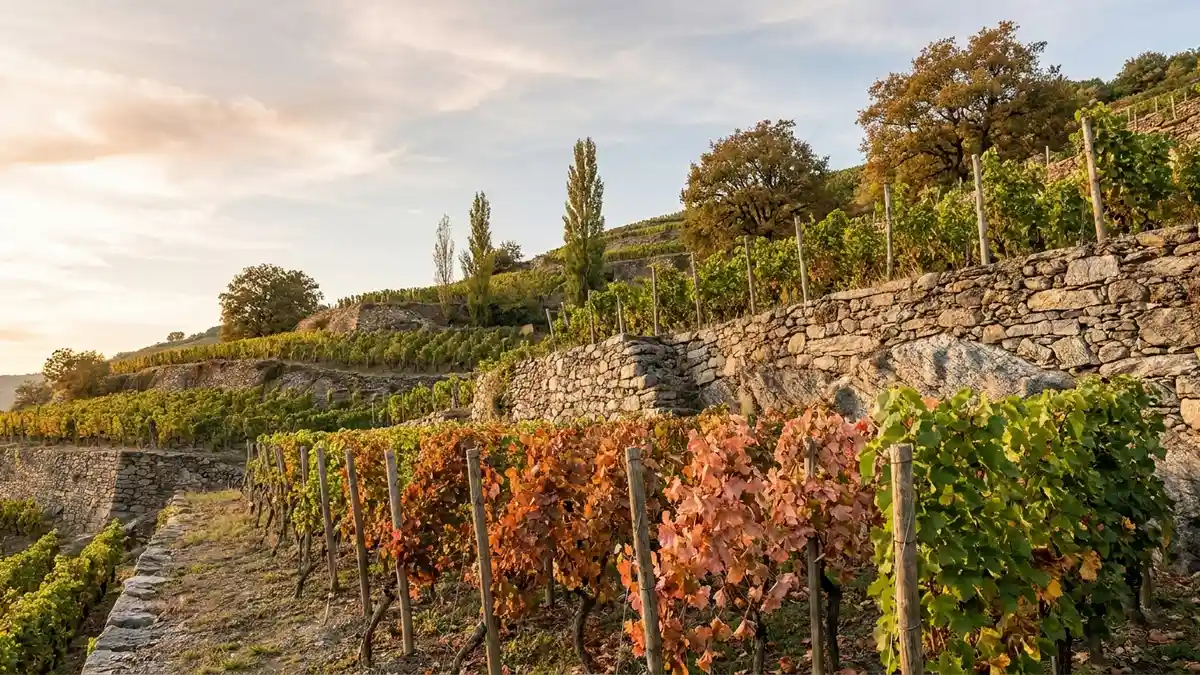
For a fuller tour of the region, our french wine regions guide places Hermitage in context with neighbouring Côte-Rôtie, Condrieu, and the southern Rhône.
Saint-Joseph Blanc
Just across the river from Hermitage sits Saint-Joseph, a longer and more diverse appellation that runs along the right bank of the Rhône. Saint-Joseph Blanc is also a Roussanne-Marsanne blend, but in a less concentrated, earlier-drinking style than Hermitage. The wines are typically lighter, with more pronounced floral notes and crisper acidity.
Saint-Joseph Blanc is one of the best entry points into northern Rhône whites for beginners — more affordable than Hermitage, faster to express its character, and a clear demonstration of the Roussanne-Marsanne dynamic at work.
Châteauneuf-du-Pape Blanc
Roussanne is one of the thirteen permitted grapes in Châteauneuf-du-Pape, the great appellation of the southern Rhône. Most Châteauneuf is red, but a small fraction — about seven percent of total production — is white. Châteauneuf-du-Pape Blanc is most often built around Grenache Blanc, Clairette, Bourboulenc, and Roussanne, with Roussanne typically contributing five to thirty percent of the blend.
Roussanne plays a particular role in Châteauneuf Blanc. The southern climate is hotter and drier than the northern Rhône, and white grapes here tend toward higher alcohol and softer acid. Roussanne brings the freshness, perfume, and ageing structure that lifts the blend. A small number of producers make varietal-driven Châteauneuf-du-Pape Blanc with eighty percent or more Roussanne — these are the most age-worthy and aromatic of the appellation's whites.
Australia — Eden Valley and Beyond
Australia took to Roussanne in the 1990s, and the grape now thrives in Eden Valley, the cool-climate Adelaide Hills, and parts of Victoria. The Australian style is typically more fruit-forward than the Rhône original, with a bigger pear-and-quince expression, but the chamomile and beeswax markers are unmistakable.
The Australian approach has also normalised varietal Roussanne — single-variety bottlings are far more common in Australia than in France. This is one of the easier ways for a beginner to taste pure Roussanne without the Marsanne component.
Paso Robles, California
California's Paso Robles has emerged as the most exciting non-French home for Roussanne. The combination of warm days, cool nights, and mineral-rich soils suits the grape unusually well. A community of Rhône-focused producers — sometimes called the Rhône Rangers — has built Paso into a serious source of both varietal Roussanne and Roussanne-Marsanne blends.
The Paso style sits between the Rhône and the Australian: ripe but structured, perfumed but not overblown. Washington State, Texas Hill Country, and parts of Argentina also produce notable Roussanne, though in smaller quantities.
Food Pairing — Where Roussanne Shines
Roussanne's combination of medium body, medium-high acidity, and herbal-floral aromatics makes it a wonderful food wine. The classic pairings reach beyond French cuisine into Asia and the Middle East.
Strong Roussanne pairings include:
- Thai green curry with chicken or vegetables — coriander and lemongrass meet chamomile and pear
- Vietnamese pho and lighter broths with star anise and ginger
- Moroccan chicken tagines with preserved lemon, saffron, and dried apricot
- Roast pork with apple or quince — the orchard-fruit aromatics align directly
- Herb-crusted chicken with thyme, sage, and rosemary
- Mushroom risotto and earthy vegetable dishes
- Soft-rind cheeses like Brie, Camembert, Reblochon, and triple-crèmes
- Aged Roussanne with foie gras, white truffle dishes, or aged Comté
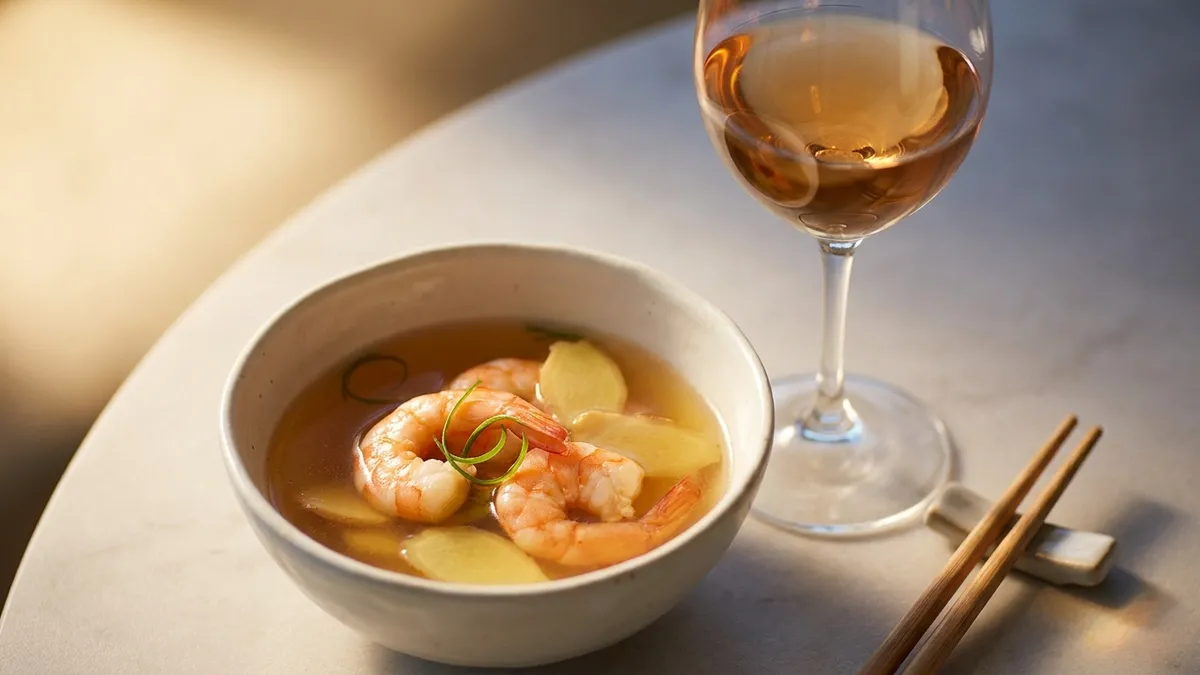
Two pairings to avoid: aggressively acidic dishes that overpower Roussanne's gentler perfume, and heavily smoked or charred meats that obliterate the floral notes. Our wine pairing rules breakdown explains the underlying logic of matching wine and food on body, acidity, and aromatic intensity.
Drink It Now or Cellar It — The Ageing Question
Most aromatic whites are made for early drinking. Roussanne is the exception. Its medium-high acidity, phenolic structure, and tendency to develop over time put it closer to top Riesling and white Burgundy than to its aromatic cousins.
A young Roussanne — one to three years from harvest — is bright with pear, white blossom, and a fresh herbal lift. With three to ten years in bottle, the wine develops a markedly different character: honey, beeswax, dried herbs, candied citrus, and a savoury, almost saline minerality. The fruit recedes; the structure remains. Top Hermitage Blanc and the most ambitious Châteauneuf-du-Pape Blanc can age beautifully for fifteen to twenty years, picking up nutty, almost truffled complexity.
The practical implication is that Roussanne is one of the few whites worth genuinely cellaring. Store bottles cool — 10 to 13°C — and lying on their sides. Serve at 10 to 12°C; chilling too cold mutes the wine's fragile aromatics. Our wine serving temperature chart covers the ideal serving window for every major style.
How Roussanne Differs from Other Aromatic Whites
Beginners often ask how Roussanne fits among the better-known aromatic whites. The short answer is that Roussanne sits in the middle — quieter than Viognier, fresher than Marsanne, more savoury than Gewürztraminer.
- Viognier is loud and apricot-driven, full-bodied and oily, with low acid. Roussanne is restrained, herbal, and pear-driven, with crisper acid.
- Marsanne is nutty and waxy, weightier and softer than Roussanne. Marsanne fills the mouth; Roussanne lifts it.
- Gewürztraminer is exotic — lychee, rose, ginger — and noticeably aromatic. Roussanne is gentler and more savoury.
- Riesling is sharp, citrus-driven, and bracingly acidic. Roussanne is rounder and more orchard-fruit-led.
- Chardonnay is a near-neutral grape shaped by winemaking; Roussanne carries its character from the grape itself.
If you are still building a base of varietal recognition, our chardonnay vs sauvignon blanc comparison explains how varietal character versus winemaking choices shapes any white wine, and the same logic helps explain why Roussanne's signature comes through across very different cellars and climates.
How to Taste Roussanne
A few practical tips for getting the most out of a glass:
- Serve cool, not cold — 10 to 12°C. Below that, the chamomile and pear aromatics never volatilise
- Use a medium-sized white wine glass — too narrow a bowl traps the alcohol, too wide a bowl loses the perfume
- Look for pear and chamomile first — these are the two most consistent markers across regions and vintages
- Note the acidity — Roussanne has more freshness than Marsanne; this is the easiest way to tell the two apart
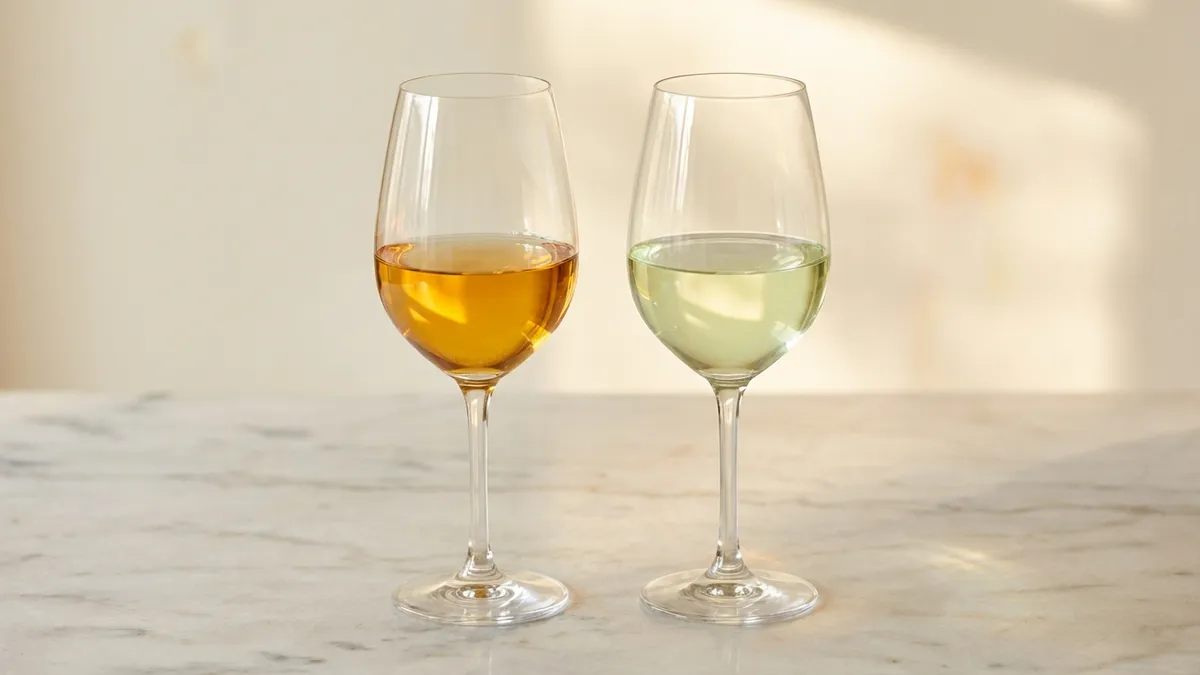
- Watch the colour — a deeper gold often signals an older wine, and the secondary aromas of honey and beeswax that come with age
- Compare a young bottle and an aged bottle side by side if you can — Roussanne's evolution is dramatic
For a complete framework on building a tasting practice from scratch, our how to taste wine guide walks through the systematic approach used by professionals. The Sommy app's structured tasting modules also walk you through aroma references for chamomile, beeswax, and dried hay — the markers that define Roussanne and help you spot it blind.
Why Roussanne Belongs on Your Tasting List
For anyone building a serious tasting vocabulary, Roussanne is essential. It is a clear example of an aromatic variety that rewards patience, and it teaches your nose to recognise the subtle herbal and beeswax markers that show up in great whites from Hermitage to Paso Robles.
Compare a young Saint-Joseph Blanc with a ten-year-old Hermitage Blanc, then taste a varietal Australian Roussanne and a Paso Robles bottling. Four wines, one grape, four windows into how climate, soil, and ageing shape varietal character.
Pour it cool. Pair it with something fragrant. Give it time. For more guided tastings and aroma training, the Sommy app walks you through the same comparative exercises that build pattern recognition for every major variety.
Frequently Asked Questions
What does Roussanne taste like?
Roussanne offers a delicate, perfumed nose of ripe pear, chamomile tea, honey, dried hay, and jasmine, with hints of beeswax and a faint herbal lift. The palate carries medium-high acidity, medium body, and alcohol typically between 13 and 14 percent. Compared with the lusher Marsanne, Roussanne is leaner, brighter, and more aromatic, with a long finish that often gains a savoury, almost saline character with age.
Why is Roussanne usually blended with Marsanne?
The two grapes are complementary partners in the northern Rhône. Roussanne brings high-toned aromatics, freshness, and acidity, but it ripens unevenly and gives low yields. Marsanne brings weight, glycerolic texture, and reliability but can taste flat alone. Most Hermitage Blanc, Saint-Joseph Blanc, and many Châteauneuf white blends use a Roussanne-Marsanne ratio between 60/40 and 20/80, balancing perfume with body in a single wine.
Where does Roussanne come from?
Roussanne originated in the northern Rhône Valley of France, almost certainly on the steep granite hillsides of Hermitage and Saint-Joseph. The name comes from the French word *roux*, meaning russet or red-brown, a reference to the coppery hue the ripe berries take on at harvest. Today Roussanne is also grown in California's Paso Robles, Washington State, Australia's Eden Valley, and across the southern Rhône and Provence.
Is Roussanne difficult to grow?
Yes. Roussanne is one of the more demanding white grapes in viticulture. It ripens late, gives low and inconsistent yields, struggles with wind and oxidation in the vineyard, and is highly sensitive to powdery mildew. These challenges nearly drove plantings to extinction in the mid-twentieth century. Modern clones developed in the 1990s have improved disease resistance, which is why Roussanne plantings have grown steadily over the past three decades.
Should you age Roussanne?
Yes, more than most aromatic whites. Roussanne's medium-high acidity and phenolic structure give it real ageing potential. A young Roussanne is bright with pear and chamomile. With three to ten years in bottle, the wine develops honey, beeswax, dried herbs, candied citrus, and a savoury minerality. Top Hermitage Blanc and white Châteauneuf-du-Pape can age beautifully for fifteen to twenty years, gaining complexity that most aromatic whites never reach.
What food pairs best with Roussanne?
Roussanne shines with rich, gently spiced cuisine. Try it with Thai curries, Vietnamese pho, and Moroccan tagines, where its herbal-floral profile aligns with lemongrass, coriander, and saffron. It also handles roast pork with apples, herb-crusted chicken, mushroom risotto, and soft-rind cheeses like Brie or Reblochon. Older Roussanne with honey and beeswax notes pairs beautifully with foie gras, aged Comté, and white truffle dishes.
What is the difference between Roussanne and Viognier?
Both are aromatic Rhône whites, but the perfumes are different. Viognier leads with apricot, peach, and intense honeysuckle, full-bodied and oily with low acid. Roussanne is more delicate and herbal — think pear, chamomile, dried hay, and jasmine — with medium-high acid and a leaner, more savoury feel. Viognier is bright and immediate. Roussanne is subtler and rewards patience, often blooming after a few years in bottle.
What does *roussanne* mean and how do you pronounce it?
*Roussanne* (pronounced *roo-sahn*) takes its name from the French word *roux*, meaning russet or red-brown. The name refers to the distinctive copper-coloured hue the ripe berries develop at harvest, especially on the south-facing granite slopes of the northern Rhône. Among Rhône whites, Roussanne is the only major variety named directly for its appearance rather than a place, family, or aromatic descriptor.
Sommy Team
LinkedInFounder & Wine Educator
The Sommy Team is building the world's most approachable wine education app, helping beginners develop real tasting skills through structured courses and AI-guided practice.