Petit Manseng: Southwest France's Sweet and Dry Treasure

By the Sommy Team — AI-assisted, human-edited.
Updated Jun 17, 2026
Contents (9)
- What Is Petit Manseng Wine?
- Petit Manseng Tasting Notes and Flavor Profile
- Passerillage: How Tiny Berries Become Sweet Wine
- Jurançon Moelleux vs Jurançon Sec
- Petit Manseng vs Gros Manseng
- Where Petit Manseng Grows
- How to Pair Petit Manseng Wine with Food
- Serving and Aging Petit Manseng
- Building Your Petit Manseng Tasting Skills
TL;DR
Petit Manseng is a thick-skinned white grape from Southwest France whose tiny berries shrivel on the vine, concentrating sugar for honeyed late-harvest sweet wines. It also makes bone-dry styles. Expect pineapple, passionfruit, candied citrus, honey, ginger spice, and racy high acidity that keeps every version fresh.
What Is Petit Manseng Wine?
Petit Manseng is a white grape from Southwest France known for two seemingly opposite talents: it makes some of the country's most honeyed sweet wines and some of its most racy dry whites. Petit manseng wine comes mainly from Jurançon, an appellation tucked into the foothills of the Pyrenees, and from the broader Gascony region. The grape's hallmark is intense tropical fruit — pineapple, passionfruit, candied citrus — wrapped around a core of high, mouth-watering acidity. Its tiny, thick-skinned berries shrivel on the vine in late autumn, a process called passerillage, concentrating sugar without losing freshness. The result is a grape that punches far above its modest plantings.
Petit Manseng Tasting Notes and Flavor Profile
Petit Manseng has one of the most recognizable flavor signatures in white wine: bright, exotic, and almost tropical, yet never flabby thanks to its searing acidity.
Typical aromas: pineapple, passionfruit, ripe peach, candied citrus peel, honey, apricot, and a warm ginger or nutmeg spice note.
The grape's defining trait is the tension between concentrated fruit and high acidity. Even when the sugar climbs, the wine stays lively and refreshing rather than heavy. That balance is the whole reason Petit Manseng can swing between dry and sweet styles without ever tasting tired.
For dry styles, the numbers run roughly: Sweetness: bone-dry (1/5) · Acidity: very high (5/5) · Body: medium (3/5). For sweet late-harvest styles: Sweetness: sweet to lusciously sweet (4–5/5) · Acidity: very high (5/5) · Body: medium-full (4/5).
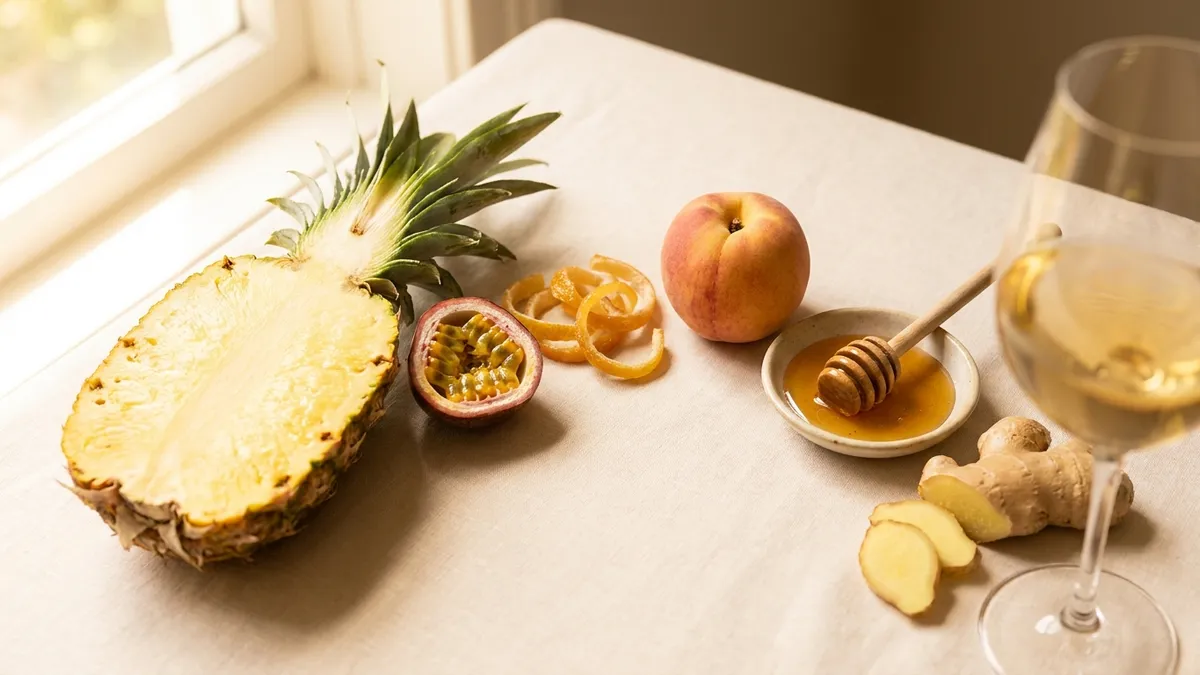
That high acidity is the grape's superpower. Where a sweet wine from a low-acid grape can feel cloying, Petit Manseng's brightness keeps every sip clean. Learning to separate the sweetness you taste from the acidity you feel is a core tasting skill, and it is worth reading our guide to tannins, acidity, and body to understand why this grape feels so vivid.
The Color in the Glass
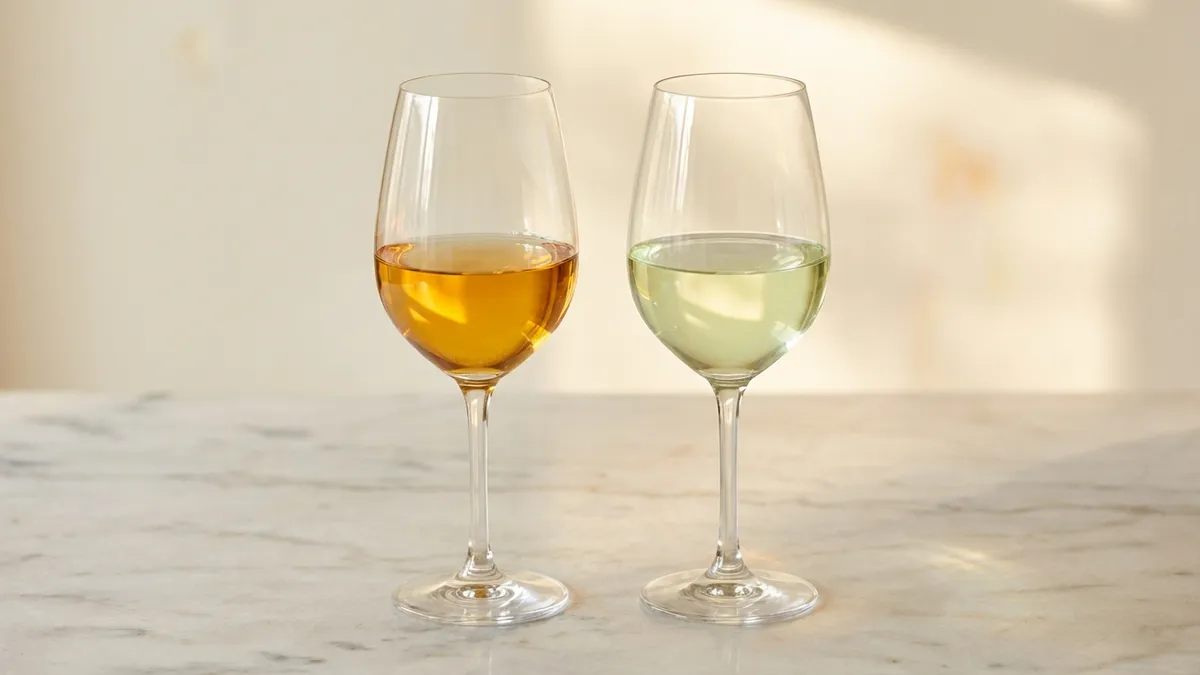
Dry Petit Manseng shows pale straw to light gold, often with green-gold highlights when young. Sweet, late-harvest versions deepen toward rich gold and amber, a visual clue to the concentrated sugar inside. The deeper the gold, the more raisining the grapes likely underwent before harvest.
Passerillage: How Tiny Berries Become Sweet Wine
The secret behind Petit Manseng's great sweet wines is not added sugar or fortification — it is patience and the weather of the Pyrenees.
Petit Manseng has unusually small berries with thick skins, which means very little juice per grape but a high ratio of skin and flavor compounds. Those thick skins are the key. They resist splitting and rotting, so the grapes can stay on the vine long after most varieties would have to be picked.
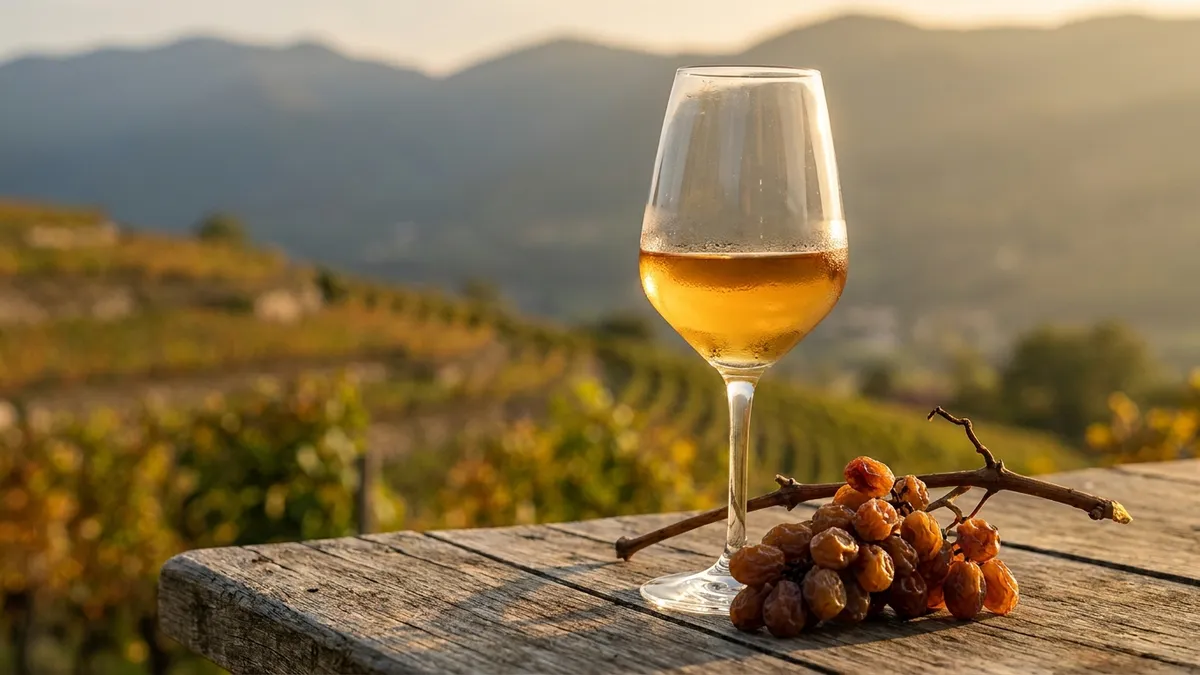
As autumn arrives, warm, dry winds known locally as the foehn sweep down from the mountains. They dehydrate the hanging clusters, shriveling each berry like a raisin. This in-vine drying is called passerillage (the French word for raisining on the vine), and it is what sets Jurançon apart from sweet wines made through other methods.
- Passerillage — grapes dry and shrivel on the vine in warm autumn winds, concentrating sugar inside intact skins. This is Petit Manseng's signature path to sweetness.
- Noble rot — a beneficial fungus, Botrytis cinerea, pierces and dehydrates grapes in damp-then-dry conditions. This is the path behind Sauternes and many other dessert wines, covered in our dessert wine guide.
- Late harvest — a broad term for grapes picked extra-ripe. Passerillage is a specific, drier form of late harvest where the fruit raisins rather than rots.
Because Petit Manseng relies on passerillage rather than noble rot, its sweet wines taste cleaner and more overtly fruity — pineapple and honey rather than the ginger-and-saffron funk that botrytis brings. Pickers often go through the vineyard several times, selecting only the most shriveled clusters in a series of passes called tries, sometimes stretching into November or December.
Jurançon Moelleux vs Jurançon Sec
The Jurançon appellation captures Petit Manseng's split personality in two official labels. Knowing the difference helps you pick the right bottle for the moment.
- Jurançon Moelleux: sweet · made from passerillage-shriveled grapes · honey, candied pineapple, apricot, ginger · racy acidity keeps it from cloying · classic with foie gras and blue cheese · the appellation's most prized style.
- Jurançon Sec: bone-dry · picked earlier at lower sugar · grapefruit, lime, green apple, passionfruit · crisp and mineral · pairs with seafood, poultry, and creamy cheeses · increasingly popular for its energy.
The word moelleux means "marrowy" or "mellow" in French and signals a sweet wine. Sec simply means dry. Both share the same DNA: that core of high acidity and tropical-fruit intensity. The Moelleux turns it toward honeyed richness, while the Sec keeps it lean and zesty.
A small number of producers also make an even sweeter, more concentrated style from the latest, most raisined pickings — essentially a Moelleux taken to its limit. These rare bottlings can show extraordinary depth of dried apricot, marmalade, and spice.
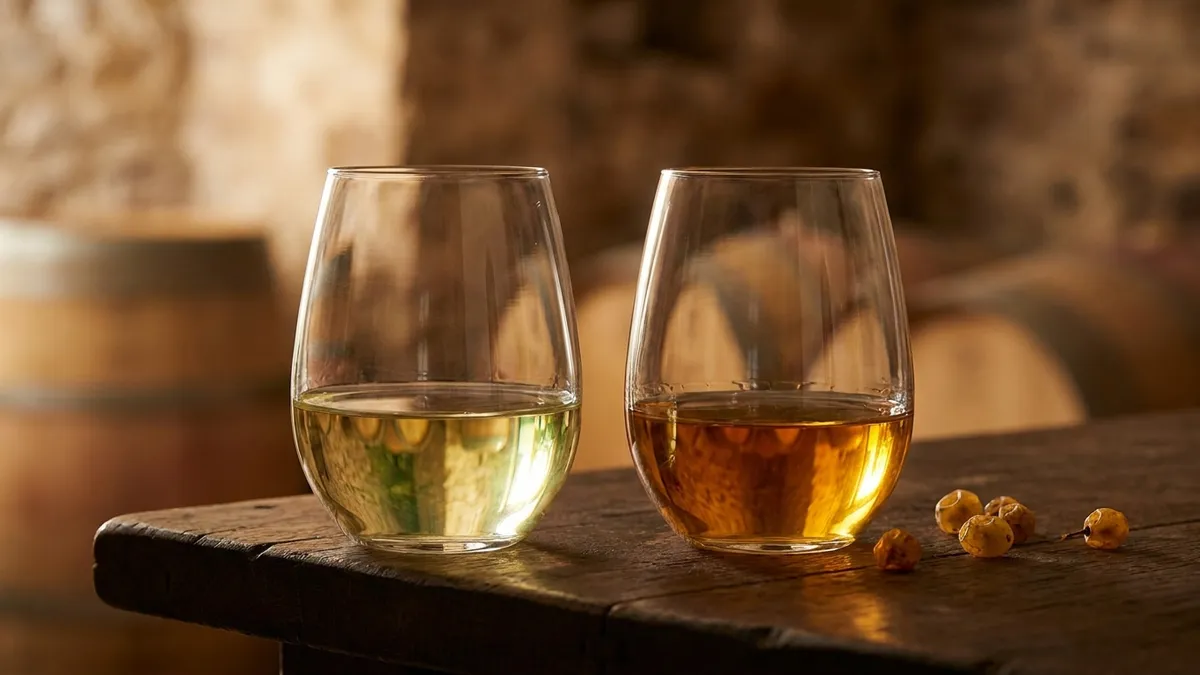
Sommelier tip: If a wine simply says "Jurançon" with no qualifier, it is the sweet Moelleux style by default. The dry version must always carry the word Sec on the label.
Petit Manseng vs Gros Manseng
Petit Manseng has a larger-berried cousin, Gros Manseng, and the two are often blended. Understanding how they differ explains a lot about what ends up in your glass.
- Petit Manseng: tiny berries · thick skins · low yield · high concentration · the grape of choice for the finest sweet wines and the most ageworthy dry whites.
- Gros Manseng: larger berries · thinner skins · higher yields · lighter concentration · the workhorse for everyday dry whites and the backbone of many Gascony blends.
Many Jurançon and Gascony wines combine the two: Gros Manseng provides volume and easygoing fruit, while Petit Manseng adds the intensity, structure, and aging potential. In the finest sweet wines, Petit Manseng often dominates or stands alone, because only its thick skins and tiny berries can survive the long hang time that passerillage demands.
If you enjoy aromatic, high-acid whites like this, you may also appreciate Riesling, which similarly spans bone-dry to lusciously sweet, or the honeyed versatility of Chenin Blanc. For a fuller map of white varieties, our white grapes overview places Petit Manseng among its peers.
Where Petit Manseng Grows
Jurançon and the Pyrenees
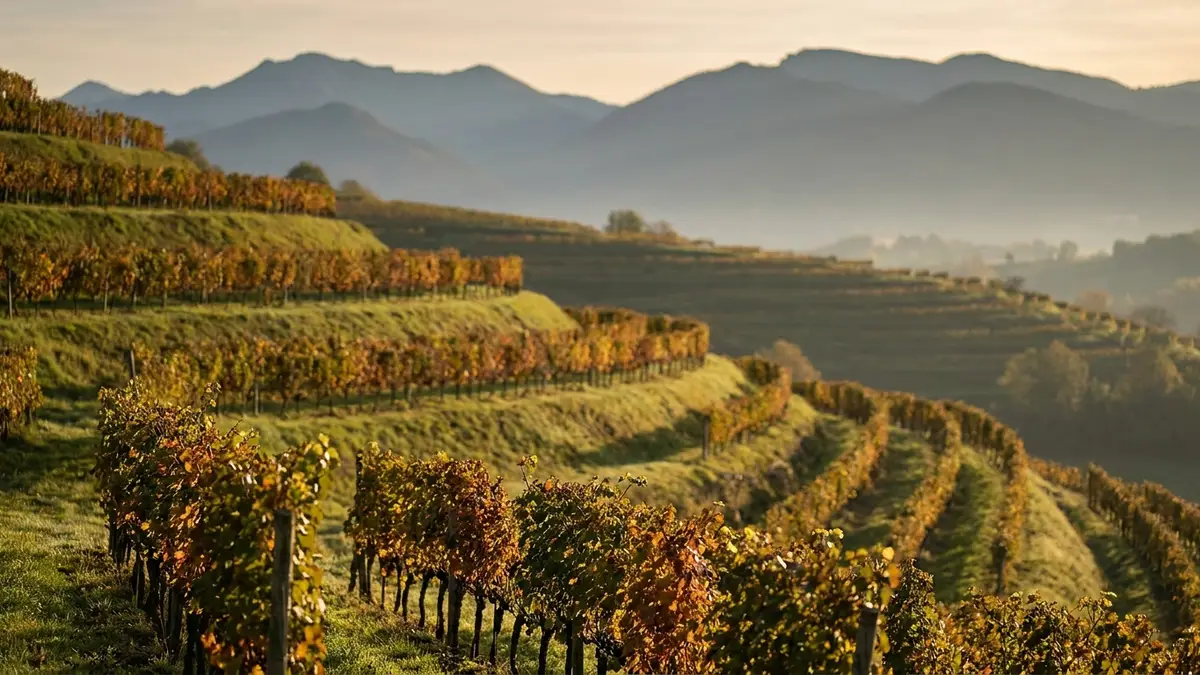
Petit Manseng's spiritual home is Jurançon, just south of the city of Pau in the far southwest corner of France, where the vineyards climb the foothills of the Pyrenees. The combination of altitude, mountain light, and those warm autumn foehn winds creates ideal conditions for slow ripening and passerillage. Vines are often trained high on tall trellises to escape spring frost and to catch maximum sunlight on steep, well-drained slopes.
Jurançon has a long history — it is said to have been used to bless the future King Henry IV at his christening in the 16th century, which gave the wine an early reputation at the French court.
Gascony and the Wider Southwest
Beyond Jurançon, Petit Manseng grows across Gascony, the rolling country famous for Armagnac and duck. Here it appears in appellations like Pacherenc du Vic-Bilh (which makes both sweet and dry whites) and in the vast, value-driven IGP Côtes de Gascogne category, usually blended with Gros Manseng, Colombard, and Ugni Blanc for fresh, zesty dry whites. These are some of the best-value aromatic whites in France. For the bigger picture of the area, see our guide to French wine regions.
Petit Manseng in Virginia and the United States
Petit Manseng has found a surprising second home in Virginia, which has embraced it as one of its signature white grapes. Virginia's humid, warm summers and the threat of late-season rain are tough on thin-skinned varieties, but Petit Manseng's thick skins make it remarkably resistant to rot and splitting. That durability lets it ripen fully and even raisin on the vine in the American Mid-Atlantic climate.
Virginia winemakers produce Petit Manseng in both dry and off-dry styles, keeping the grape's hallmark acidity and tropical fruit. Smaller plantings have also appeared in other US states experimenting with humidity-tolerant whites. While the variety remains a niche outside France, its rise in Virginia shows how a grape bred for one corner of the Pyrenees can travel when the conditions reward its strengths.
How to Pair Petit Manseng Wine with Food
Petit Manseng's high acidity makes it a flexible partner across both savory and sweet courses. The pairing depends entirely on whether you have a dry or a sweet bottle.
Pairing Dry Jurançon Sec
- Seafood — grilled fish, shellfish, and ceviche; the wine's acidity mirrors a squeeze of citrus.
- Roast chicken and pork — its weight and freshness handle white meats and herb-roasted poultry.
- Creamy and goat cheeses — the acidity slices through richness and resets the palate.
- Spiced and Asian dishes — its fruit and zest stand up to mild chili and aromatic spices.
Pairing Sweet Jurançon Moelleux
- Foie gras — the classic regional match; honeyed sweetness against rich, fatty liver, with acidity to cleanse.
- Blue cheese — Roquefort and similar; salt and funk balanced by tropical sweetness.
- Fruit tarts and spiced desserts — apricot, pineapple, and ginger flavors echo the wine.
- Spicy food — a touch of sweetness cools chili heat while acidity refreshes.
The golden rule with the sweet style: the wine should be at least as sweet as the dish, or the food will make it taste thin. Because Petit Manseng keeps so much acidity, it handles richer, fattier pairings than most dessert wines can.
Serving and Aging Petit Manseng
Temperature
Serve dry Jurançon Sec chilled at 8–10°C (46–50°F) to highlight its citrus and minerality. Sweet Moelleux is best slightly warmer, around 10–12°C (50–54°F), which lets the honey and tropical aromas open up without muting the acidity.
Aging Potential
- Jurançon Sec — drink within 3–6 years for freshness, though the best examples gain a waxy, honeyed complexity over a decade.
- Jurançon Moelleux — the high acidity gives real staying power; good bottles age gracefully for 10–20 years, deepening into marmalade, dried apricot, and roasted nut.
This aging ability is another gift of that vibrant acidity, which acts as a natural preservative and keeps even old sweet wines from tasting flat.
Building Your Petit Manseng Tasting Skills
Petit Manseng is a brilliant grape for training your palate to separate two sensations that beginners often confuse: sweetness (the sugar you taste on the tip of the tongue) and acidity (the tartness that makes your mouth water along the sides). Because this grape is high in both, tasting it teaches you to feel them as distinct.
Try this side by side: pour a glass of dry Jurançon Sec next to a sweet Moelleux. Notice how both make your mouth water — that is the shared acidity — while only one coats the palate with honeyed sugar. Then practice naming the fruit: pineapple, passionfruit, candied citrus, peach. Putting words to aroma is the foundation of how to taste wine, and it gets easier with structured repetition.
The Sommy app walks you through exactly these comparisons, guiding you to identify acidity, sweetness, and aroma one glass at a time so you build real tasting confidence. Sommy's interactive exercises put a vocabulary to what you sense, turning a bottle of Petit Manseng from a pleasant mystery into a lesson you can repeat with any wine. Few grapes reward that kind of attention as generously as this small, golden treasure from the edge of the Pyrenees.
Sources
Frequently Asked Questions
What does Petit Manseng wine taste like?
Petit Manseng tastes of pineapple, passionfruit, candied citrus, ripe peach, and honey, often with a warm ginger or nutmeg spice note. Its defining feature is racy, mouth-watering acidity that balances every style. Dry versions feel crisp and citrusy, while sweet late-harvest wines layer honey and tropical fruit over that same vibrant freshness.
Is Petit Manseng a sweet or dry wine?
Petit Manseng makes both. In Jurançon it produces sweet, honeyed late-harvest wines labeled Moelleux, made from grapes that raisin on the vine. The same grape also makes bone-dry wines labeled Jurançon Sec, full of citrus and tropical fruit. The grape's high natural acidity keeps both styles lively rather than heavy.
What is passerillage in Petit Manseng?
Passerillage is the process where grapes are left on the vine into late autumn, where warm Pyrenean winds shrivel them like raisins. This dehydrates the berries and concentrates their sugar and flavor. Petit Manseng's thick skins resist rot, so the grapes can hang for weeks, producing intensely sweet wines without needing noble rot.
How is Petit Manseng different from Gros Manseng?
Petit Manseng has smaller, thicker-skinned berries with less juice but far more concentration, making it the grape of choice for the finest sweet wines. Gros Manseng has larger berries, higher yields, and is used more for dry and entry-level wines. Many Jurançon and Gascony wines blend the two, leaning on Petit Manseng for intensity.
Where is Petit Manseng grown?
Petit Manseng's heartland is Southwest France, especially Jurançon at the foot of the Pyrenees and the wider Gascony region for dry whites and IGP Côtes de Gascogne. It is also planted in the United States, where Virginia has embraced it as a signature white grape suited to its humid, warm summers.
What food pairs with Petit Manseng?
Dry Petit Manseng pairs with seafood, roast chicken, and creamy cheeses, its acidity cutting through richness. Sweet Jurançon Moelleux is a classic match for foie gras, blue cheese, spiced desserts, and fruit tarts. The wine's bright acidity stops sweet pairings from cloying and makes it flexible across savory and sweet courses.
Why does Petit Manseng have such high acidity?
Petit Manseng retains naturally high acidity even when fully ripe, a trait of the variety reinforced by its cool, high-altitude Pyrenean home. The long, slow ripening preserves tartaric acid while sugars build. That tension between sweetness and acidity is what makes its sweet wines taste fresh and its dry wines taste racy rather than flat.
Sommy Team
LinkedInFounder & Wine Educator
The Sommy Team is building the world's most approachable wine education app, helping beginners develop real tasting skills through structured courses and AI-guided practice.