Marsanne Wine Guide: The Rich White of the Northern Rhône

By the Sommy Team — AI-assisted, human-edited.
Updated Apr 29, 2026
Contents (10)
- What Is Marsanne Wine, in 100 Words
- A Northern Rhône Native with a Quiet Reputation
- What Marsanne Tastes Like
- Why Marsanne and Roussanne Are Almost Always Blended
- Key Marsanne Regions
- How Marsanne Differs from Viognier
- Food Pairing — Where Marsanne Wins
- The Aging Arc — Why Marsanne Rewards Patience
- How to Taste Marsanne
- Why Marsanne Belongs on Your Tasting List
TL;DR
Marsanne is a rich, waxy, low-acid white grape native to France's Northern Rhône. Expect deep gold color, oily texture, almond, honeysuckle, quince, and lanolin notes. Star regions are Hermitage Blanc, Saint-Joseph, Crozes-Hermitage, and Australia's Goulburn Valley. Often co-blended with Roussanne for balance. Best Hermitage Blanc ages five to fifteen years.
Marsanne wine is one of France's great hidden whites — a grape that fills the cellars of Hermitage and Saint-Joseph yet rarely shows up on a beginner's shopping list. If Viognier is the perfumed star of the Northern Rhône, marsanne is the quiet workhorse: deeper in color, fuller in body, longer in the cellar, and built more on texture than on overt aromatics. A mature Hermitage Blanc made from old marsanne vines is one of the most extraordinary white wines in the world.
This guide covers what marsanne is, where the best examples come from, why it is almost always blended with Roussanne, how to pair it at the table, and what to expect from the grape's unusually long aging arc.
What Is Marsanne Wine, in 100 Words
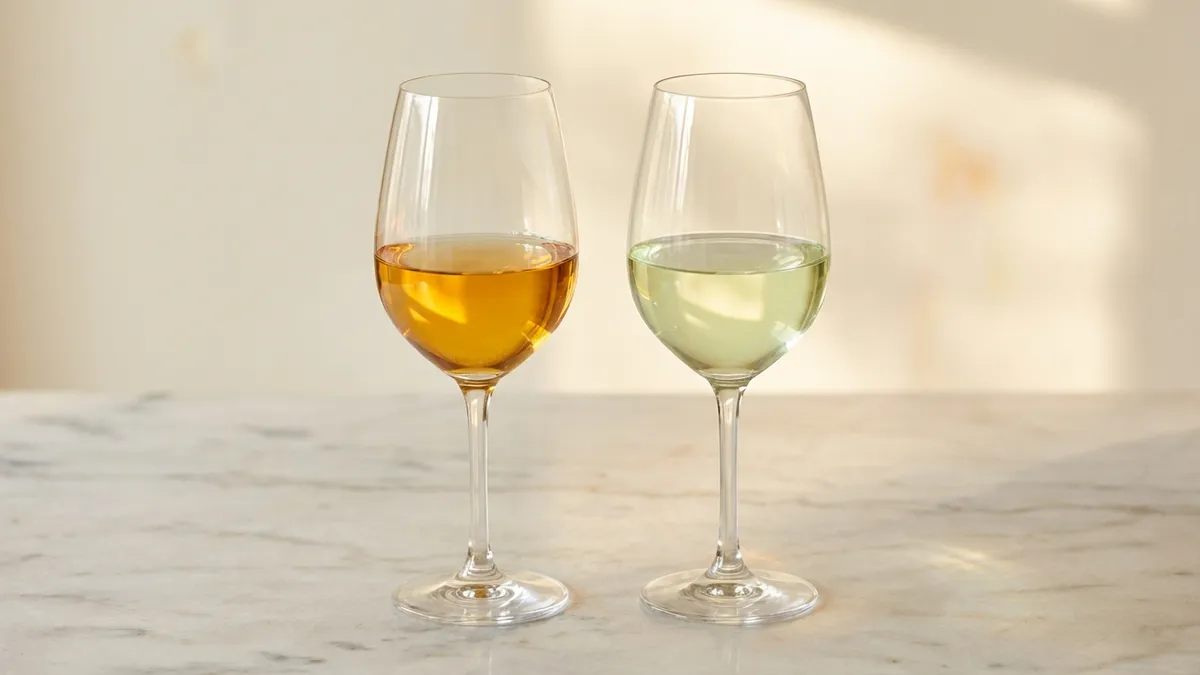
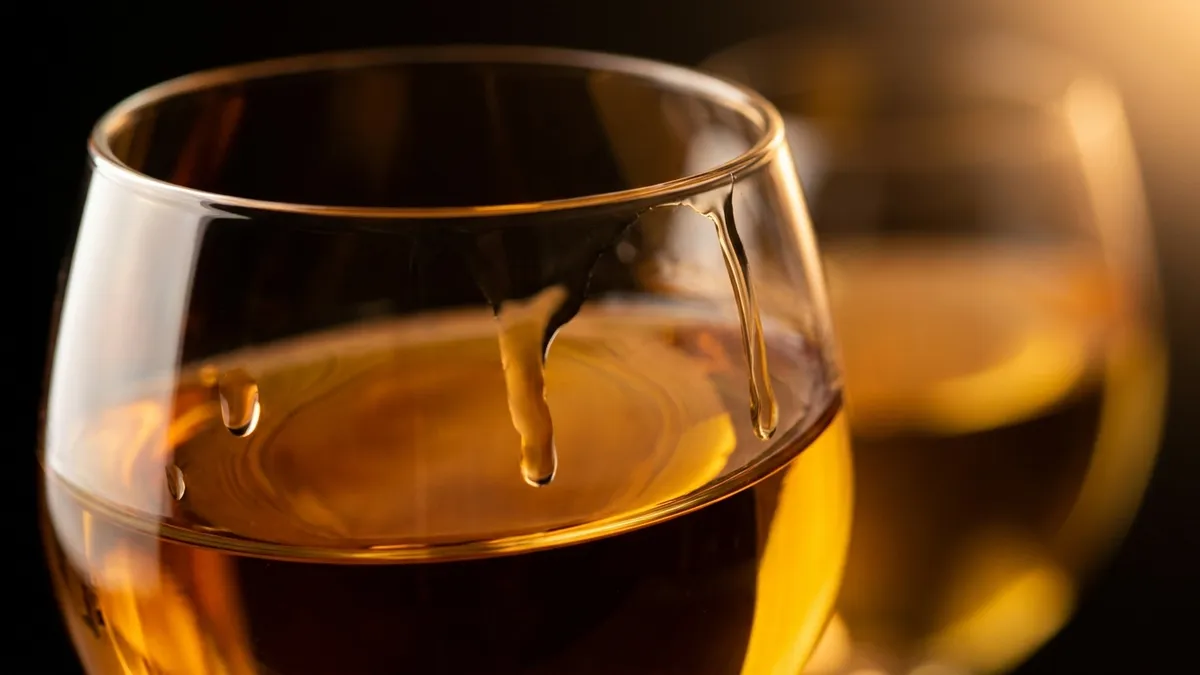
Marsanne is a richly textured, low-acid white grape native to France's Northern Rhône. The wines pour a deep gold — unusually deep for a young white — with a full body, oily glycerolic texture, and aromas of roasted almond, beeswax, honeysuckle, quince, dried pear, and a distinctive lanolin note. Acidity is modest and alcohol typically reaches 13.5 to 14.5 percent. The star regions are Hermitage Blanc, Saint-Joseph Blanc, Crozes-Hermitage Blanc, Australia's Goulburn Valley, and California's Central Coast. Marsanne is almost always co-blended with Roussanne for balance — marsanne brings weight and nuts, Roussanne brings aromatics and acid. Top Hermitage Blanc ages beautifully for five to fifteen years.
A Northern Rhône Native with a Quiet Reputation
Marsanne takes its name from the village of Marsanne in the Drôme department of southeastern France. Documentary evidence places the grape in the region from at least the early nineteenth century, though it almost certainly has a longer history. Unlike Viognier, marsanne never came close to extinction — it quietly held its position as the Northern Rhône's dominant white through phylloxera, two world wars, and the shift toward red production.
That quiet reputation is part of why marsanne is less famous than it deserves to be. The Northern Rhône is overwhelmingly known for its red Syrah — Côte-Rôtie, Hermitage, and Cornas have always sold faster and at higher prices than the whites of the same hills. White production from Hermitage represents only around 25 percent of the appellation's total, and the grape that fills most of it is marsanne.
For a fuller picture of how the Northern Rhône fits into the broader French wine map, our guide to French wine regions places marsanne's home appellations in context with Bordeaux, Burgundy, and the rest of the country.
What Marsanne Tastes Like
Marsanne is a textural grape first and an aromatic grape second. Tasters new to the variety often note the texture before they note the smell — the wine arrives in the glass with a viscous, almost oily presence that announces itself before the nose engages.
On the nose, expect:
- Orchard fruit — quince, ripe pear, baked apple, sometimes dried apricot
- Nuts — roasted almond, hazelnut, occasionally a walnut hint with age
- Floral — honeysuckle, acacia, faint jasmine
- Savory — beeswax, lanolin, marzipan, a faint tea-leaf note in older bottles
- Texture cues — a waxy, glycerolic mouth-coating quality
On the palate, marsanne is full-bodied and round. Acidity is modest — clearly less than Riesling, Sauvignon Blanc, or even Chardonnay from a cool site. Alcohol typically lands between 13.5 and 14.5 percent, contributing to the wine's weight. The texture is glycerolic (the slightly oily, mouth-coating sensation produced by glycerol, a natural fermentation by-product especially pronounced in ripe, low-acid grapes). The finish is long, faintly nutty, and more savory than fruity.
Almost every dry marsanne is fermented fully dry. The impression of richness comes from texture and ripe aromatics, not residual sugar. If you are still calibrating dry versus sweet by smell alone, our guide on what does dry wine mean walks through the difference between perceived and measured sweetness.
Why Marsanne and Roussanne Are Almost Always Blended
If you pick up a bottle of Hermitage Blanc, Saint-Joseph Blanc, or Crozes-Hermitage Blanc, the back label will almost always reveal the same partnership: marsanne and Roussanne, with marsanne typically the dominant grape. The two varieties have been blended in the Northern Rhône for so long that they are sometimes treated as a single category.
The reason is simple — they balance each other almost perfectly.
- Marsanne brings body, weight, and a nutty, waxy, orchard-fruit profile. Its acidity is modest and its aromatics are restrained.
- Roussanne brings aromatic lift, herbal and floral perfume, and a higher natural acidity. On its own it can feel high-strung; in blend it adds the freshness marsanne lacks.
A typical Hermitage Blanc is built on roughly 80 percent marsanne and 20 percent Roussanne, though the exact ratio varies. Some producers go heavier on Roussanne for aromatic intensity; others lean almost entirely on marsanne for richness and aging potential. The two grapes are also genetic relatives — DNA testing has shown they are closely linked, which helps explain why they ferment and age at compatible rates in blend.
This dynamic is unusual. Most white wine regions produce single-varietal wines or blends of unrelated grapes. The marsanne-Roussanne marriage is one of the few cases where two specific varieties are treated as natural partners by an entire appellation system.
Key Marsanne Regions
Hermitage Blanc, Northern Rhône
Hermitage is the spiritual home of serious marsanne. The famous south-facing hill rises above the village of Tain l'Hermitage on the eastern bank of the Rhône, and its granite, schist, and decomposed mica soils produce some of the longest-lived white wines in France. Hermitage Blanc is overwhelmingly built on marsanne — often 90 percent or more — with a smaller proportion of Roussanne.
These are not casual wines. A young Hermitage Blanc is often closed and tightly wound; the magic emerges with age. The wines move through honeysuckle and quince in their first years, retreat into a closed phase between roughly years three and seven, and re-emerge with honey, beeswax, dried apricot, and toasted almond from year ten onward. Top vintages from established producers can develop for two to three decades.
Hermitage Blanc sits in a rarefied price tier, and total production is small — the appellation covers only around 130 hectares total, of which whites occupy perhaps 35.
Saint-Joseph Blanc
Saint-Joseph stretches along the right bank of the Rhône, north and south of the Hermitage hill. It produces both red Syrah and white wines from marsanne and Roussanne. Saint-Joseph Blanc tends to be lighter, fresher, and more approachable than Hermitage Blanc, with brighter quince and pear fruit and less of the dense, waxy texture. The wines are typically ready to drink within two to five years of release.
For value-driven Northern Rhône white drinking, Saint-Joseph Blanc is one of the most reliable categories on a wine list. The same marsanne-Roussanne dynamic applies, often in similar 80-20 proportions, but the wines wear it more lightly.
Crozes-Hermitage Blanc
Crozes-Hermitage is the largest Northern Rhône appellation by volume, and its white production has grown steadily as global demand for serious whites has risen. Crozes-Hermitage Blanc is generally a step up in body from Saint-Joseph but a step down from Hermitage — a useful middle ground for tasters trying to learn marsanne without paying a Hermitage price. Most bottles are built for drinking within five years.
Saint-Péray
Saint-Péray is the southernmost Northern Rhône appellation and the only one dedicated solely to white wine. Both still and traditional-method sparkling versions exist, based on marsanne and Roussanne. The still wines have grown in reputation as a structured alternative to Hermitage Blanc at a lower price point.
Australia — Goulburn Valley
The most important marsanne story outside France belongs to Australia. The Tahbilk estate in Victoria's Goulburn Valley maintains the world's oldest continuously producing marsanne vines, planted in 1927. Australia today holds more total marsanne acreage than France, and the grape has become a recognized regional signature of central Victoria.
Australian marsanne wears the grape's profile differently from the Northern Rhône. The wines are typically more fruit-forward in their youth — riper pear and citrus — and they undergo a famous transformation around age six to eight, where they shift from primary fruit into the classic honey, beeswax, and toast spectrum. Drinkers buy them young, store them, and wait. The aging arc is one of the longest of any white wine outside France.
Our Australian wine guide covers the country's regional structure and signature grapes in more depth.
California, Washington, and Switzerland
California's Central Coast — Paso Robles, Santa Ynez, and the Sierra Foothills — has developed a small but serious marsanne following since the Rhône Rangers movement of the 1980s. Switzerland's Valais grows marsanne under the local name Ermitage, producing some of the longest-lived whites in the country — a reminder that the grape's affinity for granite and altitude crosses borders.
How Marsanne Differs from Viognier
Both marsanne and Viognier are Northern Rhône full-bodied whites, but they sit at opposite ends of the aromatic spectrum. The contrast is one of the clearest pairings in white-wine tasting education.
Viognier is a true aromatic grape. Its character comes from terpenes in the skin — apricot, jasmine, honeysuckle, ginger spice — and the wine announces itself on the nose. It also fades quickly, with most examples best within one to three years. Our Viognier wine guide covers the grape in detail.
Marsanne is a textural and savory grape. Its profile is built around almond, quince, beeswax, and honeysuckle — present and pleasant, but never intense in the Viognier sense. What marsanne offers instead is texture, weight, and an aging arc Viognier cannot match.
A useful exercise is to taste a young Condrieu Viognier next to a young Hermitage Blanc. Two grapes from the same valley produce two completely different wines — a perfect illustration of how varietal character shapes a glass even when terroir is held nearly constant.
Food Pairing — Where Marsanne Wins
Marsanne's combination of weight, modest acidity, and savory nutty profile makes it an excellent partner for rich, traditional, and slightly aged-savory dishes. The classic pairings lean French and Mediterranean.
Strong marsanne pairings include:
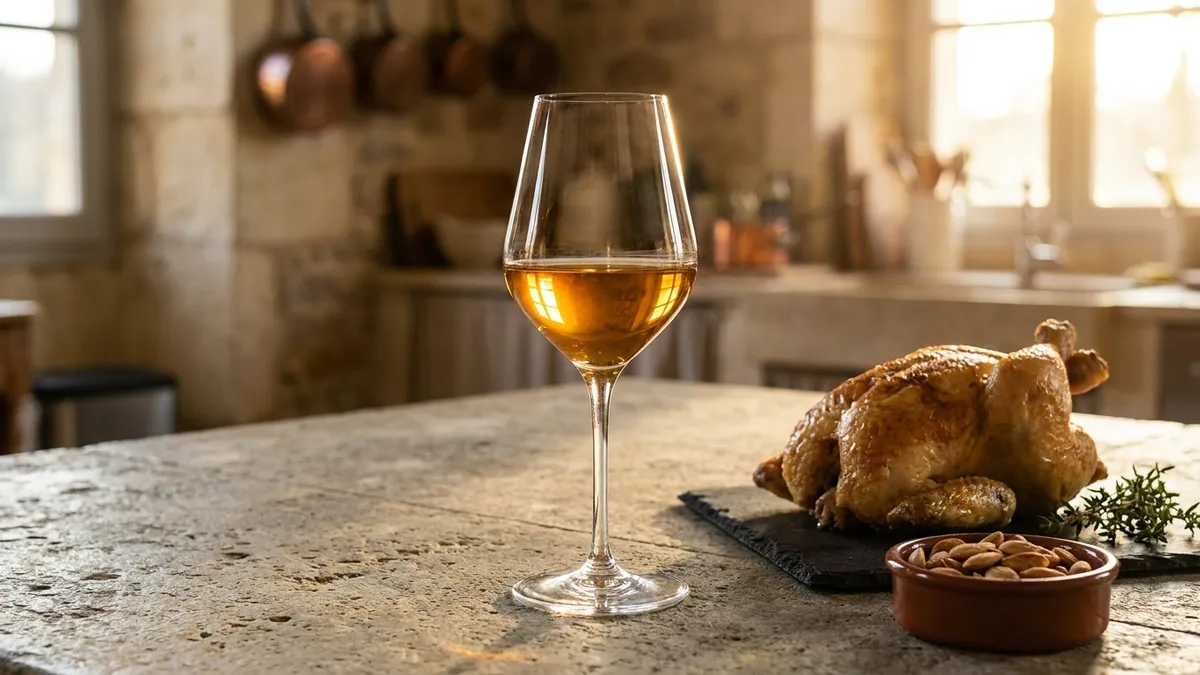
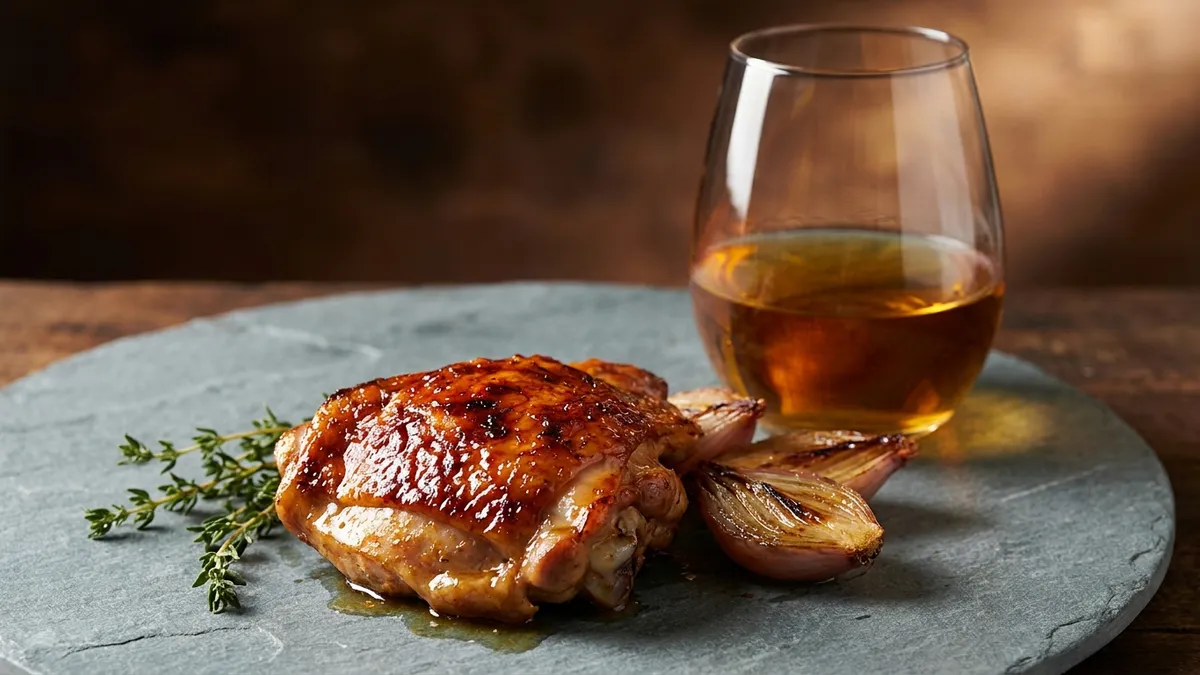
- Roast chicken with thyme, rosemary, or tarragon — the herbal lift complements the wine's honeysuckle
- Pork loin with quince paste, apple chutney, or mustard cream
- Foie gras — the wine's body and modest acid handle the richness without competing
- Hard aged cheeses like Comté, Gruyère, and aged Gouda
- Lobster, crab, or scallops with butter or beurre blanc
- Mushroom risotto, truffle pasta, or any dish with deep savory umami
- Roast duck with stone-fruit glaze (a classic Rhône pairing)
Two pairings to avoid: bracingly acidic dishes (a sharp vinaigrette will make marsanne taste flat) and aggressively spicy food (which overwhelms the savory aromatics). The general principle is to match marsanne's weight rather than its acidity. For a deeper look at pairing logic, our wine pairing rules breakdown explains how acidity, sweetness, and body interact with food.
The Aging Arc — Why Marsanne Rewards Patience
Most white wines have a straightforward aging trajectory: they start fresh, peak in their first few years, and then decline. Marsanne breaks the pattern. It has one of the most distinctive — and counterintuitive — aging arcs of any white grape.
The trajectory typically goes:
- Years 0 to 2 — Bright orchard fruit, honeysuckle, modest weight. Pleasant but not yet revealing.
- Years 3 to 7 — A famously closed phase. The wines often go quiet, with primary fruit fading and tertiary notes not yet emerging. Many tasters open a bottle in this window and assume the wine is dying.
- Years 8 to 15 — The reawakening. Honey, beeswax, dried apricot, marzipan, and toasted almond emerge. Texture deepens, and the wine reaches its most complex expression.
- Years 15 to 30+ — Top Hermitage Blanc continues to develop, picking up tea, dried herbs, and a subtle nutty oxidative quality reminiscent of fine Sherry, though without the deliberate oxidation.
Everyday Saint-Joseph Blanc and Crozes-Hermitage rarely follow the full arc — they are built for drinking in their first five years. But Hermitage Blanc, top Saint-Péray, and the best Australian Tahbilk marsannes are some of the longest-lived dry white wines in the world. Cellar them properly at 12 to 14°C and the patience is rewarded. Our wine serving temperature chart recommends 11 to 13°C for serving — slightly warmer than most whites, to let the texture and aromatics open fully.
How to Taste Marsanne
Marsanne is a forgiving grape to learn on if you approach it with the right expectations. The mistake beginners make is to treat it like an aromatic white — to swirl hard and search for an explosive nose. Marsanne's reward is on the palate, not the glass rim.
A few tips for getting the most from a glass:
- Serve cool, not cold — 11 to 13°C is ideal. Below that, the texture goes flat and the savory aromatics disappear
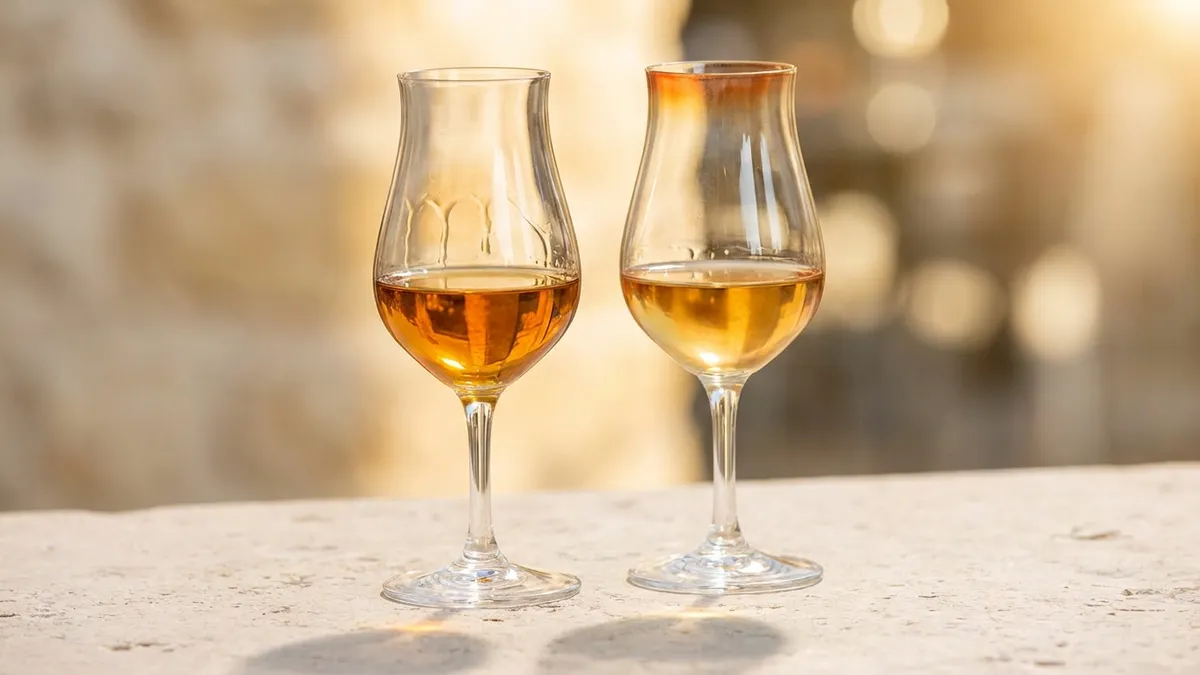
- Use a medium-bowled white wine glass — too narrow and the alcohol traps; too wide and the aromatics evaporate
- Sniff in short bursts — marsanne's full-bodied alcohol can fatigue your nose quickly
- Look for texture first — the oily, glycerolic mouthfeel is the variety's signature
- Note the color — a young marsanne already shows a deeper gold than most other young whites
- Hold the wine on the palate longer — savory almond and beeswax emerge through retronasal contact, not the front nose
For a complete framework on building a tasting practice, our how to taste wine guide walks through the systematic approach used by professionals. You can also work the same exercises inside the Sommy app, which trains your nose on the real varietal signatures behind grapes like marsanne, Viognier, and Roussanne.
Why Marsanne Belongs on Your Tasting List
For anyone building a serious tasting vocabulary, marsanne is a high-value grape to know precisely because it is undervalued. The wines are excellent, the aging arc is unique, and the regional story — one grape quietly anchoring the Northern Rhône's white production for two centuries — is one of the more interesting in French wine.
Marsanne also rewards comparative tasting. A young Saint-Joseph Blanc next to a mature Hermitage Blanc is a masterclass in how a single grape expresses itself differently as it ages. Add an Australian Tahbilk to the lineup and you have a three-region story across two continents.
Drink it cool but not cold. Pair it with something rich and savory. Give the best examples time. And let the texture do the talking — marsanne is a grape that whispers, and the whisper is worth listening to.
Frequently Asked Questions
What does marsanne wine taste like?
Marsanne wine delivers a deep gold color and a full-bodied, oily, almost waxy texture. The nose leans toward roasted almond, beeswax, quince, honeysuckle, dried pear, and a distinctive lanolin note. Acidity is modest, alcohol typically lands between 13.5 and 14.5 percent, and the finish is long with a faint nutty character. Even when fully dry, the ripe orchard-fruit aromatics make many tasters perceive it as richer than it measures.
Where does marsanne come from?
Marsanne originated in the Northern Rhône Valley of France, almost certainly near the village of Marsanne in the Drôme department. It is the dominant white grape of the Hermitage hill and the surrounding appellations of Saint-Joseph, Crozes-Hermitage, and Saint-Péray. Outside France, the most important plantings are in Australia's Goulburn Valley, where the Tahbilk estate maintains the world's oldest continuously producing marsanne vines, planted in 1927.
Why is marsanne usually blended with roussanne?
Marsanne and Roussanne are the two permitted white grapes of the Northern Rhône, and they balance each other almost perfectly. Marsanne brings weight, almond, and a generous oily texture but has modest acidity. Roussanne adds aromatic lift, herbal-floral perfume, and a higher natural acidity. A typical Hermitage Blanc blends roughly 80 percent marsanne with 20 percent Roussanne, though the exact ratio varies by producer and vintage.
Is marsanne a sweet wine?
Almost all marsanne is fermented fully dry. The impression of richness comes from its deep color, glycerolic body, ripe orchard-fruit aromatics, and modest acidity rather than residual sugar. Most still examples measure under 4 grams per liter of residual sugar. The exceptions are rare late-harvest and vin de paille bottlings from the Northern Rhône, which are deliberately sweet and often quite low in volume.
How long should you age marsanne?
Everyday Saint-Joseph Blanc and Crozes-Hermitage Blanc are best within two to five years. Top Hermitage Blanc, however, has one of the longest aging arcs of any white wine in France — five to fifteen years is typical, and the very best vintages can develop for two to three decades. Marsanne curiously goes through a closed phase between roughly years three and seven, then re-emerges with honey, beeswax, and dried-fruit complexity.
What food pairs best with marsanne wine?
Marsanne's full body, low acidity, and nutty profile make it a natural with rich, savory dishes. Strong matches include roast chicken with herbs, pork loin with quince or apple, foie gras, hard aged cheeses like Comté or Gruyère, lobster with butter, and creamy mushroom risottos. Avoid bracingly acidic dishes and aggressively spiced food — both will flatten the wine. The general rule is to match marsanne's weight rather than its acidity.
What is the difference between marsanne and viognier?
Both are full-bodied Northern Rhône whites, but they sit at opposite ends of the aromatic spectrum. Viognier is a true aromatic grape, leading with intense apricot, jasmine, and ginger driven by terpenes in the skin. Marsanne is much more restrained on the nose — its character is textural and savory, built around almond, quince, beeswax, and honeysuckle rather than overt floral perfume. Marsanne also ages far longer than Viognier.
Should marsanne be aged in oak?
Both styles exist. Traditional Hermitage Blanc sees a portion of older neutral oak, which adds creamy texture and a subtle nutty layer without overpowering the grape. Modern producers in Saint-Joseph and Crozes-Hermitage often work in stainless steel to preserve freshness and the pure orchard-fruit aromatics. Heavy new oak is rare among quality producers because it tends to crush marsanne's delicate honeysuckle and beeswax notes under vanilla and toast.
Sommy Team
LinkedInFounder & Wine Educator
The Sommy Team is building the world's most approachable wine education app, helping beginners develop real tasting skills through structured courses and AI-guided practice.