Graciano: Rioja's Secret Spice Grape

By the Sommy Team — AI-assisted, human-edited.
Updated Jun 16, 2026
Contents (10)
- What Is Graciano Wine?
- Graciano Wine Rioja, in One Paragraph
- Graciano's Role as Rioja's Blending Grape
- Graciano Tasting Notes and Flavor Profile
- Why Graciano Nearly Disappeared
- Where Graciano Grows: Regions and Aliases
- Graciano's Aging Potential
- How to Pair Graciano with Food
- How a Beginner Should Approach Graciano
- The Takeaway on Graciano
TL;DR
Graciano is the high-acid, deeply colored grape that gives Rioja its backbone and lift. Long a minor blending partner that nearly vanished because of its stingy yields, it is now bottled as a varietal wine of intense black fruit, violet, black pepper, and firm tannins that ages for decades.
What Is Graciano Wine?
Graciano is the dark, high-acid Spanish red grape that gives graciano wine rioja its backbone — the quiet partner that has shaped great Rioja for centuries while almost never appearing on the label. For most of its history it was a blending grape, added in small amounts to lift Tempranillo and Garnacha. Today a growing number of producers bottle it on its own, revealing a wine of inky color, floral violet aromatics, savory black pepper, and tannins built for the long haul.
The name Graciano hints at the grape's gift: it brings grace and lift to a blend. Where Tempranillo offers red fruit and structure and Garnacha brings warmth and body, Graciano supplies acidity, color, and aromatic complexity — the spice in the recipe.
For years the grape nearly vanished. Its stingy yields made it uneconomical to grow, and vineyards were torn up in favor of more generous varieties. That it survived at all is a story of a handful of growers who valued character over volume — and the reason a single-grape Graciano is one of Spain's most interesting discoveries for a curious drinker.
Graciano Wine Rioja, in One Paragraph
Graciano wine rioja refers to the deeply colored, very high-acid grape that adds structure and aromatic lift to Rioja, typically blended in at under 10% alongside Tempranillo and Garnacha. It tastes of intense blackberry and black cherry, lifted by violet, black pepper, dried herbs, and licorice, with firm tannins and a long, savory finish. Once nearly extinct because its low yields made it unprofitable, Graciano now also appears as a varietal wine capable of aging 15 to 25 years. It grows mainly in Rioja and Navarra, and travels under the names Morrastel in southern France and Tintilla de Rota in Andalusia. For beginners, it is best met first inside a Rioja blend, then explored on its own with food.
Graciano's Role as Rioja's Blending Grape
To understand Graciano, start with the wine it serves. Classic Rioja is a blend, and each grape plays a part. Tempranillo (Spain's signature red, full of cherry fruit and savory depth) is the lead. Garnacha (Grenache — ripe, warm, and generous) adds body and alcohol. Mazuelo (Carignan) contributes tannin. And Graciano, often the smallest slice of all, supplies the lift.
That lift matters more than its percentage suggests. Add even 5 to 10% Graciano and a blend tightens, brightens, and gains color and aromatic complexity. Winemakers reach for it specifically when they want a wine built to age — its acidity and tannin are the scaffolding that holds a Rioja Reserva or Gran Reserva together over decades.
If you want the full picture of how these grapes interlock, the Tempranillo wine guide covers Rioja's lead variety and aging classifications in detail.
What Graciano Brings to the Blend
- Acidity — Graciano keeps its bright, mouth-watering acidity even in warm vintages, preventing a blend from tasting flat or jammy.
- Color — Its thick skins deliver deep, almost black pigment, giving the finished wine a saturated, youthful hue.
- Tannin and structure — Firm tannins build the frame a long-lived wine needs.
- Aromatics — Floral violet and savory black pepper add a layer of complexity that fruit-forward grapes alone cannot supply.
A small amount of Graciano does for a Rioja blend what a squeeze of lemon does for a rich dish — it sharpens, lifts, and makes everything taste more alive.
This is why understanding tannins, acidity, and body is so useful when tasting blended wines: each grape contributes one of these structural elements. The guide to tannins, acidity, and body explains how to feel each of them in the glass.
Graciano Tasting Notes and Flavor Profile
Tasted on its own, Graciano is a serious, dark, structured wine — not a soft crowd-pleaser. The first impression is depth of color, then a striking combination of black fruit and floral spice.
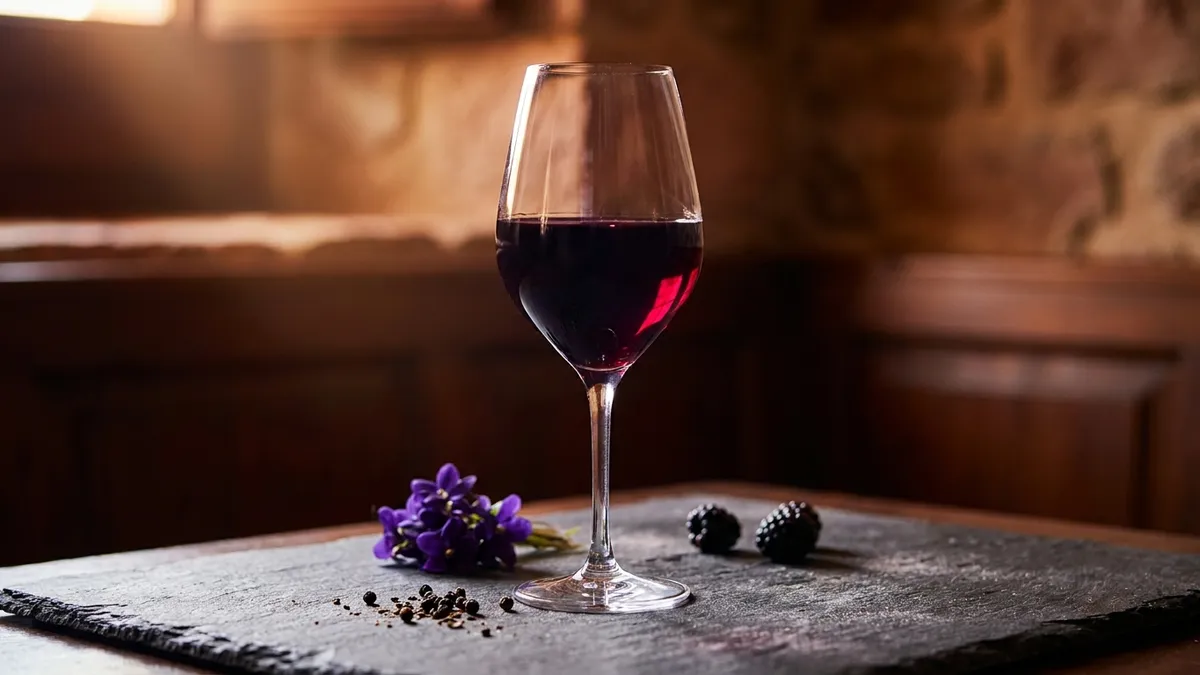
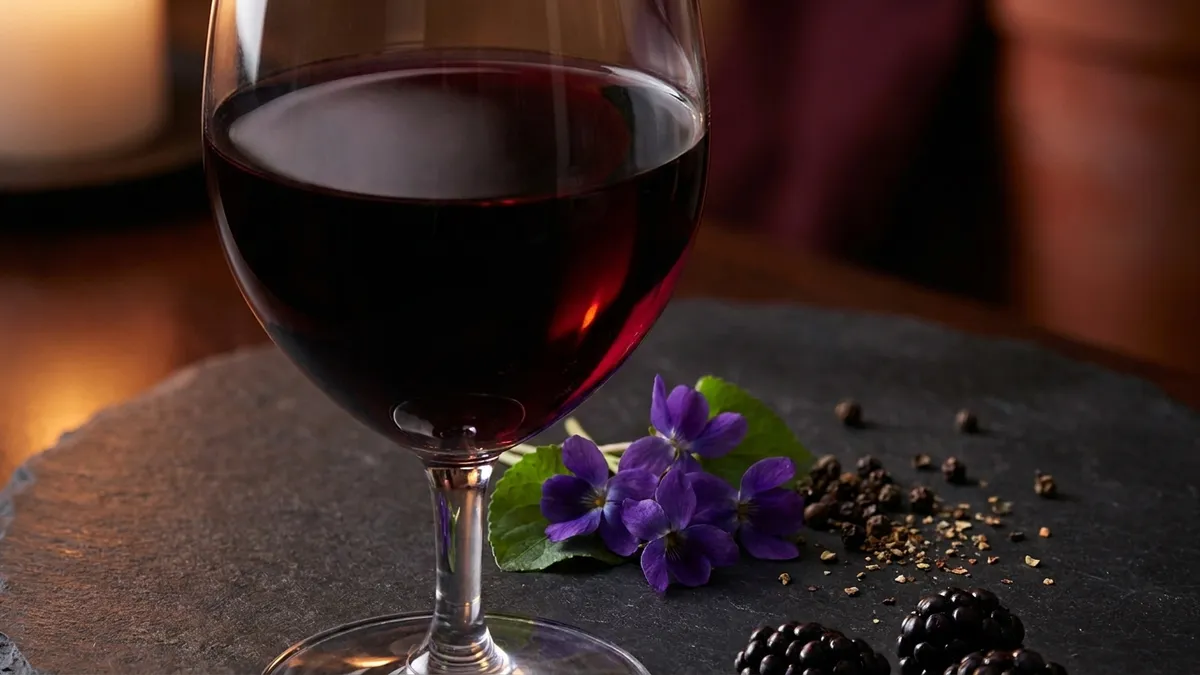
Typical aromas: blackberry, black cherry, black plum, violet, black pepper, licorice, dried herbs, thyme, leather, cedar. The signature Graciano profile: intense black fruit lifted by floral violet, savory black pepper, and dried-herb notes, deepening to leather and cedar with age.
Fruit and Floral Notes
The fruit core is black: blackberry, black cherry, and black plum, ripe but rarely jammy because the acidity keeps it taut. Over that fruit sits a distinctive floral violet aroma — a hallmark of the grape that makes a varietal Graciano surprisingly perfumed for such a dark wine.
The Savory, Herbal Streak
What sets Graciano apart from most black-fruited reds is its savory side. Expect black pepper, dried Mediterranean herbs, thyme, and a thread of licorice. This herbal, peppery character is the "spice" in the grape's nickname, and it is what gives Graciano its complexity rather than simple fruitiness.
Structure in the Glass
- Acidity — High. Graciano is one of the more acidic Spanish reds, which is exactly why it lifts a blend.
- Tannins — Firm and grippy, especially in youth. They need food or a few years of age to soften.
- Body — Medium to full, with a dense, concentrated feel.
- Color — Deep ruby to near-black, with a youthful purple rim.
The combination of high acidity and firm tannins makes Graciano feel closer in structure to Cabernet Sauvignon than to a soft, fruity red — even though its aromatics are entirely its own.
Why Graciano Nearly Disappeared
Graciano is a beautiful grape with one serious commercial flaw: it does not produce much wine. Its yields (the amount of fruit a vine produces) are very low, and it ripens late, demanding patience and warm sites. A grower could plant the same hectare with Tempranillo or Garnacha and harvest two or three times the fruit.
For most of the 20th century, that math was decisive. As Rioja modernized and demand grew, vineyards were replanted for volume and reliability. Graciano plantings fell sharply, and in some decades the grape teetered on the edge of disappearing from the region entirely.
It survived for one reason: a small group of quality-minded producers refused to give it up, because they knew their best, longest-lived blends needed it. As interest in indigenous Spanish grapes revived in recent decades, Graciano was rediscovered — first as the essential blending component it had always been, then as a varietal wine worth bottling on its own.
The story is a useful reminder that some of the most rewarding wines come from grapes that volume-focused farming had written off. Graciano sits alongside other rediscovered varieties explored in the guide to indigenous grapes worth trying.
Where Graciano Grows: Regions and Aliases
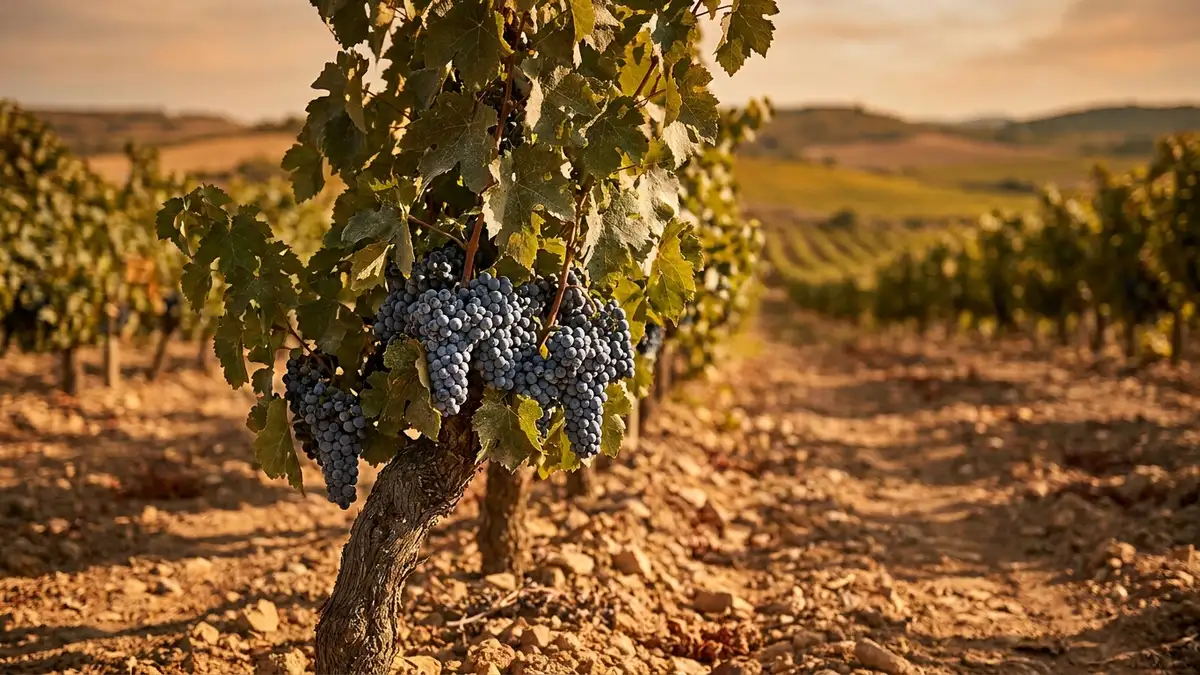
Graciano remains a Spanish grape at heart, concentrated in the north, but it travels under several names that can confuse the unwary.
Rioja and Navarra
Rioja is Graciano's home and the place it matters most, almost always as part of a blend rather than a standalone wine — though varietal bottlings are slowly growing. Just to the north, Navarra also grows Graciano, both for blending and for an increasing number of single-variety wines that show off the grape's dark, perfumed character. These two regions in northern Spain account for the great majority of the world's plantings.
For the wider context of where these regions sit and how they differ, see the Spanish wine regions guide.
Morrastel in France
Cross into southern France and Graciano becomes Morrastel, planted in the Languedoc, where it plays a supporting role in red blends. The name change reflects the grape's long history of movement across the Pyrenees, and it is a classic example of how a single variety can carry different identities in different countries.
Tintilla de Rota in Andalusia
In southern Spain's Andalusia, Graciano appears as Tintilla de Rota, historically used near the coastal town of Rota. Here it has occasionally been made into a sweeter, sun-concentrated style — a reminder that the same grape can wear very different clothes depending on local tradition.
New World Plantings
Small but growing plantings of Graciano exist in Australia, California, and Argentina. In these warmer regions, winemakers value precisely the traits that nearly doomed it in Rioja: its reliable acidity and deep color, which can bring freshness and structure to blends that might otherwise turn flabby in the heat.
Graciano's Aging Potential
Few Spanish grapes age as gracefully as Graciano. The same high acidity and firm tannins that make young examples feel intense are exactly the qualities that let the wine evolve for years in the bottle.
A good varietal Graciano can develop beautifully for 15 to 25 years, sometimes longer. Over that time, the bright black fruit slowly recedes and gives way to tertiary aromas — leather, tobacco, dried fig, and forest floor — while the firm tannins soften and integrate. The floral violet note often persists, lending an elegance that belies the wine's dark, powerful youth.
In Rioja blends, Graciano is one of the unsung reasons a Reserva or Gran Reserva can cellar for decades. The structure it contributes is part of what allows those wines to spend years in oak and bottle before release, and to keep improving after.
How Graciano compares to its Rioja blending partners and to Cabernet Sauvignon.
- Body: Graciano medium-full; Tempranillo medium-full; Garnacha full; Cabernet Sauvignon full.
- Tannins: Graciano high, firm; Tempranillo medium-high; Garnacha low-medium; Cabernet Sauvignon high.
- Acidity: Graciano high; Tempranillo medium-high; Garnacha medium-low; Cabernet Sauvignon medium-high.
- Color: Graciano deep, near-black; Tempranillo ruby to garnet; Garnacha medium ruby; Cabernet Sauvignon deep purple.
- Key flavors: Graciano black fruit, violet, pepper; Tempranillo cherry, leather, tobacco; Garnacha red fruit, spice, warmth; Cabernet Sauvignon blackcurrant, cedar.
- Aging potential: Graciano 15–25+ years; Tempranillo 10–25+ years; Garnacha 5–15 years; Cabernet Sauvignon 15–30+ years.
If you enjoy Garnacha's warmth, the Grenache wine guide covers the grape that partners Graciano so often in the Rioja blend — and shows just how different two co-stars in one wine can be.
How to Pair Graciano with Food
Graciano's firm tannins and high acidity make it a natural partner for rich, fatty, and savory food. The acidity cuts through fat while the tannins find protein to soften against, and the grape's peppery, herbal character echoes seasoning beautifully.
Best Pairings
- Roast lamb — Rosemary, garlic, and a fatty cut meet Graciano's structure and herbal streak head-on.
- Grilled beef and steak — The char and protein tame the tannins; the wine's acidity refreshes the palate between bites.
- Game — Venison, wild boar, and duck suit the wine's savory, dark-fruited intensity.
- Black-pepper and herb dishes — Peppered steak or herb-crusted meats mirror the grape's own aromatics.
- Aged hard cheeses — Manchego, aged Gouda, and Pecorino bring umami that amplifies Graciano's depth.
- Tomato-based stews — The wine's acidity harmonizes with tomato's brightness in braises and ragùs.
What to Avoid
Save Graciano for robust food. Its firm tannins and high acidity can overwhelm delicate fish, mild poultry, or anything subtly seasoned, and they clash with sweet dishes. This is a wine that wants something to push against.
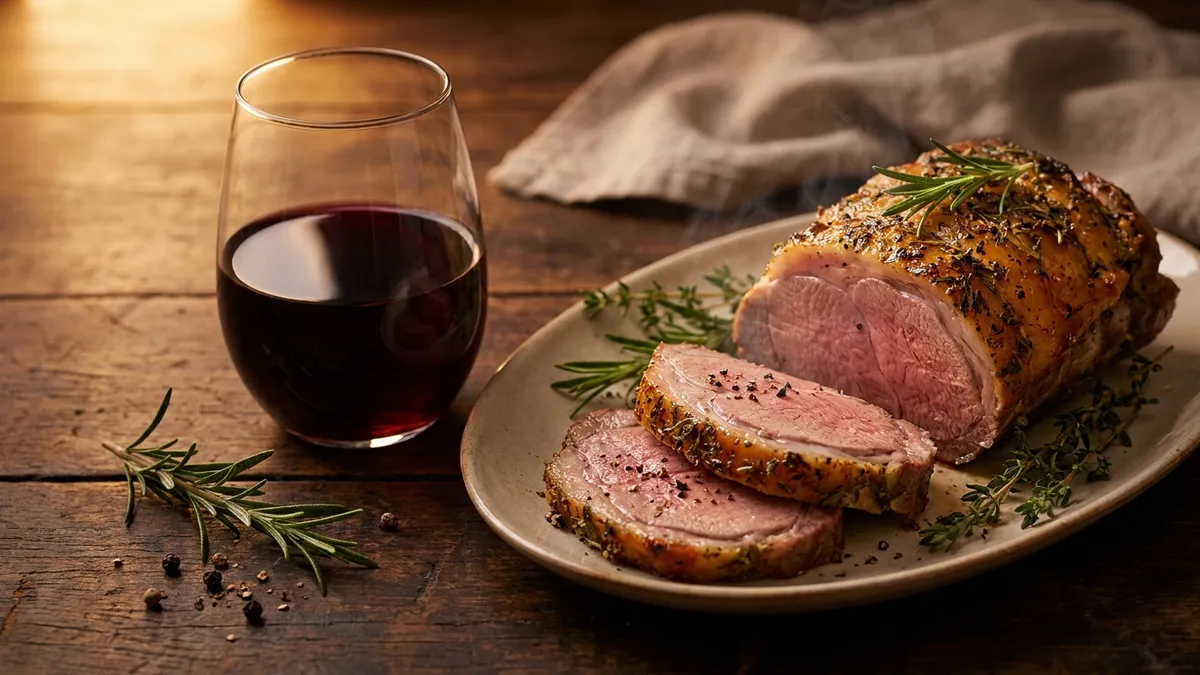
For a fuller framework on matching structure to food — tannic reds with fat and protein, high-acid wines with rich dishes — the principles transfer directly from any structured red you already enjoy.
How a Beginner Should Approach Graciano
Graciano is not the gentlest first red. Its high acidity and firm tannins can feel severe if your palate is tuned to soft, fruity wines. But approached the right way, it is one of the most instructive grapes a developing taster can meet.
Start by tasting it inside a blend. Pick up a classic Rioja that lists Graciano among its grapes, and you will meet the variety doing its real job — adding lift and structure without dominating. This is the most natural introduction to graciano wine rioja and the way the grape has been enjoyed for centuries.
Then, when you are ready, seek out a varietal Graciano and taste it with food. The contrast is the lesson: you will recognize the same dark fruit, violet, and pepper, but now turned up and unmistakable. Tasting the blend and the varietal side by side is the fastest way to understand what one grape contributes to a finished wine.
A Simple Practice Routine
- Look — Note the deep, near-black color and the youthful purple rim.
- Smell — Hunt for the violet floral note over the black fruit; then find the pepper and dried herbs underneath.
- Sip with food — Feel the rush of acidity and the firm tannic grip, and notice how a bite of fatty, savory food softens both.
If you want to put structured words to these sensations, the Sommy app walks you through color, aroma, and palate step by step, building your tasting vocabulary one glass at a time. Practicing on a high-contrast grape like Graciano — where acidity, tannin, and color are all turned up — accelerates that learning more than a soft, easygoing wine ever could.
Working through the foundations first also helps. The guide on how to taste wine covers the look-smell-sip method that turns a daunting grape like Graciano into an approachable one.
The Takeaway on Graciano
Graciano spent most of its history in the background — the small percentage that made great Rioja great, almost never named, almost lost to the economics of low yields. Its rediscovery as both an essential blending grape and a varietal wine in its own right is one of Spanish wine's quietly happy stories.
For a curious drinker, it offers a clear reward: a dark, perfumed, structured red unlike the soft fruit bombs that dominate supermarket shelves. Meet it first in a blend, then on its own, always with good food, and you will understand why winemakers fought to keep it alive.
Sources
- Wine Grapes: A Complete Guide to 1,368 Vine Varieties — Jancis Robinson, Julia Harding, José Vouillamoz, Allen Lane, 2012
- The Oxford Companion to Wine — Jancis Robinson (ed.), Oxford University Press, 2023
- DOCa Rioja: Grape Varieties — Consejo Regulador DOCa Rioja, 2024
Frequently Asked Questions
What does Graciano wine taste like?
Graciano tastes of intense blackberry and black cherry, lifted by a distinct floral violet note and a savory streak of black pepper, dried herbs, and licorice. It has very high acidity, firm tannins, and deep color. The overall impression is dark and structured rather than soft and fruity, with a long, mouth-watering finish.
Why is Graciano used in Rioja blends?
Graciano contributes what Tempranillo and Garnacha lack. Its high acidity keeps the blend fresh, its firm tannins and deep color add structure and longevity, and its floral, peppery aromatics add complexity. Even a small percentage, usually under ten percent, noticeably lifts and tightens a Rioja blend, which is why top producers prize it for age-worthy wines.
Why did Graciano almost disappear?
Graciano produces very low yields and ripens late, so growers earned far less from it than from generous, reliable Tempranillo or Garnacha. Through the twentieth century plantings collapsed as vineyards were replanted for volume. It survived mainly because a handful of Rioja and Navarra producers kept it for blending, valuing quality over quantity.
Is Graciano a dry or sweet wine?
Graciano is a dry red wine with no significant residual sugar. Its very high acidity and firm tannins make it taste structured and savory rather than sweet. The ripe black fruit can give an impression of richness, but the wine itself finishes dry and tightly framed, closer in feel to Cabernet Sauvignon than to a soft, fruity red.
Where is Graciano grown besides Rioja?
Beyond Rioja, Graciano is grown in neighboring Navarra in northern Spain. In France's Languedoc it is known as Morrastel and used in blends. In Andalusia it appears as Tintilla de Rota. Small plantings also exist in Australia, California, and Argentina, where winemakers value its acidity and color in warm climates.
How long can Graciano wine age?
Graciano is one of Spain's most age-worthy grapes. Its high acidity and firm tannins let good varietal bottlings develop for fifteen to twenty-five years or more. In Rioja blends, Graciano is a major reason Reserva and Gran Reserva wines can cellar for decades, slowly trading fresh black fruit for leather, tobacco, and dried-fruit complexity.
What food pairs well with Graciano?
Graciano's firm tannins and bright acidity suit rich, fatty, and savory dishes. Roast lamb, grilled beef, game such as venison, and dishes with black pepper or herbs work well. Aged hard cheeses and tomato-based stews also pair nicely. The acidity cuts through fat while the structure stands up to bold, robust flavors.
Is Graciano good for beginners?
Graciano is a rewarding next step rather than a first red. Its high acidity and firm tannins can feel intense if you are used to soft, fruity wines, so it helps to taste it alongside food. Starting with a Rioja blend that includes Graciano, then trying a varietal bottling, makes the grape's contribution easy to recognize.
Sommy Team
LinkedInFounder & Wine Educator
The Sommy Team is building the world's most approachable wine education app, helping beginners develop real tasting skills through structured courses and AI-guided practice.