What Do Wine Legs Mean? The Truth About Tears on Your Glass
Sommy Team
Founder & Wine Educator
April 9, 2026
11 min read
TL;DR
The wine legs meaning is mostly about alcohol, not quality. Those tears sliding down your glass are created by the Gibbs–Marangoni effect — surface tension pulling water up as alcohol evaporates. More prominent legs usually mean a higher alcohol wine, not a better one. Useful information, not a verdict.
The Most Over-Interpreted Visual Cue in Wine
Few wine topics generate more confident misinformation than the wine legs meaning question. Ask a casual wine drinker what they look for in a glass of red, and somewhere near the top of the list will be "legs" — those thin streams of wine that slide down the inside of the glass after a swirl. Many people have been told those tears are a mark of a great wine. They stare into the glass, count the tears, and make a quiet judgment about the bottle based on what they see sliding down the crystal.
The actual answer is more interesting and less romantic. Legs are not a quality signal. They are a physics signal. Those slow-moving rivers of liquid are caused by a real, measurable phenomenon called the Gibbs–Marangoni effect, and what they are really telling you has almost nothing to do with whether the wine is good, expensive, or ageworthy. They are telling you something specific about alcohol and, to a smaller degree, sugar and viscosity. Reading that signal correctly changes how you look at every glass of wine you pour.
This guide explains exactly what wine legs are, what creates them, what they actually tell you, what they do not tell you, and where they fit into a proper four-step wine tasting. By the end, you will know how to glance at a glass, read the legs in about two seconds, and move on to the parts of the wine that really matter.
What Wine Legs Actually Are
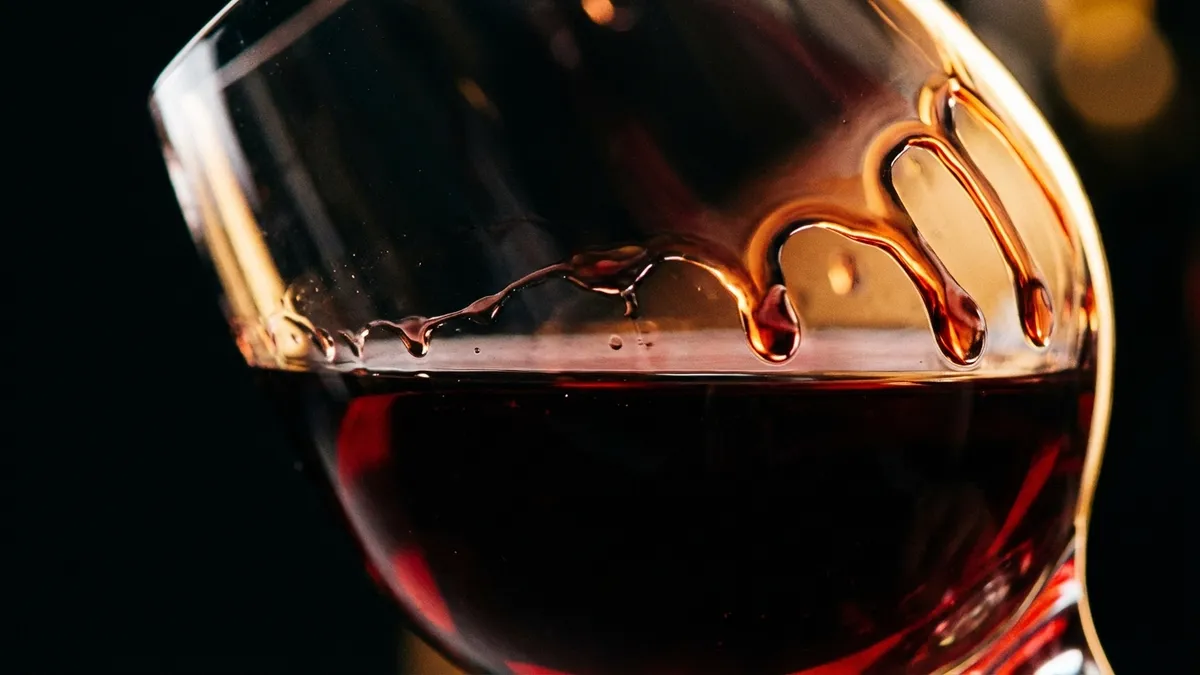
Wine legs — sometimes called tears of wine, wine fingers, or in French, les larmes du vin — are the thin droplets and streams that form on the inside wall of a wine glass after the wine has been swirled. Swirl a glass, set it down, and watch closely. The wine coats the interior of the bowl with a thin film. Within a few seconds, that film reorganizes itself: you see tiny beads forming near the top, thickening, and then falling back down as streams that look almost like glycerin.
They are real. They are visible in almost any wine you will ever drink. And they are caused by a genuine piece of fluid physics that scientists worked out in the 1800s.
The Gibbs–Marangoni Effect, Plain English Version
The science has a fancy name: the Gibbs–Marangoni effect, named after Italian physicist Carlo Marangoni and American physicist Josiah Willard Gibbs, who studied the phenomenon in the 19th century. Here is how it works in plain English:
- Wine is mostly water and alcohol, with smaller amounts of sugar, acid, and trace compounds.
- Water and alcohol have different surface tensions. Alcohol has lower surface tension than water.
- When you swirl, a thin film of wine coats the glass. At the top edge of the film, alcohol evaporates faster than water.
- As alcohol leaves that top edge, the liquid there becomes more watery and gains higher surface tension.
- Higher surface tension at the edge pulls more liquid upward from below. This is the key move — the whole film is essentially being "sucked" upward by a surface-tension gradient.
- Eventually the rising liquid has nowhere to go. It beads up into droplets, and gravity takes over. The droplets slide back down the glass as the visible tears.
That is the whole mechanism. No magic, no romance, no glycerol. It is surface tension doing its thankless job in full public view.
Why the Old "Glycerol" Story Was Wrong
For a long time, wine writers described legs as a sign of glycerol, a sweet, viscous byproduct of fermentation that contributes slightly to a wine's mouthfeel. The logic was: thicker legs = more glycerol = richer wine. It turned out to be mostly wrong. Modern physics shows that alcohol drives the Marangoni effect almost entirely. Glycerol contributes a small amount to wine viscosity and can make legs look slightly thicker, but it is the sidekick, not the star.
If you still see this explanation in older wine books, treat it as a historical footnote rather than current science.
The Real Wine Legs Meaning: What They Tell You — and What They Do Not
Here is the simple version. Wine legs are directly correlated with alcohol by volume, and slightly correlated with sugar and total extract. They are not correlated with quality, flavor intensity, aromatic complexity, or age-worthiness. Reading the legs is like reading a single line on a medical chart: informative, but never the whole story.
What Legs Do Tell You
- Alcohol level. More prominent, slower-moving legs generally mean higher alcohol. A 15 percent Zinfandel or fortified wine will show dramatic, slow legs. An 11 percent Mosel Riesling may show almost none.
- Body, roughly. Because body in wine is largely driven by alcohol and extract, the two often travel together. A big, full-bodied wine usually has obvious legs. A light, delicate wine usually does not.
- Residual sugar. Sweet wines slow the rate at which tears fall. You can almost watch a good Sauternes in slow motion — the tears creep instead of race. Dry wines drop faster for the same alcohol level.
- Temperature effects. Warmer wine evaporates alcohol faster, which amplifies the Marangoni effect. The same bottle at 50°F shows muted legs; at 65°F, it shows pronounced ones.
What Legs Do Not Tell You
- Quality. Nothing about the physics of legs reveals whether a wine is balanced, expressive, typical of its region, or well-made.
- Price. A twelve-dollar Chilean Carménère can have more prominent legs than a hundred-dollar Burgundy. The latter is likely the more interesting wine.
- Aroma or flavor intensity. The nose and the palate are where flavor lives. Legs have no mechanical connection to either.
- Age-worthiness. Legs do not reveal how well a wine will develop over time. That depends on tannin, acid, fruit concentration, and structure.
A sommelier looks at the legs for two seconds to guess the alcohol level, then ignores them completely. The wine's story is in the glass, not on its sides.
Where Legs Fit in Proper Wine Tasting
The classic wine-tasting sequence has four steps: look, swirl, sniff, sip. Legs appear in the swirl step, roughly a third of the way through the full evaluation. Here is how skilled tasters actually use them:
- Look. Before touching the glass, examine the wine's color, clarity, and rim. Color is a much richer signal than legs — see our guide to reading wine color. The rim tells you about age and grape variety. Color intensity tells you about extraction and body.
- Swirl. Gently rotate the glass to coat the interior with a thin film. This serves two purposes: it releases aromatics for the nose, and it sets up the conditions for legs to form.
- Read the legs quickly. Glance — do not stare. Are the legs thick or thin? Slow or fast? This is your quick alcohol hypothesis. You might think: "These look like a 14 to 15 percent wine." Write that guess in your mental margin and move on.
- Sniff. This is where most of the information lives. For the full nose technique, see our guide to how to smell wine. The nose will tell you far more about quality than the legs ever can.
- Sip. Confirm your alcohol hypothesis from the legs with what you actually taste on the palate. If the wine feels warm and heavy at the back of the throat, your leg reading was correct. If it feels light and zippy, you were wrong — and that is still useful information.
Used this way, legs are a quick calibration tool, not a verdict. They take two seconds to read and then you are done with them.
A Quick At-Home Experiment to See the Effect
If any of this sounds abstract, there is a one-minute experiment that makes the Marangoni effect obvious. You will need two glasses:
- Pour about an ounce of wine into a proper wine glass. Any red will do.
- Pour about the same amount of water into a second wine glass.
- Swirl both glasses gently at the same time and set them down next to each other.
- Watch what happens on the inside walls over the next 10 to 30 seconds.
The wine glass will show distinct legs within seconds. The water glass will show almost nothing — maybe a thin sheet that slides evenly down without forming tears. The only difference between the two liquids, chemically speaking, is that wine contains alcohol and dissolved solids. That is the entire mechanism in one clean visual.
Doing this experiment once changes how you look at legs forever. You stop imagining them as a mysterious quality signal and start seeing them as a surface-tension read-out, the same way you would read the fog on a bathroom mirror.
Why Temperature and Glass Shape Matter
Two things have a surprising effect on how pronounced legs look. Neither one has anything to do with the wine itself.
Temperature
The warmer the wine, the faster the alcohol evaporates, and the stronger the Marangoni effect. A Cabernet Sauvignon poured straight out of a 55°F cellar will show modest legs. The same glass, ten minutes later on a warm table at 65°F, will show dramatic legs. Same wine, same glass — different reading. If you want to evaluate the legs fairly, let the wine reach its proper serving temperature first. For details on which wines should be served at which temperatures, see our wine serving temperature chart.
Glass Shape
A proper, clean, dry wine glass shows legs clearly because its curved interior gives the Marangoni effect room to work. A tumbler, a dirty glass, or a glass coated with residual detergent film will distort or suppress the effect. If you are comparing wines, compare them in the same glass shape and rinse each glass with water between pours. It is a small discipline that removes a lot of noise.
Wine Legs, Body, and the Alcohol Map
Because legs track so closely with alcohol, they double as a rough map of wine body — the sensation of weight and fullness on your palate. Body is heavily driven by alcohol level, with smaller contributions from sugar, glycerol, and extract. A wine with dramatic, slow, thick legs is almost always going to feel full-bodied in the mouth. A wine with barely visible legs is almost always going to feel light.
This is useful when you are trying to describe a wine in a restaurant, pairing it with food, or comparing two bottles. Body is one of the most important structural properties of a wine, and learning to recognize it quickly — via legs, nose, and first sip — is a core tasting skill. For a full breakdown of how body interacts with the other structural elements, see our guide to understanding tannins, acidity, and body.
The Sommy app includes guided body-recognition exercises that pair leg observation with palate feedback, so you can train your eye and your palate together. Over a few sessions, the two-second leg glance becomes automatic.
Common Mistakes People Make About Wine Legs
A few habits quietly distort how beginners read legs. Avoid these and your glance becomes much more reliable:
- Treating legs as a verdict. They are a physics read-out, not a score. Use them for alcohol, nothing else.
- Comparing legs across different glass shapes. A Bordeaux glass and a tumbler show the same wine's legs differently. Keep the glass constant when comparing.
- Judging legs in a cold wine. A too-cold wine will under-report its true alcohol via legs. Let the glass warm up.
- Mistaking glass residue for legs. A film of detergent or water from a rinse that was not fully dried can create fake legs. Always taste and swirl in a clean, dry glass.
- Ignoring legs entirely. The opposite mistake. Legs are not a verdict, but they are a free piece of information. A two-second glance is worth taking.
The One-Line Answer
If someone asks you what wine legs mean, the shortest accurate answer is this: they are mostly about alcohol, not quality, and they come from a surface-tension effect called Marangoni. That is it. Everything in this guide is a longer version of that sentence, plus the physics that makes it true.
Wine appreciation is full of small myths dressed up as wisdom. Stripping the quality myth off of wine legs is the single fastest way to feel less intimidated at a tasting. You can stop staring into the glass for a judgment that was never there and start looking at the things that actually matter — the aromas rising from the rim, the weight of the wine in your mouth, the finish after you swallow.
The Sommy app is built around exactly this kind of grounded, myth-busting wine education. Structured courses walk you through the four-step tasting framework with real feedback at each stage, so the useful signals become automatic and the noise drops away. Visit sommy.wine to start building a tasting vocabulary that is based on what wine actually is, not on what the old wine books used to say about it.
Frequently Asked Questions
What do wine legs actually mean?
Wine legs are created by the difference in surface tension between water and alcohol as alcohol evaporates at the edge of your glass. They tell you a wine is moderately to highly alcoholic or has residual sugar. They do not tell you whether the wine is good, expensive, well-made, or age-worthy.
Do wine legs mean a wine is high quality?
No. This is the single most common wine myth. Wine legs correlate with alcohol level and viscosity, not with quality. A cheap 15 percent Zinfandel will show dramatic legs. A world-class 12.5 percent Grand Cru Burgundy may show almost none. Quality lives in aroma, balance, and finish — not in the tears.
What is the Marangoni effect?
The Marangoni effect is a physics phenomenon first described by 19th-century physicists Carlo Marangoni and Josiah Willard Gibbs. When a liquid with two components of different surface tension (like water and alcohol) sits in a glass, the lower-surface-tension component evaporates faster at the edges, pulling the remaining liquid upward until it beads and falls back as tears.
Do wine legs tell me the alcohol content?
Roughly, yes. More prominent and slower-moving legs generally indicate higher alcohol. A 14 or 15 percent red will show obvious, thick, slow legs. An 11 percent Riesling will show almost none. It is an imprecise but directional reading of alcohol by volume.
Does glycerol cause wine legs?
Not significantly. The old folk belief that glycerol (a byproduct of fermentation) causes wine legs has been displaced by better physics. Glycerol does contribute a tiny amount to wine viscosity and can make legs look slightly thicker, but alcohol is the primary driver. If you have heard that glycerol creates legs, that is the outdated explanation.
Why do sweet wines have different-looking legs?
Residual sugar slows the speed at which tears drop down the glass. A sweet wine like a Sauternes will have legs that creep slowly rather than race downward. That is sugar-driven viscosity, not alcohol alone. This is one of the few useful extra signals legs can give you.
Should I actually look at wine legs when tasting?
Yes, but only as one data point among many. A quick swirl and glance at the legs is a 2-second check on alcohol level and body. Skilled tasters notice them, form a quick hypothesis, and then use smell and taste to confirm. Never judge a wine by legs alone.
Why does temperature affect wine legs?
Warmer wine evaporates alcohol faster, which makes the Marangoni effect stronger and the legs more dramatic. A cold wine from the fridge will show muted legs that become much more visible ten minutes later on the counter. Always evaluate at proper serving temperature before drawing conclusions.
Get the free Wine 101 course
Start learning to taste wine like a pro with structured lessons and AI-guided practice.
Sommy Team
LinkedInFounder & Wine Educator
The Sommy Team is building the world's most approachable wine education app, helping beginners develop real tasting skills through structured courses and AI-guided practice.
Keep Reading
How to Taste Wine: The Complete Beginner's Guide
Learn the four-step method that sommeliers use to evaluate every glass. Master the look, swirl, sniff, and sip technique with this comprehensive guide.
Understanding Tannins, Acidity, and Body in Wine
Learn what tannins, acidity, and body actually are, how to identify them on your palate, and why they matter for food pairing and aging.
How to Smell Wine: A Beginner's Guide to Wine Aromas
Most wine flavor comes from your nose, not your tongue. Here is how to smell wine properly, what to look for, and how to build an aroma vocabulary from scratch.