Rheingau Wine Guide: Germany's Most Historic Wine Region

By the Sommy Team — AI-assisted, human-edited.
Updated Jun 17, 2026
Contents (9)
- What Is Rheingau Wine?
- The Grapes That Define the Rheingau
- Terroir: South-Facing Slopes Above the Rhine
- The Rheingau Wine Guide to Dry Classification: Erstes Gewächs and GG
- Sweet Wine, Spätlese, and the Lore of Noble Rot
- Spätburgunder: The Rheingau's Red Tradition
- How the Rheingau Differs from the Mosel
- The Rheingau in the Wider Wine World
- How a Beginner Should Start with the Rheingau
TL;DR
The Rheingau is a small, historic German region on the river Rhine, famous for Riesling that runs fuller and drier than neighbouring Mosel, plus serious Spätburgunder around Assmannshausen. This rheingau wine guide covers its south-facing slopes, the GG dry classification, and how a beginner should begin tasting it.
What Is Rheingau Wine?
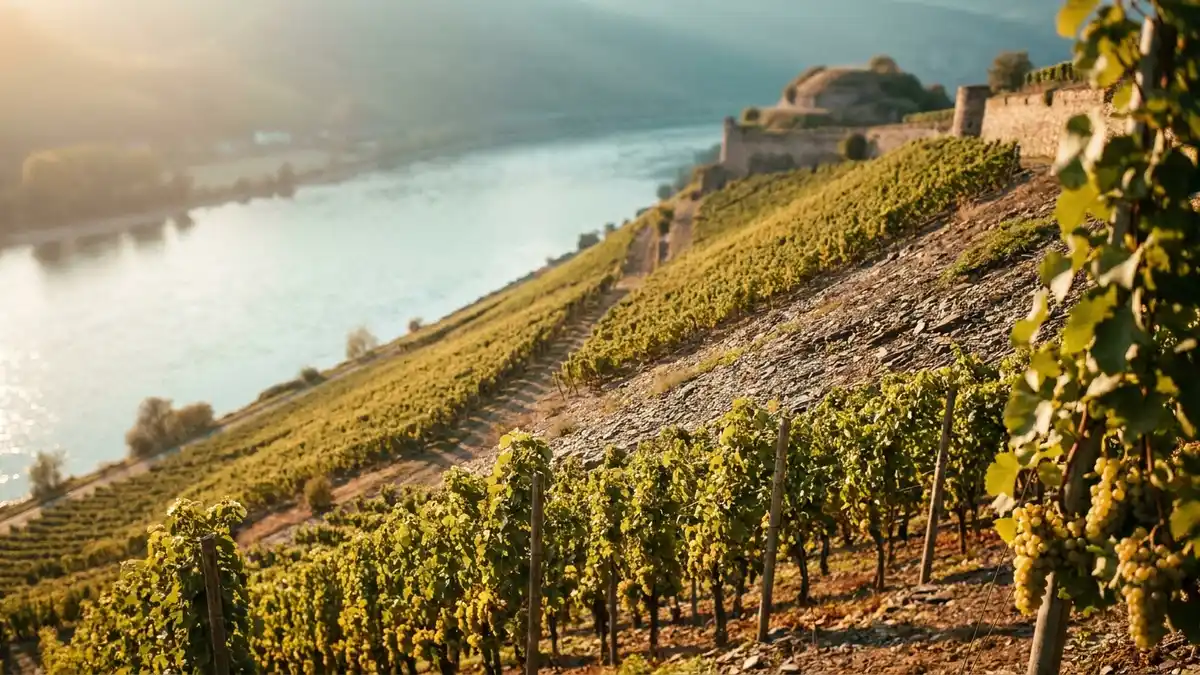
This rheingau wine guide begins with geography, because the Rheingau owes everything to a bend in a river. The Rheingau is a small, storied German wine region in the state of Hesse, where the river Rhine swings west for roughly 30 kilometres before turning north again. Along that westward stretch, the vineyards sit on south-facing slopes that catch sunlight all day and bask in warmth reflected off the wide water below. The signature grape is Riesling, which here ripens fuller and more often dry than in the neighbouring Mosel. The region also makes serious Spätburgunder (Pinot Noir) around Assmannshausen, and it is the legendary birthplace of late-harvest and noble-rot wines. Learn the river, the grape, and the difference from Mosel, and the Rheingau opens up quickly.
The Grapes That Define the Rheingau
Few regions are as single-minded about one grape as the Rheingau is about Riesling. It covers around four-fifths of the vineyard area, and almost everything the region is famous for flows from it. The second grape, Spätburgunder (the German name for Pinot Noir), holds a smaller but historic place, mostly in one corner of the region.
This focus is a gift to a learner. Because the white grape rarely changes, every difference you taste between two Rheingau wines comes from the site, the ripeness, and the winemaker's choice of dry or sweet. The region becomes a clean classroom for understanding how one grape responds to terroir — the soil, slope, and climate where it grows.
Rheingau Riesling is the headline act. Compared with lighter German styles it feels weightier and riper, often fully dry, with cut-glass acidity that keeps it fresh. Typical aromas: ripe peach, apricot, green apple, citrus, white flowers, and as it ages a distinctive note of petrol or honey. Body: medium (3/5) · Acidity: high (4-5/5) · Sweetness: ranges from bone-dry to lusciously sweet depending on style. If you want the full picture of this grape beyond Germany, our Riesling wine guide covers how it behaves around the world, and our overview of white grapes places it among the other great whites a learner should know.
Rheingau Spätburgunder is the quiet surprise. Around the village of Assmannshausen, the same grape that makes red Burgundy yields pale-to-medium ruby reds that are perfumed and savoury rather than heavy. Typical aromas: red cherry, raspberry, forest floor, and a faint smokiness. Body: light-to-medium (2-3/5) · Acidity: high (4/5) · Tannins: low-to-medium (2/5). For how this grape behaves elsewhere, our Pinot Noir guide traces it from Burgundy to the New World.
Terroir: South-Facing Slopes Above the Rhine
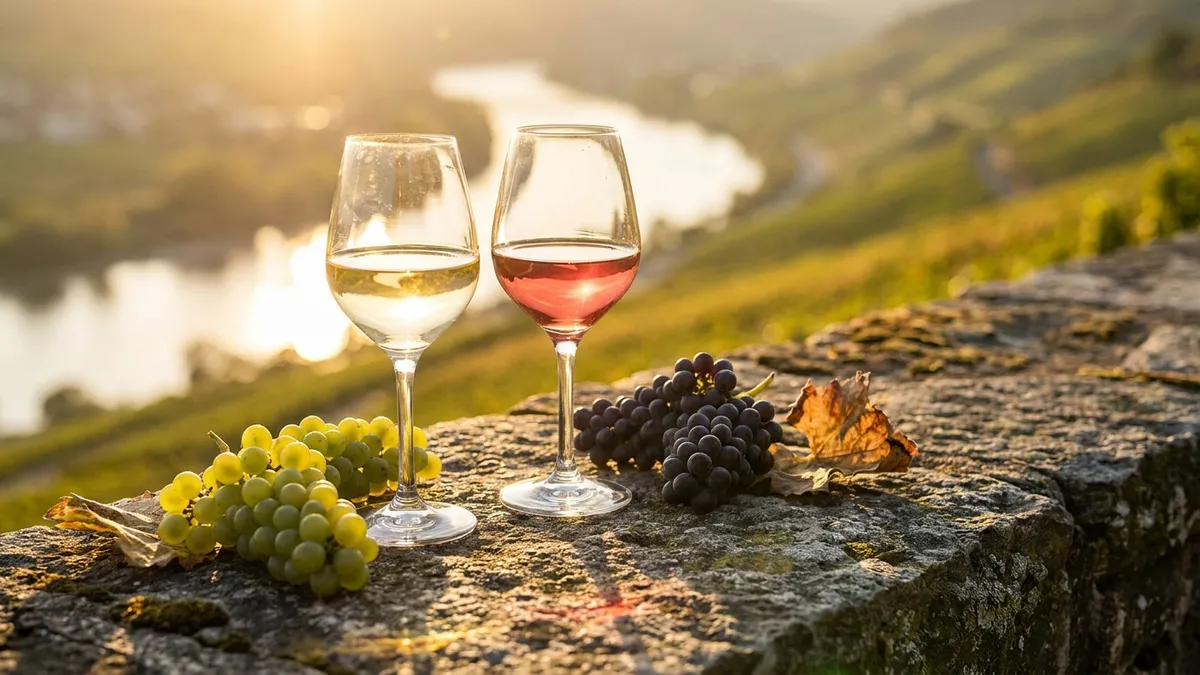
To understand the Rheingau you have to picture the river. For most of its course the Rhine flows north, but at the Rheingau it bends to run east-to-west, and the vineyards line the right bank on slopes that face due south. That orientation is the whole secret. South-facing hillsides receive the most direct sun in the northern hemisphere, and the broad, slow river acts as a giant reflector and heat store, pushing ripeness in a climate that would otherwise be marginal for vines.
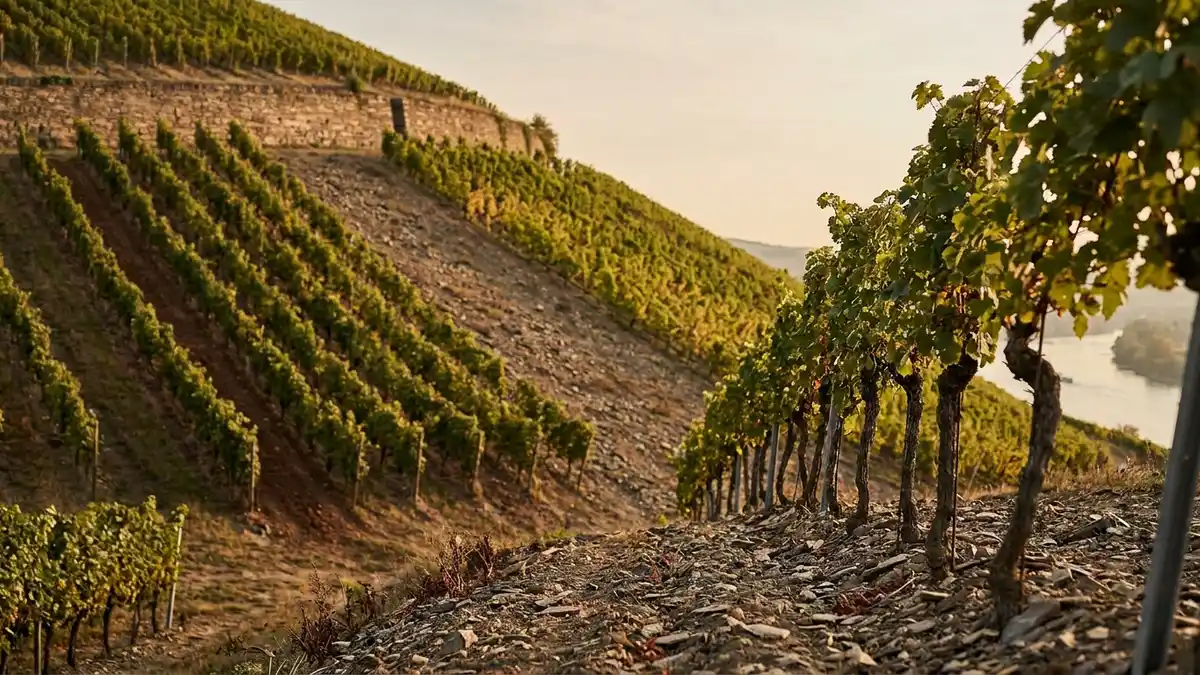
The soils shift as you walk the slope. Higher up sit slate, quartzite, and stony ground that drain well and ripen Riesling cleanly. Lower down, toward the river, richer loam and loess hold more water and give fuller, rounder wines. Around Assmannshausen the soil turns to a reddish slate that suits Spätburgunder rather than Riesling.
The result is a region that is warmer and riper than the steep, cool slate canyons of the Mosel. That extra warmth is exactly why Rheingau Riesling carries more body and ferments dry more easily. The same grape, a different river bend, and the wine changes character — a lesson our piece on why grapes that look the same can taste different carries well beyond Germany.
A great vineyard here is just a south-facing slope, a wide river, and a thin-skinned grape that needs every hour of sun it can get.
The Rheingau Wine Guide to Dry Classification: Erstes Gewächs and GG
Germany's wine labels have a reputation for being hard to read, but the Rheingau gives you a useful shortcut for finding the serious dry wines. Two terms matter, and they point at the same idea: a dry wine from a classified great vineyard.
- Erstes Gewächs (EG): Meaning "first growth," this was the Rheingau's own historic classification for dry wine from its best vineyard sites, introduced in the region ahead of the rest of Germany. It marked out a single top tier of dry, site-specific Riesling and Spätburgunder. You may still encounter the term, and it signals a wine meant to express a great vineyard rather than a simple everyday bottle.
- Grosses Gewächs (GG): Meaning "great growth," this is the nationwide top tier of dry German wine, used across regions by members of the VDP growers' association. A GG bottle is dry, made from a single classified vineyard, and held to ripeness and yield standards. In the Rheingau, GG has largely taken over the role that Erstes Gewächs once filled. The letters "GG" on a label are the clearest single signal of a serious dry wine here.
Below these top tiers sit broader categories — wine labelled simply by region or by village, and dry wines marked trocken ("dry") regardless of vineyard pedigree. The pattern to remember mirrors the rest of fine wine: the more specific the place named on the label, the higher the ambition. A single famous vineyard plus "GG" sits near the summit; a plain regional name sits at the base. The Sommy app's German wine lessons walk through real labels so you can place any bottle at a glance.
Sweet Wine, Spätlese, and the Lore of Noble Rot
Long before the modern dry movement, the Rheingau built its name on sweet wine — and on a story that changed German wine forever. The region is the traditional home of Spätlese, literally "late harvest," a style made from grapes left on the vine past the usual picking date to gain extra ripeness and sugar.
The lore goes that a delayed harvest order arrived too late, the grapes had already begun to shrivel under noble rot — the benevolent form of the fungus Botrytis cinerea, which dehydrates ripe grapes and concentrates their sugar and flavour — and the resulting wine was unexpectedly glorious. Whether tidy legend or rough history, the Rheingau sits at the heart of how Europe learned to prize botrytised sweet wine.
That tradition lives on in Germany's Prädikat ladder, a ranking of natural grape ripeness at harvest that you read on the label from drier and lighter to sweeter and richer:
- Kabinett: The lightest Prädikat, from normally ripe grapes. Often off-dry, low in alcohol, delicate and refreshing.
- Spätlese: "Late harvest." Riper grapes, more body and concentration. Can be dry or off-dry; the off-dry version is a classic Rheingau style.
- Auslese: "Select harvest." Hand-picked riper bunches, fuller and sweeter, sometimes touched by noble rot.
- Beerenauslese (BA): "Berry select harvest." Individually picked, noble-rot grapes making an intensely sweet dessert wine.
- Trockenbeerenauslese (TBA): "Dry-berry select harvest." Shrivelled, raisined noble-rot berries yielding one of the rarest, sweetest, most age-worthy wines in the world.
A key thing for beginners: Prädikat measures ripeness at harvest, not finished sweetness. A Spätlese can be made bone-dry. To be sure a wine is dry, look for trocken on the label as well.
Spätburgunder: The Rheingau's Red Tradition
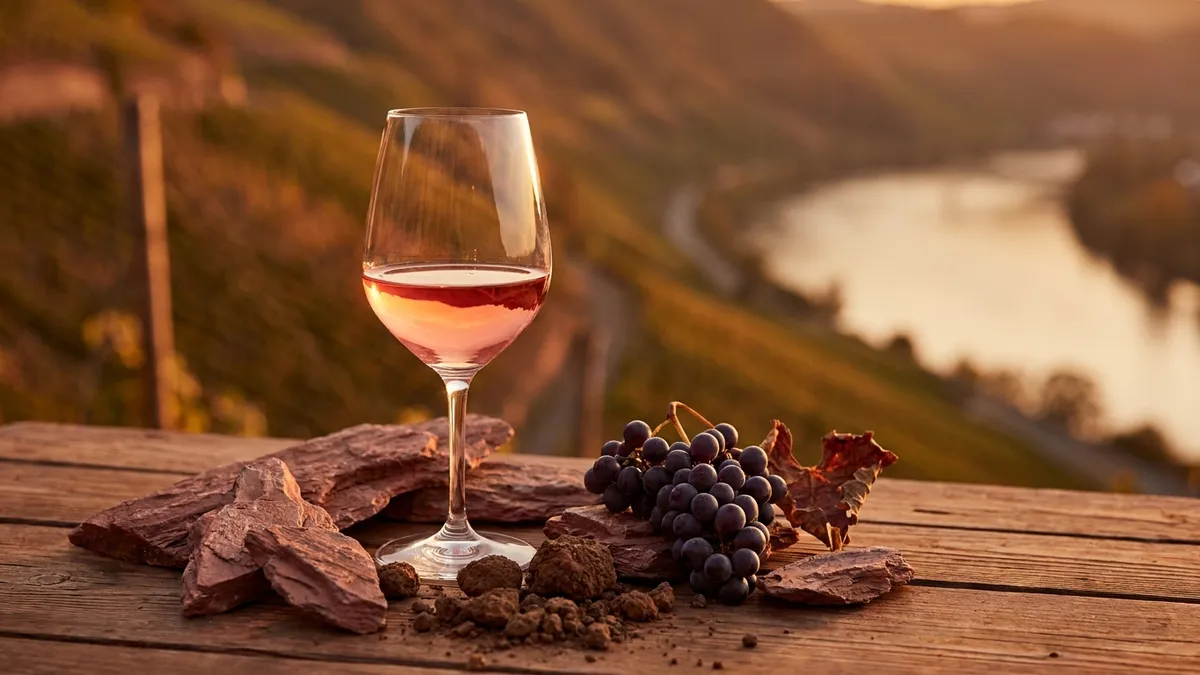
It surprises many newcomers that this white-wine heartland has a serious red side. Around the village of Assmannshausen, on reddish slate soils at the western edge of the region, the Rheingau has grown Spätburgunder — Pinot Noir — for centuries.
These are not heavy, oak-driven reds. Rheingau Spätburgunder is pale to medium ruby, light to medium bodied, and built on bright acidity and fine, silky tannins. Expect red cherry and raspberry fruit lifted by an earthy, forest-floor savouriness and a whisper of smoke. The style sits closer to red Burgundy than to a New World Pinot, which makes sense given the shared grape and the cool-climate slopes.
For a learner, an Assmannshausen red is a useful counterpoint to the region's whites. It proves that the Rheingau's gift — long sun on a south-facing slope, freshness held by acidity — applies to red grapes too. To place it in the wider family of great grapes, see our overview of the noble grapes every learner should know first.
How the Rheingau Differs from the Mosel
The Rheingau and the Mosel are Germany's two most famous Riesling regions, and they sit close together, yet they make very different wine. Holding the contrast in your head is the single fastest way to understand both. Read each bullet as one region versus the other:
- River and slopes — Rheingau: wide, slow Rhine with mostly south-facing slopes · Mosel: narrow, winding Moselle with steep slopes facing many directions.
- Soil — Rheingau: slate, quartzite, loam, and loess, warmer overall · Mosel: steep blue and grey slate that radiates heat in a cooler valley.
- Body and ripeness — Rheingau: fuller, riper, weightier Riesling · Mosel: lighter, more delicate, lower in alcohol.
- Sweetness leaning — Rheingau: increasingly dry, much labelled trocken or GG · Mosel: more associated with off-dry and sweet Kabinett and Spätlese.
- Alcohol — Rheingau: moderate, often around 12% for dry styles · Mosel: often lower, sometimes 8-9% in lighter sweet wines.
- Red wine — Rheingau: a real Spätburgunder tradition at Assmannshausen · Mosel: almost entirely white.
Neither region is "better." They are two answers to the same question — what does Riesling do here? The Mosel gives you weightlessness and tension; the Rheingau gives you body and ripeness. Tasting one beside the other is the clearest possible lesson in terroir, and our broader German wine regions guide shows where both sit on the national map.
The Rheingau in the Wider Wine World
The Rheingau is small, but its influence runs deep. Its early dry-vineyard classification helped shape how Germany thinks about great sites, and its Riesling sets a benchmark that other countries chase. Riesling itself travels widely, and comparing the Rheingau's fuller style with the leaner Riesling of cooler regions sharpens your palate fast.
The region also rewards a sense of how Europe's great whites relate to one another. The dry, mineral ambition of top Rheingau Riesling echoes the way other classic regions take a single grape seriously, and our guide to French wine regions offers a useful parallel in how place comes before brand. Wherever you start, the Rheingau teaches that ripeness and freshness are not opposites — the best examples hold both at once.
Sommy turns these comparisons into guided exercises — naming the aromas, scoring the structure, and building the vocabulary to describe what you sense. You can start practicing free at sommy.wine, then bring the method to your next bottle of Rheingau Riesling.
How a Beginner Should Start with the Rheingau
You do not need a rare bottle or a big budget to understand the Rheingau. The smartest path is to taste deliberately and pay attention to what changes between styles. Here is a practical order:
- Begin with a dry Riesling labelled trocken. This shows the region's signature fuller, riper, bone-dry style at a fair price — ripe peach and citrus held tight by high acidity.
- Compare it with a Mosel Riesling. Open the two side by side. The Rheingau wine will feel weightier and often drier; the Mosel lighter and more delicate. Same grape, different river — terroir made obvious.
- Meet the sweeter tradition with an off-dry Spätlese. A classic Rheingau Spätlese shows how ripeness and acidity can balance sweetness without feeling heavy.
- Try an Assmannshausen Spätburgunder. See the region's red side — a pale, perfumed Pinot Noir that proves the south-facing slopes serve red grapes too.
- Build the tasting habit. Note the high acidity, the stone-fruit aromas, and how ripeness shifts from dry to sweet. Our guide to how to taste wine gives you the step-by-step method, and our piece on tannins, acidity, and body explains the structure behind these vivid, age-worthy wines.
Sommy is built to make that habit stick — turning each bottle into a short, guided lesson so the next Rheingau Riesling you open is a little clearer than the last. Start small, taste in pairs, and let the slopes above the Rhine reveal themselves one glass at a time.
Sources
Frequently Asked Questions
What is the Rheingau best known for?
The Rheingau is best known for Riesling grown on south-facing slopes above the river Rhine. Its whites tend to be fuller-bodied and drier than those of the nearby Mosel, with ripe stone fruit and firm acidity. The region is also the historic home of Spätlese and noble-rot wines, plus respected Spätburgunder reds around Assmannshausen.
How is Rheingau Riesling different from Mosel Riesling?
Rheingau Riesling is generally fuller, riper, and more often dry than Mosel Riesling. The Rhine valley is warmer and the slopes face mostly south, so grapes ripen more fully. Mosel sits on steep slate beside a smaller river and leans toward lighter, lower-alcohol, often sweeter styles. Both share high acidity, but the Rheingau version feels weightier in the glass.
What does GG mean on a Rheingau wine label?
GG stands for Grosses Gewächs, the top tier of dry German wine from a classified vineyard site. It signals a dry wine from a single great vineyard, made by a member of the VDP growers' association. In the Rheingau the older term Erstes Gewächs was used for a similar idea. A GG label is a reliable marker of a serious, dry, site-specific bottle.
Does the Rheingau make red wine?
Yes. While the Rheingau is mostly white, it has a long tradition of red wine from Spätburgunder, the German name for Pinot Noir, concentrated around the village of Assmannshausen. These reds are pale to medium ruby, perfumed with red cherry and earthy notes, and lighter in body than many international Pinot Noirs, with bright acidity and fine tannins.
Is Rheingau wine sweet or dry?
Both styles exist, but modern Rheingau leans dry. A large share of production is now dry Riesling, often labelled trocken or sold as Grosses Gewächs. The region still makes celebrated sweet wines, from off-dry Spätlese to lusciously sweet Beerenauslese and Trockenbeerenauslese made from noble-rot grapes. Reading the label for trocken or for a Prädikat term tells you which style is in the bottle.
What is noble rot and why does the Rheingau matter to it?
Noble rot is the benevolent form of the fungus Botrytis cinerea, which shrivels ripe grapes and concentrates their sugar and flavour, yielding intensely sweet wines. The Rheingau is part of the lore around its discovery, with the famous Spätlese story tied to a delayed harvest. The region still produces some of Germany's finest noble-rot sweet wines from Riesling.
Where should a beginner start with Rheingau wine?
Start with a dry Rheingau Riesling labelled trocken, which shows the region's fuller, riper style at a fair price. Taste it beside a Mosel Riesling to feel the difference in weight. From there, try an off-dry Spätlese to meet the region's sweeter tradition, and an Assmannshausen Spätburgunder to see its red side. Build slowly and compare.
Sommy Team
LinkedInFounder & Wine Educator
The Sommy Team is building the world's most approachable wine education app, helping beginners develop real tasting skills through structured courses and AI-guided practice.