Pfalz Wine Guide: Germany's Sunniest Wine Region

By the Sommy Team — AI-assisted, human-edited.
Updated Jun 17, 2026
Contents (10)
- What Is Pfalz Wine?
- Where the Pfalz Sits: Sun, Shelter, and an Almond-Blossom Climate
- The Grapes That Define the Pfalz Wine Region
- Terroir: One Region, Many Soils
- The Pfalz Wine Guide to GG and German Classification
- Key Sub-Regions and the German Wine Route
- How the Pfalz Differs from Mosel and Rheingau
- What Makes the Pfalz Distinctive
- How a Beginner Should Start with the Pfalz
- The Reward of Learning the Pfalz
TL;DR
The Pfalz is Germany's warmest, sunniest wine region and its second largest, making ripe dry Riesling alongside a hotbed of the Pinot family — Spätburgunder, Grauburgunder, and Weissburgunder — plus the soft red Dornfelder. This Pfalz wine guide shows beginners where it sits, what it tastes like, and how to start.
What Is Pfalz Wine?
The Pfalz wine region — the Palatinate in English — is Germany's warmest, sunniest place to grow grapes and its second-largest wine area by vineyard size. Sheltered by the Haardt hills along its western edge, the Pfalz ripens fruit more fully than almost anywhere else in the country, which shapes everything in the glass. Its flagship is Riesling, here made in a riper, fuller, usually bone-dry style rather than the lighter, sweeter versions further north. Just as important, the Pfalz is Germany's hotbed for the Pinot family — Spätburgunder, Grauburgunder, and Weissburgunder — plus the soft, fruity red Dornfelder. Add the scenic German Wine Route and an almost Mediterranean climate, and the Pfalz becomes one of the friendliest German regions for a beginner to start.
Where the Pfalz Sits: Sun, Shelter, and an Almond-Blossom Climate
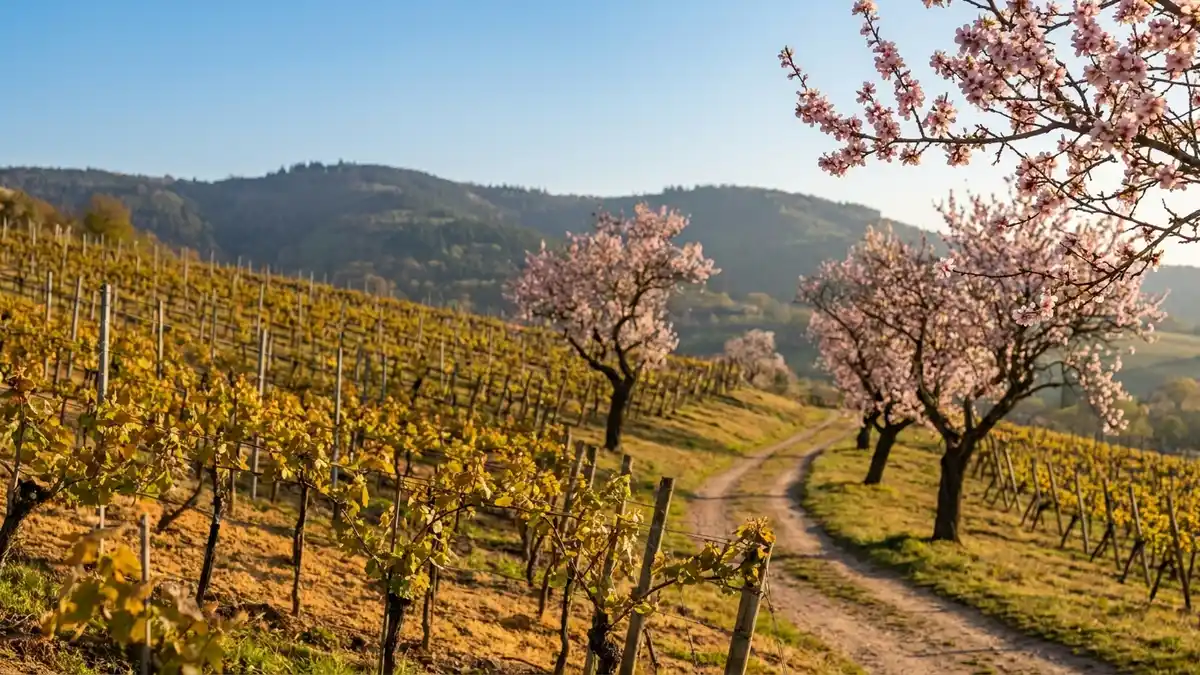
The Pfalz lies in southwest Germany, a long ribbon of vineyards running roughly 80 kilometers north to south. To the west rise the Haardt hills, the German continuation of France's Vosges mountains, and just over the southern border begins Alsace — a clue to the warm, generous character the two regions share.
Those hills are the secret. They catch the rain coming off the Atlantic and leave the vineyards in a rain shadow, dry and bathed in sunshine. The Pfalz logs some of the highest sunshine hours and lowest rainfall in German wine country, which is why grapes here ripen so reliably.
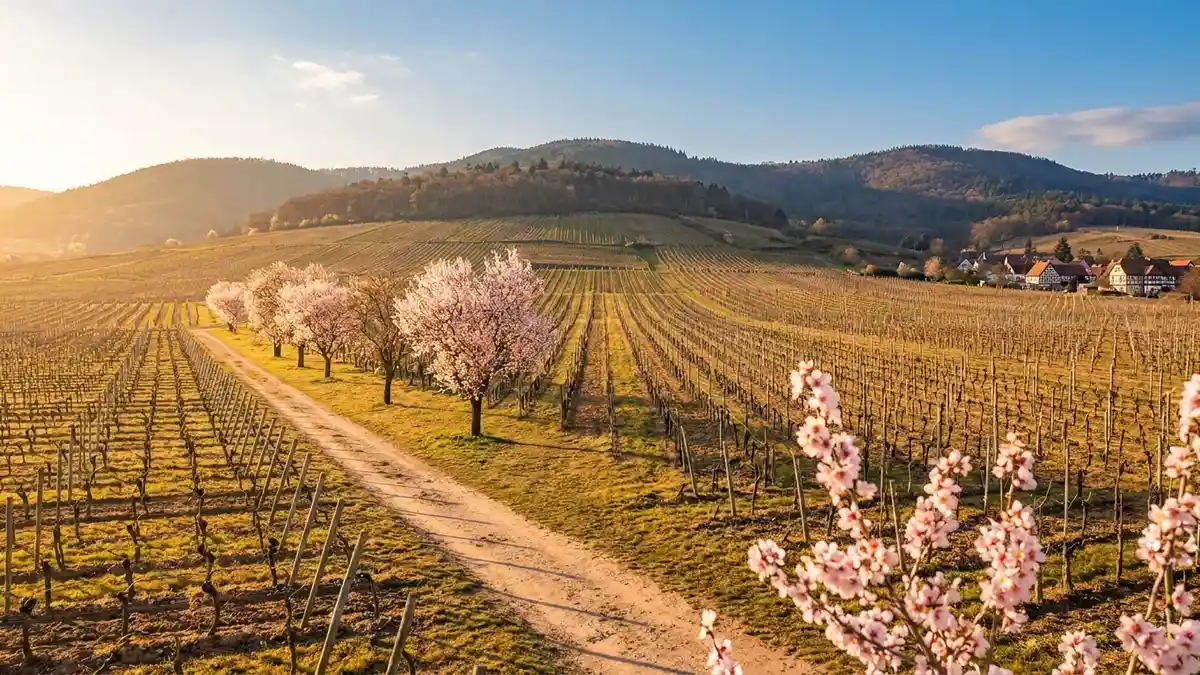
The mildness is famous enough to have a face: the Mandelblüte, or almond blossom, which paints the German Wine Route pink in early spring. Figs, lemons, and even palm trees grow in sheltered corners. Locals call it Germany's Tuscany, and standing among the vines in March it is easy to see why.
This warmth is the single most useful fact about the Pfalz. It explains the ripe fruit, the fuller body, the confidence to make Riesling completely dry, and the success of sun-loving Pinot grapes that struggle in cooler German regions.
The Grapes That Define the Pfalz Wine Region
The Pfalz plants a wider spread of grapes than most of Germany, but a handful carry its identity. Learn these and you can read almost any Pfalz shelf with confidence.
Riesling: Ripe, Full, and Usually Dry
Riesling is the heart of the Pfalz, and the region is one of the largest growers of it on earth. The difference from cooler German areas is style. Where northern Riesling can be feather-light and gently sweet, Pfalz Riesling is built on fuller ripeness — and most of it is made trocken (bone dry).
Expect riper fruit and more weight in the glass. Typical aromas: yellow peach, apricot, ripe apple, citrus, and a touch of honey, often over a flinty or stony note from the varied soils. Body: medium to medium-plus (3-4/5) · Acidity: high but rounder than the Mosel (4/5) · Sweetness: usually dry (1/5). The result is a wine that drinks like a serious dry white while keeping Riesling's electric freshness. To understand the grape's full global range, our Riesling wine guide is the best place to go deeper.
The Pinot Family: Germany's Burgundy
The Pfalz is the German home of the Pinot family, the group of related grapes that dominate Burgundy. All three appear here under German names:
- Spätburgunder (Pinot Noir): The Pfalz makes some of Germany's most serious reds from this grape — pale to medium ruby, with red cherry, raspberry, and a savory, earthy depth. The warm climate gives it riper fruit and softer tannins than cooler regions can. For the grape in full, see our Pinot Noir guide.
- Grauburgunder (Pinot Gris): A rounder, fuller white with ripe pear, melon, and a creamy texture when made in the richer local style. Drier and more substantial than the light Italian Pinot Grigio many beginners know.
- Weissburgunder (Pinot Blanc): Gentle and food-friendly, with subtle apple, almond, and citrus and a soft, easy mouthfeel. One of the most underrated whites in Germany and a brilliant everyday pour.
These three are not unrelated accidents — they are color mutations of the same vine, which is why they share so much character. The story of how one grape splits into a family is worth knowing, and our piece on grape mutations and sports explains exactly how Pinot does it.
Dornfelder and the Everyday Reds
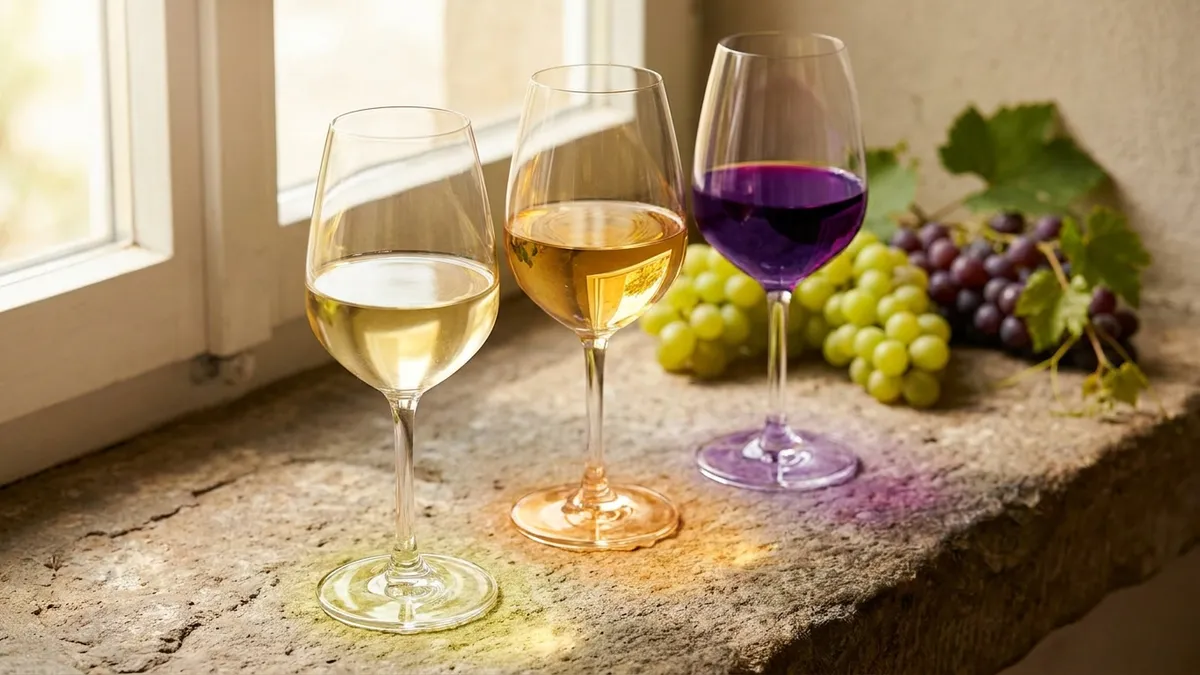
Dornfelder is the Pfalz's signature everyday red — a modern German crossing bred for deep color and ripe, juicy fruit. It gives soft, fruit-forward wines full of blackberry and dark cherry, low in harsh tannins (the drying, gripping sensation in red wine), and easy to enjoy young and slightly chilled. It is not built for cellaring; it is built for a relaxed evening, and the Pfalz makes more of it than anywhere.
Terroir: One Region, Many Soils
The Pfalz is not a single uniform vineyard. Beneath the sunshine lies a patchwork of soils that gives its wines real variety, and that variety is part of the region's appeal.
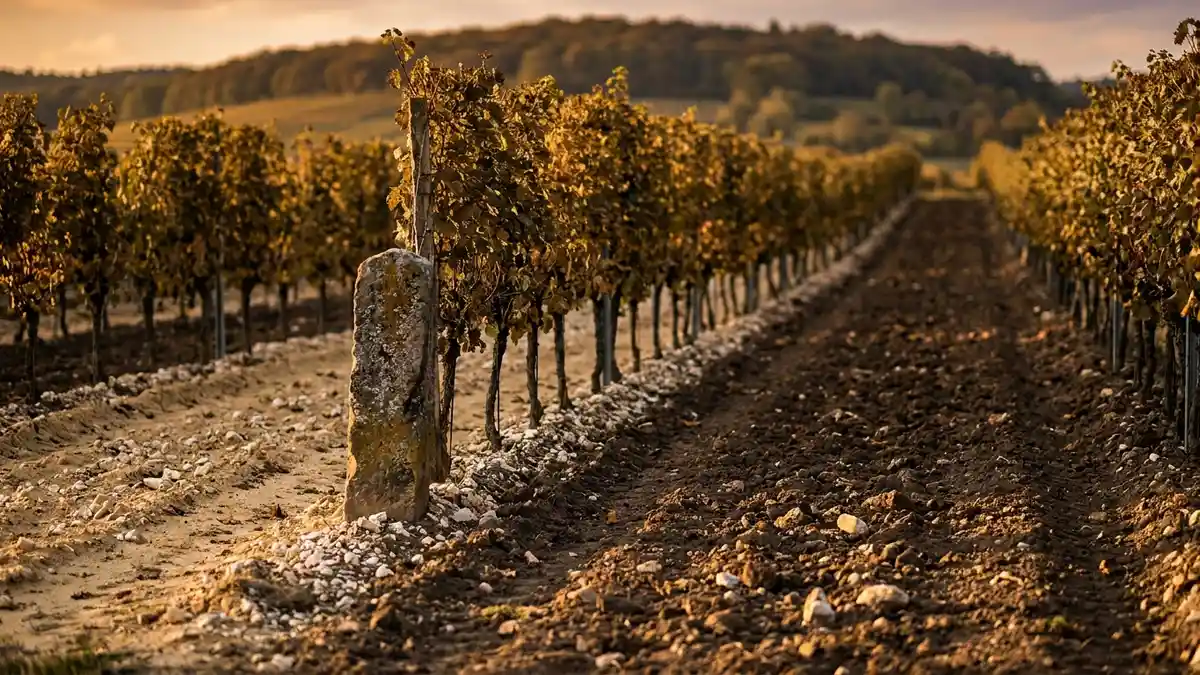
The classic Pfalz terroir — the full mix of soil, slope, and climate where the vines grow — runs from limestone and sandstone to loam, clay, basalt, and weathered volcanic rock. Riesling planted on a stony, mineral-rich slope tastes taut and flinty; the same grape on warmer, deeper loam turns rounder and richer. This is why two dry Pfalz Rieslings can feel so different even within a few kilometers.
The finest sites cluster along the foot of the Haardt hills, where the slopes catch maximum sun and drain well. The combination of heat from above and varied rock below is what lets the Pfalz make wines with both ripeness and definition — power without heaviness.
The Haardt hills do the heavy lifting: they block the rain, hold the warmth, and let the soils do the talking.
The Pfalz Wine Guide to GG and German Classification
Germany classifies wine on two parallel tracks, and the Pfalz uses both. Sorting them out makes any label far easier to read.
The official national system, the Prädikatswein scale, ranks wine by grape ripeness at harvest — from Kabinett (lightest) up through Spätlese, Auslese, and on to rare sweet styles. This historically told you how ripe and often how sweet a wine was, though many Pfalz producers now make dry wines at these ripeness levels too.
Running alongside it is the modern dry-quality ladder from the VDP, an association of top German estates that ranks vineyards rather than ripeness:
- Gutswein: The estate's entry-level wine, drawn from across its holdings. Approachable and a smart first taste of a producer's house style.
- Ortswein: A village-level wine from a single named place, with clearer local character.
- Erste Lage: A wine from a classified premier vineyard site — a step up in concentration and detail.
- Grosse Lage: The top vineyard tier. A dry wine from a Grosse Lage site carries the prized label GG (Grosses Gewächs), meaning Grand Growth.
A GG is the Pfalz's flagship dry statement — usually a single-vineyard Riesling or Spätburgunder, hand-harvested at a set ripeness and built to age. When you see those two letters, you are looking at the region's most serious dry wine. The Sommy app's German wine lessons walk through real labels so the VDP pyramid stops being a puzzle.
Key Sub-Regions and the German Wine Route
The Pfalz splits into two broad districts, linked by one of Germany's most famous roads.
- Mittelhaardt (the northern heart): The Pfalz's most celebrated stretch, home to its grandest dry Rieslings and many of the top GG vineyards. The wines here are powerful, mineral, and age-worthy — the region's serious face. Villages like Forst, Deidesheim, and Ruppertsberg anchor this district.
- Südliche Weinstraße (the southern wine route): The larger, sunnier south, historically a source of value and now a hotbed of energy and experimentation. It excels with the Pinot family — Spätburgunder, Grauburgunder, Weissburgunder — and turns out characterful, friendly wines at fair prices.
Tying it all together is the Deutsche Weinstraße (German Wine Route), an 85-kilometer scenic road opened in 1935 that runs the full length of the Pfalz, from Bockenheim in the north to Schweigen on the French border. It threads through wine villages, half-timbered towns, and tasting rooms, with figs and almond trees lining the way. It was Germany's first signposted wine route and remains the easiest way to grasp how varied one region can be.
For the bigger picture of where the Pfalz fits among Germany's thirteen growing areas, our overview of German wine regions maps the whole country.
How the Pfalz Differs from Mosel and Rheingau
The fastest way to understand the Pfalz is to set it beside Germany's two other Riesling icons. Same grape, three climates, three personalities:
- Pfalz: Warm and sunny, rain-sheltered by the Haardt hills · Riesling ripe, full-bodied, almost always dry · also a Pinot-family stronghold · soils a varied patchwork of sandstone, limestone, and loam · overall mood generous and fruit-forward.
- Mosel: Cool and steep, vineyards on dramatic slate cliffs above the river · Riesling light, low in alcohol, often off-dry with racy acidity · slate-driven minerality · the most delicate, filigree style in Germany.
- Rheingau: Moderate and prestige-driven along the Rhine · Riesling firm, structured, classically balanced between dry and off-dry · slate and quartzite soils · the historic benchmark for serious German Riesling.
The headline: the Pfalz is the ripe, dry, sun-soaked member of the trio. Where the Mosel whispers and the Rheingau holds tradition, the Pfalz speaks with warmth and body. Tasting a Pfalz Riesling next to a Mosel one is the single clearest lesson in how climate reshapes a grape — and Sommy turns exactly that kind of side-by-side into a guided exercise.
What Makes the Pfalz Distinctive
A few traits set the Pfalz apart from every other German region and explain its growing reputation.
First, the climate. No other major German area is as warm or as sunny, and that ripeness underpins everything — the dry Rieslings with real body, the success of Pinot Noir, the easy-drinking reds.
Second, the breadth of grapes. Most German regions live and die by Riesling. The Pfalz does Riesling brilliantly but also leads the country in the Pinot family and grows the largest share of Dornfelder. There is more to drink here than anywhere else in German wine.
Third, the dry, modern confidence. The Pfalz embraced fully dry winemaking early and committed to it. Its identity today is built on fruit-forward, food-friendly dry wines that suit modern tables, which has made it one of Germany's most dynamic and exported regions. For how white grapes behave across styles, our white grapes overview gives useful context, and the noble grapes primer covers Riesling and Pinot Noir among the classics worth learning first.
How a Beginner Should Start with the Pfalz
You do not need a famous GG or a big budget to understand the Pfalz. The smartest path is to taste deliberately across its core styles and notice how the warmth shows up in each glass. Here is a practical order:
- Begin with a dry Riesling. Pick a Pfalz Riesling labeled trocken and taste the signature ripe-but-fresh style — peach and citrus over a stony backbone, with body the Mosel rarely shows.
- Meet the Pinot whites. Try a Weissburgunder for gentle, food-friendly ease, then a Grauburgunder for something rounder and richer. Both reveal the region's softer side.
- Pour a friendly red. A Dornfelder, lightly chilled, is the easiest entry to Pfalz reds — juicy, soft, and built for a relaxed evening.
- Step up to Spätburgunder. Once your palate is settled, a Pfalz Pinot Noir shows how seriously Germany takes red wine, with riper fruit and softer tannins than cooler regions.
- Compare across climates. Open a Pfalz Riesling beside a Mosel one. Same grape, two worlds — the clearest tasting lesson the region can teach.
As you taste, build the habit of naming what you sense. Our guide to how to taste wine gives the step-by-step method, and Sommy turns these comparisons into guided exercises — naming the aromas, scoring the structure, and growing the vocabulary to describe a wine. You can start practicing free at sommy.wine, then bring the method to your next bottle of Pfalz Riesling.
The Reward of Learning the Pfalz
The Pfalz rewards a beginner faster than almost any German region. Its wines are ripe enough to feel familiar, dry enough to suit modern tables, and varied enough to keep teaching you something new. One day a flinty dry Riesling, the next a creamy Weissburgunder or a juicy Dornfelder — all from a single sunlit strip of vines.
For learners drawn to warm-climate, Pinot-friendly regions, the Pfalz also pairs naturally with neighboring Alsace and France's wider regions just across the border. Start small, taste in pairs, and let the German Wine Route reveal itself one glass at a time. The Sommy app is built to make that habit stick — turning each bottle into a short, guided lesson so the next Pfalz wine you open is a little clearer than the last.
Sources
Frequently Asked Questions
What grapes does the Pfalz wine region grow?
Riesling is the flagship, made in a riper, often fully dry style. The Pfalz is also Germany's stronghold for the Pinot family: Spätburgunder (Pinot Noir), Grauburgunder (Pinot Gris), and Weissburgunder (Pinot Blanc). Dornfelder is the leading everyday red, giving soft, fruity, deeply colored wines that are easy to enjoy young.
How is Pfalz Riesling different from Mosel Riesling?
The Pfalz is much warmer than the Mosel, so its Riesling ripens fuller and is usually made bone dry, with riper stone-fruit flavor and more body. Mosel Riesling tends to be lighter, lower in alcohol, and often off-dry, with racier acidity and slate-driven minerality. Same grape, two very different climates and styles.
What does GG mean on a German wine label?
GG stands for Grosses Gewächs, meaning Grand Growth. It is the top dry classification from the VDP, an association of leading German estates. A GG is a dry wine from a top-rated single vineyard, harvested by hand at a defined ripeness. In the Pfalz it usually means a serious, age-worthy dry Riesling or Pinot.
Where is the Pfalz wine region located?
The Pfalz, or Palatinate, sits in southwest Germany along the eastern edge of the Haardt hills, an extension of France's Vosges mountains. It runs north to south for roughly 80 kilometers and borders Alsace to the south. The Haardt shelters it from rain, making it Germany's warmest, sunniest, and second-largest wine region.
Is Pfalz wine dry or sweet?
Most Pfalz wine today is dry, marked trocken on the label. The warm climate ripens grapes fully, so even Riesling is typically vinified bone dry with ripe fruit and real body. Off-dry and sweeter styles still exist, especially older-school Riesling, but the modern Pfalz identity is built on confident, fruit-forward dry wines.
What is the German Wine Route?
The German Wine Route, or Deutsche Weinstraße, is an 85-kilometer scenic road running the length of the Pfalz from Bockenheim in the north to Schweigen on the French border. Opened in 1935, it links wine villages, vineyards, and tasting rooms. The mild climate gives the route an almost Mediterranean feel, with fig and almond trees lining the way.
How should a beginner start with Pfalz wine?
Start with a dry Pfalz Riesling labeled trocken to taste the region's signature ripe, full style. Then try a Weissburgunder or Grauburgunder for a softer, rounder white, and a Dornfelder for an easy, fruity red. Taste a Pfalz Riesling beside a Mosel one to feel how climate changes the same grape.
Sommy Team
LinkedInFounder & Wine Educator
The Sommy Team is building the world's most approachable wine education app, helping beginners develop real tasting skills through structured courses and AI-guided practice.