Mencía: Spain's Hidden Gem Red Grape

By the Sommy Team — AI-assisted, human-edited.
Updated Apr 29, 2026
Contents (9)
TL;DR
Mencía is an aromatic red grape from northwest Spain producing medium-bodied wines with red cherry, violet, and slate-mineral character. Star regions are Bierzo and the steep terraced vineyards of Ribeira Sacra. Once dismissed as bulk wine, mencía is now compared to Pinot Noir and Cabernet Franc for its lighter, terroir-driven elegance and excellent value.
The Grape Spain Almost Threw Away
For most of the twentieth century, mencía was treated as a workhorse — pulled from steep, hard-to-farm vineyards in northwest Spain and turned into pale, simple bulk wine sold by the demijohn. Generations of growers tore out old vines on the worst slopes because they could not be mechanized. The grape's reputation, when it had one at all, was modest. Mencía was a name on a bottle nobody outside Galicia or Bierzo asked for.
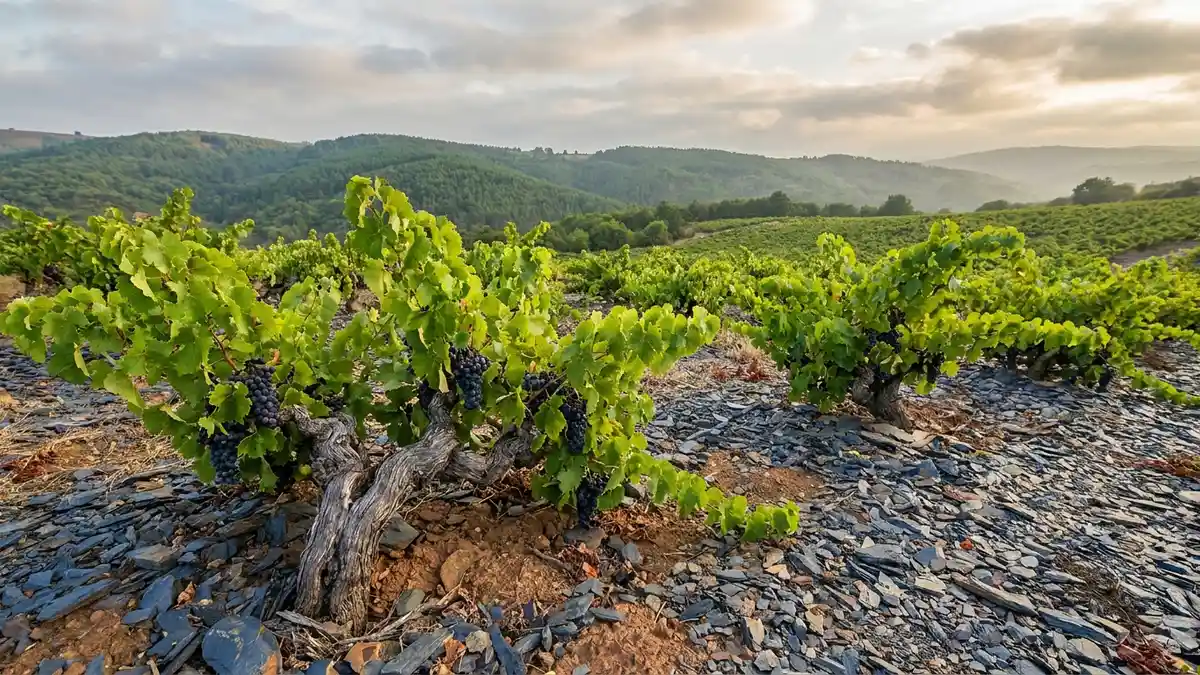
Then, in the mid-1990s and 2000s, a small group of producers walked back into those abandoned slate terraces, looked at the gnarled hundred-year-old vines clinging to the slopes, and noticed something: the wines coming out of the best old plots were astonishing. Floral, mineral, transparent, alive with bright red fruit and a wet-slate kick that nothing else in Spain quite produced. Mencía wine went from forgotten to fashionable in roughly fifteen years, and today it is the single most exciting red grape coming out of Spanish wine regions.
This guide walks through what mencía is, where it grows, what it tastes like, how it sits next to grapes you may already know, and how to start drinking it tonight. By the end you will understand why sommeliers quietly call it Spain's hidden gem.
Mencía Wine in 60 Seconds
Mencía is an aromatic red grape native to northwest Spain — Galicia and the western edge of Castilla y León. It produces medium ruby, medium-bodied wines with fresh red cherry, raspberry, violet, herbal lift, and a hallmark slate-mineral or graphite note. Tannins are moderate and fine-grained, acidity is bright, and alcohol typically lands between 12.5 and 13.5 percent — lighter than most Spanish reds. The grape's heartland is the Bierzo DO in Castilla y León, with elite expressions also coming from Ribeira Sacra DO and Valdeorras DO in Galicia. Often described as Spain's Pinot Noir or Spain's Cabernet Franc for its lighter, terroir-driven elegance, mencía pairs beautifully with lamb, charcuterie, and aged Manchego. It is one of the best value-to-quality propositions in modern wine.
A Brief History: Mistaken Identity, Real Revival
The Cabernet Franc Confusion
For decades, ampelographers — the botanists who classify grape varieties by leaf shape, cluster, and behavior — assumed mencía was simply Cabernet Franc that had been carried into Spain along medieval pilgrimage routes to Santiago de Compostela. The two grapes shared a similar floral perfume, a graphite note, and a comparable medium body. The story was tidy and the wines tasted plausibly related.
It was wrong. In the early 2000s, DNA profiling at research institutes in Spain and California compared mencía's genetic fingerprint with the Bordeaux family and found no match. Mencía is its own grape — an indigenous northwest Spanish variety with distinct parentage. The stylistic resemblance to Cabernet Franc is a coincidence of climate, soil, and aromatics, not heritage. The grape also turned up in northern Portugal under the name Jaen, where it has long been used in the blends of the Dão region.
From Bulk to Boutique
The modern mencía revival is usually dated to the late 1990s, when a wave of quality-minded producers — most famously the Priorat veteran Álvaro Palacios and his nephew, who arrived in Bierzo in 1999 — began identifying old-vine plots on steep slate slopes and bottling them as serious, single-vineyard wine. The shift was philosophical as much as agronomic: stop chasing volume on flat land, start farming the hard slopes by hand, and let the grape's transparency speak. Within a decade, Bierzo had become one of Spain's most discussed appellations and Ribeira Sacra had earned international recognition for its near-vertical terraced vineyards.
That arc — abandoned to celebrated in fifteen years — is one of the great stories in modern wine, and it is still ongoing. Read more about how regional revivals like this one shape what ends up in your glass in our piece on Spanish wine regions.
The Star Regions
Mencía is grown across northwest Spain, but three appellations dominate the conversation. Each puts a different stamp on the grape.
Bierzo DO (Castilla y León)
Bierzo is the most internationally famous home of mencía. Tucked into a basin between the mountains of León and Galicia, the region sits at the meeting point of Atlantic and continental climates. Soils are predominantly slate (pizarra) and clay, with the best vineyards planted on steep south-facing slopes at altitudes of 450 to 800 meters.
Bierzo mencía tends to be the riper and more structured end of the spectrum: deeper red and dark cherry fruit, fine-grained tannin, more visible oak in the top bottlings, and slate minerality threaded through the finish. The DO has implemented a Burgundy-style classification ranking sites from Vino de Pueblo (village level) up through Vino de Paraje and Vino de Viña Clasificada, recognizing that terroir matters here at the plot level.
Ribeira Sacra DO (Galicia)
If Bierzo is mencía's prestigious face, Ribeira Sacra is its dramatic one. The vineyards are terraced into near-vertical slopes above the Sil and Miño rivers, in canyons so steep that nearly all work is done by hand or with monorail tractors. The Romans planted here two thousand years ago because the slopes caught precious sun in an otherwise cool, wet Galicia.
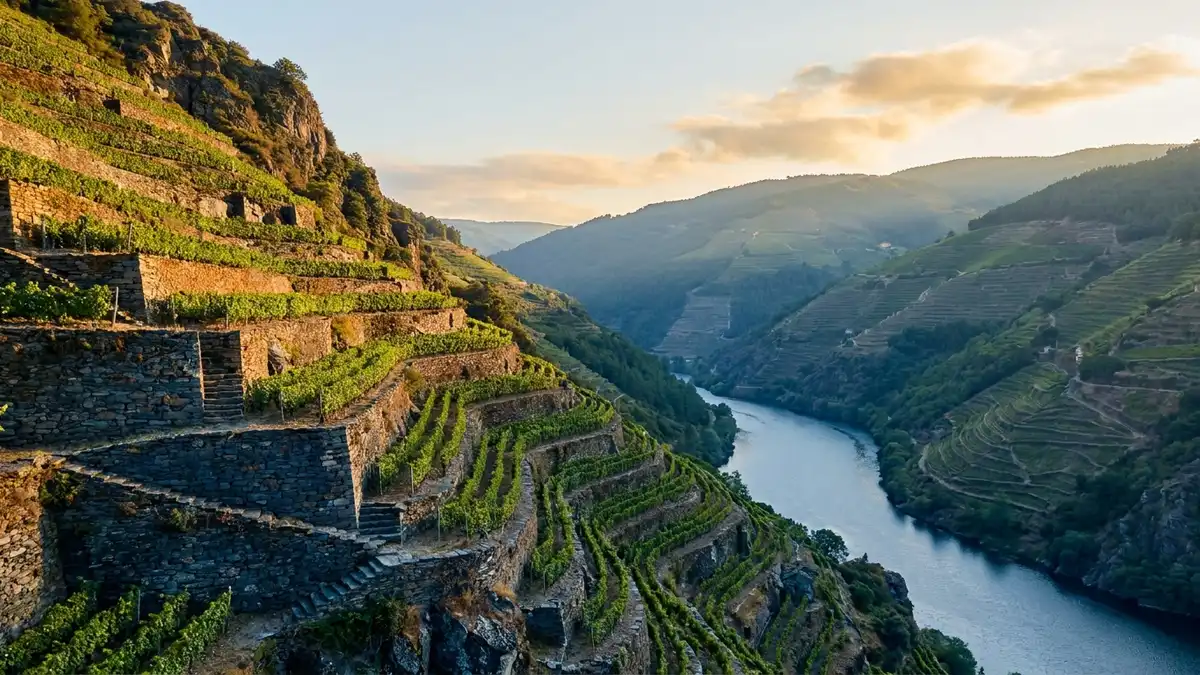
Ribeira Sacra mencía is lighter, more floral, and more transparent than Bierzo. The Atlantic climate keeps acidity bright and alcohol moderate (often below 13 percent), and the slate soils give a marked wet-stone minerality. These are the wines most often compared to village-level Burgundy or cool-climate Pinot Noir — pale ruby, perfumed, almost translucent, built around freshness rather than power.
Valdeorras DO (Galicia)
Valdeorras sits between Bierzo and Ribeira Sacra and produces a hybrid style — slightly more body than Ribeira Sacra, slightly more lift than Bierzo. The DO is better known for the white grape Godello, but its red mencía bottlings are an underrated entry point to the variety, often offering excellent value.
What Mencía Actually Tastes Like
The Sensory Profile
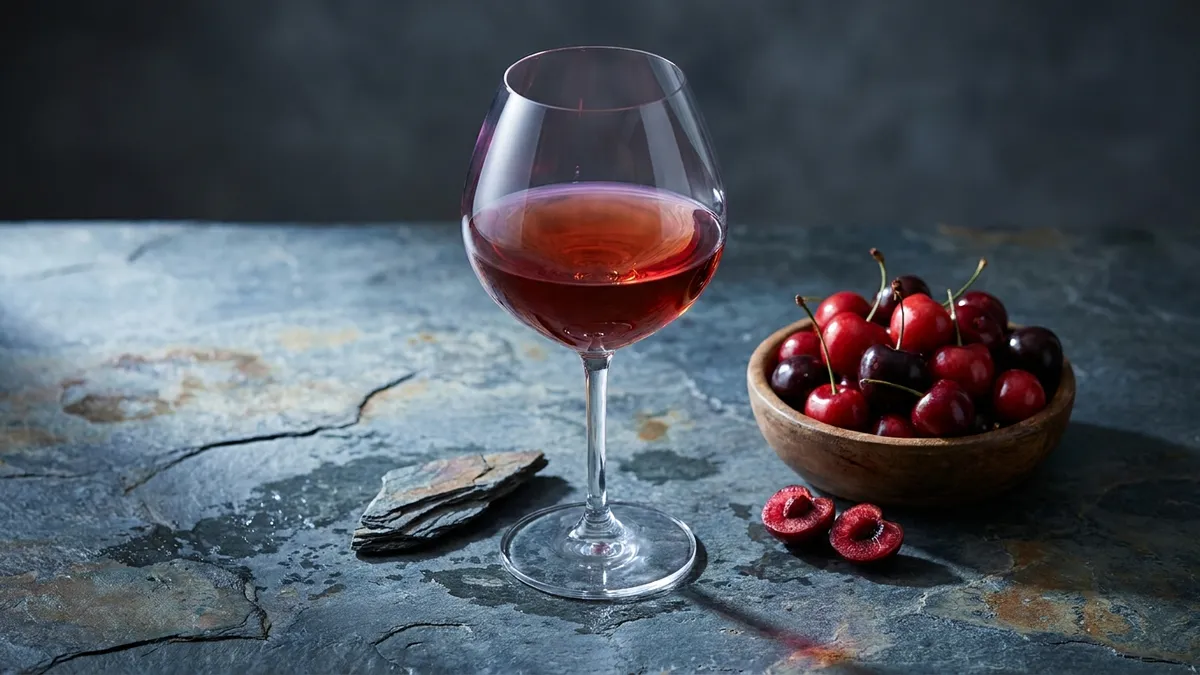
Pour a glass of well-made mencía and you are looking at a medium ruby wine, often with a slight purple rim in young examples — paler than Tempranillo, slightly deeper than Pinot Noir. Tilt the glass and you can usually see through to the stem.
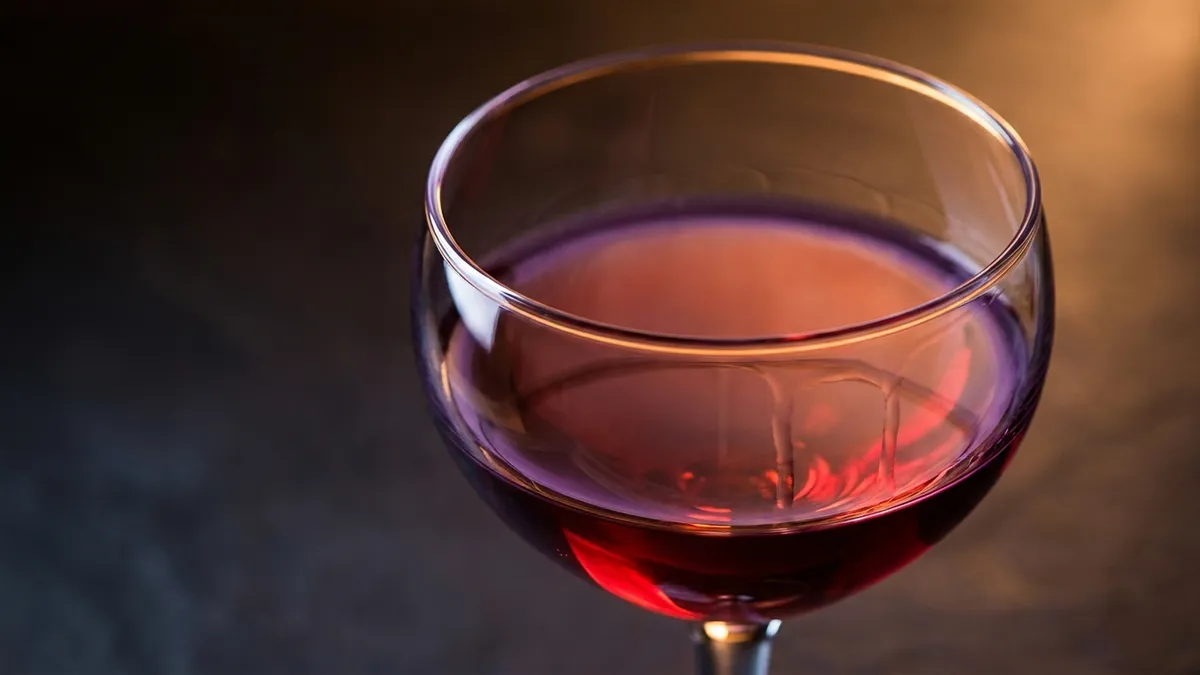
On the nose, the dominant notes are:
- Red fruit: fresh red cherry, raspberry, red plum, sometimes pomegranate
- Floral: violet, dried rose, occasional lavender
- Mineral: wet slate, graphite, pencil shavings, crushed stone
- Herbal: bay leaf, thyme, dried tobacco leaf
- Spice: subtle black pepper and clove, mostly in warmer Bierzo bottlings
On the palate, mencía leads with bright acidity and finishes with fine, dusty tannins — never the gripping tannin of Cabernet Sauvignon or the round softness of Merlot. The mid-palate is where the slate note often shows up most clearly, lending the wine a savory, almost saline edge that distinguishes it from generic fruity reds.
Mencía vs Pinot Noir
The two grapes share a body weight, an acid profile, and a transparency to terroir. Both are medium ruby, both are light-to-medium-bodied, both reward cool climates, and both are about perfume and elegance rather than power. Where they part ways: mencía is more savory and more mineral, with a wet-slate or graphite signature that Pinot Noir rarely produces. Pinot Noir leans more toward earth, mushroom, and forest floor; mencía leans more toward stone, herbs, and bright cherry. If you love Pinot but want something with a saltier, more Mediterranean edge, mencía is the natural next step. The structural framework for comparing reds like this lives in our guide to understanding tannins, acidity, and body.
Mencía vs Cabernet Franc
This is the historic comparison and it still holds stylistically, even if the genes do not. Both wines share violet, graphite, and herbal lift, and both finish with fine-grained tannin rather than overwhelming grip. Cabernet Franc tends to be a touch greener — bell pepper and tomato leaf in cooler vintages — while mencía's herbal note is drier and more Mediterranean (bay leaf, sage). Cabernet Franc generally has slightly more tannic structure; mencía has slightly more lift and brightness.
How to Pair Mencía with Food
Mencía's combination of bright acidity, moderate tannin, and savory minerality makes it one of the most versatile Spanish reds at the table. A few starting points:
- Roast lamb — the regional pairing in Bierzo and the canonical match. The slate-mineral note in the wine echoes the rosemary-and-garlic crust on the lamb beautifully.
- Charcuterie — jamón ibérico, chorizo, and lomo all sing alongside a chilled-down mencía. The wine's acidity cuts the fat and the herbal note plays off cured spice.
- Aged Manchego or sheep's-milk cheeses — the wine's dusty tannin and mineral edge match the salty, nutty character of aged sheep cheese.
- Mushroom risotto, duck, or roast chicken with herbs — Atlantic-style mencía has the silkiness and earthy lift to handle classic Pinot Noir territory.
- Grilled tuna or salmon — lighter Ribeira Sacra mencía, served slightly chilled, can stand up to oilier fish without overpowering them.
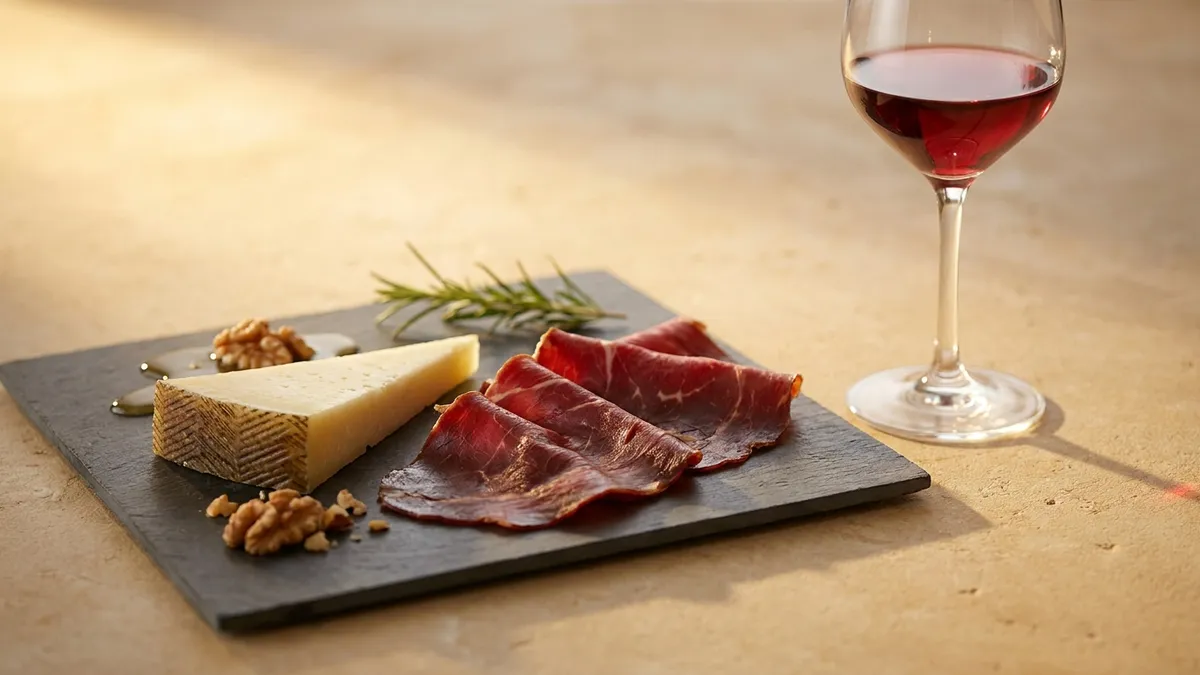
For a deeper framework on matching wine to dishes by structure rather than by rule, see our guide to wine and food pairing. The Sommy app walks beginners through building these pairing instincts step by step.
Aging, Serving, and Style
Aging Window
Mencía is a grape built more on acidity than tannin, which changes how it ages. Entry-level mencía is meant to be drunk within 2 to 3 years of release, while the fresh red fruit is still front-and-center. Mid-tier village and single-vineyard wines drink beautifully between 3 and 7 years, with the slate minerality coming forward as the primary fruit recedes. The top old-vine bottlings from Bierzo and Ribeira Sacra can age gracefully for 10 years or more, developing dried flowers, leather, dried herbs, and a tertiary mineral depth that rewards patience.
For a full primer on how a wine evolves over time, our guide on tasting young vs aged wine is a useful companion.
Serving Temperature
Serve mencía at 55°F to 60°F (13°C to 16°C) — cooler than most red wines, especially the lighter Ribeira Sacra style, which actively benefits from a 15-minute fridge stint before pouring. Too warm and the wine tastes flabby and alcoholic; at the right temperature, the violet, slate, and red cherry all come into focus.
Glassware
A standard Burgundy bowl or a universal red wine glass works well — anything with enough volume to let the perfume open up. Avoid narrow Bordeaux-shaped glasses, which mute the floral lift that makes mencía distinctive.
Why Mencía Is the Best Value in Spanish Wine Right Now
Three factors keep mencía priced below where the quality says it should be. First, the regions are still small and largely unknown outside specialist circles, which keeps demand modest. Second, the labor cost of farming Ribeira Sacra's terraces is enormous, but the wines have not yet been priced at the level required to fully capture it. Third, the comparison points — village-level Burgundy, Loire Cabernet Franc — remain the reference, and mencía consistently underbids both.
Practically, that means an entry-level Bierzo or Ribeira Sacra mencía typically sits between 12 and 20 dollars and drinks well above its price point. Mid-tier single-vineyard wines run 25 to 40 dollars. The top old-vine bottlings from the most celebrated sites can reach 60 to 100 dollars, but even there mencía cost a fraction of equivalent Burgundy or Northern Rhône. For drinkers who love elegant, mineral-driven reds and want their dollar to go further, this is the category to learn.
If you want a structured way to build the palate skills to taste these wines critically — to actually identify the slate minerality, the violet lift, the difference between Bierzo and Ribeira Sacra in a blind glass — the Sommy app builds those skills lesson by lesson with guided tastings and AI-powered feedback on your tasting notes. Mencía is the kind of grape where a trained palate doubles the pleasure.
Where to Start
Three bottles, three regions, three styles. Pour them across an evening and you will have a complete map of the variety:
- A Ribeira Sacra mencía — the lightest, most floral, most transparent expression. This is the one that will recall Pinot Noir and Atlantic Cabernet Franc.
- A village-level Bierzo mencía — riper, slightly more structured, with the slate note dialed up. This is the heart of the variety.
- A single-vineyard, old-vine Bierzo or Valdeorras bottling — the serious end, where the grape's age-worthiness and depth of mineral character come through.
The Sommy app's growing Spanish wine course walks through exactly this kind of comparison flight, with structured tasting notes and prompts that help you connect what you smell to what is happening in the glass. The faster you can name the slate, the violet, the cherry, the more the wine opens up.
Mencía is a grape that rewards curiosity. It is the kind of bottle you bring home from a wine shop on a Wednesday and end up texting friends about by Saturday. Spain almost lost it to bulk production a generation ago. The fact that you can now drink it at this level, at this price, is one of the quiet miracles of modern wine — and one of the strongest arguments for looking past the famous regions and into the corners of the map where the most interesting things are happening.
Frequently Asked Questions
What does mencía wine taste like?
Mencía smells and tastes of fresh red cherry, raspberry, violet, and a distinctive wet-slate or graphite minerality. The wines are medium ruby in color, medium-bodied, with bright acidity, moderate fine-grained tannins, and alcohol typically between 12.5 and 13.5 percent. Cooler Atlantic versions show more floral lift and minerality, while warmer Bierzo bottlings show riper black cherry and a touch of spice.
Where is mencía wine from?
Mencía is native to northwest Spain, with its heartland straddling Castilla y León and Galicia. The most important regions are Bierzo (Castilla y León), Ribeira Sacra (Galicia), and Valdeorras (Galicia). Each has different soils, climates, and altitudes, but all share the slate-driven mineral signature that defines great mencía. Small plantings also exist in Portugal, where the grape is called Jaen.
Is mencía related to Cabernet Franc?
No, although for years mencía was assumed to be the same grape because of similar floral aromatics and graphite notes. DNA profiling in the early 2000s confirmed mencía is a distinct, indigenous Spanish variety with its own genetic identity. The two grapes still share a stylistic family resemblance — fresh red fruit, violet, herbal lift, and slate or pencil-shaving mineral character.
Is mencía like Pinot Noir?
Stylistically, yes — and that is the most common shorthand sommeliers use to introduce it. Mencía is medium-bodied, pale-to-medium ruby, perfumed, and built on bright acidity rather than heavy tannin. The cooler Ribeira Sacra examples in particular have a transparency and floral lift that recall village-level Burgundy. Bierzo mencía leans slightly riper and more structured, closer to Cabernet Franc in feel.
What food pairs with mencía?
Mencía's bright acidity and moderate tannin make it one of the most food-friendly Spanish reds. Classic pairings include roast lamb, grilled pork, charcuterie like jamón and chorizo, mushroom dishes, and aged Manchego or other sheep's-milk cheeses. Atlantic-style mencía also handles oilier fish like grilled tuna or salmon. It is a versatile bottle to bring to dinner when you do not know the menu.
How long does mencía age?
Entry-level mencía is meant to be drunk young, within 2 to 3 years of release, while still bursting with fresh fruit. Mid-tier village or single-vineyard bottlings drink well between 3 and 7 years. The top old-vine wines from Bierzo and Ribeira Sacra can age gracefully for 10 years or more, developing dried flowers, leather, and tertiary mineral complexity. Acidity, not tannin, is what carries them.
Is mencía good value?
Excellent value, especially for the quality. Entry-level mencía from Bierzo or Ribeira Sacra typically sits between 12 and 20 dollars and drinks well above its price point. Single-vineyard, old-vine bottlings from top sites can reach 40 to 80 dollars but still cost a fraction of comparable Burgundy. For drinkers used to expensive Pinot Noir, mencía is one of the most rewarding category swaps in wine.
Sommy Team
LinkedInFounder & Wine Educator
The Sommy Team is building the world's most approachable wine education app, helping beginners develop real tasting skills through structured courses and AI-guided practice.