Hunter Valley Wine Guide: Sémillon and Shiraz Country

By the Sommy Team — AI-assisted, human-edited.
Updated Jun 17, 2026
Contents (11)
- What Is Hunter Valley Wine?
- The Two Grapes That Define the Hunter Valley
- Hunter Sémillon: The Great Ageworthy White
- Hunter Shiraz: Earthy, Medium-Bodied, and Built for Food
- The Humid Subtropical Climate and the Harvest-Rain Problem
- Sub-Regions: Lower Hunter and Upper Hunter
- What Makes the Hunter Valley Distinctive
- Tourism: The Wine Region Closest to Sydney
- How a Beginner Should Start with the Hunter Valley
- The Hunter Beyond Sémillon and Shiraz
- The Reward of Learning the Hunter Valley
TL;DR
The Hunter Valley is Australia's oldest wine region, just north of Sydney in New South Wales. It is famous for two signatures: a lean, low-alcohol Sémillon picked early that ages into toast and honey, and an earthy, medium-bodied Shiraz. This Hunter Valley wine guide shows beginners where to start.
What Is Hunter Valley Wine?
This Hunter Valley wine guide begins with a point of pride: the Hunter is Australia's oldest wine region, with vines planted in the 1820s, and it sits just two hours north of Sydney in New South Wales. For all that history, the region is defined by two grapes most beginners overlook. Its white signature is Sémillon — picked early, unoaked, low in alcohol, taut and citrusy when young, and famous for ageing into toast and honey. Its red signature is Shiraz, but a restrained, earthy, medium-bodied version rather than the big, ripe style Australia is known for. A humid, subtropical climate and the constant threat of harvest rain shape both. Learn those two grapes and the climate behind them, and the Hunter makes immediate sense.
The Two Grapes That Define the Hunter Valley
Most of Australia is associated with sun-soaked, full-throttle reds. The Hunter Valley quietly does the opposite, and it does so with two grapes that reward patience over power.
Sémillon is the region's true claim to fame and, many argue, one of the world's great white wines. Shiraz is its companion red. Both are shaped by a climate that keeps ripeness in check, so neither becomes the heavy, high-alcohol wine you might expect from a warm country.
This restraint is the whole point. Because the Hunter is humid and warm but not arid and baking, the grapes ripen earlier and gentler than in the inland regions. The result is a pair of wines with an almost old-world sense of balance — fresh, savoury, and built for the dinner table rather than the trophy cabinet.
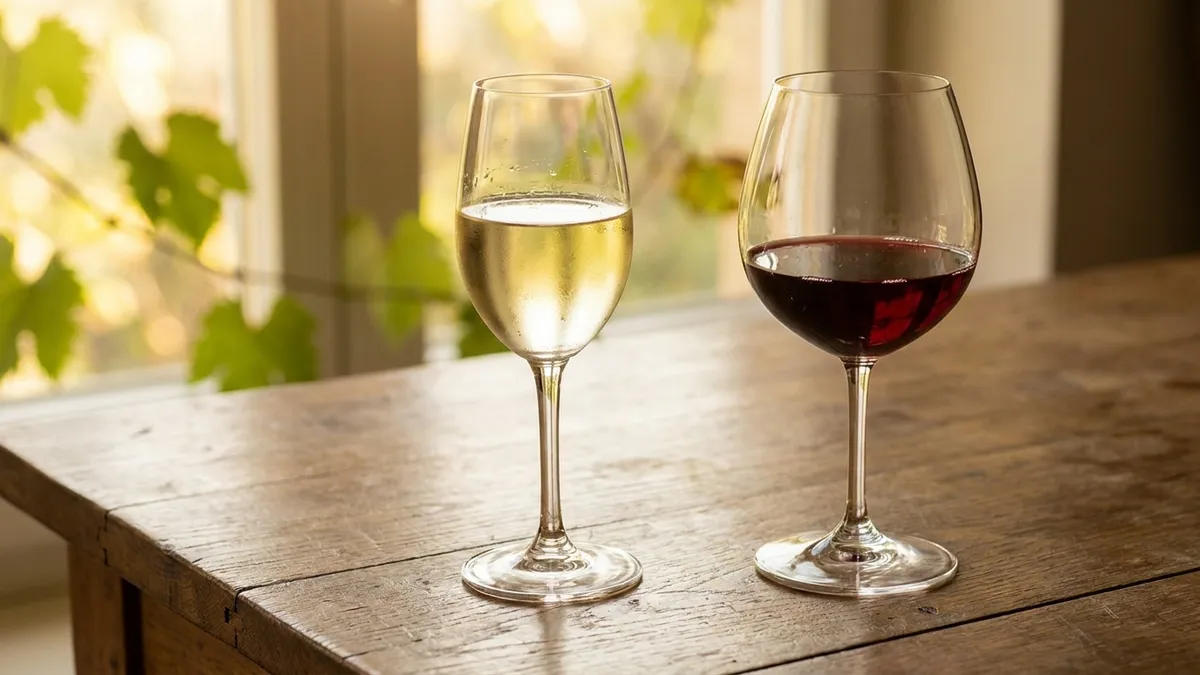
Hunter Sémillon: The Great Ageworthy White
If you learn one thing about the Hunter, learn this grape. Hunter Sémillon is unlike Sémillon anywhere else on earth, and it is the region's gift to wine lovers.
The technique is the secret. Growers pick the grapes early, at low sugar, partly to beat the summer rains and partly by design. Early picking means low potential alcohol — Hunter Sémillon usually lands around 10 to 11 percent, far below most dry whites. It is fermented in stainless steel with no oak at all, preserving its delicate, transparent character.
Young, it is a quiet wine: pale, lean, and bone-dry. Typical aromas: fresh lemon, green apple, lime zest, and a faint grassy note. Body: light (2/5) · Acidity: high (5/5) · Alcohol: low (around 10–11%) · Oak: none. Many tasters find young Hunter Sémillon almost austere — and that is the trap, because the magic comes later.
Hunter Sémillon is the rare white wine that asks you to wait. Cellar it five years and a thin, citrusy youth becomes a wine of toast, honey, and golden depth.
Given five to ten years in bottle, the wine transforms. The high acidity that made it sharp now carries it through a slow, graceful evolution into toast, honey, lanolin, and beeswax — a richness that tastes oaked but is built entirely from time and acid. Few white wines in the world age this well without a barrel. Because the grape leans on acidity rather than fruit weight, it is one of the clearest classrooms for the role of acidity in a wine, a topic our guide to understanding tannins, acidity, and body covers in plain language.
Sémillon also makes a useful contrast point in the broader white-wine family. If you want to see where it sits among the major whites, our white grapes overview places it alongside Chardonnay, Sauvignon Blanc, and Riesling, and our look at aromatic versus neutral grapes explains why young Sémillon reads as so restrained.
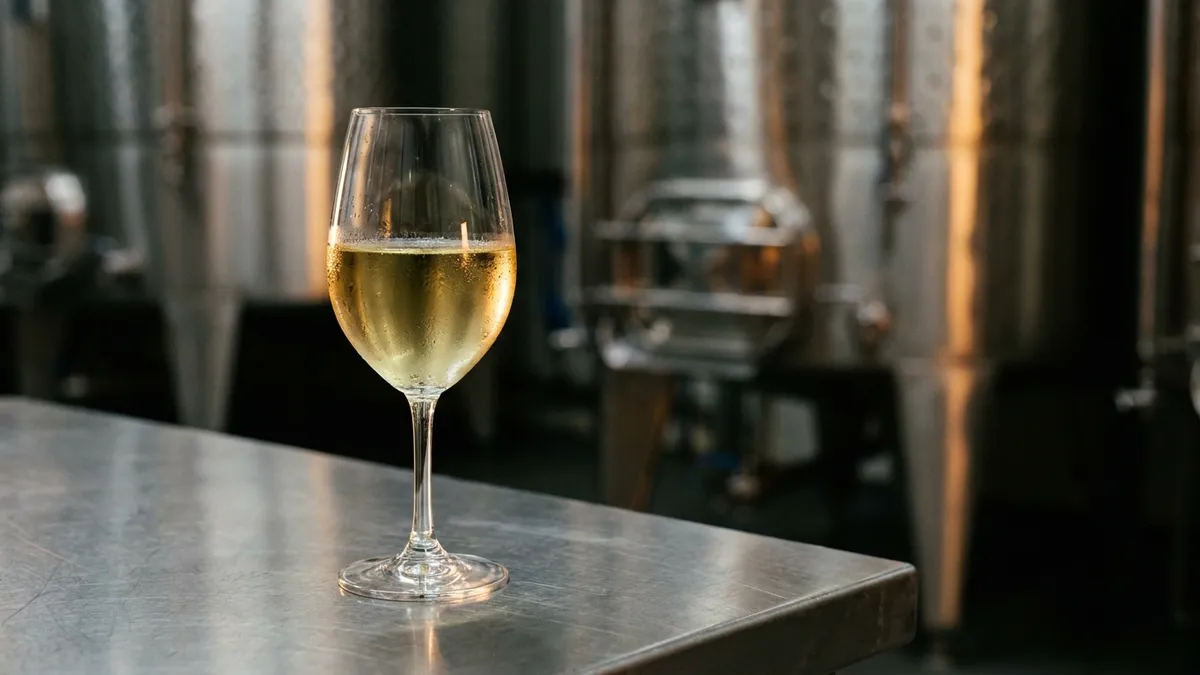
Hunter Shiraz: Earthy, Medium-Bodied, and Built for Food
The Hunter's red signature surprises people who expect Australian Shiraz to mean a dark, jammy, high-alcohol blockbuster. Hunter Shiraz is the gentler cousin: medium-bodied, savoury, and earthy.
The milder, more humid climate is again the cause. Grapes ripen without roasting, so the fruit stays restrained and the alcohol moderate. The signature is an earthy, almost rustic character that older tasters affectionately call by an old regional nickname for its leathery, savoury edge.
Hunter Shiraz is typically medium ruby and perfumed rather than opaque and brooding. Typical aromas: red and dark berries, earth, leather, dried herbs, and gentle pepper-and-spice. On the palate it is medium-bodied with soft tannins and fresh acidity. Body: medium (3/5) · Tannins: medium-soft (2–3/5) · Acidity: medium-high (4/5) · Alcohol: moderate. These are wines that flatter roast meats and hard cheeses rather than overpowering them.
It helps to know that Shiraz and Syrah are the same grape — the Australian name and the French name for one variety that simply behaves very differently depending on climate. Our piece on Syrah versus Shiraz unpacks exactly how the warm-versus-cool divide produces such different wines, and the Hunter is a perfect case study: a warm country making a cool-climate-style red.
A quick comparison of the region's two reds-and-whites logic, written as a bullet list to keep it scannable:
- Hunter Sémillon (white): Picked early · Alcohol low (10–11%) · Oak none · Young style lean and citrusy · Aged style toast and honey · Ages 5–15+ years
- Hunter Shiraz (red): Picked at moderate ripeness · Alcohol moderate · Oak gentle · Body medium · Character earthy and savoury · Ages well over a decade
- Typical warm-region Shiraz (for contrast): Picked very ripe · Alcohol high (14.5%+) · Oak often generous · Body full · Character ripe and jammy · Drinks well young
The Sommy app turns side-by-side tastings like this into guided exercises, so the difference between a Hunter Shiraz and a riper inland one stops being abstract and becomes something you can actually taste and name.
The Humid Subtropical Climate and the Harvest-Rain Problem
To understand why the Hunter makes such distinctive wine, you have to understand its weather — which, on paper, should not work for fine wine at all.
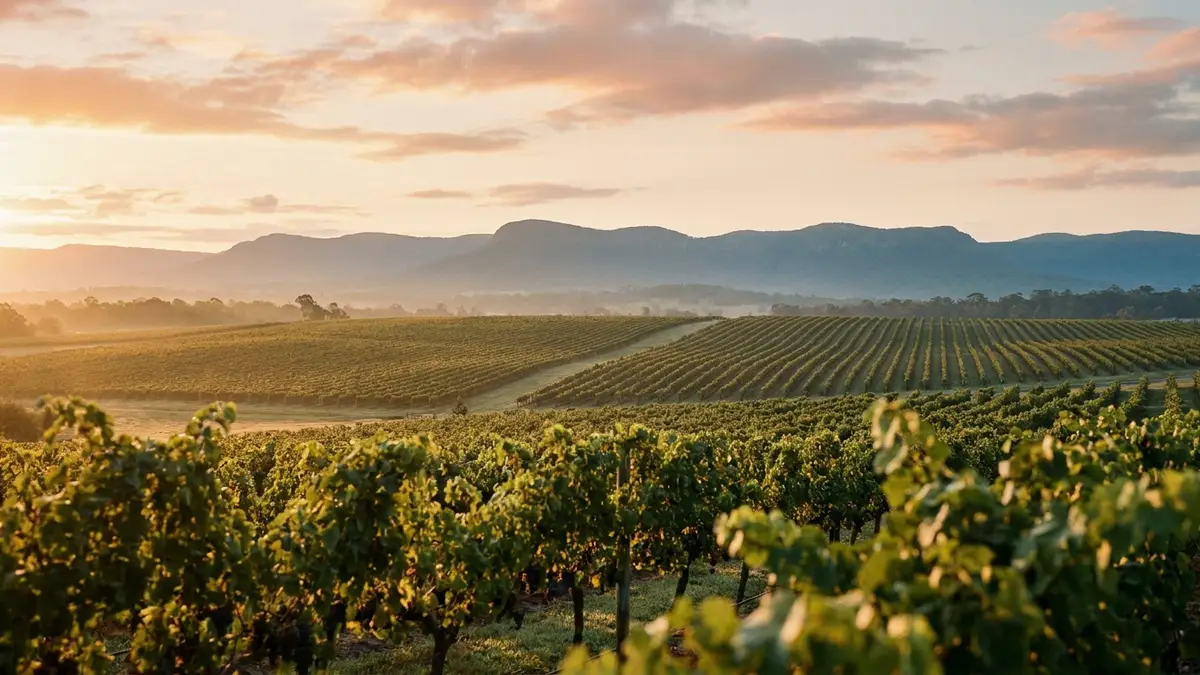
The Hunter has a humid, subtropical climate. It is warm and damp rather than hot and dry, with cloud cover that softens the summer sun and afternoon sea breezes that cool the vines. That cloud and humidity are part of why the wines stay restrained: the grapes get enough warmth to ripen but rarely roast.
The catch is rain. The Hunter's wettest months coincide almost exactly with harvest in January and February. Summer storms arriving at the worst possible moment raise the risk of disease, rot, and dilution in nearly ripe fruit. This is the region's defining challenge and the reason vintage variation here is real — some years the rain holds off, some years it does not.
Growers have adapted with one elegant move that shaped the whole region: they pick Sémillon early, before the heaviest rains, while sugars are still low. That single decision — born of necessity — is exactly what created the lean, low-alcohol, ageworthy white the Hunter is now celebrated for. The climate did not just shape the style; it invented it.
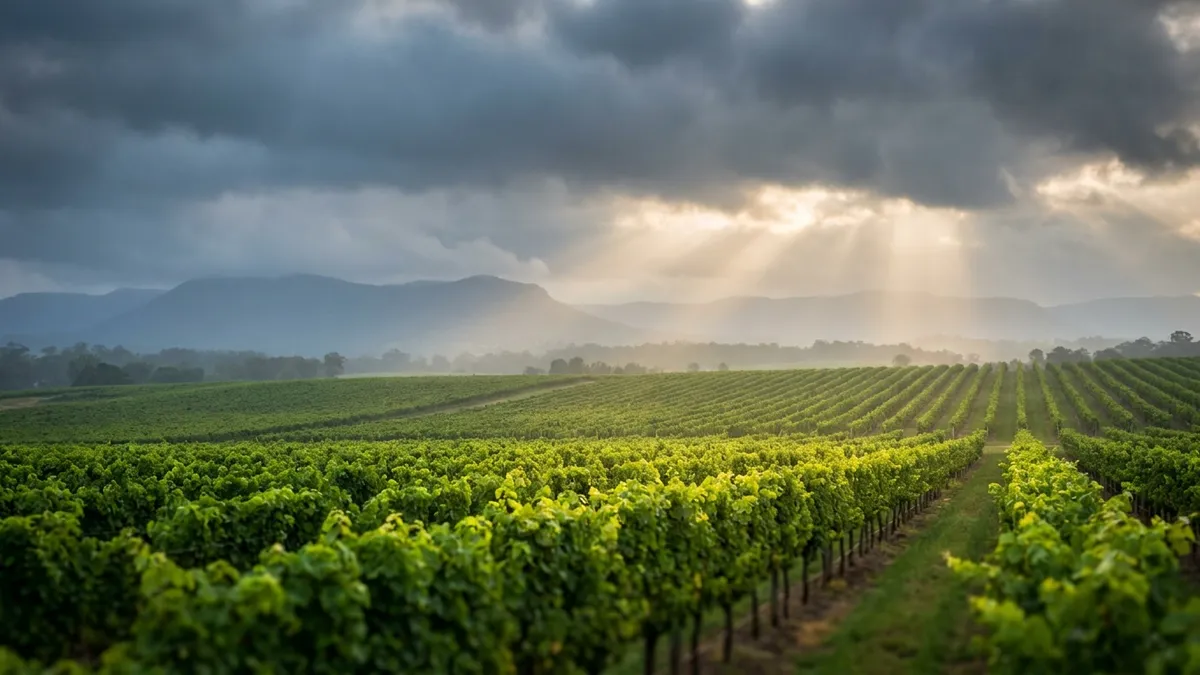
Sub-Regions: Lower Hunter and Upper Hunter
The Hunter is not one uniform place. Knowing its two main zones helps you read a label and understand what is in the glass.
- Lower Hunter: The historic and most famous heart of the region, centred on the town of Pokolbin. This is where most of the celebrated Sémillon and Shiraz are grown, and where the cellar doors, restaurants, and accommodation cluster. When people picture the Hunter Valley, they are picturing the Lower Hunter.
- Upper Hunter: A smaller, drier, slightly warmer zone further inland to the northwest, along the Hunter River. It came to prominence later and leans toward Chardonnay and Sémillon. The wines tend to be a touch riper and rounder than those of the Lower Hunter.
Australia does not use a French-style cru hierarchy. Instead it uses a simpler official system of Geographical Indications — legally defined region and sub-region names, such as Hunter Valley as a zone and Pokolbin within it. The label tells you the place of origin, not a quality tier, so the producer's reputation and the vintage do more to predict quality than the name alone. For the wider context of how grapes earn their reputations, our overview of the noble grapes is a useful companion.
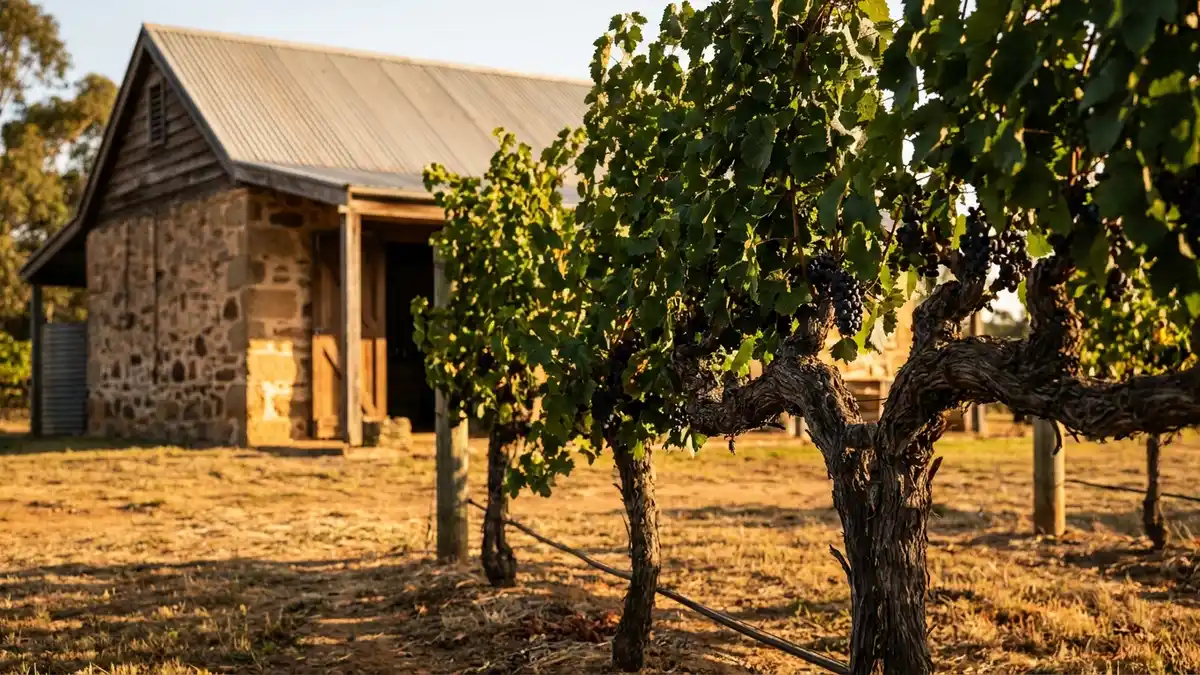
What Makes the Hunter Valley Distinctive
A few things set the Hunter apart from every other region in Australia, and from most regions in the world.
- Age on a budget. Hunter Sémillon is one of the few genuinely ageworthy white wines that is still affordable and widely made. A modest bottle can reward a decade in the cupboard.
- Restraint in a warm country. While much of Australia chases ripeness, the Hunter's humidity and cloud cover deliver medium-bodied, savoury wines with an almost European balance.
- A style born of weather. The early-picked Sémillon style is a direct, traceable response to harvest rain — a rare case where you can point to a climate problem and the wine it created.
- History you can taste. As Australia's oldest wine region, the Hunter preserves old-vine Shiraz and a continuous tradition stretching back nearly two centuries.
These traits make the Hunter an unusually good teaching region. Because the wines are restrained, their structure — the acidity in the Sémillon, the medium body and soft tannins in the Shiraz — is easy to perceive without being buried under ripe fruit or heavy oak.
Tourism: The Wine Region Closest to Sydney
Part of the Hunter's appeal is simply how easy it is to reach. Sitting about two hours' drive north of Sydney, it is one of the most accessible major wine regions in the country, which has made it a fixture of weekend trips for generations.
The Lower Hunter around Pokolbin is dense with cellar doors, so a single visit can take in young and aged Sémillon, several Shiraz styles, and a fair amount of Chardonnay without much driving. That concentration makes it an ideal first wine region for anyone learning to taste, because you can compare many examples of the same two grapes in a short time — exactly the kind of side-by-side practice that builds a palate fastest.
If you are planning to taste your way through any region, our guide to how to taste wine gives you a repeatable, four-step method so a day of cellar doors becomes a day of real learning rather than a blur.
How a Beginner Should Start with the Hunter Valley
You do not need an aged collector's bottle to understand the Hunter. The smartest path is to taste deliberately and pay attention to what the climate has done to each grape. Here is a practical order:
- Start with a young Hunter Sémillon. Buy a recent vintage, serve it well-chilled, and notice how lean, low-alcohol, and citrusy it is. This is the region's most distinctive style and unlike Sémillon from anywhere else.
- Then taste an aged Sémillon if you can find one. A bottle with five or more years on it shows the toast-and-honey transformation. Tasting young and old side by side is the single best lesson the region offers.
- Move to a Hunter Shiraz. Look for its earthy, savoury, medium-bodied character and notice how different it feels from a big, ripe red. Soft tannins and moderate alcohol are the tells.
- Compare across climates. Set a Hunter Shiraz next to a warmer-region Shiraz to feel how climate, not the grape, drives the difference. The contrast makes the whole idea of terroir click.
- Build the tasting habit. Note the color, the high acidity in the Sémillon, and the leather-and-spice edge in the Shiraz. The Sommy app turns each of these into a short guided exercise, naming the aromas and scoring the structure so the vocabulary sticks.
Sommy is built to make exactly this habit easy. You can start practicing free at sommy.wine, then bring the method to your next bottle of Hunter Sémillon or Shiraz. The region rewards attention more than money — and that is a rare and welcome thing in wine.
The Hunter also teaches a lesson that pays off everywhere else: that the same grape, grown in a different climate, becomes a different wine. Once that idea lands, every region you explore afterward — from the warm valleys nearby to the cool slopes of Europe — becomes a little easier to read.
The Hunter Beyond Sémillon and Shiraz
The two signatures dominate, but a fuller picture rounds out the region. Chardonnay has a long history here, especially in the Upper Hunter, where it tends to be ripe and approachable. Small plantings of Verdelho, a brisk, tropical-fruited white, give the region a cheerful everyday option, and a little Cabernet Sauvignon appears too, though it never rivals Shiraz.
It is also worth placing the Hunter within Australia as a whole. The country's most famous wine regions sit elsewhere — the warm valleys that built Australia's bold-red reputation, and the cooler southern zones known for elegant reds and aromatic whites. The Hunter's value is its difference: a warm, humid region that, against the odds, makes restrained, ageworthy, food-friendly wines. Reading it alongside other regions, much as our French wine regions overview maps that country, helps you see where it fits in the bigger story.
The Reward of Learning the Hunter Valley
The Hunter Valley asks for a little patience and gives a lot back. Its early-picked Sémillon teaches the power of acidity and time; its medium-bodied Shiraz teaches that climate, not just grape, decides a wine's character. Neither needs a big budget, and both are easy to taste side by side — at a cellar door two hours from Sydney or at your own table.
Start with a young Sémillon, be curious about an aged one, and let the Shiraz show you a quieter side of Australian red. The Sommy app is built to make that habit stick — turning each bottle into a short, guided lesson so the next Hunter wine you open is a little clearer than the last.
Sources
Frequently Asked Questions
What is the Hunter Valley known for in wine?
The Hunter Valley is Australia's oldest wine region and is best known for two signature styles. Its Sémillon is picked early and unoaked, low in alcohol, and famous for ageing into a toasty, honeyed white. Its Shiraz is medium-bodied and earthy rather than big and jammy, with a savoury, leather-and-spice character that sets it apart from warmer regions.
Where is the Hunter Valley located?
The Hunter Valley sits in New South Wales, Australia, roughly two hours' drive north of Sydney. That closeness to a major city makes it one of the country's most visited wine regions. The main vineyards cluster around the Lower Hunter near Pokolbin, with a smaller, slightly cooler Upper Hunter zone further inland to the northwest.
Why is Hunter Valley Sémillon special?
Hunter Sémillon is picked early at low sugar, so it is light and low in alcohol, around 10 to 11 percent. Made without oak, it is taut and citrusy when young. Given five to ten years in bottle, it transforms into a richer wine of toast, honey, and lanolin without ever seeing a barrel. Few white wines age this gracefully on acidity alone.
What does Hunter Valley Shiraz taste like?
Hunter Shiraz is medium-bodied and savoury rather than the big, ripe, fruit-forward style of warmer Australian regions. Expect red and dark berries layered with earth, leather, dried herbs, and gentle spice, with soft tannins and moderate alcohol. The humid, milder climate keeps the fruit restrained, giving these wines an old-world, food-friendly character.
Is the Hunter Valley a good wine region to visit?
Yes. Being only about two hours from Sydney, the Hunter Valley is one of the easiest wine regions in Australia to reach, which makes it ideal for a first visit. The Lower Hunter around Pokolbin is dense with cellar doors, restaurants, and accommodation, so you can taste a range of Sémillon and Shiraz styles in a single weekend.
Why is harvest difficult in the Hunter Valley?
The Hunter has a humid, subtropical climate, and summer rain often arrives right around harvest in January and February. That rain raises the risk of disease and dilution in the vineyard. Growers respond by picking Sémillon early, before the worst of the wet, which is one reason the grape became such a lean, low-alcohol style here.
Should beginners choose Hunter Valley Sémillon or Shiraz first?
Start with a young Hunter Sémillon to meet the region's most distinctive style — crisp, low-alcohol, and unmistakably local. Then taste a Hunter Shiraz to feel how a cooler, humid climate produces an earthy, medium-bodied red rather than a jammy one. Tasting both side by side is the fastest way to understand what makes the region unique.
Sommy Team
LinkedInFounder & Wine Educator
The Sommy Team is building the world's most approachable wine education app, helping beginners develop real tasting skills through structured courses and AI-guided practice.