How to Tell If Wine Is Corked: Signs, Smell, and What to Do
Sommy Team
Founder & Wine Educator
April 9, 2026
11 min read
TL;DR
A corked wine tastes like a wet basement, damp cardboard, or a musty attic. The fault is caused by a chemical compound called TCA, which comes from the cork, not the wine itself. Only about 1–2 percent of cork-sealed bottles are affected today, and a corked wine is always safe to return.
The Wine Fault Everyone Meets But Nobody Knows How to Name
Sooner or later, every wine drinker opens a bottle that just smells wrong. The fruit is missing. There is a dusty, musty, wet-basement note where cherries or citrus should be. Something about the wine feels lifeless. That bottle is almost certainly corked wine, and learning to recognize it is one of the single most useful skills you can build as a beginner — because once you know what corked wine smells like, you will never second-guess yourself at a dinner table again.
Most people have tasted a corked bottle without realizing it. They blamed the grape, the region, the vintage, or their own palate. They told themselves they just did not like this type of wine. The real problem was a microscopic chemical compound called TCA, and it has nothing to do with the wine itself. It comes from the cork.
This guide walks through exactly what corked wine smells like, what is actually happening inside the bottle, how common the fault really is, how to spot it quickly, and what to do about it at home or in a restaurant. By the end you will have a tool that sommeliers use every day: the ability to know, within thirty seconds of opening a bottle, whether something is wrong.
What Is Corked Wine, Really?
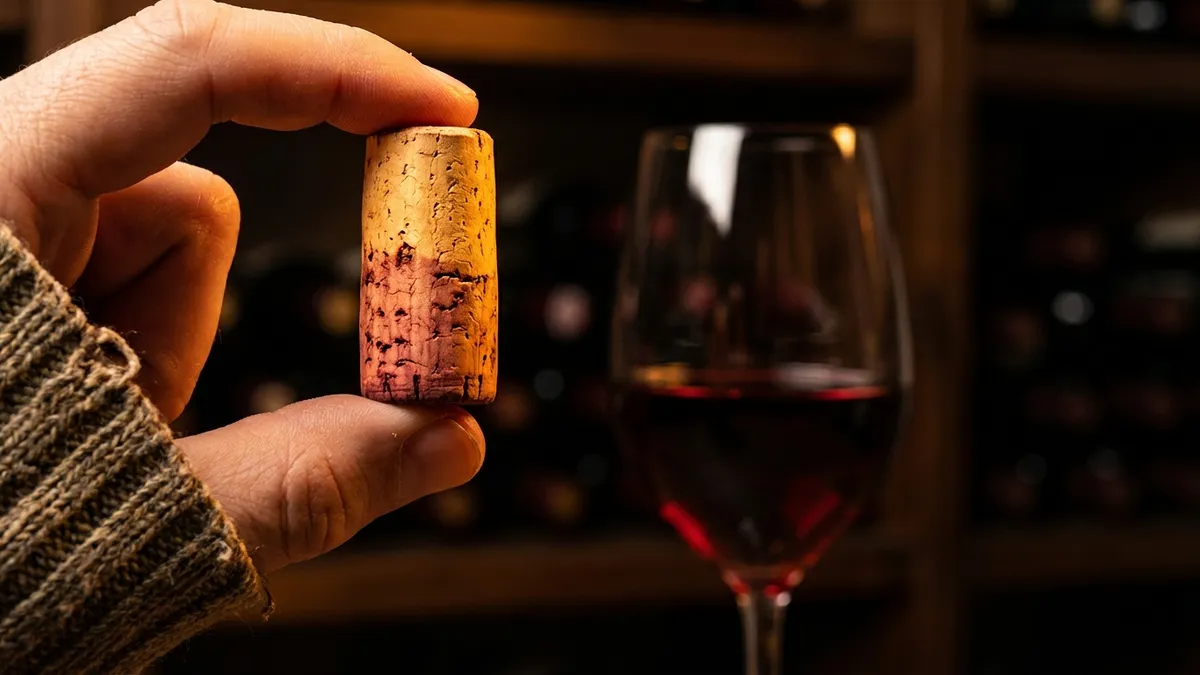
A corked wine is a wine that has been contaminated by a chemical compound called 2,4,6-trichloroanisole, almost always shortened to TCA. TCA is produced when natural phenols in cork come into contact with certain fungi and chlorine-based compounds. The reaction creates a musty, mouldy molecule that transfers from the cork into the wine over time.
The term "corked" has nothing to do with cork crumbs in the glass or a cork that breaks when you pull it out. Those are mechanical issues, not flavor faults. A corked wine can look perfectly clean. The problem is invisible — it lives in the aroma.
Why TCA Is Such a Big Deal
TCA is one of the most powerful smells humans can detect. Studies have measured human detection thresholds as low as 1 to 2 nanograms per liter, and trained panelists can pick it up at 0.3 nanograms per liter. To put that in perspective, a nanogram is a billionth of a gram. A few molecules in an entire bottle of wine are enough to register.
This extreme sensitivity is why TCA matters so much. You do not need a heavily tainted wine to notice the fault. Even a bottle with a tiny amount of TCA will taste flat, lifeless, and fruitless compared to a clean version of the same wine. You might not know what is wrong, but you will know that something is wrong.
Where TCA Actually Comes From
Natural cork comes from the bark of cork oak trees, mostly grown in Portugal and Spain. During processing, chlorine-based cleaning agents were historically used to sterilize cork material, and when those chlorides met certain fungi living in the bark, they produced TCA as a byproduct. The cork then carried the contamination straight into the bottle, where it slowly released the molecule into the wine over months and years.
Modern cork producers have swapped chlorine for peroxide-based cleaning, screened individual corks for contamination, and in some cases steam-cleaned corks at high temperatures. These efforts have dramatically cut cork taint rates. One industry test program reported an 81 percent reduction in TCA levels after eight years of quality control work. The fault still exists, but it is far less common than it used to be.
What Corked Wine Actually Smells Like
Here is the vocabulary you need. When sommeliers and winemakers describe corked wine, they reach for the same small list of descriptors again and again:
- Wet cardboard
- Damp basement or musty cellar
- Wet dog
- Mouldy old books or wet newspaper
- Damp towel left in a gym bag too long
- Attic or root cellar
Notice what is missing from that list: any fruit, any flower, any spice. That is the real signature of cork taint. The fault does not add a bad smell so much as it subtracts everything good. A lightly corked wine will smell faintly musty, but the bigger clue is that the cherries, citrus, or florals you would expect have disappeared. The wine feels flat, dusty, and dull.
A more heavily corked bottle will punch you in the face the moment you pour the glass. The basement smell rises out of the bowl before you get your nose anywhere near it. There is no mistaking it once you have encountered it once or twice.
Any wine that reminds you of an old, damp room is corked. Pour it out and open another. That is the entire skill.
Smelling properly is half the battle, which is why serious tasters train their nose before they worry about anything else. To learn how to evaluate a wine's aroma step by step, read our guide to how to taste wine — the same swirl-and-sniff technique that reveals a wine's character is exactly how you catch a fault.
How to Check If a Wine Is Corked in 30 Seconds
When you open a new bottle, run this quick checklist. Once it becomes muscle memory, it takes less than half a minute:
- Pour a small amount into a clean, properly shaped glass — enough to swirl.
- Swirl gently for three or four seconds to release aromatics.
- Take one sharp sniff from about an inch above the rim.
- Ask two questions. First: do you smell any fruit? Second: is there any hint of wet cardboard, damp basement, or mustiness?
- If the fruit is missing and the basement is present, the wine is corked.
This process is exactly what a waiter is giving you when they pour a small taste at the start of a meal. It is not about showing off. It is a structural check for faults like cork taint, oxidation, and heat damage. Taking ten seconds to actually smell the wine is the polite and correct response.
Serve at the Right Temperature Before You Judge
Temperature affects how much TCA rises out of the glass. A wine served too cold can mask a light taint that becomes obvious as the bottle warms up. Before deciding a wine is corked, make sure it is close to its proper serving temperature. If you need a refresher on the right range for every style, see our wine serving temperature chart.
A good rule: if the wine smells faintly off when you first pour it, wait five minutes. If the mustiness is gone and fruit appears, the wine was simply too cold. If the mustiness is still there or grows stronger, it is cork taint.
How Common Is Corked Wine Today?
This is one of the most debated numbers in wine. Twenty years ago, credible estimates put cork taint rates as high as 5 to 10 percent of all cork-sealed bottles. In a 2005 study at the Wine Spectator blind-tasting facility in Napa, 7 percent of 2,800 bottles were found to be tainted. That number was a wake-up call for the cork industry.
Since then, quality control has transformed the sector. Industry groups like APCOR cite current taint rates between 0.7 and 1.2 percent. More realistic third-party estimates today land around 1 to 2 percent of cork-sealed bottles — roughly one in fifty. That is low enough to be uncommon but high enough that any regular drinker will meet a corked bottle every year or two.
A few practical implications flow from those numbers:
- If you drink one bottle a week, you will likely encounter a corked wine every year or two.
- If you open a fifty-dollar bottle for a special occasion, the odds are about 1 in 50 that it will be faulty. This is why restaurants always ask you to taste.
- The rate is essentially zero for screw-cap wines. Swapping to screw cap effectively eliminates cork taint as a risk.
What to Do If Your Wine Is Corked
At Home
Pour it out. Open another bottle. There is no home remedy that reliably fixes a corked wine. A popular trick involves putting plastic wrap into the wine for ten minutes — the plastic can absorb some TCA — but it also strips aromatic compounds and rarely restores the wine to anything enjoyable. If you bought the bottle recently, most reputable wine shops will replace it without question. Bring it back.
Keep any receipts and, if possible, the cork itself. A good shop will want to see both. Over time, a responsible retailer tracks which producers show up with repeat cork taint issues and will flag them back up the supply chain.
At a Restaurant
When a sommelier or server pours you a taste, they are giving you the chance to check for faults. Swirl, sniff, and ask yourself the two questions above. If the wine is corked, say so calmly and directly. You do not need to be an expert. A simple sentence works:
"This wine smells musty to me. I think it might be corked."
A well-run restaurant will replace the bottle without hesitation. This is the entire point of the ritual. Do not taste the wine, decide something feels off, and then drink it anyway because you are embarrassed. Cork taint is a known problem, the staff expects it to happen occasionally, and pointing it out is exactly what they want you to do.
If the restaurant pushes back or tries to convince you the wine is fine, stand your ground. You are the customer. You are not making a personal judgment about the wine's quality — you are reporting a physical fault. Any good wine program will replace a corked bottle as a matter of course.
How to Train Your Nose for Cork Taint
The best way to learn the smell of cork taint is to meet it once in a controlled setting. A few practical tips for building the skill:
- Save a corked cork. The next time you encounter a corked wine, keep the cork in a sealed jar. Give it a sniff every few weeks to reinforce the memory.
- Compare side by side. If you ever have access to the same wine from two different bottles, one clean and one corked, the difference is unmistakable. Pour a small amount of each and swirl both.
- Focus on what is missing, not what is present. Beginners try to detect a specific "bad" smell. Experts notice the absence of fruit. Train your nose to ask "where are the cherries?" before it asks "what is that weird note?"
- Practice regularly. Aroma recognition is a trainable skill. The more wine you smell deliberately, the faster your brain builds a reference library for normal vs faulty.
This kind of structured aroma practice is exactly what the Sommy app is designed for. Guided tasting sessions walk you through evaluating color, aroma, and palate with real-time feedback, so identifying faults like cork taint becomes automatic rather than guesswork.
Other Wine Faults That Can Look Like Cork Taint
Not every off-smelling wine is corked. A few other common faults can be mistaken for cork taint by beginners:
- Oxidation — the wine smells like bruised apples, sherry, or nuts, and often has a brownish color. This is from too much air exposure, usually a bad seal or old storage.
- Heat damage — the wine smells stewed or jammy and often feels flabby and lifeless. This happens when wine is stored too warm.
- Reduction — the wine smells like struck matches, burnt rubber, or rotten eggs. This is a sulfur issue. Surprisingly, mild reduction often blows off with a swirl or a splash decant.
- Brettanomyces — the wine smells like a barnyard, sweaty saddle, or band-aid. In small doses, this is a stylistic choice in some old-world reds. In large doses, it is a fault.
Each of these has its own signature. Cork taint is the wet-basement fault. Oxidation is the bruised-apple fault. Heat damage is the stewed-fruit fault. Learning to tell them apart is one of the most rewarding parts of building tasting skill, and it is much easier once you understand the underlying structure of wine.
Build the Reflex Once, Keep It Forever
Recognizing a corked wine feels mysterious the first few times. After you have met the fault two or three times, it becomes automatic. The wet-basement note jumps out of the glass before you have even finished swirling. You stop second-guessing and start reacting — and that confidence transfers to everything else you taste.
Structured practice is the shortcut. The Sommy app walks you through aroma identification, fault recognition, and full four-step tasting evaluation using the same methodology sommeliers learn in formal certification courses. Visit sommy.wine to start training your nose for every fault, flavor, and style you will meet in a glass. A little deliberate practice turns guesswork into instinct faster than you would expect.
Frequently Asked Questions
What does a corked wine actually smell like?
Corked wine smells like wet cardboard, a damp basement, a musty old attic, or a wet dog. The fruit aromas you would normally expect are muted or completely gone. The stronger the taint, the more aggressive the mustiness becomes. Even very light cork taint strips a wine of freshness and fruit.
Is corked wine dangerous or unsafe to drink?
No. Corked wine is completely safe. TCA, the compound responsible for the fault, is not toxic at the levels found in tainted wine. It will not make you sick. It just tastes and smells bad. You can pour it down the sink or return it without any health concern.
How common is corked wine?
Modern cork quality control programs have driven the rate down significantly. Industry studies place it between 0.7 and 7 percent depending on the year and region. A realistic estimate for cork-sealed bottles today is 1 to 2 percent, or roughly 1 in 50 bottles you open.
Can a corked wine be fixed or saved?
Not really. There is a folk remedy involving plastic wrap, which can absorb some TCA molecules, but it also strips the wine of flavor and rarely brings a tainted bottle back to life. The honest answer is that once a wine is corked, it is done. Pour it out and open another bottle.
Can a wine with a screw cap be corked?
Technically yes, but extremely rarely. TCA can come from sources other than the cork itself — contaminated wood in the cellar, wooden pallets, barrels, or storage rooms. In those rare cases, the entire cellar's wines can be affected. But day to day, screw-cap wines are almost never corked.
What should I do if I order a corked wine at a restaurant?
Tell the server or sommelier calmly. Say the wine smells musty or tastes off. A good restaurant will replace the bottle without question — this is exactly what the tasting ritual at the start of a meal is for. Do not feel embarrassed. It is a common fault and not your fault.
Is a crumbly or broken cork a sign of cork taint?
No. A crumbly cork is a storage or age issue, not a flavor issue. The wine can be perfectly fine even if the cork breaks. Cork taint is about smell and taste, not about the physical condition of the cork. Never judge a bottle until you have smelled the wine itself.
Does temperature affect how much you notice cork taint?
Yes. Warmer temperatures make TCA more obvious because it becomes more volatile and rises into the glass faster. A cold wine can mask a light taint that becomes clear as the bottle warms up. Always evaluate a wine at its proper serving temperature before sending it back.
Get the free Wine 101 course
Start learning to taste wine like a pro with structured lessons and AI-guided practice.
Sommy Team
LinkedInFounder & Wine Educator
The Sommy Team is building the world's most approachable wine education app, helping beginners develop real tasting skills through structured courses and AI-guided practice.