Sulfites in Wine: What They Are and Why They Are There
Sommy Team
Founder & Wine Educator
April 9, 2026
10 min read
TL;DR
Sulfites in wine are a preservative, not a toxin. Every wine has some, even ones labeled natural. Only about 1 percent of people are genuinely sulfite-sensitive, and dried fruit has up to ten times more sulfites per gram than wine. Your wine headache is almost certainly not from sulfites.
The Most Misunderstood Ingredient on the Wine Label
Few topics generate more confusion and myth than sulfites in wine. Walk through any wine shop and look at the back label of almost every bottle, from a mass-market red blend to a hand-bottled natural wine from a farm cooperative. Two words show up on nearly all of them: contains sulfites. Those two words have launched a thousand dinner-party debates, inspired an entire "no added sulfites" category, and convinced generations of drinkers that sulfites are what gives them a wine headache.
The truth is less dramatic and more interesting. Sulfites are a preservative, they exist in almost every food on your supermarket shelf, and they are present in wine at lower levels than most dried fruits. The FDA label is not a warning about toxicity — it is a nutritional disclosure prompted by a very small subgroup of asthmatic drinkers who are genuinely sensitive. For everyone else, sulfites are doing a thankless job of keeping wine drinkable.
This guide walks through exactly what sulfites are, what they do inside the bottle, how much is really in your glass, who is actually sensitive to them, why they almost certainly are not the cause of your wine headache, and how to read a wine label so you know what you are drinking.
What Sulfites Are, Chemically Speaking
Sulfites is an umbrella term for a family of sulfur-based compounds, the most important of which is sulfur dioxide, usually written as SO2 (pronounced "ess-oh-two"). Sulfur dioxide has been used as a food preservative for more than two thousand years. Roman winemakers burned sulfur candles inside their amphorae to sterilize them before filling them with wine. That is the same basic technique — with modern chemistry — that winemakers use today.
In a wine bottle, sulfites serve three critical jobs:
- Antimicrobial. Sulfites suppress unwanted bacteria and wild yeast that would otherwise ferment any leftover sugar or turn the wine to vinegar.
- Antioxidant. Sulfites bind to oxygen molecules, preventing the wine from going flat, brown, or sherry-like.
- Enzyme inhibitor. Sulfites slow down the enzymes that break down color, aroma compounds, and freshness.
Without sulfites, most wines would turn into cloudy, oxidized, vinegary liquid within weeks of bottling. A small amount of sulfite protection is the difference between a wine that ages gracefully for a decade and a wine that spoils on the shelf.
Some Sulfite Is Always There
Here is a fact that surprises almost every beginner: every wine contains sulfites, including "no sulfites added" natural wines. That is because yeast produces small amounts of sulfur dioxide naturally during fermentation. Depending on the yeast strain and fermentation conditions, a totally untreated wine can end up with 5 to 10 parts per million of sulfites all on its own.
This is why the FDA's "contains sulfites" warning shows up on almost every bottle on the shelf. The threshold is 10 ppm, and nearly every wine exceeds it by natural fermentation alone. The label does not tell you whether sulfites were added — just that some are present. For a broader look at the philosophy behind lower-intervention winemaking, see our guide to natural wine.
How Much Sulfites in Wine Are Actually in Your Glass?
Sulfite levels are measured in parts per million (ppm), and the numbers vary by wine style. A rough breakdown of typical ranges:
- Dry red wines: 50 to 150 ppm
- Dry white wines: 100 to 200 ppm
- Rosé wines: 100 to 150 ppm
- Sweet and dessert wines: 200 to 350 ppm
- Sparkling wines: 100 to 200 ppm
- "No sulfites added" wines: up to 10 ppm (from fermentation)
- Conventional organic wines (US): no added sulfites, same 10 ppm natural floor
The FDA's legal maximum for wine sold in the United States is 350 ppm of total sulfites. In practice, almost no commercial winery gets anywhere near that ceiling — the typical bottle sits comfortably in the 80 to 150 ppm range. Sweet wines use more because the residual sugar is a food source for spoilage microbes, and extra sulfite is needed to keep the wine stable.
Sweet and White Wines Use More Than Red
It surprises many drinkers that white wines typically have more sulfites than reds. The reason is structural: red wines already have natural preservatives in the form of tannin and phenolic compounds from the grape skins, which provide some antioxidant protection on their own. Whites, which are pressed off their skins, have less of this built-in defense and need more added sulfur dioxide to compensate.
Sweet wines need even more because sugar feeds the yeast and bacteria that sulfites are trying to suppress. A dessert wine with 100 grams of residual sugar per liter is a sitting duck for refermentation without adequate sulfite protection. If you want a refresher on the difference between dry and sweet, read what does dry wine mean.
The Dried Fruit Comparison That Changes Everything
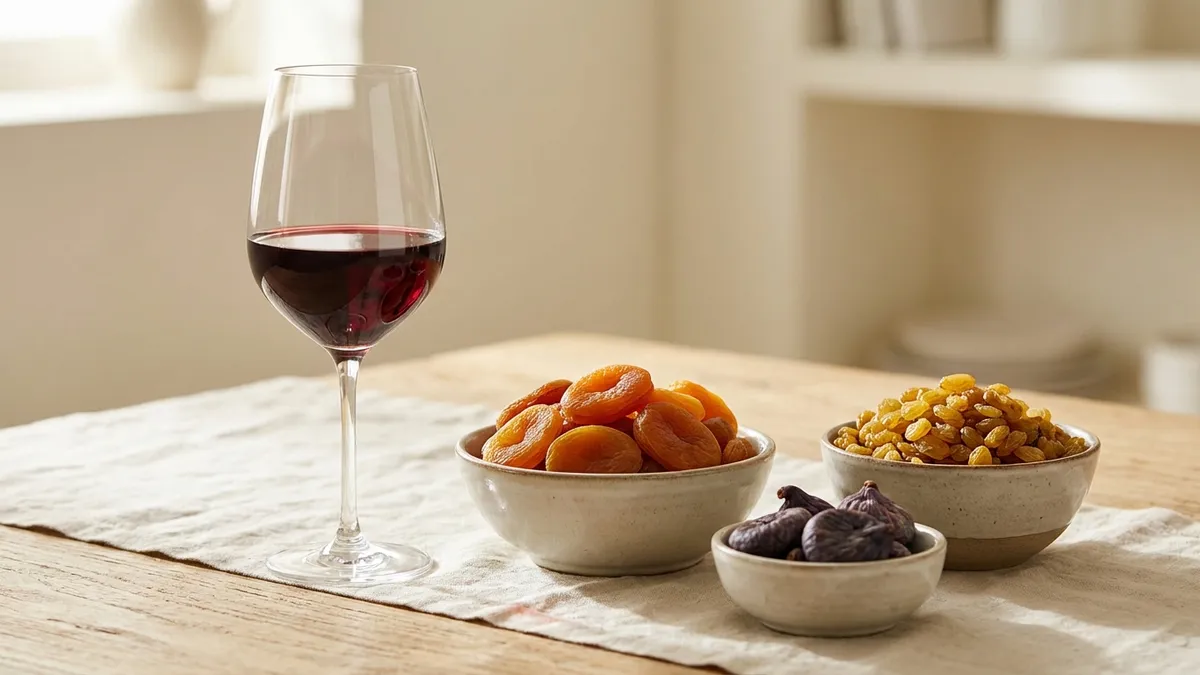
Here is the single most useful piece of context for anyone worried about sulfites: dried fruit contains far more sulfites than wine, and nobody panics about dried fruit.
A few reference numbers:
- Dried apricots: up to 2,000 ppm
- Raisins and sultanas: 500 to 2,000 ppm
- Dried mango: up to 1,000 ppm
- Dried figs: 500 to 1,000 ppm
- Typical red wine: 50 to 150 ppm
A handful of non-organic dried apricots can contain more sulfite than an entire bottle of wine. A small box of raisins can deliver more sulfite than three bottles. And those numbers are considered totally safe for general consumption, with no label warnings and no "no-sulfite" dried fruit industry.
The reason sulfites are used on dried fruit is the same reason they are used in wine: they preserve color, prevent browning, and stop microbial growth. The amounts are higher because dried fruit is more perishable and more concentrated. What this comparison reveals is that the sulfite dose in a glass of wine is extremely modest on an absolute basis.
If dried apricots do not give you a headache, sulfites in wine almost certainly are not giving you one either.
Who Is Actually Sulfite-Sensitive?
Genuine sulfite sensitivity is real but rare. An FDA study from the 1980s estimated that roughly 1 percent of the population has a true sulfite sensitivity, and the majority of those individuals are asthmatics — people whose airways react to sulfur dioxide exposure. For this group, sulfites can trigger wheezing, shortness of breath, chest tightness, or nasal congestion.
Notice what is not on that list: headaches. A real sulfite reaction is a respiratory event, not a cranial one. If your reaction to wine is a throbbing forehead the next morning, sulfites are almost certainly not the culprit. A severe asthmatic reaction to a few glasses of wine would be obvious and happen within minutes, not hours later.
What Usually Causes Wine Headaches
If not sulfites, then what? There are several well-documented triggers for red wine headaches, and most are more likely than sulfites:
- Histamine. Red wine can contain 20 to 200 percent more histamine than white wine. Some people are deficient in the enzyme (diamine oxidase) that breaks histamine down, and a glass of red wine can overwhelm their system. Histamine headaches show up quickly and often come with a flushed face.
- Tannin. The same astringent compounds that give red wine its grip can trigger headaches in sensitive drinkers, likely through the release of serotonin.
- Alcohol itself. Ethanol is a diuretic and a vasodilator. Drinking more than a glass or two without water is a reliable recipe for a next-morning headache regardless of the wine style.
- Congeners. These are minor compounds produced during fermentation that accumulate in darker drinks. Red wine, whiskey, and brandy have more than vodka or white wine.
- Dehydration. Possibly the biggest single factor. Most wine headaches are partly or fully a mild hangover.
To test whether sulfites specifically bother you, try the dried-apricot test from the FAQ above. If a small handful of non-organic dried apricots causes similar symptoms, sulfites might be a factor. If not, histamine, tannin, or plain alcohol is a more likely explanation. The Sommy app includes a structured tasting journal that helps you track which wines cause reactions and which do not — over time, patterns emerge that pure memory cannot catch.
Reading a Wine Label for Sulfite Content
The US wine label is not as informative as you might hope. Here is what you actually learn from the text on the back of the bottle:
- "Contains sulfites" — There is more than 10 ppm total. This appears on almost every wine. It tells you nothing about whether sulfites were added by the winemaker.
- "No added sulfites" or "No sulfites added" (NSA) — The winemaker did not add SO2. The wine can still contain up to 10 ppm from natural fermentation.
- "Organic" (USDA certified) — In the United States, wine labeled simply as "organic" must be made from organic grapes AND have no added sulfites. These wines have a shorter shelf life and are harder to make stable.
- "Made with organic grapes" — The grapes are certified organic, but the winemaker is allowed to add a limited amount of sulfites (up to 100 ppm). This is the more common organic label in the US market.
- "Biodynamic" — A farming philosophy that goes beyond organic. Biodynamic wines may or may not use sulfites, depending on certification level.
Outside the United States, organic standards differ. European Union organic wine laws permit some added sulfites up to specific thresholds (100 ppm for red, 150 ppm for white, less for lower-sugar wines). If you specifically want to avoid added sulfites, you need to look for the "no sulfites added" designation or seek out the very small category of zero-zero natural wines.
A Practical Note on "Zero-Zero" Wines
The tiny subset of wines made with no added sulfites at any stage of production is often called zero-zero or sans soufre (French for "without sulfur"). These wines can be wonderful and expressive, but they have real tradeoffs:
- They are less stable and more sensitive to heat and light.
- They can vary bottle to bottle, even within the same case.
- They need to be stored carefully and drunk relatively young.
- They can show wine faults more frequently than conventional wines.
None of that means they are bad. It just means the winemaker is trading stability for minimal intervention. If you like the philosophy and understand the tradeoffs, they are worth exploring.
Build a Real Understanding, One Glass at a Time
Sulfites are one of the most talked-about and least understood ingredients in wine. Once you know what they actually do, how much is really in your glass, and who is genuinely sensitive to them, the entire conversation changes. Sulfites become a useful winemaking tool instead of a mysterious villain, and wine headaches become a puzzle you can actually troubleshoot.
The Sommy app is built around the same kind of grounded, demystified wine education this article tries to model. Structured courses walk you through the chemistry, the history, and the hands-on tasting skills that turn wine from something intimidating into something you can actually talk about. Visit sommy.wine to start building your own wine vocabulary, one glass and one myth at a time.
If you are curious about the lower-intervention end of the winemaking spectrum and how sulfite usage differs there, the natural wine explained guide is the natural next stop. If you want to understand the flavor components that might actually be causing your headache, the understanding tannins, acidity, and body breakdown is a useful companion read.
Frequently Asked Questions
What are sulfites in wine and what do they actually do?
Sulfites are sulfur-based compounds (usually sulfur dioxide, or SO2) that winemakers use as a preservative and antimicrobial agent. They stop unwanted bacteria and yeast from spoiling the wine, prevent oxidation, and help the wine stay fresh. Without them, most wine would turn to vinegar within months.
Are sulfites in wine harmful or dangerous?
For the vast majority of people, no. FDA research from the 1980s found that roughly 1 percent of the population is genuinely sulfite-sensitive, and most of those individuals are asthmatics. A true sulfite reaction typically involves respiratory symptoms like wheezing, not a headache.
Why does wine have 'contains sulfites' on the label?
Since 1988, the FDA has required any wine with more than 10 parts per million of sulfites to carry a 'contains sulfites' warning. This threshold is lower than the natural sulfite level in almost every wine, which is why the label shows up on nearly every bottle including many natural wines.
Is my red wine headache caused by sulfites?
Almost certainly not. If sulfites caused headaches, dried apricots would put you in the hospital — they can contain up to ten times more sulfites per gram than wine. Most red wine headaches are caused by histamine, tannin, alcohol, dehydration, or the sheer volume of wine consumed, not by sulfites.
Do natural or organic wines have no sulfites?
Most natural and organic wines still contain some sulfites, just less than conventional wines. 'No added sulfites' wines can still contain up to 10 ppm that occur naturally during fermentation. In the United States, wine labeled simply 'organic' must have no added sulfites; 'made with organic grapes' allows limited added sulfites.
How much sulfite is actually in a typical glass of wine?
Most red wines contain 50 to 150 parts per million of total sulfites, white wines 100 to 200, and sweet wines up to 350. That is the FDA's legal maximum. For context, a single handful of raisins can deliver as much sulfite as an entire bottle of wine.
How can I tell if I am actually sulfite-sensitive?
The clearest test is to eat a small amount of dried apricots or a handful of non-organic raisins. If they cause the same symptoms you get from wine, sulfites may be involved. If they do not, something else in the wine is likely the trigger — histamine, tannin, or alcohol are the most common suspects.
Do sulfites affect the taste of wine?
Only at very high or very low levels. At normal levels, sulfites are tasteless and odorless. A wine with too much sulfite can smell like burnt matches. A wine with no sulfite protection can go brown, oxidized, or vinegary quickly. The goal is a balanced dose, not zero.
Get the free Wine 101 course
Start learning to taste wine like a pro with structured lessons and AI-guided practice.
Sommy Team
LinkedInFounder & Wine Educator
The Sommy Team is building the world's most approachable wine education app, helping beginners develop real tasting skills through structured courses and AI-guided practice.