Rhône Valley Wine Region Guide: Northern, Southern, and Beyond
Sommy Team
Founder & Wine Educator
April 29, 2026
12 min read
TL;DR
The Rhône Valley wine region splits into a Northern half built on 100% Syrah from steep granite slopes and a Southern half built on Grenache-led blends across stone-strewn Mediterranean terraces. Côte Rôtie and Hermitage anchor the north, Châteauneuf-du-Pape the south, with Côtes du Rhône offering the best value entry point into one of France's most diverse and food-friendly regions.
What Makes the Rhône Valley Wine Region Unique
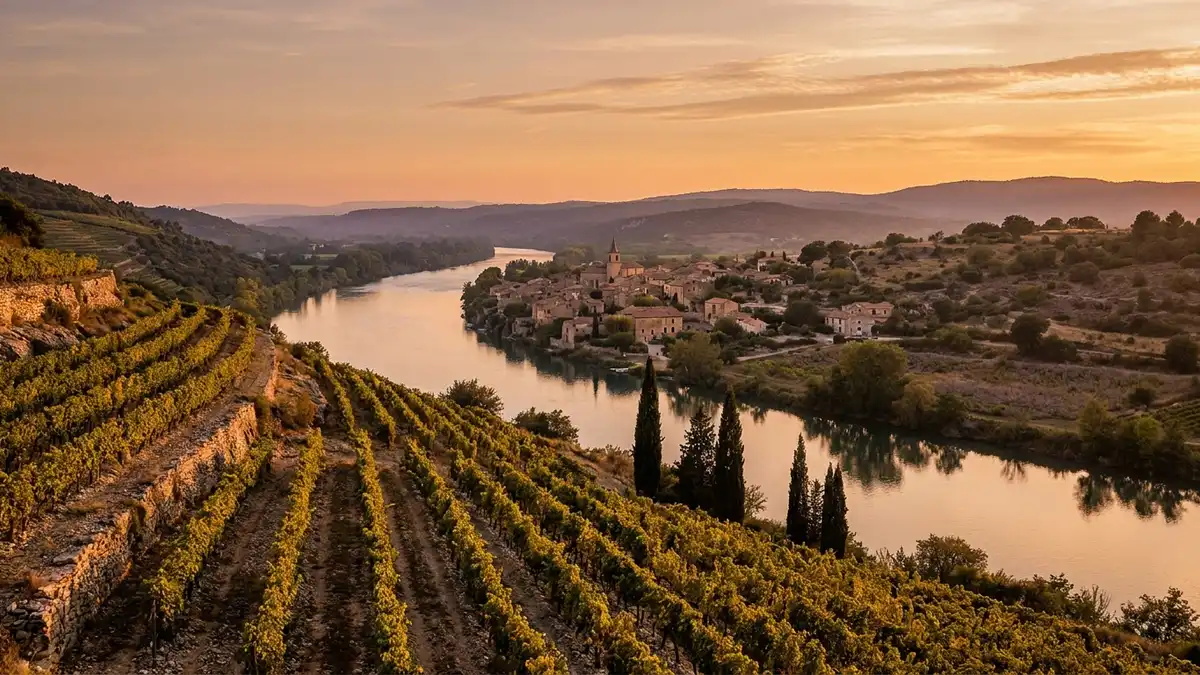
The Rhône Valley wine region runs roughly 200 kilometres down the southeast of France, following the Rhône river from south of Lyon to the city of Avignon. It is one of France's largest wine regions by volume — and one of its most misunderstood, because it is really two regions sharing a single name.
The split is not subtle. The Northern Rhône and Southern Rhône have different climates, different soils, different grape rules, and different tasting profiles. A bottle from Côte Rôtie and a bottle from Châteauneuf-du-Pape are both labelled Rhône, yet they could be wines from different countries.
For drinkers coming from Bordeaux or Burgundy, the Rhône offers something neither can: explosive aromatic range at every price point, from $15 weekday bottles to age-worthy flagships. The trick is knowing which half of the valley you are reading.
Rhône Valley Wine Region, in 90 Seconds
The Rhône Valley wine region splits into a Northern half built on Syrah (the dark, spicy red grape responsible for almost every Northern Rhône red) and a Southern half built on Grenache-led blends typically combining Grenache, Syrah, and Mourvèdre. The Northern Rhône — Côte Rôtie down to Saint-Péray — is small, steep, and granite-soiled. The Southern Rhône — from Vinsobres to Avignon — is warmer, larger, and Mediterranean. Côtes du Rhône is the broad regional appellation. Châteauneuf-du-Pape is the most famous village. Hermitage and Côte Rôtie are the prestige northern crus. The valley produces every wine colour and style, from sparkling Saint-Péray to fortified Muscat de Beaumes-de-Venise.
The Northern Rhône — Granite, Syrah, and the Mistral
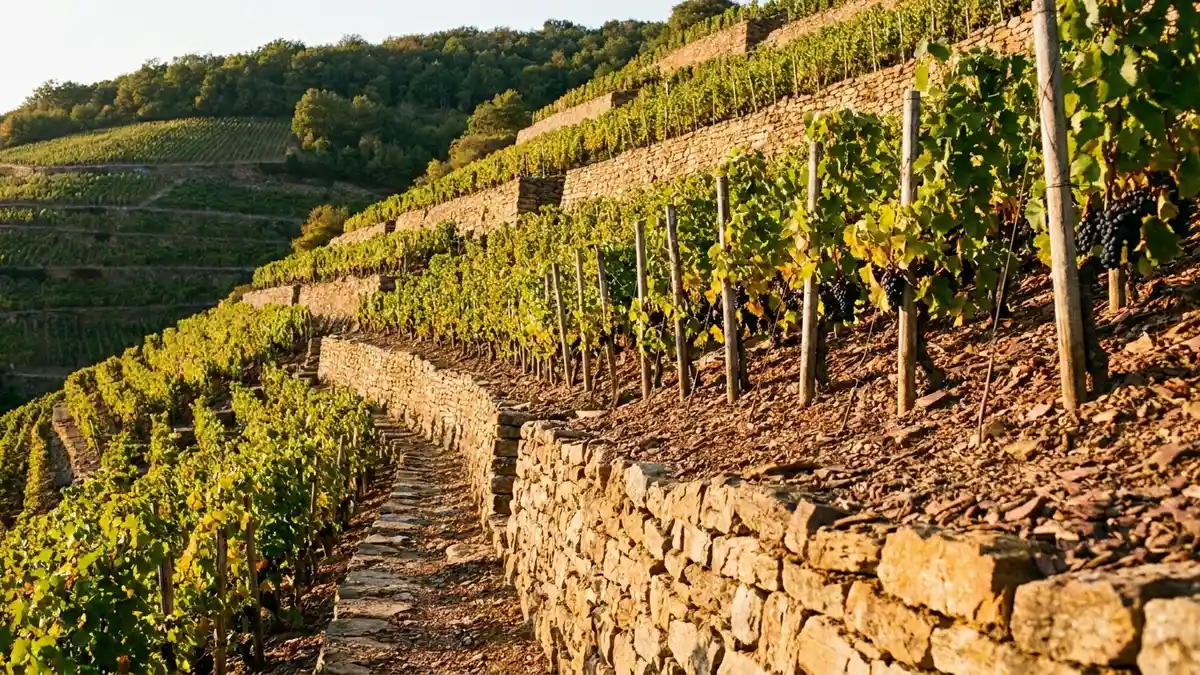
The Northern Rhône is a thin ribbon of vineyards clinging to slopes above the river, stretching about 200 kilometres but accounting for only around 5 percent of total Rhône production. Granite is the defining soil. The climate is continental, cooled by the Mistral — a strong dry wind from the north that funnels down the valley.
For reds, only one grape is permitted: Syrah. For whites, a small palette of Viognier, Marsanne, and Roussanne does all the work.
Côte Rôtie — The Roasted Slopes
Côte Rôtie sits at the northern tip of the Rhône and translates as "roasted slope" — a reference to the steep south-facing terraces that catch sunlight all day. The wines are 100% Syrah, though up to 20% Viognier (a peachy, floral white grape) may be co-fermented for aromatic lift.
Classic Côte Rôtie shows black olive, smoked meat, white pepper, violet, and bacon fat. The texture is structured but elegant, with fine-grained tannins and a long, savoury finish. Top bottles age 15 to 30 years and rank among the most prestigious Syrahs in the world.
Hermitage — France's Longest-Aging Syrah
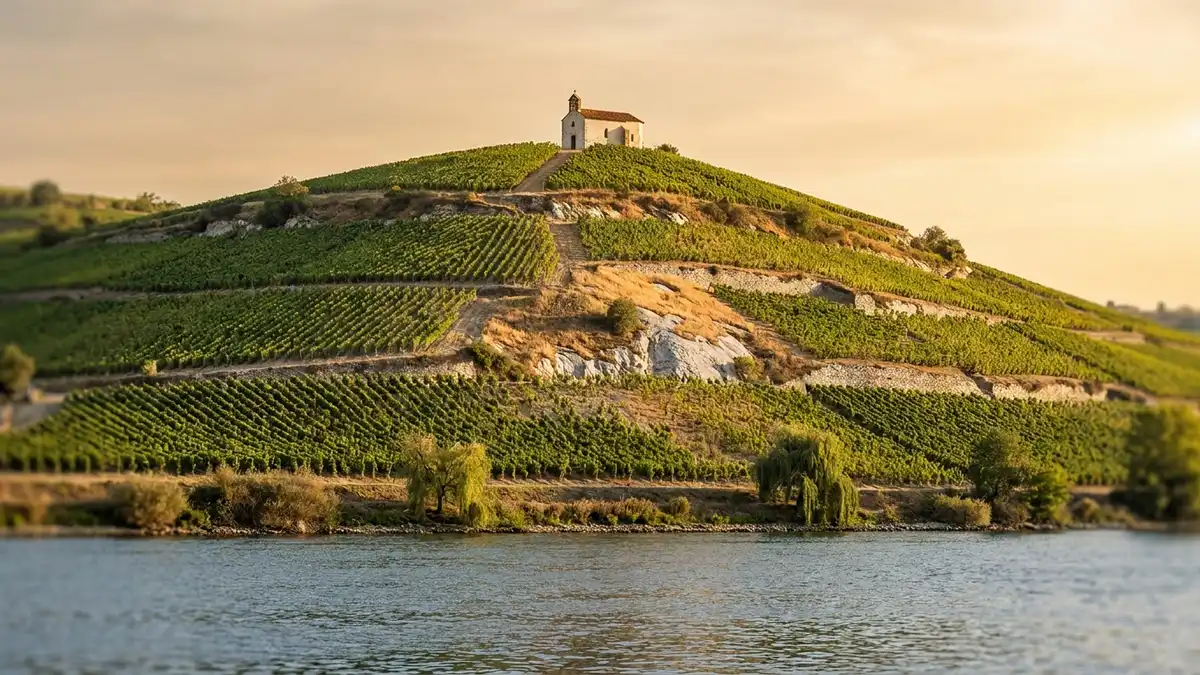
Hermitage is a single south-facing granite hill rising above the village of Tain-l'Hermitage. The appellation covers just 137 hectares — smaller than many single Bordeaux estates.
Hermitage reds are powerful, brooding, and built for the cellar. Some of France's longest-aging Syrahs come from this hill, drinking well at 30 or even 40 years. Hermitage Blanc — made from Marsanne and Roussanne — is a structured, nutty, age-worthy white that quietly ranks among the great whites of France.
Saint-Joseph and Cornas — Affordable Northern Syrah
Saint-Joseph stretches along the west bank of the Rhône and produces the most accessible Northern Syrah at reasonable prices. The wines are lighter and more fruit-forward than Hermitage, ready to drink earlier, often with the same peppery savoury thread.
Cornas, by contrast, is a small, sun-trap appellation producing dense, almost black Syrah — chunky, savage, and structured, but rewarding to those who give it time.
Crozes-Hermitage — The Workhorse
Crozes-Hermitage surrounds the Hermitage hill and is by far the largest Northern Rhône appellation. The wines lack Hermitage's concentration but offer the best value entry point into Northern Syrah, drinking beautifully at 5 to 8 years and pairing with everyday food. For drinkers wanting to taste the Northern Rhône style without spending Hermitage money, this is the obvious starting point — a sentiment echoed in many guides on develop your wine palate through structured comparisons.
Condrieu and Saint-Péray — The White Specialists
Condrieu is the world reference for Viognier, producing intense, low-acid whites loaded with peach, apricot, honeysuckle, and white flowers. The wines drink richly young and rarely benefit from long ageing. Saint-Péray, at the southern end of the Northern Rhône, produces still and sparkling whites from Marsanne and Roussanne — an under-the-radar appellation that rewards exploration.
The Southern Rhône — Stones, Sun, and Grenache
Cross south of the gap that separates the two halves and the landscape changes. The Southern Rhône is a wide Mediterranean basin with rolling vineyards rather than steep terraces. The climate is hot and dry. The soils shift from granite to clay, limestone, sand, and the famous stone-strewn terraces that radiate heat through the night.
Reds dominate, almost always blends. Grenache (called Garnacha in Spain — the same grape, different name) is the backbone, joined by Syrah, Mourvèdre, Cinsault, and others. Whites use Roussanne, Marsanne, Grenache Blanc, Bourboulenc, Clairette, and Picpoul.
Châteauneuf-du-Pape — The Flagship
Châteauneuf-du-Pape translates as "the Pope's new castle," a reference to a 14th-century papal residence outside Avignon. The appellation allows up to 13 grape varieties — a remarkable list that includes Grenache, Syrah, Mourvèdre, Cinsault, Counoise, Vaccarèse, Muscardin, and several whites.
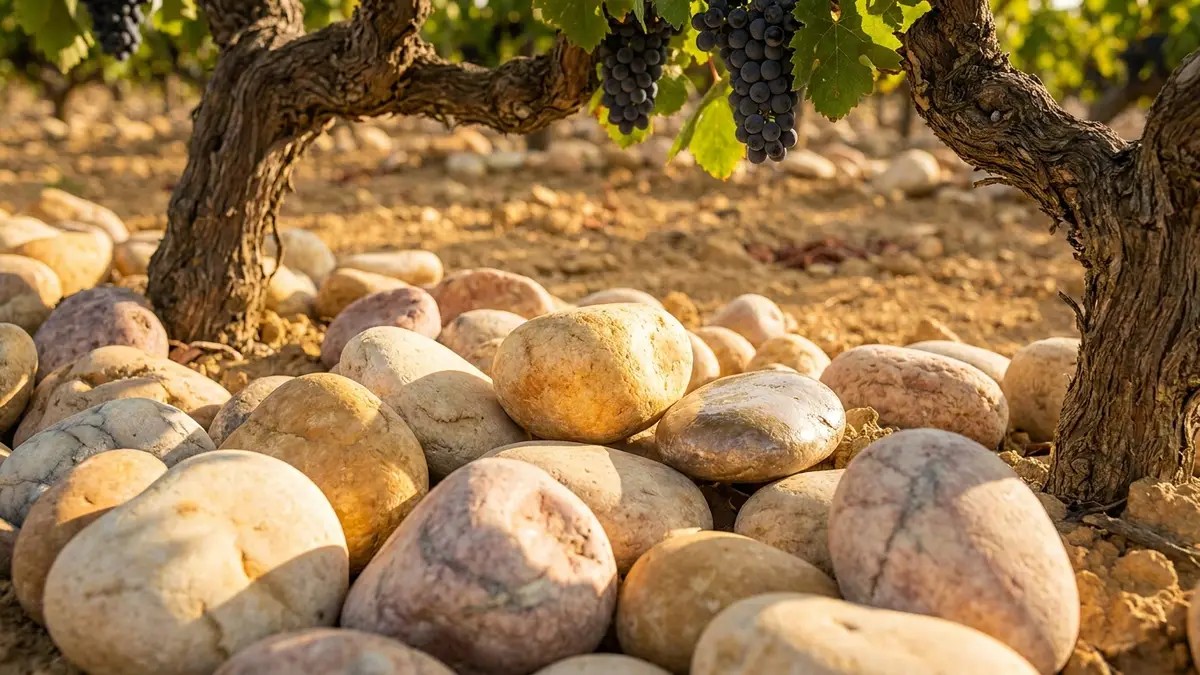
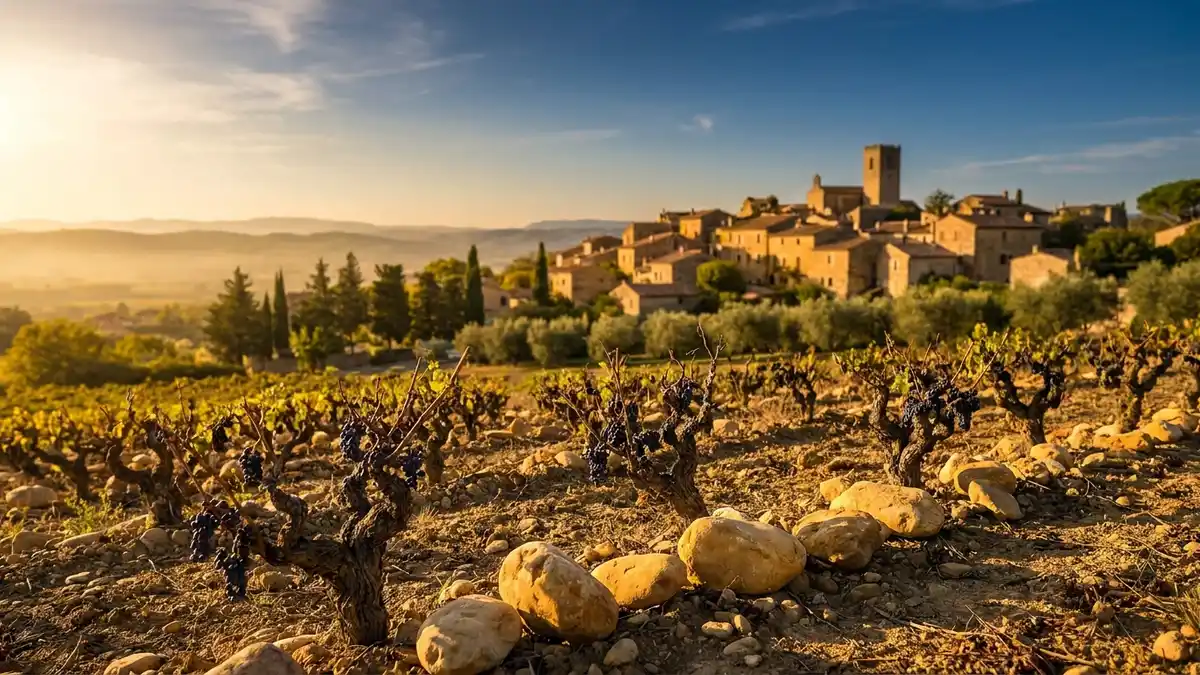
The signature soil is the galets roulés — large round stones, polished smooth by an ancient river, that cover entire vineyards. The stones store heat from the sun and release it through the night, helping Grenache reach its full ripe potential.
Classic Châteauneuf shows red cherry, raspberry, kirsch, garrigue herbs, lavender, leather, and warm earth. Alcohol typically sits between 14.5 and 15.5 percent — a warm-climate signature. Top bottles age 15 to 25 years.
Gigondas and Vacqueyras — The Mountain Villages
Gigondas sits in the foothills of the Dentelles de Montmirail mountains and produces structured Grenache-Syrah-Mourvèdre blends that rival Châteauneuf in concentration. The cooler altitude gives the wines a fresher edge and a slower ripening curve.
Vacqueyras sits just to the south and produces wines in a similar style at noticeably lower prices. For drinkers familiar with Châteauneuf-du-Pape but priced out of it, Vacqueyras and Gigondas are the smartest substitutions.
Côtes du Rhône and Côtes du Rhône-Villages
The Côtes du Rhône appellation is the catch-all regional tier covering most of the Southern Rhône. It is enormous — by volume the second-largest French AOC after Bordeaux — and quality varies widely. Good Côtes du Rhône is one of France's best $15 reds. Bad Côtes du Rhône is forgettable.
Côtes du Rhône-Villages is a step up, with stricter rules and lower yields. A subset of villages have earned the right to add their name to the label — for example, Côtes du Rhône-Villages Cairanne or Côtes du Rhône-Villages Sablet. When you see a village name attached, expect a meaningful jump in quality.
Tavel and Lirac — Rosé and Beyond
Tavel is one of the few French appellations dedicated entirely to rosé, made primarily from Grenache and Cinsault. The style is darker, drier, and more structured than Provence pink — closer to a light red than a delicate summer sipper. Lirac, just across the river from Châteauneuf-du-Pape, produces reds, whites, and rosés in a similar style to its more famous neighbour at significantly lower prices.
Beaumes-de-Venise — The Sweet Note
Beaumes-de-Venise produces both dry reds and Muscat de Beaumes-de-Venise, a fortified sweet wine showing orange blossom, ripe apricot, and honey — a small, distinctive corner of the Southern Rhône that travels well to the dessert course.
The Backbone Grapes
Knowing the grapes makes the appellation map suddenly legible.
Grenache
Grenache is the most important red grape of the Southern Rhône and one of the most widely planted red varieties in the world. It produces wines with high alcohol, soft tannins, and ripe red and dark fruit, often layered with herbal garrigue and warm baking spice.
It is the same variety as Spain's Garnacha — the grape and the style are first cousins, even if the labels read differently.

Syrah
Syrah is the only red grape allowed in the Northern Rhône. The cool granite slopes give it a lean, peppery, savoury profile — black olive, smoked meat, violet, and white pepper, with high acidity and firm tannins.
The same variety in Australia is called Shiraz and produces a riper, jammier style. The split between Northern Rhône Syrah and Australian Shiraz is one of the clearest examples in wine of how climate transforms a single grape — a contrast that pairs naturally with cabernet sauvignon vs merlot for a complete picture of how environment shapes red wine character.
Mourvèdre
Mourvèdre is the third leg of the GSM blend. It ripens late, demands heat, and contributes structure, dark fruit, and a meaty, almost gamey edge. Few Southern Rhône wines are 100% Mourvèdre, but its presence in a blend lifts depth and ageing potential.
The White Quartet
Northern Rhône whites lean on Viognier (rich, peachy, low acid), Marsanne (nutty, structured, beeswax notes), and Roussanne (mineral, floral, longer-lived). Southern Rhône whites add Grenache Blanc, Bourboulenc, Clairette, and Picpoul for fresher, lower-alcohol blends.
What Rhône Wine Tastes Like
Three families of flavour cover most of the region.
Northern Syrah
Black olive, smoked meat, bacon fat, white pepper, blackberry, violet, graphite. Acidity is high, tannins are firm but fine, alcohol typically 12.5 to 14 percent. The mood is savoury and structured rather than ripe and fruity.
Southern Grenache Blends
Red cherry, raspberry, kirsch, lavender, garrigue (the dry herbal scrub of Provence — thyme, rosemary, juniper), warm earth, leather, often higher alcohol around 14 to 15.5 percent. The mood is generous and warm-climate.
Whites
Viognier shows ripe peach, apricot, and honeysuckle with a low-acid, almost waxy texture. Marsanne and Roussanne lean nuttier and more structured, with melon, beeswax, and toasted nut notes that develop with age.
The Sommy app walks through aroma identification step by step, turning vague impressions into a structured tasting note.
Climate, the Mistral, and Vintage Variation
The Mistral wind shapes both halves of the Rhône. In the Northern Rhône it cools the granite slopes and helps Syrah retain freshness in warm summers. In the Southern Rhône it dries the vineyards after rain, reducing disease pressure and concentrating fruit.
Vintage variation is real but smaller than in Burgundy. The Southern Rhône is generally more reliable thanks to consistent Mediterranean warmth. The Northern Rhône, exposed to cooler continental swings, sees more vintage-to-vintage range. Climate change has pushed alcohol levels upward across both halves, with producers responding through earlier picking and higher-elevation parcels.
How to Read a Rhône Label
The Rhône label is more straightforward than Burgundy's, but it pays to know the hierarchy.
- Côtes du Rhône — broad regional appellation. $12 to $20.
- Côtes du Rhône-Villages — step up, stricter rules. $15 to $30.
- Côtes du Rhône-Villages [Village Name] — named village, another step up.
- Specific village appellation — Gigondas, Vacqueyras, Crozes-Hermitage. $25 to $50.
- Grand cru appellations — Côte Rôtie, Hermitage, Châteauneuf-du-Pape, Cornas.
For a deeper walkthrough on label decoding, see how to read a wine label and the broader french wine regions overview.
A Practical Beginner Flight
The fastest way to internalise the Rhône is a four-bottle flight that crosses both halves and two tiers.
- A Côtes du Rhône-Villages — Southern entry point, Grenache-led blend.
- A Crozes-Hermitage — Northern entry point, 100% Syrah from granite soil.
- A Châteauneuf-du-Pape — Southern flagship, full GSM blend complexity.
- A Saint-Joseph or Cornas — Northern flagship, structured Syrah at scale.
Tasting these side by side teaches the regional split in a single evening. The Sommy app guides each tasting step by step, helping the differences register as flavours rather than appellation labels.
Pricing Reality
A rough map of what the Rhône costs:
- Côtes du Rhône — $12 to $20.
- Côtes du Rhône-Villages — $15 to $30.
- Crozes-Hermitage and Saint-Joseph — $25 to $50.
- Châteauneuf-du-Pape — $40 to $150.
- Hermitage and Côte Rôtie — $80 to $300+.
- Top single-vineyard cuvées — $300 to $1,000+.
The honest beginner advice is to spend a little on Côtes du Rhône-Villages rather than the cheapest Côtes du Rhône, and to skip generic Châteauneuf-du-Pape under $40 — at that price the appellation badge usually outpaces the wine in the bottle.
Food Pairings That Work
Northern Rhône Syrah pairs naturally with:
- Lamb — roasted, grilled, or braised with herbs.
- Peppered steak — the wine's own white-pepper note doubles down.
- Grilled meats with rosemary and thyme — herbal echoes meet savoury wine.
- Hard aged cheeses — Comté, aged Gouda, Manchego.
Southern Rhône Grenache blends handle:
- Braised meats and stews — daube, beef bourguignon-adjacent dishes.
- Ratatouille and Provençal vegetables — garrigue meets garrigue on the plate.
- Roast pork with rosemary — warm fruit balances rich meat.
Viognier from Condrieu shines with roast chicken, lobster, and mild Asian curries.
For deeper pairing logic, the wine and food pairing guide breaks down the underlying principles, and a chardonnay vs sauvignon blanc comparison helps frame how warm-climate whites like Viognier behave differently from cool-climate alternatives.
Visiting the Rhône Valley
The two halves call for two different bases. Lyon is the natural launchpad for the Northern Rhône — easy day trips down to Côte Rôtie, Hermitage, and Cornas. Avignon anchors the Southern Rhône, with Châteauneuf-du-Pape, Gigondas, and the broader Côtes du Rhône countryside within an hour. The Mistral wind is a constant feature, so pack a windbreaker even in summer.
Building Rhône Skills with Sommy
The Rhône rewards structured comparison more than almost any other French region, because the split between north and south is a teachable contrast rather than a vague stylistic difference. A Crozes-Hermitage next to a Côtes du Rhône-Villages tells you everything about granite Syrah versus stone-and-clay Grenache in two glasses.
Building that comparative palate is exactly what Sommy's structured tastings are designed for. The wine regions hub and the broader course catalogue at sommy.wine walk through guided flights so the regional split becomes muscle memory rather than memorisation.
Start with a Côtes du Rhône-Villages this week. Add a Crozes-Hermitage next month. By the time the first Châteauneuf-du-Pape lands on the table, the framework will already be in place, and the wine will read as a chapter in a story rather than a standalone label.
Frequently Asked Questions
What is the difference between Northern and Southern Rhône?
Northern Rhône is a narrow 200-kilometre strip of steep granite slopes producing 100% Syrah reds and small-batch whites from Viognier, Marsanne, and Roussanne. Southern Rhône is a wider Mediterranean expanse where Grenache-led blends dominate, often combined with Syrah and Mourvèdre. The climates, soils, and grape rules are completely different despite sharing the Rhône name.
What grape is Châteauneuf-du-Pape made from?
Châteauneuf-du-Pape allows up to 13 grape varieties, but Grenache is the dominant backbone in most bottles. Syrah and Mourvèdre commonly join the blend, with smaller amounts of Cinsault, Counoise, and several whites. Some producers make 100% Grenache cuvées, while others lean on the full palette for complexity.
What does Rhône Valley wine taste like?
Northern Rhône Syrah shows black olive, smoked meat, white pepper, bacon fat, and violet — savoury and structured. Southern Rhône Grenache blends lean toward red cherry, raspberry, lavender, and garrigue herbs, often with higher alcohol and warmer fruit. Whites range from peachy Viognier to nutty, structured Marsanne and Roussanne.
Is Côtes du Rhône the same as Châteauneuf-du-Pape?
No. Côtes du Rhône is the broad regional appellation covering most of the Southern Rhône — entry-level, food-friendly, $12 to $20. Châteauneuf-du-Pape is a specific village appellation within that region with stricter rules and a much higher reputation, typically $40 to $150 a bottle. Côtes du Rhône-Villages sits between them in quality and price.
How long does Rhône Valley wine age?
Aging potential varies widely by tier. Côtes du Rhône is built for 3 to 5 years. Châteauneuf-du-Pape rewards 8 to 25 years of cellaring. Hermitage and Côte Rôtie can age 15 to 40 years from strong vintages. Quality Rhône whites — especially structured Hermitage Blanc — can hold 5 to 15 years.
What is the GSM blend?
GSM stands for Grenache-Syrah-Mourvèdre, the classic Southern Rhône red blend. Grenache supplies plummy fruit and warmth, Syrah adds spice and structure, Mourvèdre brings tannin, dark fruit, and a meaty edge. The blend has been borrowed by Australian Shiraz producers and Spanish Garnacha-based wines, but the Southern Rhône is its home.
Where should a beginner start with Rhône wine?
Start with a quality Côtes du Rhône-Villages and a Crozes-Hermitage side by side — one Southern, one Northern. The contrast between Grenache warmth and Syrah savouriness teaches the region's split in a single tasting. From there, step up to a Châteauneuf-du-Pape and a Saint-Joseph or Cornas to experience the flagship styles.
Why does the Rhône Valley have so many different appellations?
The Rhône stretches 200 kilometres from Vienne to Avignon, crossing climate zones from continental north to Mediterranean south. Soils shift from granite slopes to stone-strewn terraces. Each appellation reflects a specific combination of climate, soil, and traditional grape mix. The region's diversity is what makes it one of France's most rewarding to explore.
Get the free Wine 101 course
Start learning to taste wine like a pro with structured lessons and AI-guided practice.
Sommy Team
LinkedInFounder & Wine Educator
The Sommy Team is building the world's most approachable wine education app, helping beginners develop real tasting skills through structured courses and AI-guided practice.
Keep Reading
French Wine Regions: A Complete Guide
Explore the major French wine regions from Bordeaux to Provence. Understand the AOC system, signature grapes, and what makes each region unique.
Italian Wine: From Chianti to Barolo
Discover Italian wine from north to south. Learn the key regions, native grapes, classification system, and why Italian wine and food are inseparable.
Spanish Wine Regions: From Rioja to Sherry
Explore Spain's major wine regions, from the legendary Rioja to the unique world of Sherry. Learn the DO system, key grapes, and aging classifications.