Burgundy Wine Region Guide: Climates, Crus, and Producers
Sommy Team
Founder & Wine Educator
April 29, 2026
12 min read
TL;DR
The Burgundy wine region runs north to south through eastern France, focused almost entirely on Pinot Noir and Chardonnay across roughly 30,000 hectares. Five sub-regions — Chablis, the Cote de Nuits, Cote de Beaune, Cote Chalonnaise, and the Maconnais — climb a four-tier ladder from regional Bourgogne to Grand Cru, where producer matters more than vineyard.
What Makes the Burgundy Wine Region Different
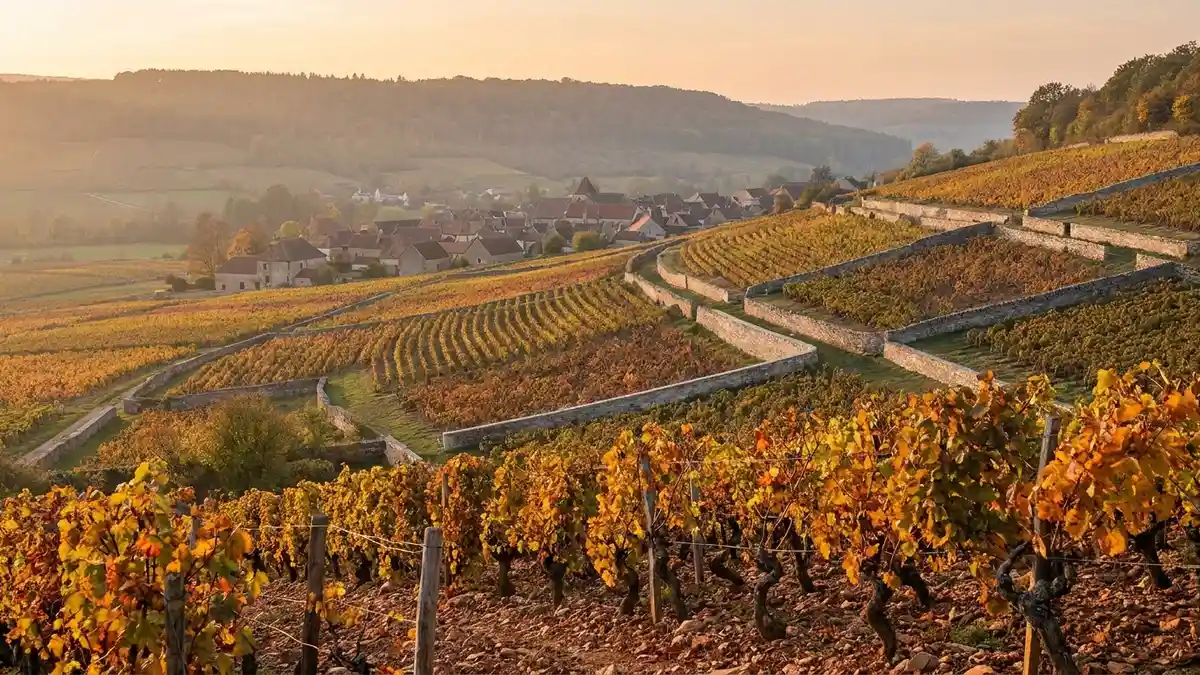
The Burgundy wine region — known in French as Bourgogne — sits in eastern France between Dijon and Lyon. It covers roughly 30,000 hectares, a fraction of Bordeaux's 110,000, yet produces some of the most studied and most expensive wines on earth.
Unlike Bordeaux, where blending is the rule, Burgundy is almost entirely a single-grape region. Pinot Noir (the red grape responsible for almost every red Burgundy) and Chardonnay (the white grape responsible for almost every white) account for nearly all production. Roughly two-thirds of the region's wine is white, one-third red.
The other defining trait is obsession with place. Vineyard parcels are mapped, ranked, and walled into hundreds of named climats — individual plots so specific that two adjacent rows can be classified differently. A bottle of Burgundy is a bottle of geography first, grape second.
For beginners coming from Cabernet country, the shift can be jarring. Burgundy asks you to think about a village, then a vineyard, then a row, then a producer — and only then about the grape in your glass.
Burgundy Wine Region, in 90 Seconds
The Burgundy wine region runs roughly 220 kilometres north to south through eastern France, focused on Pinot Noir and Chardonnay. There are five sub-regions: Chablis at the cool northern edge, the Cote de Nuits and Cote de Beaune forming the prestigious Cote d'Or, then the Cote Chalonnaise and Maconnais further south where prices ease. Wines climb a four-tier ladder — Bourgogne, Village, Premier Cru, Grand Cru — with only 33 Grand Cru vineyards in total. Vintages vary enormously thanks to a continental climate prone to frost and hail. Knowing the producer matters as much as knowing the village.
The Five Sub-Regions of Burgundy
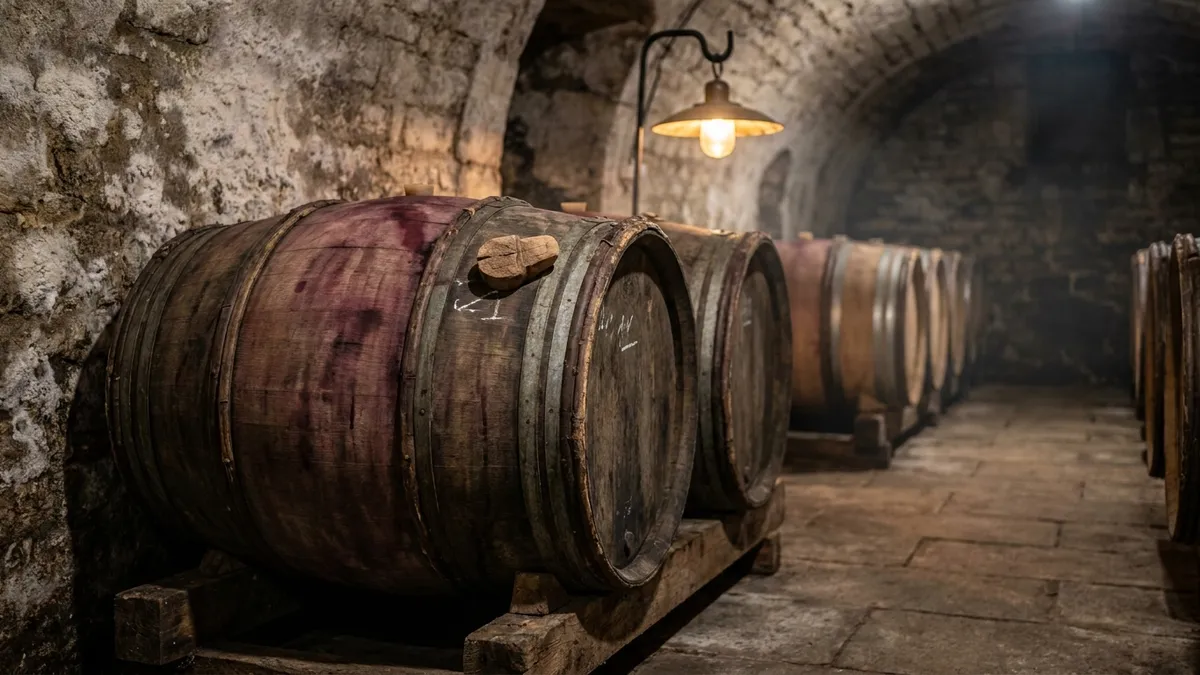
Burgundy is not one place. It is a stack of climates and soils, each producing wine in a distinct style. Working from north to south helps to keep them straight.
Chablis — The Cool Northern Outpost
Chablis sits well north of the rest of Burgundy, closer to Champagne than to the Cote d'Or. The climate is decidedly cool, frost is a regular threat, and only Chardonnay is permitted.
The signature here is Kimmeridgian limestone — a fossil-rich soil packed with crushed oyster shells from an ancient seabed. Wines tend to be lean, mineral, and steely, with green apple, lemon, and a saline edge. Many producers work with little or no oak, preserving the chalky character.
If you have only ever tasted rich, oaked Chardonnay, Chablis can feel like a different grape entirely. That contrast is one of the clearest demonstrations of how soil and climate shape flavour — see the chardonnay vs sauvignon blanc comparison for context.
Cote de Nuits — Pinot Noir Heaven
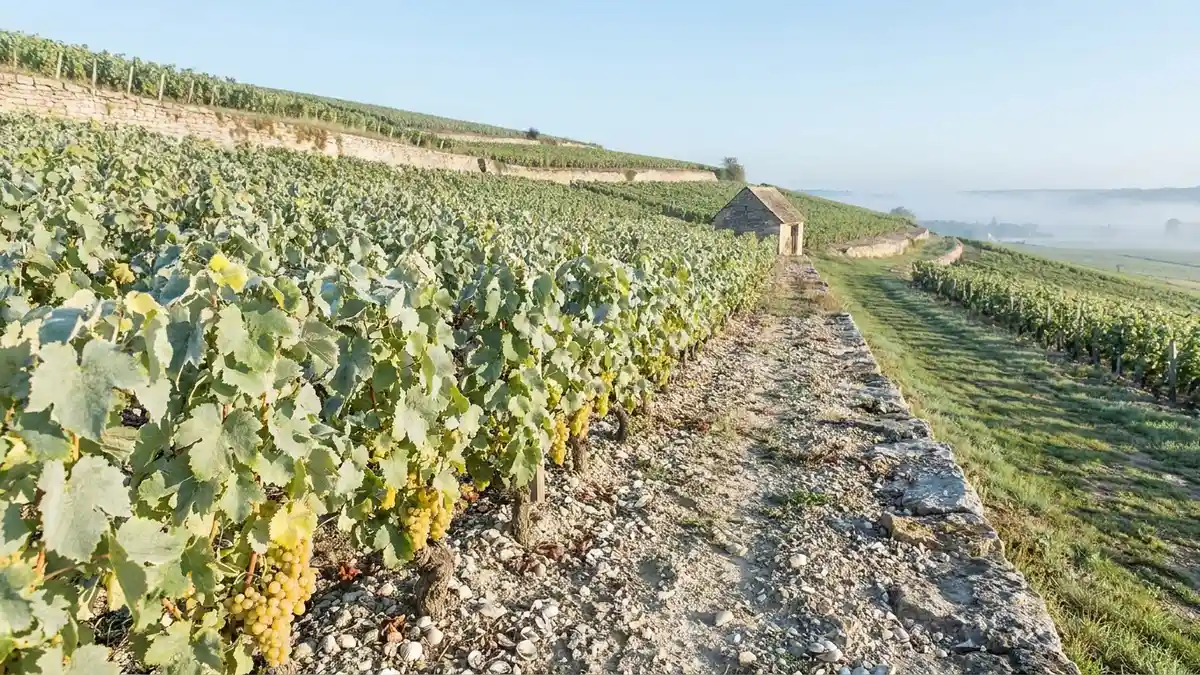
The northern half of the Cote d'Or is the spiritual home of Pinot Noir. Villages such as Gevrey-Chambertin, Vosne-Romanee, Chambolle-Musigny, and Nuits-Saint-Georges produce some of the most age-worthy reds in the world.
The style is structured and serious — red fruit rather than black, notable acidity, fine-grained tannins, and a perfumed, often earthy nose. Aged Cote de Nuits frequently develops mushroom, forest floor, and dried-leaf notes that sommeliers describe as tertiary aromas (the complex bouquet that emerges with bottle age).
Almost every Grand Cru red in Burgundy comes from this strip. To go deeper into the grape itself, the pinot noir guide walks through how it expresses across climates.
Cote de Beaune — Whites and Approachable Reds
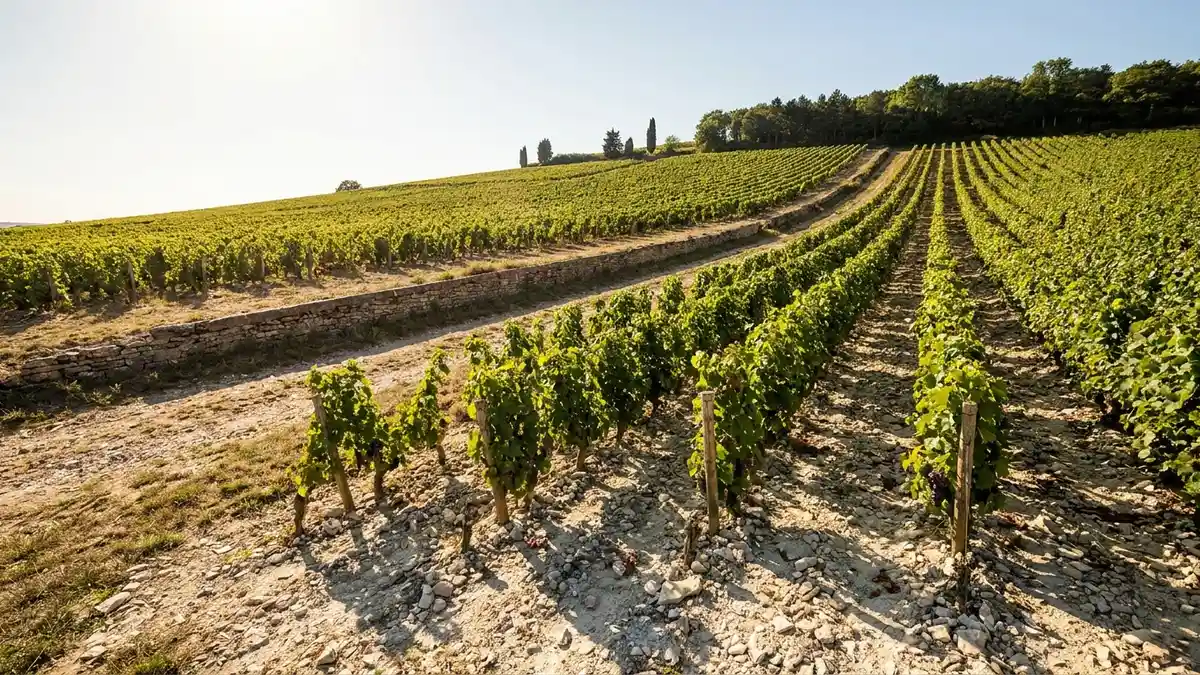
South of the city of Beaune, the Cote de Beaune produces both colours. The whites are the headline act: Meursault, Puligny-Montrachet, and Chassagne-Montrachet are the world's reference points for serious oak-aged Chardonnay.
Reds from Pommard and Volnay tend to be more accessible than their Cote de Nuits neighbours — fruit-forward, silkier, and less austere in their youth. White Burgundy from this stretch ranges from precise and citrus-driven to rich, hazelnut-laced wines built for the long haul.
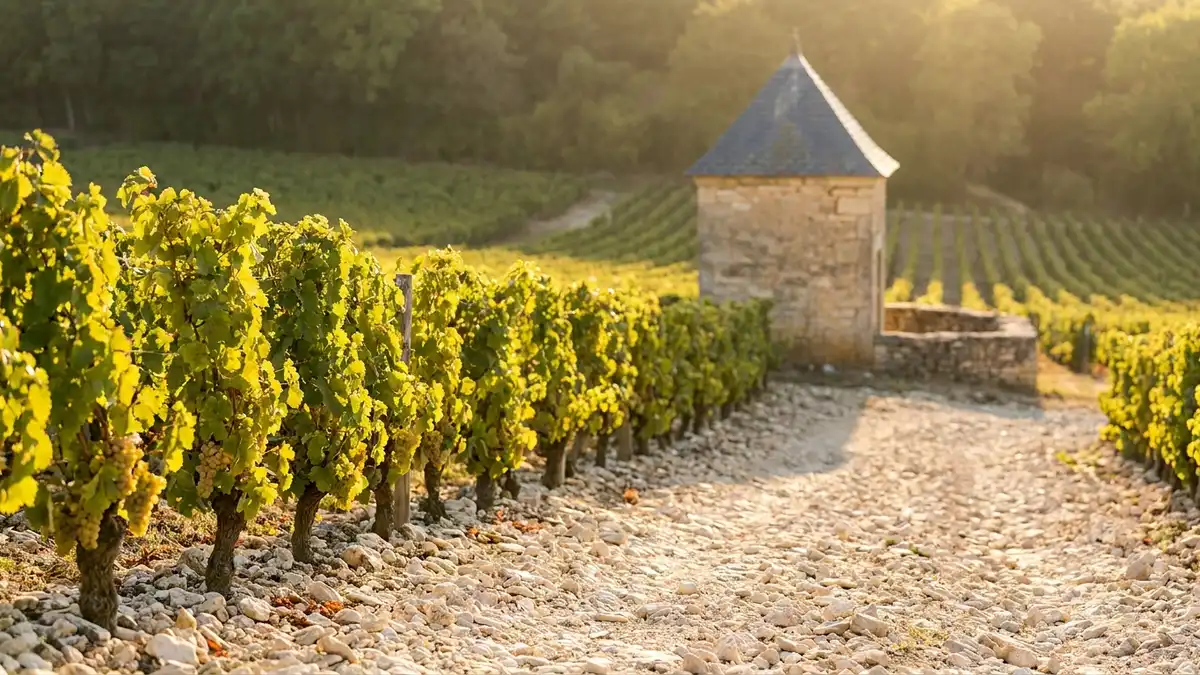
Cote Chalonnaise — Where Value Lives
Below the Cote d'Or, the Cote Chalonnaise is where serious Burgundy starts at sane prices. Mercurey and Givry produce structured Pinot Noir at a fraction of Cote de Nuits cost. Rully and Montagny make solid, food-friendly Chardonnay.
The wines lack the prestige and sometimes the depth of the famous villages, but for everyday drinking they offer some of the best value in French wine. A village-level Mercurey is one of the smartest first steps into red Burgundy.
Maconnais — Affordable Chardonnay
The Maconnais sits in the warmer south of the region. Chardonnay dominates, with Pouilly-Fuisse and Saint-Veran as the best-known appellations. The climate produces rounder, riper Chardonnay with more orchard fruit and less of the bracing acidity of Chablis.
For a beginner curious about white Burgundy without spending Meursault money, Maconnais is the obvious starting point. The wines drink well young and pair beautifully with everyday food.
The Four-Tier Classification System
Burgundy's classification ladder is what trips up most newcomers. Once it clicks, every label becomes legible.
1. Bourgogne (Regional) — The broadest tier. Grapes can come from anywhere in Burgundy, blended together. Often labelled simply Bourgogne Rouge or Bourgogne Blanc. Entry-level pricing, typically 25 to 35 dollars.
2. Village — Wines made from grapes grown within a single village. The label shows the village name (for example, Gevrey-Chambertin or Meursault). A clear step up in specificity and quality. Typically 50 to 100 dollars.
3. Premier Cru (1er Cru) — Specific vineyard parcels within a village deemed superior. The label reads village name + 1er Cru + sometimes the vineyard name. About 600 Premier Cru sites exist. Typically 100 to 300 dollars.
4. Grand Cru — The most prestigious vineyards, so famous they need no village name. Just Chambertin, Le Montrachet, Corton, Musigny, Clos de Vougeot. Only 33 Grand Cru vineyards exist in total. 300 dollars and up, frequently far more.
The mental model: each tier names a smaller, more specific patch of ground. The further down you read the label, the more zoomed in you go.
Burgundy is the only major region where the vineyard name is more important than the producer's name on most labels — but the producer still matters most for what is in the bottle.
Why Producer Matters More Than Vineyard
Here is the counterintuitive truth that takes years to learn: a great producer working a village-level vineyard will usually outperform an inattentive producer working a Grand Cru.
Burgundy is fragmented. Most vineyards — even Grand Crus — are split between dozens of owners, each making their own wine from their own rows. Clos de Vougeot, a single 50-hectare Grand Cru, has roughly 80 different owners. Every bottle from that vineyard is a different wine.
That is why experienced Burgundy buyers learn producer names before vineyard names. The label tells you the geography. The producer tells you the philosophy, the farming, and the winemaking. Both shape the wine, but the producer is the variable you can actually rely on.
What Burgundy Tastes Like
The grape pair is two — but the styles span a wide range.
Red Burgundy (Pinot Noir)
Classic markers include red cherry, raspberry, cranberry, rose petal, and underbrush. Older bottles develop mushroom, leather, and dried-leaf notes. Acidity is high, tannins are medium and silky, and alcohol typically sits between 12.5 and 13.5 percent.
Compared to New World Pinot Noir, red Burgundy is generally less fruit-forward and more savoury. Compared to a Bordeaux, the contrast is even sharper — see cabernet sauvignon vs merlot for how blended Bordeaux differs from single-variety Pinot.
White Burgundy (Chardonnay)
Chablis sits at the lean, citrus-and-flint end of the spectrum. The Cote de Beaune lives in the middle: lemon, apple, hazelnut from oak ageing, and a creamy texture from malolactic fermentation (a secondary fermentation that softens acidity). The Maconnais leans warmer and rounder, with more orchard fruit.
Across all three, mineral character — described variously as wet stone, chalk, or saline — is a recurring thread. Training your nose to spot it is one of the most useful exercises in white wine, and one the develop your wine palate guide breaks down step by step.
Vintage Variation Matters More Here
Burgundy's continental climate means weather risk is constant. Spring frost can wipe out part of a vintage. Summer hail can destroy a single vineyard while leaving its neighbour untouched. Late-season rain can dilute the harvest.
Recent vintages each tell a story:
- 2018 — Warm, ripe, generous. Approachable young.
- 2019 — Classic balance, fresh acidity, built to age.
- 2020 — Warm and opulent, low yields, concentrated.
- 2022 — Heat-wave year, fast ripening, riper styles.
Vintage charts matter more in Burgundy than almost anywhere else. The same producer can release a fragile, ethereal wine one year and a dense, structured wine the next.
How to Read a Burgundy Label
A typical Burgundy label has four moving parts:
- Producer name (the domaine or negociant)
- Place name (village, Premier Cru vineyard, or Grand Cru)
- Appellation line (for example, Appellation Gevrey-Chambertin Controlee)
- Vintage (the year of harvest)
If only the place is famous (no village name), you are looking at a Grand Cru. If the village and a vineyard are both named with 1er Cru between them, it is a Premier Cru. If only a village name appears, it is village-level. If the label says simply Bourgogne, it is regional.
For a deeper walkthrough on label decoding across regions, see how to read a wine label and the broader french wine regions overview.
Pricing Reality and Beginner Buying Strategy
Burgundy is small, demand is global, and prices reflect both. A rough map:
- 25 to 35 dollars — Regional Bourgogne, basic Maconnais Chardonnay.
- 35 to 60 dollars — Better Maconnais, Cote Chalonnaise village wines.
- 50 to 100 dollars — Cote de Beaune and Cote de Nuits village wines.
- 100 to 300 dollars — Premier Cru bottlings.
- 300 dollars and up — Grand Cru, often well into four figures for top vineyards.
The honest beginner advice is to avoid Burgundy under 20 dollars — at that price the wines almost never deliver on the region's reputation. Spend slightly more on a village-level Maconnais or Cote Chalonnaise red and the difference is dramatic.
A practical first flight might look like:
- A Maconnais Chardonnay for a friendly white intro.
- A village-level Mercurey or Givry for affordable Pinot Noir character.
- A Beaujolais Cru (technically just south, made from Gamay) as a bridge into Burgundy red.
- Eventually, a Cote de Beaune village white and a Cote de Nuits village red side by side.
The Sommy app guides each of these tastings step by step, so the structure of Burgundy clicks through actual glasses rather than abstract maps.
Ageing Burgundy
Most Burgundy benefits from at least a few years of bottle age. Rough guidelines:
- Regional Bourgogne — Drink within 3 to 7 years.
- Village wines — 5 to 15 years.
- Premier Cru — 8 to 20 years.
- Grand Cru reds — 15 to 50 years from strong vintages.
- White Burgundy — Typically 8 to 25 years; Chablis tends to peak earlier than Meursault.
Storage matters: a stable, cool, dark spot is non-negotiable for any wine you plan to keep beyond five years.
Climate Change and the Burgundy Future
Burgundy is often described as a climate-change canary. Average temperatures have risen, harvest dates have moved forward, and alcohol levels in finished wines have crept upward by roughly one percentage point over a generation.
For now, the result has been more reliable ripeness and fewer underwhelming vintages. The longer-term concern is that Burgundy's identity rests on a cool-climate edge. Chardonnay loses its electric acidity if temperatures rise too far. Pinot Noir loses its delicate red-fruit profile and starts behaving like a warmer-climate grape.
Producers are responding with earlier picking, less new oak, higher-elevation parcels, and in some cases experimentation with grape varieties that were once banned in the appellations.
Food Pairings That Work
Red Burgundy pairs naturally with:
- Roasted poultry — duck, guinea fowl, a herb-rubbed roast chicken.
- Mushroom dishes — risotto, pasta with porcini, mushroom tart.
- Beef Bourguignon — the classic match, by definition.
- Aged Comte — the savoury, nutty profile mirrors aged Pinot's earth notes.
White Burgundy from the Cote de Beaune handles:
- Scallops and lobster — richness meets richness.
- Roast chicken with butter sauce — village Meursault is born for this.
- Soft cheeses — Brie, Camembert, triple-creams.
Chablis is the seafood specialist:
- Oysters — the textbook pairing, salinity meeting salinity.
- White fish, ceviche, sushi — the lean, mineral profile lifts delicate flavours.
For deeper pairing logic, the wine and food pairing guide unpacks the underlying principles.
Where to Buy Burgundy
Burgundy rewards a relationship with a knowledgeable independent wine shop. Supermarket Burgundy is rarely interesting at any price. A good independent retailer can steer you toward producers whose style matches your taste and away from disappointing vintages or overpriced labels.
Importers also matter. The same producer can be represented well or poorly depending on shipping, storage, and distribution chains. Asking your shop which importers they trust is a small question that pays large dividends.
Building Burgundy Skills with Sommy
Burgundy is the most rewarding region in wine, and also the most frustrating. Cheap Burgundy is rarely good. Great Burgundy is rarely cheap. Vintage swings are huge, and the producer-vineyard-village stack takes years to internalise.
The way through is structured tasting, ideally in comparison flights. A Chablis next to a Meursault. A village Gevrey-Chambertin next to a village Volnay. A 2019 against a 2020. Each pairing teaches a specific lesson — about climate, about classification, about vintage character.
Sommy's wine regions hub and the broader course catalogue at sommy.wine walk through these comparisons in guided lessons, so the framework becomes muscle memory rather than memorisation. Burgundy is still a lifetime project — but with the right structure, the early years are a lot less bewildering than they used to be.
Frequently Asked Questions
What grapes does the Burgundy wine region grow?
Burgundy is essentially a two-grape region. Pinot Noir is responsible for almost every red wine and Chardonnay for almost every white. Small amounts of Aligote and Gamay exist, mainly for regional and Beaujolais-adjacent appellations, but the prestige bottles you find on a wine list are Pinot Noir or Chardonnay.
What are the five sub-regions of Burgundy?
From north to south, Burgundy is divided into Chablis, the Cote de Nuits, the Cote de Beaune, the Cote Chalonnaise, and the Maconnais. Chablis grows only Chardonnay. The Cote de Nuits is dominated by Pinot Noir. The Cote de Beaune produces both. The Cote Chalonnaise and Maconnais sit further south and offer better value.
What does Premier Cru and Grand Cru mean in Burgundy?
Burgundy uses a four-tier classification: regional Bourgogne, village wines, Premier Cru (specific vineyard parcels within a village), and Grand Cru (the most prestigious vineyards, named alone on the label). Only 33 vineyards hold Grand Cru status. The higher the tier, the smaller the area and the higher the price.
Why is Burgundy wine so expensive?
Burgundy is a small region — about 30,000 hectares versus Bordeaux's 110,000 — and yields are kept low. Demand for top sites massively exceeds supply, and the four-tier classification concentrates prestige in tiny vineyards. Add weather risk, vintage variation, and global collector demand, and prices climb quickly.
What does Burgundy taste like?
Red Burgundy from Pinot Noir typically shows red cherry, raspberry, earth, and mushroom notes with high acidity and medium tannin — less fruit-forward than New World Pinot. White Burgundy from Chardonnay ranges from steely and citrus-driven in Chablis to richer apple, hazelnut, and butter notes from the Cote de Beaune.
Where should a beginner start with Burgundy?
Start with village-level Bourgogne or a Maconnais Chardonnay in the 25 to 50 dollar range — they show classic Burgundian style without Premier Cru pricing. A Beaujolais Cru can serve as a friendly gateway to red Burgundy, and a village-level Mercurey from the Cote Chalonnaise offers an affordable proxy for Cote de Nuits character.
How does climate change affect the Burgundy wine region?
Burgundy summers have warmed noticeably, harvest dates are earlier, and ripeness has crept up. Many producers report higher alcohol levels and richer fruit than the wines of 30 years ago. Frost remains a serious risk in spring. The region is often cited as a climate-change canary because its cool-climate identity is most exposed.
How long does Burgundy wine age?
Most Burgundy ages well for 5 to 15 years. Top Grand Crus from strong vintages can age 20 to 50 years. White Burgundy typically ages 8 to 25 years, though Chablis tends to peak earlier than richer Meursault-style whites. Lower-tier wines and vintage Bourgogne are usually best within 3 to 7 years.
Get the free Wine 101 course
Start learning to taste wine like a pro with structured lessons and AI-guided practice.
Sommy Team
LinkedInFounder & Wine Educator
The Sommy Team is building the world's most approachable wine education app, helping beginners develop real tasting skills through structured courses and AI-guided practice.
Keep Reading
French Wine Regions: A Complete Guide
Explore the major French wine regions from Bordeaux to Provence. Understand the AOC system, signature grapes, and what makes each region unique.
Italian Wine: From Chianti to Barolo
Discover Italian wine from north to south. Learn the key regions, native grapes, classification system, and why Italian wine and food are inseparable.
Spanish Wine Regions: From Rioja to Sherry
Explore Spain's major wine regions, from the legendary Rioja to the unique world of Sherry. Learn the DO system, key grapes, and aging classifications.