Serving & Storage
Get the practical details right: temperature, decanting, glassware, and cellaring basics.
1 articleStart here
Wine Serving Temperature Chart: The Complete Guide for Every StyleA plain-English wine serving temperature chart for red, white, rosé, and sparkling. The 20/20 rule, the room temperature myth, and why serving temp changes everything in the glass.
The way you serve and store wine has a measurable impact on how it tastes. A great bottle served too warm, in the wrong glass, or after years of improper storage will underperform — and you may never know what you missed. The good news is that the fundamentals are simple, and getting them right costs almost nothing.
This section covers the practical side of wine enjoyment: the details that happen between the shop and your glass. Temperature, glassware, decanting, and storage are not fussy rituals — they are straightforward adjustments that let each wine show its best.
Temperature Matters More Than You Think
Most people serve white wine too cold and red wine too warm. A white wine pulled straight from the refrigerator (around 4 degrees Celsius) will have its aromas muted and its acidity amplified to the point of harshness. A red wine sitting on a kitchen counter in a warm house (around 24 degrees) will taste flabby, with alcohol dominating the fruit.
The general guideline is simpler than it sounds: light whites and sparkling wines at 7 to 10 degrees, fuller whites and light reds at 12 to 14 degrees, and medium to full-bodied reds at 16 to 18 degrees. In practice, this means pulling your white wine out of the fridge 15 minutes before serving, and putting your red wine in the fridge for 15 minutes before serving. That single adjustment improves nearly every bottle.
Glassware Basics
You do not need a different glass for every grape variety. A single tulip-shaped glass with a stem works for almost everything. The shape concentrates aromas at the rim, and the stem lets you hold the glass without warming the wine with your hand.
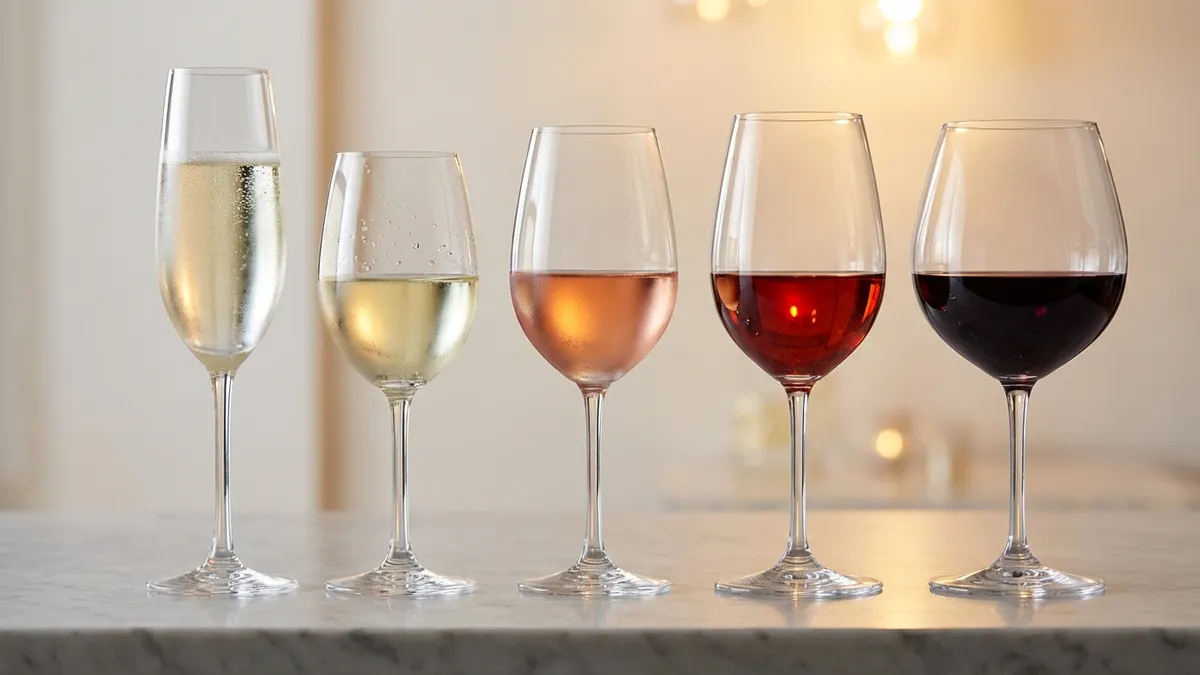
That said, there are a few cases where glass shape makes a noticeable difference. Sparkling wine benefits from a tall, narrow flute or a tulip glass that preserves the bubbles. Very aromatic whites like Riesling benefit from a smaller bowl that focuses the delicate scents. And broad-shouldered reds like Cabernet Sauvignon open up in a larger bowl that gives them room to breathe.
If you are building a collection, start with a set of good all-purpose wine glasses and expand from there as your interest grows.
Decanting
Decanting serves two purposes: separating wine from sediment and exposing it to air. Young, tannic red wines often benefit from an hour in a decanter — the oxygen softens harsh tannins and opens up aromas that are locked away in the bottle. Older wines with sediment should be decanted carefully, pouring slowly to leave the gritty deposit behind.
Not every wine needs decanting. Most whites, roses, and light reds are ready to drink straight from the bottle. But if you open a young Barolo, Cabernet, or Syrah and it tastes tight and closed, a decanter is the simplest fix.
Storage Fundamentals
If you are drinking wine within a few weeks of buying it, storage barely matters — a cool, dark spot in your home is fine. But if you want to age wine for months or years, a few conditions become important: consistent temperature around 12 to 14 degrees Celsius, moderate humidity to keep corks from drying out, darkness to prevent UV damage, and stillness to avoid disturbing sediment.
You do not need a dedicated wine cellar. A temperature-controlled wine fridge is the most practical option for most people. Avoid storing wine in the kitchen (too warm and variable), in direct sunlight, or near appliances that vibrate.
Practical, Not Precious
The articles in this section are written for people who want to enjoy wine at its best without overthinking it. Every recommendation is tied to a reason: you serve wine at a specific temperature because it affects how the aromas and flavors present themselves. You decant because it changes the wine's texture. You store properly because temperature swings accelerate aging in unpredictable ways.
Sommy's app includes serving suggestions alongside tasting notes, so you can make quick adjustments before you pour. The articles here go deeper into the why behind each recommendation.
Start with temperature — it is the single highest-impact adjustment you can make, and it takes less than a minute.
Articles in this topic

This pillar is growing
More articles on serving & storage are on the way. Bookmark this page and check back soon.