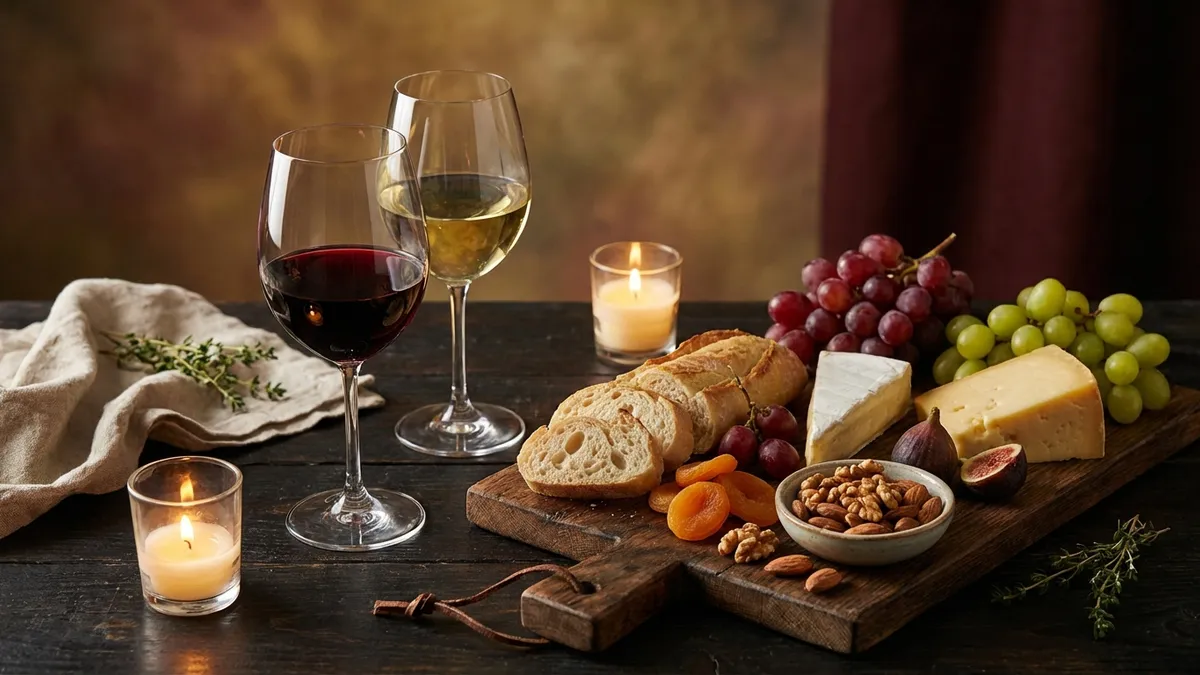
Wine and Cheese Pairing: The Ultimate Matching Guide
Sommy Team
Founder & Wine Educator
April 16, 2026
11 min read
TL;DR
Great wine and cheese pairing comes down to matching intensity, balancing fat with acidity, and pairing salt with sweetness. Fresh cheeses love crisp whites, aged hard cheeses stand up to bold reds, and blue cheeses shine with sweet wines. Forget the old red-wine-with-everything rule and pair by cheese style instead.
Why Wine and Cheese Pairing Works
Wine and cheese pairing is the oldest love story in food. Both are products of fermentation, both evolve with age, and both express the place they come from. When the match is right, the wine tastes brighter, the cheese tastes deeper, and neither overwhelms the other. When the match is wrong, a tannic red can turn a creamy cheese into chalk, or a dry white can taste like battery acid next to a salty blue.
The old advice of "red wine with cheese" captures barely half the picture. Some of the worst pairings in the wine world come from serving a big Cabernet Sauvignon with a soft goat cheese, and some of the best come from matching sweet wines with pungent blues. Good wine and cheese pairing starts with understanding cheese as its own spectrum, from milky-fresh to hard-aged, and choosing the wine that handles its specific intensity and texture.
This guide walks through the logic of pairing, maps every major cheese category to the wine styles that flatter it, and gives you a practical playbook for building a cheese board that actually makes your wine taste better.
The Three Principles Behind Every Great Pairing
Every successful cheese pairing follows at least one of three strategies. Once you internalize them, you can match any cheese to any wine even without a chart in front of you.
Match Intensity to Intensity
The cardinal rule of food and wine is that neither should bully the other. A delicate fresh mozzarella needs a delicate wine. An intense aged Gouda needs an intense wine. Intensity in cheese comes from age, salt, and fat concentration. Intensity in wine comes from alcohol, tannin, oak, and flavor concentration.
A useful mental model: the louder the cheese, the louder the wine can be. A young, milky cheese speaks at a whisper, so it needs a wine that whispers back. A twenty-four-month-aged hard cheese speaks at a shout, so it can share the stage with a bold red.
Balance Fat with Acidity
Cheese is, for the most part, concentrated fat. Fat coats the palate and mutes flavors, which is why a cheese-heavy bite can flatten a wine. The solution is acidity (the bright, mouth-watering quality in wine that comes from tartaric, malic, and lactic acids) — acidity cuts through fat the way lemon juice brightens a rich sauce.
This is why high-acid wines like Sauvignon Blanc, Chablis, Champagne, and Riesling are the workhorses of cheese pairing. They refresh the palate between bites and let each taste of cheese land cleanly.
Balance Salt with Sweetness
Cheese, especially aged cheese and blue cheese, is surprisingly salty. Salt amplifies bitterness in wine, which is why tannic reds often taste harsh next to salty cheeses. Sugar, on the other hand, balances salt and creates the kind of contrast that makes salted caramel so addictive.
This is why sweet wines are not just for dessert. A late-harvest Riesling with aged Gouda, a Sauternes with Roquefort, or a tawny Port with Stilton are among the most memorable pairings in wine. The sweetness does not clash with the cheese; it transforms it.
Pairing by Cheese Style
Cheese is easier to understand when you group it by how it is made rather than by where it is from. Each style has a different texture, flavor, and salt-to-fat ratio, and each calls for a different kind of wine.
Fresh Cheeses
Fresh cheeses (unaged cheeses like mozzarella, burrata, ricotta, feta, and fresh chevre) are mild, milky, and tangy. They contain a lot of moisture and very little fat concentration, so they need wines that match their lightness.
Best pairings:
- Crisp, unoaked whites: Sauvignon Blanc, Muscadet, Albarino, Verdicchio
- Sparkling wine: Prosecco, Cava, Cremant, Champagne
- Dry rose, especially Provencal styles
- Light, unoaked whites with a hint of herbal character
Avoid: tannic reds, oaky Chardonnays, and full-bodied wines. They will steamroll the cheese.
The classic: Sauvignon Blanc from the Loire with fresh goat cheese. The wine's citrus and grassy notes bridge directly to the tangy, slightly grassy flavor of chevre. This pairing is so iconic that it is featured in every chapter of our French wine regions guide.
Soft-Ripened (Bloomy Rind) Cheeses
Soft-ripened cheeses (bloomy-rind cheeses like Brie, Camembert, and triple-creams) have a white, edible rind and a rich, buttery, sometimes mushroomy interior. They are fattier than fresh cheeses and need wines with more acidity and a little more body.
Best pairings:
- Sparkling wine (the classic match for Brie)
- Dry rose
- Light, fruity reds: Pinot Noir, Gamay (Beaujolais), Grenache
- Off-dry Riesling or Chenin Blanc for triple-creams
The fat-slicing power of sparkling wine is especially useful here. Champagne with Brie is not a cliche; it is a technique. The bubbles and acid scrub the butterfat off your tongue between bites.
Avoid heavy reds with young, milky bloomy cheeses. They fight. With more aged and barnyardy examples, a light, fruity red can work beautifully.
Washed-Rind Cheeses
Washed-rind cheeses (cheeses with orange, sticky rinds bathed in brine, wine, or spirits during aging, like Epoisses, Taleggio, Munster, and Limburger) are pungent, meaty, and intensely aromatic. They are often described as smelling stronger than they taste.
Best pairings:
- Aromatic whites: Gewurztraminer, dry Alsace Riesling, Pinot Gris
- Off-dry Chenin Blanc
- Beer and farmhouse cider (for the curious)
Washed-rinds are notorious red-wine killers. The combination of pungency and salt makes tannins taste bitter. Stick to aromatic, slightly sweet whites that match the cheese's exotic intensity. Gewurztraminer's lychee and rose notes are a revelation next to an Epoisses.
Semi-Hard Cheeses
Semi-hard cheeses (pressed, aged cheeses with a firm but not crumbly texture, like Gruyere, Comte, Gouda, Emmental, Edam, and Manchego) are the diplomatic middle ground. They are nutty, caramelized, and versatile.
Best pairings:
- Medium-bodied whites: oaked Chardonnay, white Rioja, Alsace Pinot Gris
- Medium-bodied reds: Merlot, Tempranillo, Grenache, Sangiovese
- Dry sherry (a classic with Manchego)
- Traditional-method sparkling with aged Gruyere
Semi-hard cheeses are the easiest category to pair. They take tannin well, they take oak well, and they rarely clash. This is the part of the cheese board where a medium-bodied red finally earns its keep.
Hard, Aged Cheeses
Hard, aged cheeses (long-aged, low-moisture cheeses like Parmigiano-Reggiano, aged Gouda, Pecorino Romano, Grana Padano, and aged cheddar) are concentrated, crystalline, and powerful. The umami compounds that build up during aging (the same amino acids that give aged meats their savory depth) can make some wines taste metallic, but they amplify others.
Best pairings:
- Full-bodied reds: Cabernet Sauvignon, Nebbiolo, Sangiovese Riserva, aged Tempranillo
- Aged, savory whites: aged white Rioja, Vin Jaune, oxidative styles
- Sparkling reds: Lambrusco with Parmigiano is a regional classic
- Fortified wines: dry Madeira, Oloroso sherry, tawny Port
This is the only cheese category where a big, tannic red truly belongs. The concentration of flavor in a 24-month Parmigiano matches the concentration of a serious Cabernet. Looking for practical pairing principles like this one? Our guide to wine pairing rules covers the universal frameworks.
Blue Cheeses
Blue cheeses (cheeses inoculated with Penicillium mold that creates blue or green veins, like Roquefort, Stilton, Gorgonzola, and Cabrales) are the loudest voices in the cheese world. They are salty, pungent, peppery, and sometimes sharp enough to burn the tongue.
Best pairings:
- Sweet wines: Sauternes, Tokaji Aszu, late-harvest Riesling, Vin Santo
- Fortified wines: tawny Port, ruby Port, Pedro Ximenez sherry
- Ice wine
- Amarone for Gorgonzola Piccante
The pairing of Sauternes with Roquefort is one of the most storied matches in wine, and for good reason. The honeyed sweetness tames the salt, the acidity cuts the fat, and the shared intensity creates a pairing that is genuinely greater than the sum of its parts.
Avoid dry reds with blue cheese. They taste astringent and hollow next to the salt. The only exception is a very ripe, fruit-forward style where residual sugar does some of the work.
The Regional Principle
When a pairing has confused you for ten minutes, stop guessing and reach for regional logic. Cheeses and wines that evolved in the same place almost always pair well, because the food and drink of a region co-adapted over generations of shared tables.
A few regional pairings that never fail:
- Sancerre or Pouilly-Fume with Crottin de Chavignol (Loire goat cheese)
- Roquefort with Sauternes (both from southwest France)
- Comte with Vin Jaune (both from the Jura)
- Parmigiano-Reggiano with Lambrusco (both from Emilia-Romagna)
- Manchego with Rioja (both from central Spain)
- Stilton with Port (historic English wine trade with Portugal)
- Gorgonzola with Amarone or Recioto (both from northern Italy)
If you are building a themed cheese board, pick a region and source both the cheese and the wine from it. The pairing work is already done for you.
Building a Cheese Board That Actually Works
A great cheese board is not just an assortment; it is a sequence. The way you arrange and serve cheese shapes how each pairing lands.
How Many Cheeses
Three to five cheeses is the sweet spot for a tasting board. Fewer feels sparse; more overwhelms the palate and stretches the wine too thin. Choose one cheese from each of several categories so the board has contrast.
A classic five-cheese progression:
- A fresh cheese (chevre or burrata)
- A soft-ripened cheese (Brie or Camembert)
- A semi-hard cheese (Comte or Manchego)
- A hard, aged cheese (Parmigiano or aged Gouda)
- A blue cheese (Roquefort or Stilton)
How Many Wines
One excellent versatile wine can cover an entire board if you choose well. Dry rose, traditional-method sparkling, and off-dry Riesling are the three most cheese-friendly styles. For a more ambitious tasting, pair each cheese with its own wine in this order: sparkling, white, red, sweet.
Serving Tips
- Take cheese out of the fridge 30 to 60 minutes before serving. Cold cheese is muted cheese.
- Provide separate knives so flavors do not cross-contaminate.
- Eat from mildest to strongest. Starting with blue blows out your palate for everything after it.
- Serve bread, fruit, and honey alongside. They act as bridge ingredients that extend the pairing range.
For practice developing the palate skills that make these pairings obvious, the Sommy app includes interactive tasting exercises where you feel the interaction between acidity, fat, and salt in real time. Pairing becomes instinctive once you can name what is happening on your tongue.
Common Pairing Mistakes to Avoid
A few classic errors show up at nearly every cheese board. Knowing them is half the battle.
- Serving Cabernet Sauvignon with soft cheese. The tannin-plus-fat combination turns the cheese into a chalky paste. Save the Cab for the aged hard cheeses.
- Serving bone-dry wine with blue cheese. The salt amplifies everything harsh in the wine. Reach for sweetness instead.
- Forgetting about acidity. Low-acid wines get buried under cheese fat. When in doubt, pick something brighter.
- Over-cheesing the palate before the wine. Cheese coats the tongue. Sip wine first, then eat, then sip again to compare.
- Ignoring texture. Creamy cheeses need bubbles or acidity. Crystalline aged cheeses need density. Texture matching matters as much as flavor.
The underlying logic is the same as every other food-and-wine decision. If you want to deepen that foundation, our guide to wine and food pairing covers the broader principles that apply to everything you put on a plate.
The Short Cheat Sheet
When you have thirty seconds and a hungry guest, keep these reflexes handy:
- Fresh cheese + crisp white or sparkling
- Bloomy rind + sparkling wine or light red
- Washed rind + aromatic off-dry white
- Semi-hard + medium-bodied red or oaked white
- Hard aged + full-bodied red or fortified
- Blue cheese + sweet wine
Memorize those six pairings and you will outperform almost any restaurant cheese board. Everything else is fine-tuning.
Wine and cheese pairing rewards curiosity more than rules. The next time you open a bottle, try it with three different cheeses side by side and pay attention to what changes. That small experiment teaches you more than any chart. Sommy exists to make that kind of hands-on tasting easier, one sip at a time.
Frequently Asked Questions
What is the best all-around wine for a cheese board?
Sparkling wine like Champagne, Cremant, or a dry traditional-method sparkling is the most versatile choice. Its acidity and bubbles cut through fat, its subtle sweetness balances salt, and its neutral flavor profile does not clash with strong cheeses. Dry rose is a strong second.
Does red wine really go with cheese?
Sometimes, but not as often as the old rule suggests. Tannic red wines clash with fresh, creamy, and washed-rind cheeses. Reds shine with aged hard cheeses like Parmigiano-Reggiano, aged Gouda, and Manchego, where long aging has built up enough flavor concentration to stand up to tannin.
What wine pairs best with blue cheese?
Sweet wines. The salt and pungency of blue cheese is tamed by sweetness, creating one of the most celebrated pairings in wine. Sauternes, late-harvest Riesling, Tokaji, and tawny or ruby Port all work beautifully with Roquefort, Stilton, or Gorgonzola Piccante.
What wine goes with brie or camembert?
Soft-ripened cheeses like brie and camembert pair best with sparkling wine, dry rose, or light, fruity red wines like Pinot Noir or Gamay. The wine needs bright acidity to handle the buttery, rich interior without being overwhelmed by the bloomy rind.
Should I pair cheese with wine from the same region?
When in doubt, yes. Cheeses and wines that grew up side by side tend to pair beautifully. Goat cheese from the Loire with Loire Sauvignon Blanc. Manchego with Rioja Tempranillo. Parmigiano-Reggiano with Lambrusco. The regional principle is the closest thing to a guaranteed match.
How many wines do I need for a cheese board?
Two or three is plenty for most gatherings. A sparkling wine or crisp white for fresh and soft cheeses, a medium-bodied red for semi-hard and hard cheeses, and optionally a sweet wine for blue cheese. A single versatile wine like a dry rose or traditional-method sparkling can also cover an entire board.
What temperature should wine and cheese be served at?
Cheese should rest at room temperature for 30 to 60 minutes before serving so its flavors open up. White and sparkling wines should be chilled but not ice-cold (45 to 55 F). Light reds are best lightly chilled (55 to 60 F). Full-bodied reds show best slightly cool, around 60 to 65 F.
Can beer or cider replace wine with cheese?
Absolutely, though this guide focuses on wine. Farmhouse cider pairs beautifully with washed-rind cheeses, and Belgian ales work well with many styles. The same principles apply: match intensity, balance salt with sweetness, and cut fat with acidity or carbonation.
Get the free Wine 101 course
Start learning to taste wine like a pro with structured lessons and AI-guided practice.
Sommy Team
LinkedInFounder & Wine Educator
The Sommy Team is building the world's most approachable wine education app, helping beginners develop real tasting skills through structured courses and AI-guided practice.